Historical Context - International Relations | UPSC Learning
Topics
0 topics • 0 completed
🔍
No topics match your search
Historical Context
Medium⏱️ 6 min read
international relations
📖 Introduction
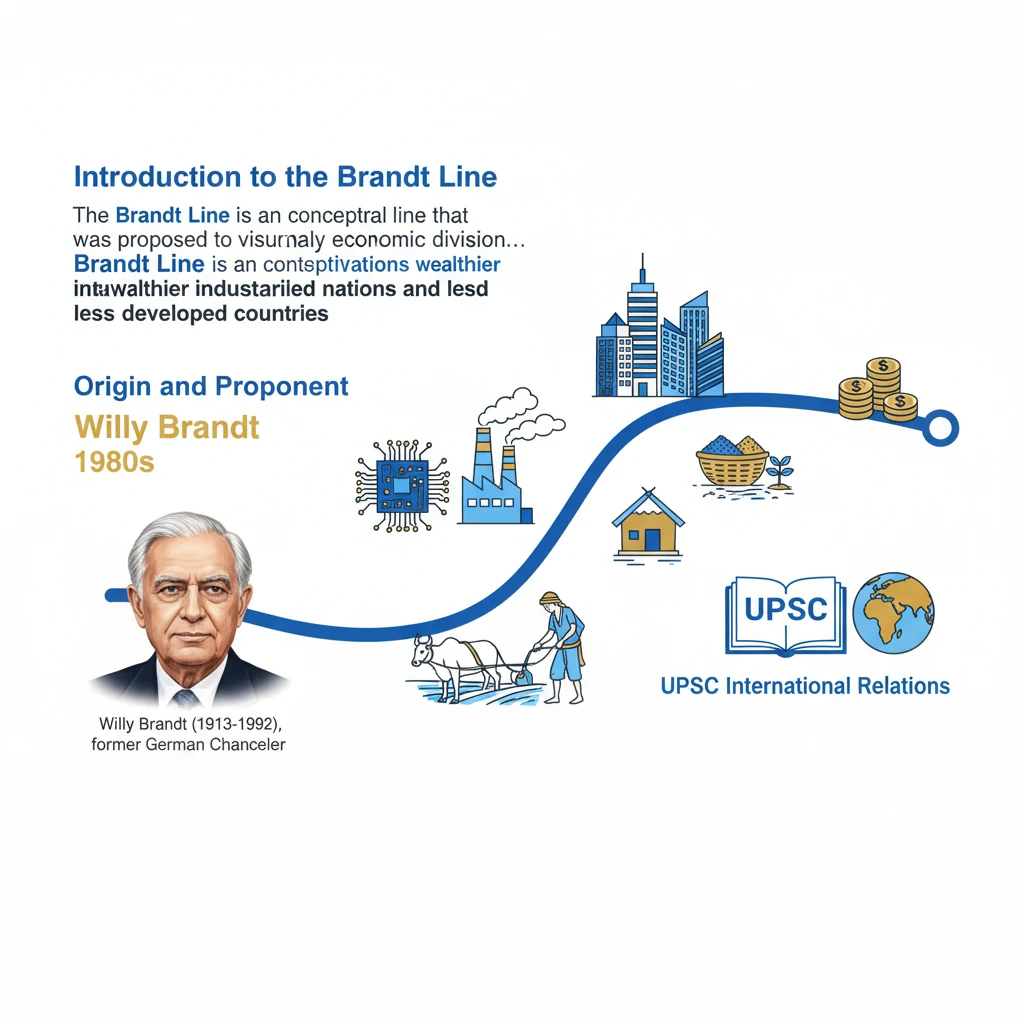
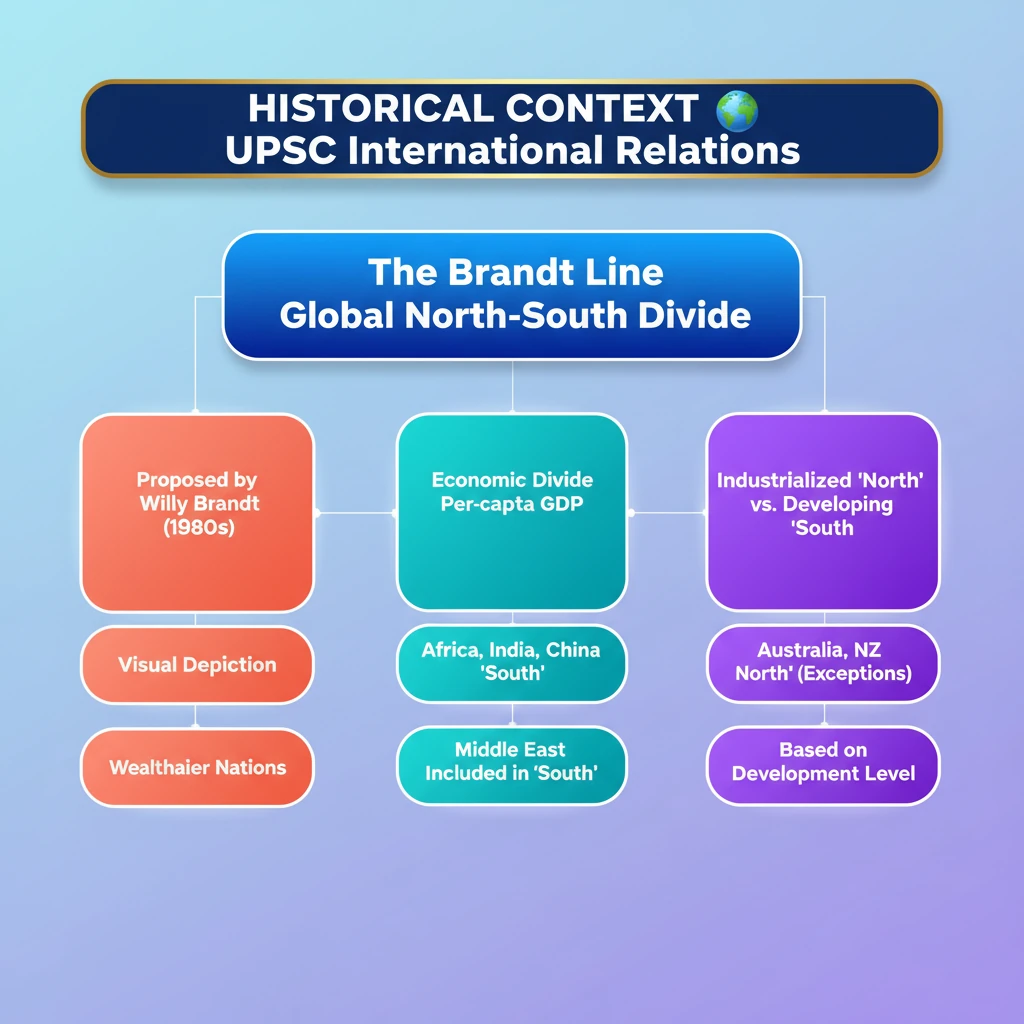
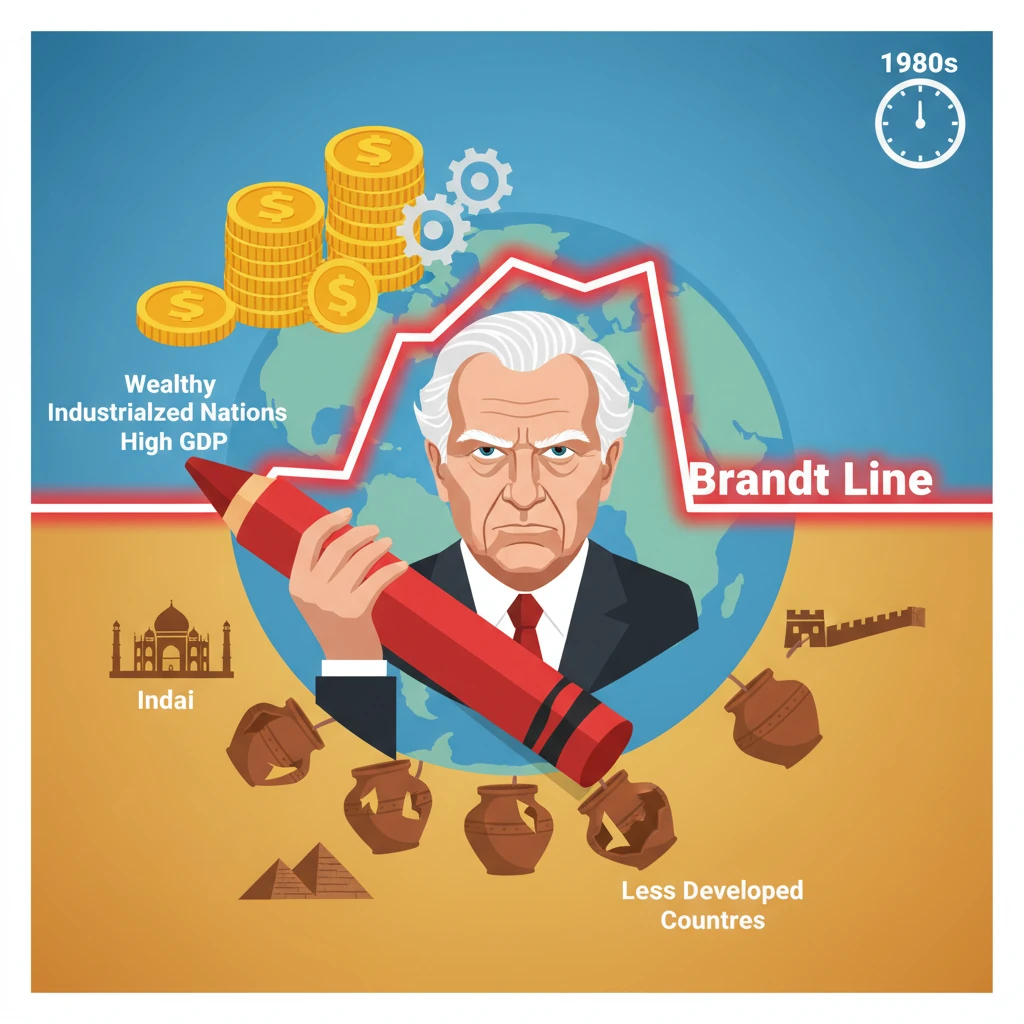
<h4>Introduction to the Brandt Line</h4><p>The <strong>Brandt Line</strong> is a conceptual line that was proposed to visually represent the global economic division between the wealthier industrialized nations and the less developed countries. It serves as a powerful symbol of the economic disparities prevalent worldwide.</p><h4>Origin and Proponent</h4><p>This significant concept was introduced by former German Chancellor <strong>Willy Brandt</strong>. He proposed the line in the <strong>1980s</strong>, aiming to highlight the stark economic contrast between the global North and South.</p><div class='info-box'><p><strong>Key Proponent:</strong> Willy Brandt, former German Chancellor</p><p><strong>Year Proposed:</strong> 1980s</p><p><strong>Purpose:</strong> To visually depict the global North-South divide based on economic indicators.</p></div><h4>Symbolism of the Divide</h4><p>The <strong>Brandt Line</strong> primarily symbolizes the profound <strong>global economic divide</strong>. This division is largely based upon <strong>per-capita GDP</strong>, with countries above the line generally having higher incomes and industrialization, and those below having lower incomes and being more agrarian or developing.</p><div class='key-point-box'><p>The Brandt Line illustrates the <strong>North-South divide</strong>, a term describing the socio-economic and political differences between developed countries (often in the Northern Hemisphere) and developing countries (often in the Southern Hemisphere).</p></div><h4>Geographical Representation</h4><p>Geographically, the line is depicted as a zigzagging boundary across continents. It encompasses a significant portion of the Southern Hemisphere and parts of the Northern Hemisphere that are economically less developed.</p><ul><li><strong>Countries Included (South):</strong> Parts of <strong>Africa</strong>, the <strong>Middle East</strong>, <strong>India</strong>, and <strong>China</strong>. These regions generally fell below the line due to lower per-capita GDPs at the time.</li><li><strong>Countries Excluded (North):</strong> Notably, <strong>Australia</strong> and <strong>New Zealand</strong>, despite being geographically in the Southern Hemisphere, are considered part of the 'Global North' due to their high economic development and are thus positioned above the Brandt Line.</li></ul><div class='exam-tip-box'><p>For UPSC, understanding the <strong>Brandt Line</strong> helps in conceptualizing historical global economic inequalities and can be used to introduce discussions on development, globalization, and international relations in <strong>GS Paper 2</strong> and <strong>GS Paper 3</strong>.</p></div>
💡 Key Takeaways
- •The Brandt Line was proposed by Willy Brandt in the 1980s.
- •It visually depicted the global North-South economic divide based on per-capita GDP.
- •The line separated wealthier industrialized nations from less developed countries.
- •It included parts of Africa, Middle East, India, and China in the 'South'.
- •Australia and New Zealand were exceptions, placed in the 'North' due to high development.
- •While a historical concept, it highlights enduring global economic disparities.
🧠 Memory Techniques
95% Verified Content
📚 Reference Sources
•United Nations Development Programme (UNDP) reports on global development
•Academic texts on International Political Economy and Development Studies
•Drishti IAS Summary (provided source)