Food Safety and Standards Authority of India - International Relations | UPSC Learning
Topics
0 topics • 0 completed
🔍
No topics match your search
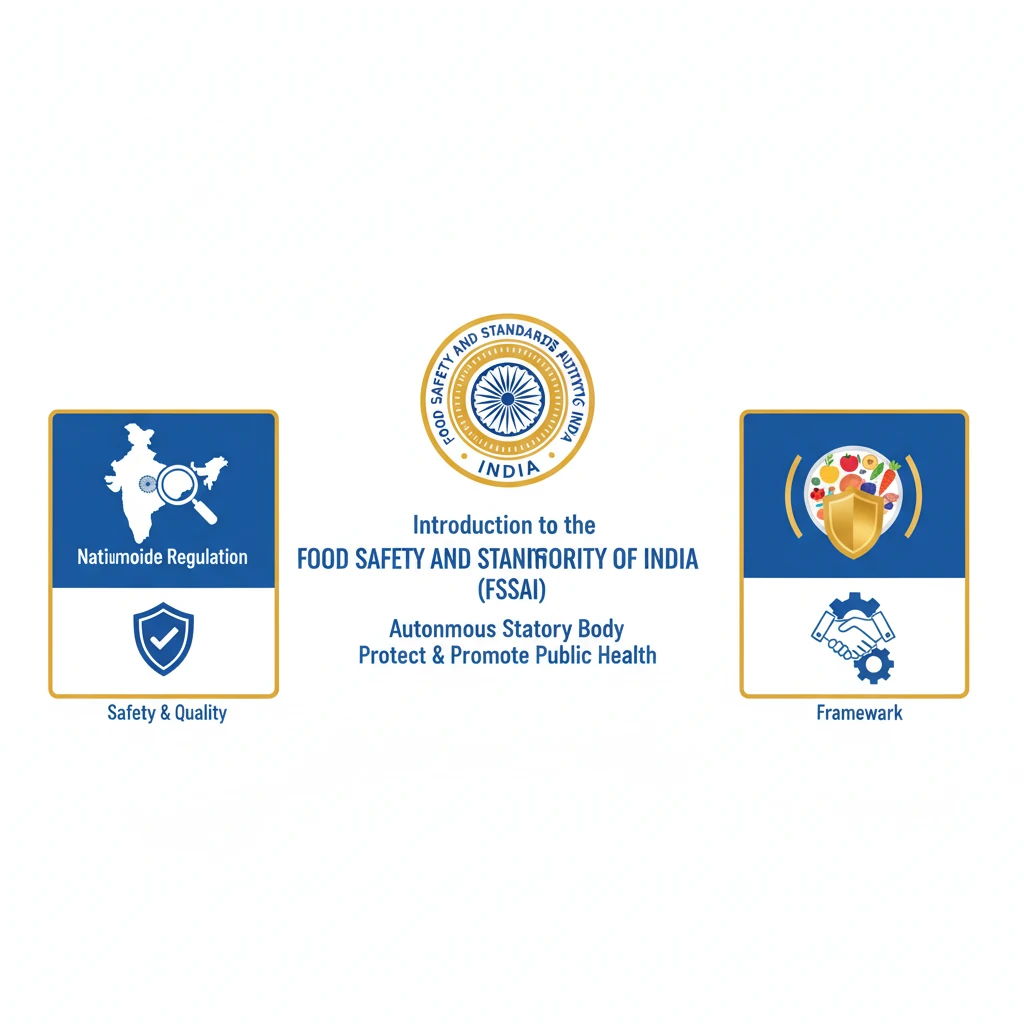
Food Safety and Standards Authority of India
Easy⏱️ 7 min read
international relations
📖 Introduction
<h4>Introduction to the Food Safety and Standards Authority of India (FSSAI)</h4><p>The <strong>Food Safety and Standards Authority of India (FSSAI)</strong> is a pivotal institution in India's public health framework. It operates as an <strong>autonomous statutory body</strong>, established to ensure the safety and quality of food products consumed across the nation.</p><p>FSSAI's mandate is to <strong>protect and promote public health</strong>. It achieves this by actively <strong>regulating and supervising food safety and quality</strong> standards throughout India. This comprehensive oversight covers everything from production to consumption.</p><div class='info-box'><p><strong>Establishment:</strong> FSSAI was established under the <strong>Food Safety and Standards Act, 2006</strong>. This Act consolidated various food laws into a single, comprehensive framework.</p><p><strong>Parent Ministry:</strong> The Authority functions under the administrative control of the <strong>Ministry of Health & Family Welfare</strong>, Government of India.</p></div><div class='key-point-box'><p>FSSAI's role extends beyond national borders. India has proactively shared its valuable experience regarding guidelines developed by FSSAI on <strong>recycling post-consumer PET (Polyethylene terephthalate)</strong> for food contact applications.</p></div><p>This initiative underscores FSSAI's contribution to addressing broader global challenges. Its work is crucial for topics like <strong>climate change</strong>, <strong>environmental protection</strong>, and fostering <strong>sustainability</strong> within the food industry and packaging sector.</p><h4>Core Responsibilities of FSSAI</h4><p>The primary responsibility of FSSAI is to set <strong>science-based standards</strong> for food articles and to regulate their manufacture, storage, distribution, sale, and import. This ensures that safe and wholesome food is available to consumers.</p><ul><li><strong>Standard Setting:</strong> Developing and enforcing food safety standards for various food products.</li><li><strong>Licensing & Registration:</strong> Granting licenses and registrations to food businesses to ensure compliance.</li><li><strong>Surveillance & Monitoring:</strong> Conducting regular checks and surveillance to monitor food quality and safety across the supply chain.</li><li><strong>Consumer Awareness:</strong> Educating consumers about food safety and healthy eating practices.</li></ul><div class='exam-tip-box'><p>For UPSC, understand FSSAI not just as a regulatory body but also as a contributor to <strong>sustainable practices</strong> and <strong>global best practices</strong>, as evidenced by its PET recycling guidelines. Mentioning its statutory nature and parent ministry is key.</p></div>
💡 Key Takeaways
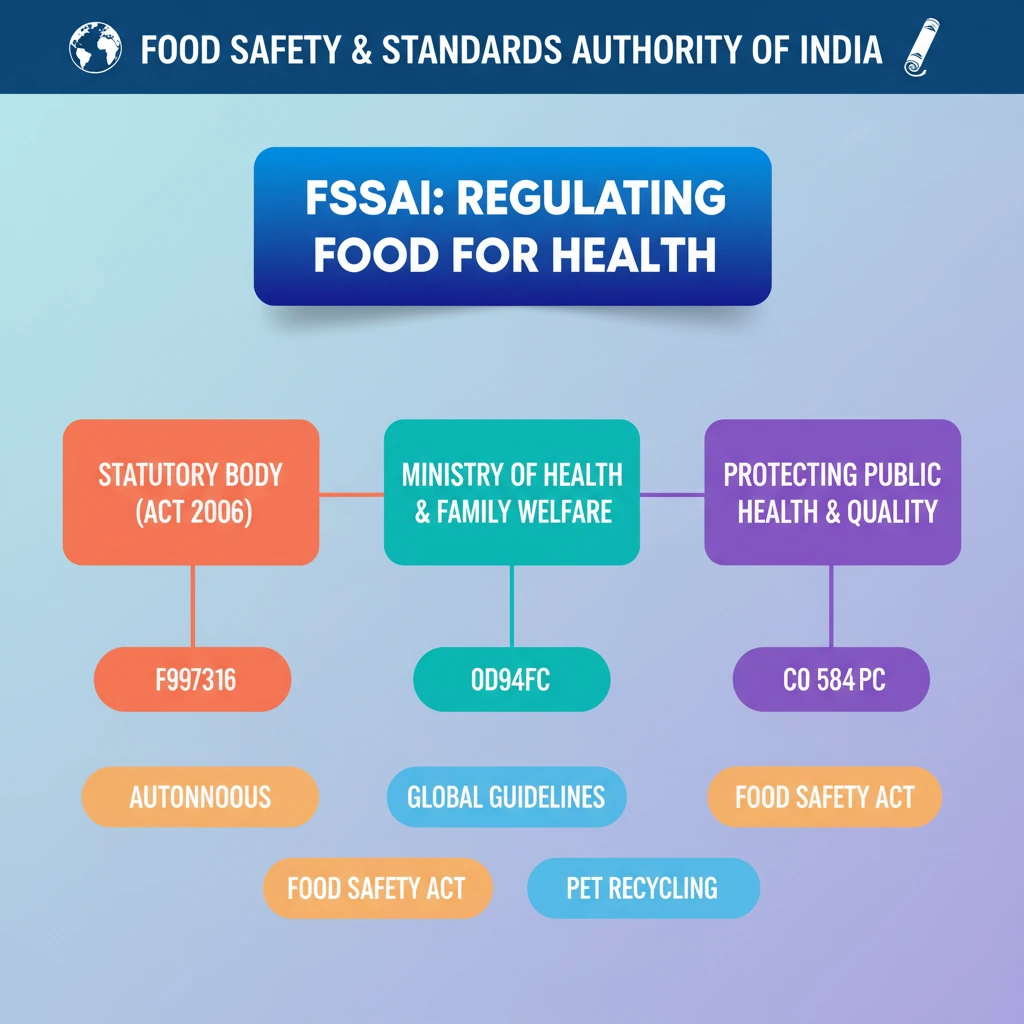
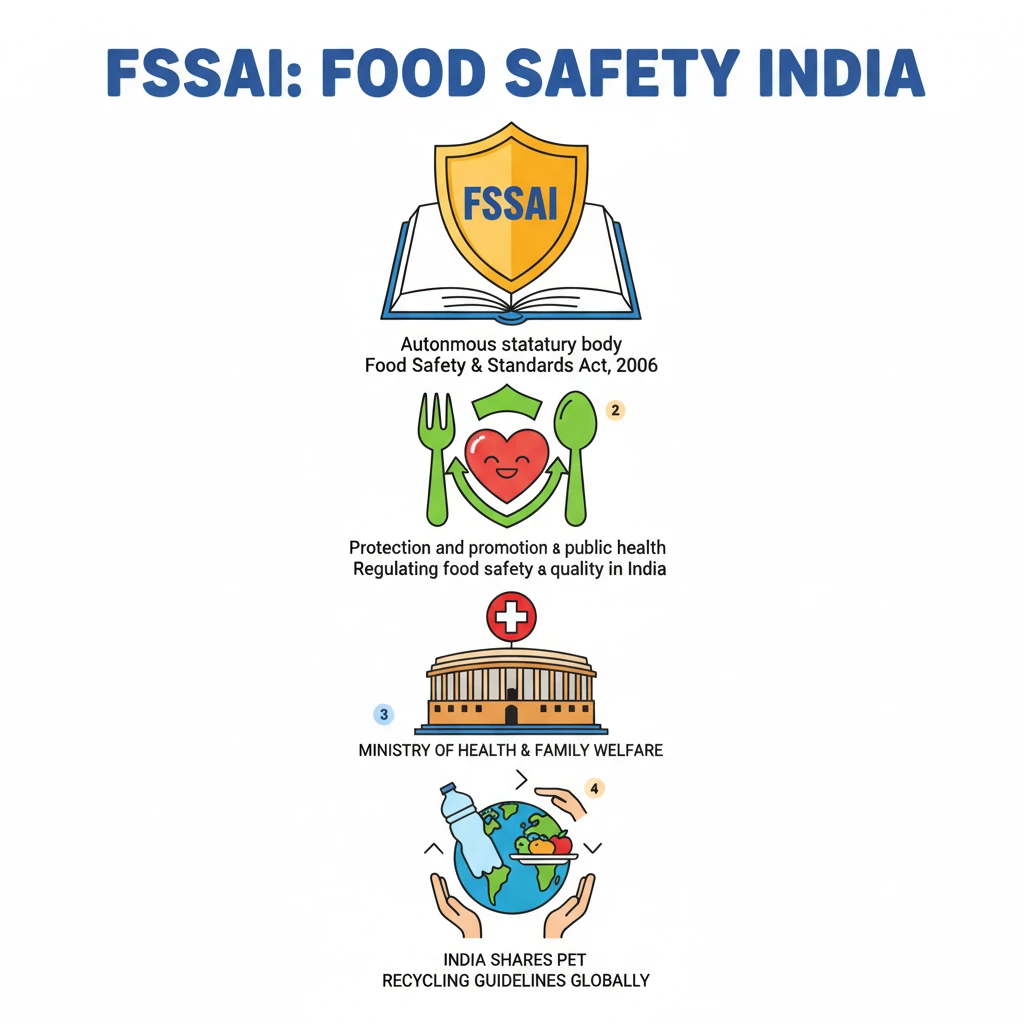
- •FSSAI is an autonomous statutory body under the Food Safety and Standards Act, 2006.
- •Its primary role is to protect and promote public health by regulating food safety and quality in India.
- •Operates under the administrative control of the Ministry of Health & Family Welfare.
- •India shared FSSAI's guidelines on recycling post-consumer PET for food contact applications internationally.
- •FSSAI's initiatives contribute to addressing global challenges like climate change, environmental protection, and sustainability.
🧠 Memory Techniques
98% Verified Content
📚 Reference Sources
•Food Safety and Standards Act, 2006
•Official website of Food Safety and Standards Authority of India (FSSAI)
•Ministry of Health & Family Welfare, Government of India