What are the Different Frameworks for Nuclear Proliferation and Nuclear Disarmament? - International Relations | UPSC Learning
Topics
0 topics • 0 completed
🔍
No topics match your search
What are the Different Frameworks for Nuclear Proliferation and Nuclear Disarmament?
Medium⏱️ 7 min read
international relations
📖 Introduction
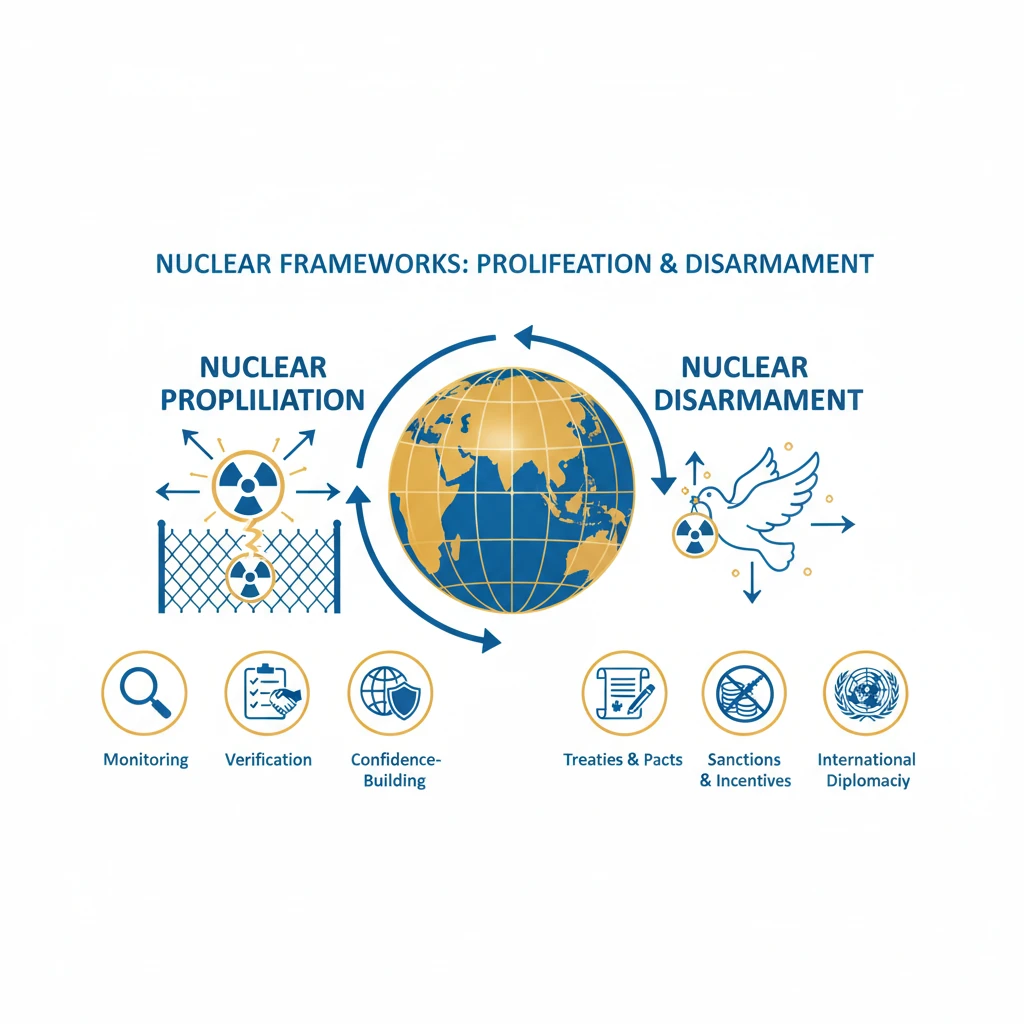
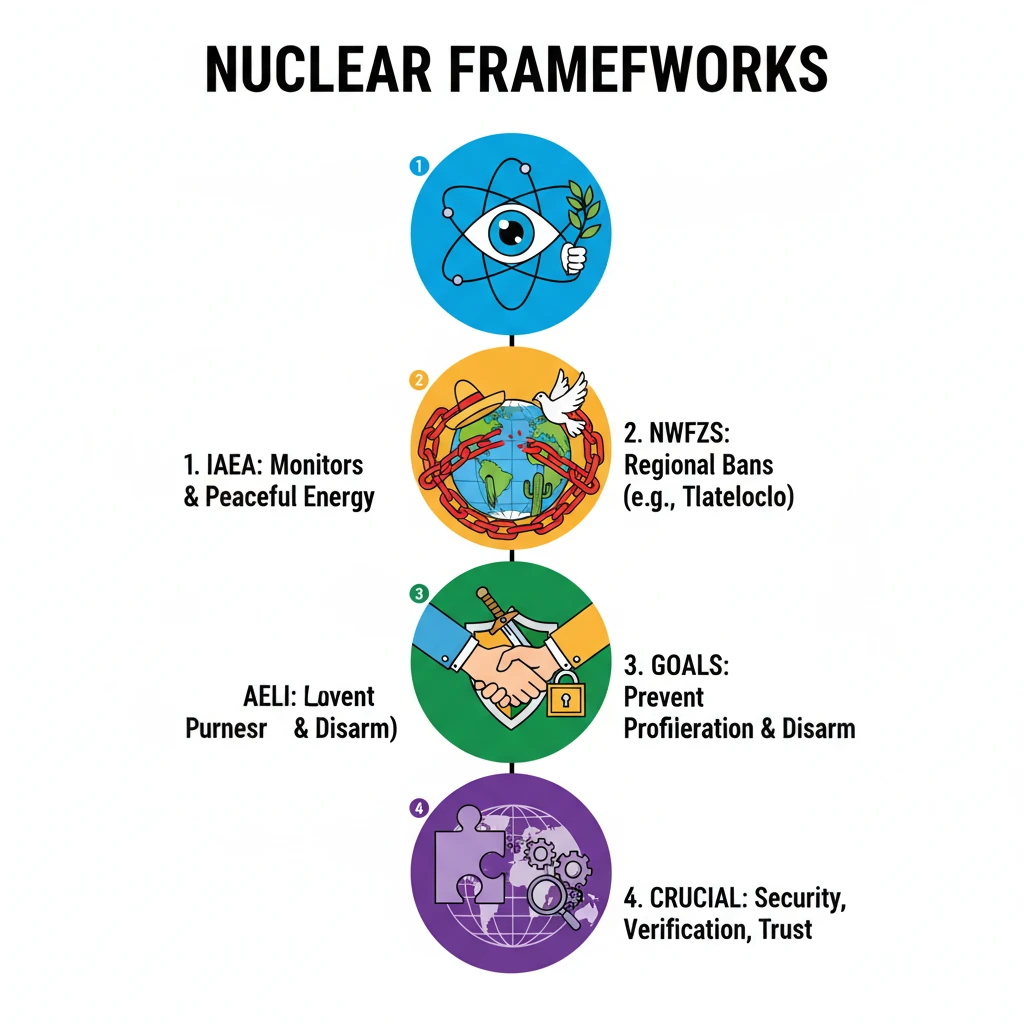
<h4>Introduction to Nuclear Frameworks</h4><p>The global community faces the dual challenge of preventing <strong>nuclear proliferation</strong> and striving for complete <strong>nuclear disarmament</strong>. Various international and regional frameworks have been established to address these critical issues, aiming to ensure global peace and security.</p><p>These frameworks provide mechanisms for monitoring, verification, and confidence-building among nations regarding nuclear technology and weapons.</p><div class='exam-tip-box'><p><strong>UPSC Insight:</strong> Understanding these frameworks is crucial for <strong>GS Paper II</strong> (International Relations) and essays on global security. Focus on their mandate, effectiveness, and India's stance.</p></div><h4>International Atomic Energy Agency (IAEA)</h4><p>The <strong>International Atomic Energy Agency (IAEA)</strong> plays a pivotal role in the global nuclear architecture. Established in <strong>1957</strong>, it functions as the world's central intergovernmental forum for scientific and technical cooperation in the nuclear field.</p><p>Its primary mandate involves promoting the <strong>peaceful uses of nuclear energy</strong> while simultaneously monitoring compliance with international nuclear agreements to prevent its diversion for military purposes.</p><div class='info-box'><p><strong>IAEA's Core Functions:</strong><ul><li><strong>Monitoring and Verification:</strong> Conducts inspections to ensure non-diversion of nuclear material.</li><li><strong>Safety and Security:</strong> Establishes and promotes nuclear safety and security standards.</li><li><strong>Technical Cooperation:</strong> Assists member states in using nuclear technology for peaceful applications (e.g., medicine, agriculture, energy).</li></ul></p></div><h4>Regional Nuclear-Weapon-Free Zones (NWFZs)</h4><p><strong>Regional Nuclear-Weapon-Free Zones (NWFZs)</strong> are geographically defined areas where countries commit to legally prohibiting the development, acquisition, testing, or possession of <strong>nuclear weapons</strong> within their territories. These zones represent a significant step towards regional and global disarmament.</p><p>Expanding the number and scope of <strong>NWFZs</strong> is seen as a crucial strategy to build momentum for a comprehensive global ban on nuclear weapons and to strengthen the non-proliferation regime.</p><div class='key-point-box'><p><strong>Key Concept: NWFZs</strong><br>These zones are established by treaties among states in a specific region, committing them to abstain from nuclear weapons. They contribute to regional stability and reduce the risk of nuclear conflict.</p></div><p>The first such zone was established in <strong>Latin America</strong> through the <strong>Treaty of Tlatelolco</strong>, setting a precedent for other regions to follow suit.</p>
💡 Key Takeaways
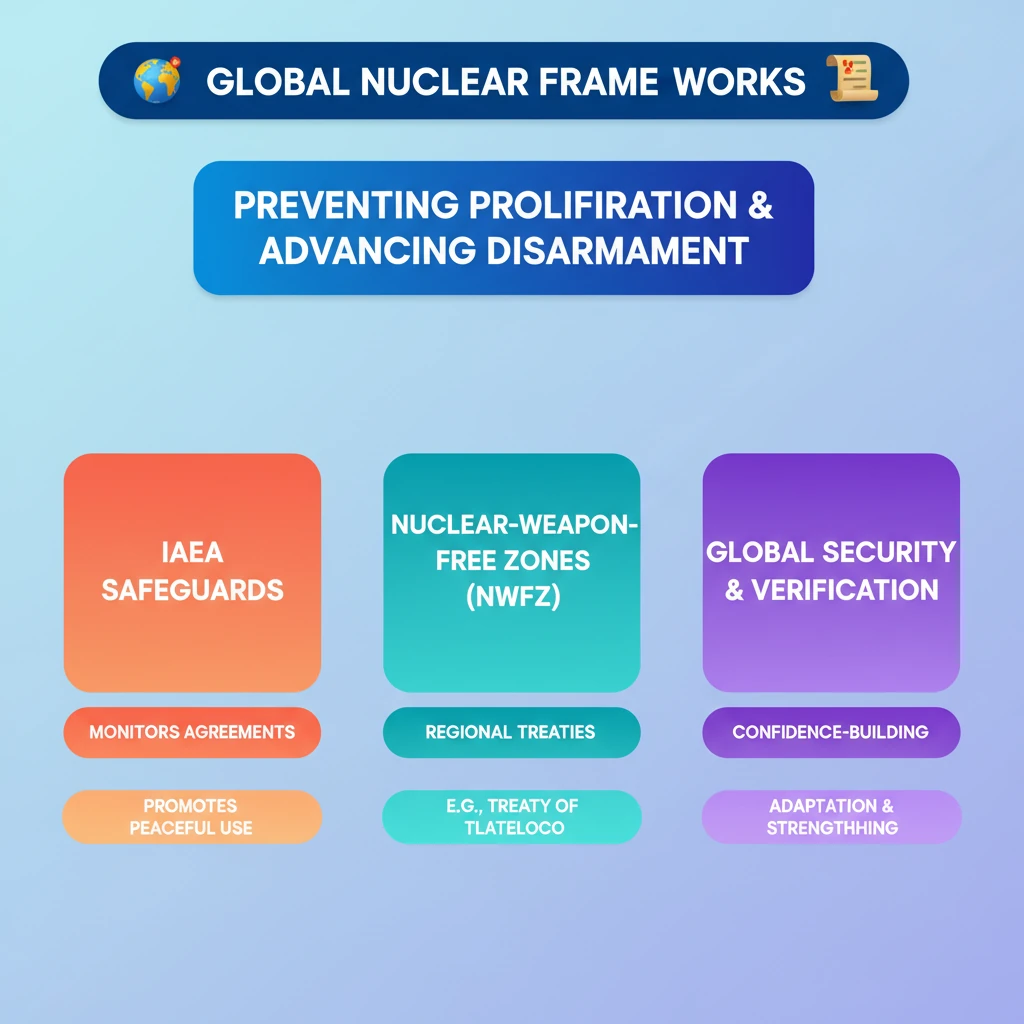
- •IAEA monitors nuclear agreements and promotes peaceful nuclear energy use.
- •NWFZs are regional treaties prohibiting nuclear weapons, like the Treaty of Tlatelolco.
- •These frameworks aim to prevent nuclear proliferation and advance disarmament.
- •They are crucial for global security, verification, and confidence-building.
- •Ongoing challenges necessitate continuous strengthening and adaptation of these frameworks.
🧠 Memory Techniques
98% Verified Content
📚 Reference Sources
•United Nations Office for Disarmament Affairs (UNODA) Website
•Treaty of Tlatelolco Text
•Treaty of Pelindaba Text
•Academic literature on nuclear non-proliferation and disarmament