India-Sri Lanka Petroleum Pipeline Project: Energy Security & Cooperation - International Relations | UPSC Learning
Topics
0 topics • 0 completed
🔍
No topics match your search
India-Sri Lanka Petroleum Pipeline Project: Energy Security & Cooperation
Medium⏱️ 7 min read
international relations
📖 Introduction
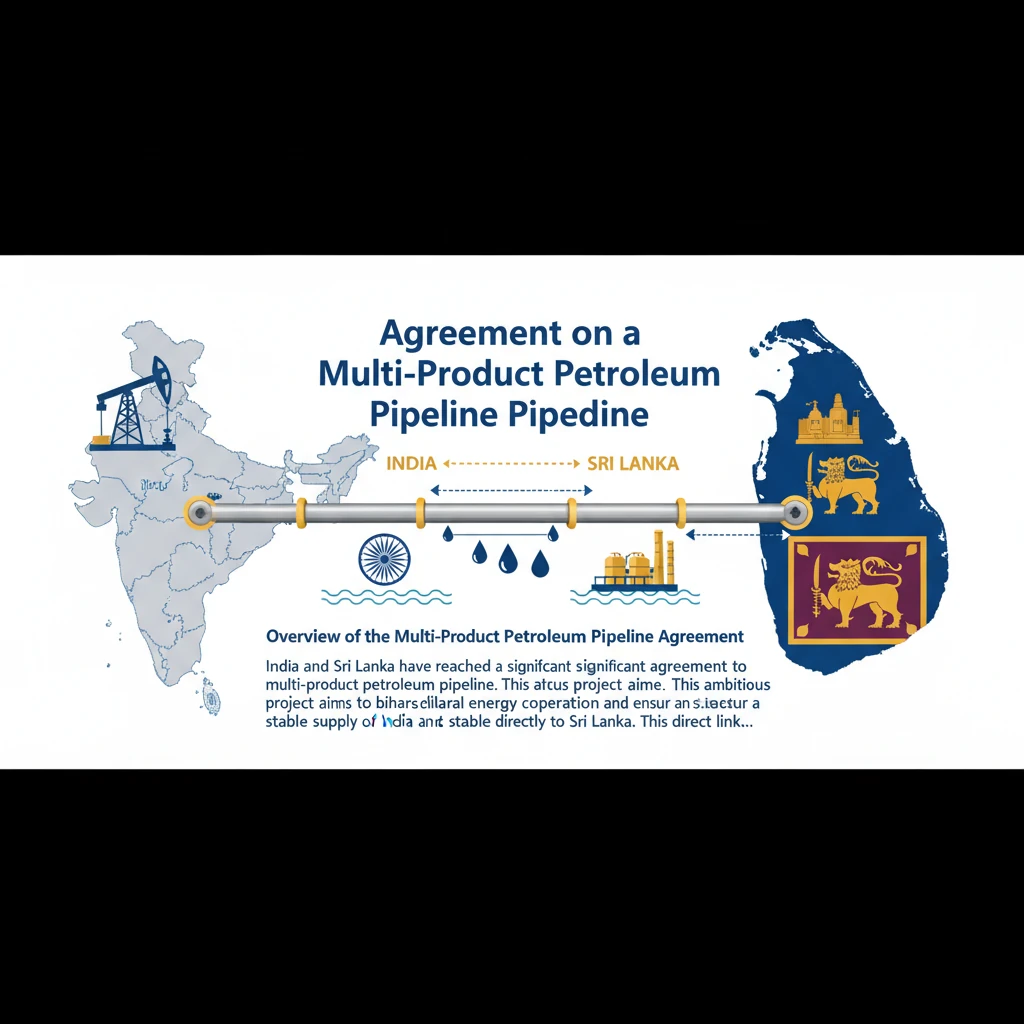
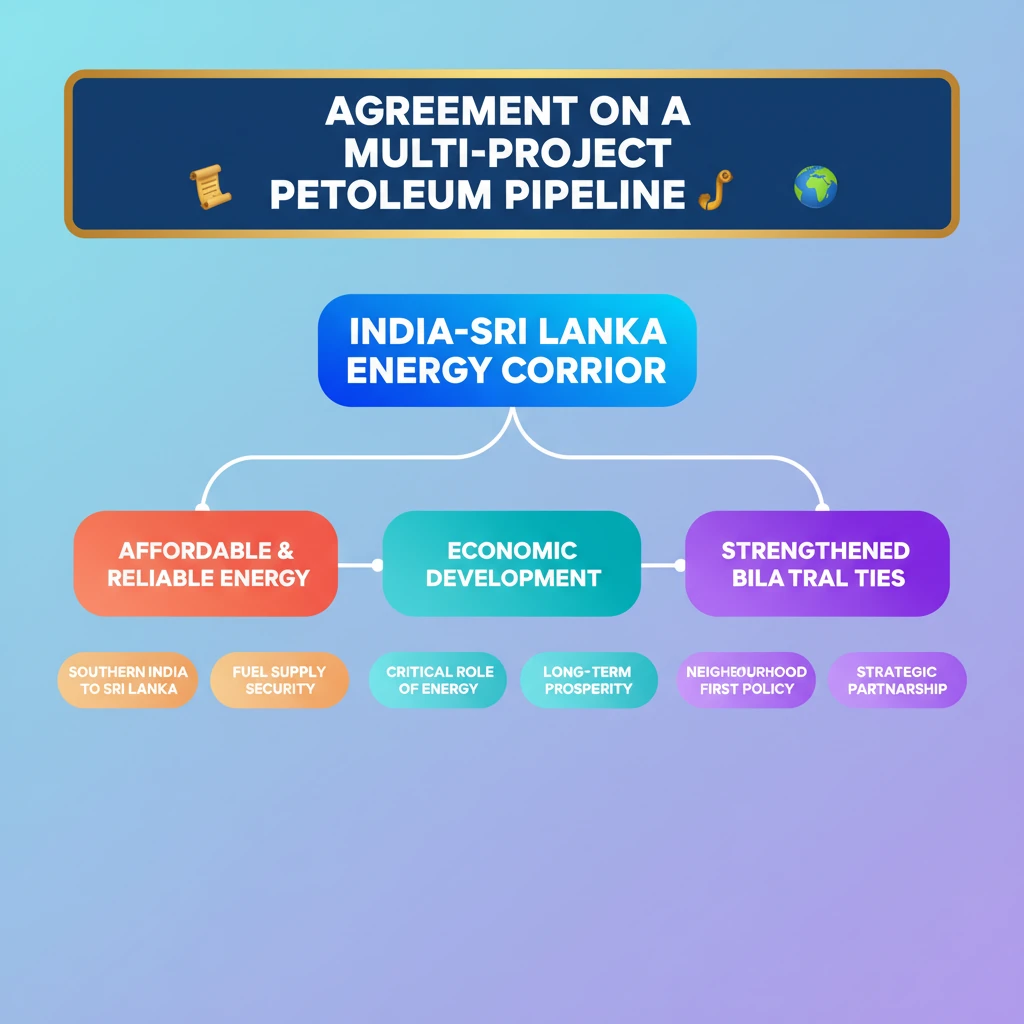
<h4>Overview of the Multi-Product Petroleum Pipeline Agreement</h4><p><strong>India</strong> and <strong>Sri Lanka</strong> have reached a significant agreement to establish a <strong>multi-product petroleum pipeline</strong>. This ambitious project aims to enhance bilateral energy cooperation and ensure a stable supply of vital resources.</p><p>The proposed pipeline will originate from the <strong>southern part of India</strong> and extend directly to <strong>Sri Lanka</strong>. This direct link is designed to streamline the transportation of various petroleum products between the two nations.</p><div class='info-box'><p><strong>Key Details of the Agreement:</strong></p><ul><li><strong>Parties Involved:</strong> India and Sri Lanka</li><li><strong>Project Type:</strong> Multi-product petroleum pipeline</li><li><strong>Route:</strong> Southern India to Sri Lanka</li></ul></div><h4>Objectives of the Pipeline Project</h4><p>The primary goal of establishing this pipeline is to provide an <strong>affordable and reliable supply of energy resources</strong> to <strong>Sri Lanka</strong>. This addresses a critical need for stable energy access, which is fundamental for national development.</p><p>Ensuring energy security for Sri Lanka is a key driver. A dedicated pipeline reduces dependence on more volatile and costly methods of energy import, such as sea-based tankers.</p><div class='key-point-box'><p><strong>Core Objective:</strong> To guarantee an <strong>affordable</strong> and <strong>reliable energy supply</strong> for Sri Lanka, fostering its economic stability and growth.</p></div><h4>Strategic Rationale and Economic Importance</h4><p>The agreement underscores the mutual recognition of <strong>energy's critical role</strong> in driving <strong>economic development and progress</strong>. Both countries acknowledge that robust energy infrastructure is a prerequisite for sustained growth.</p><p>For <strong>Sri Lanka</strong>, this pipeline represents a significant step towards bolstering its <strong>energy independence</strong> and reducing logistical challenges associated with energy imports. It provides a secure channel for essential fuel supplies.</p><div class='exam-tip-box'><p><strong>UPSC Insight:</strong> This agreement exemplifies <strong>India's Neighbourhood First Policy</strong> and its commitment to regional stability and development. It's relevant for GS-II (International Relations) and GS-III (Energy Security, Infrastructure).</p></div>
💡 Key Takeaways
- •India and Sri Lanka agreed to establish a multi-product petroleum pipeline.
- •The pipeline will run from Southern India to Sri Lanka.
- •Its main objective is to ensure affordable and reliable energy supply for Sri Lanka.
- •The project is driven by the critical role of energy in economic development.
- •It exemplifies India's Neighbourhood First Policy and strengthens bilateral ties.
🧠 Memory Techniques
95% Verified Content
📚 Reference Sources
•Ministry of External Affairs (MEA), Government of India press releases (general context for India-Sri Lanka relations and Neighbourhood First Policy)
•News reports from reputable Indian and Sri Lankan media outlets (for pipeline agreement details and IBFPL)