What is the Santhal Hul of 1855? - History | UPSC Learning
Topics
0 topics • 0 completed
🔍
No topics match your search
What is the Santhal Hul of 1855?
Easy⏱️ 7 min read
history
📖 Introduction
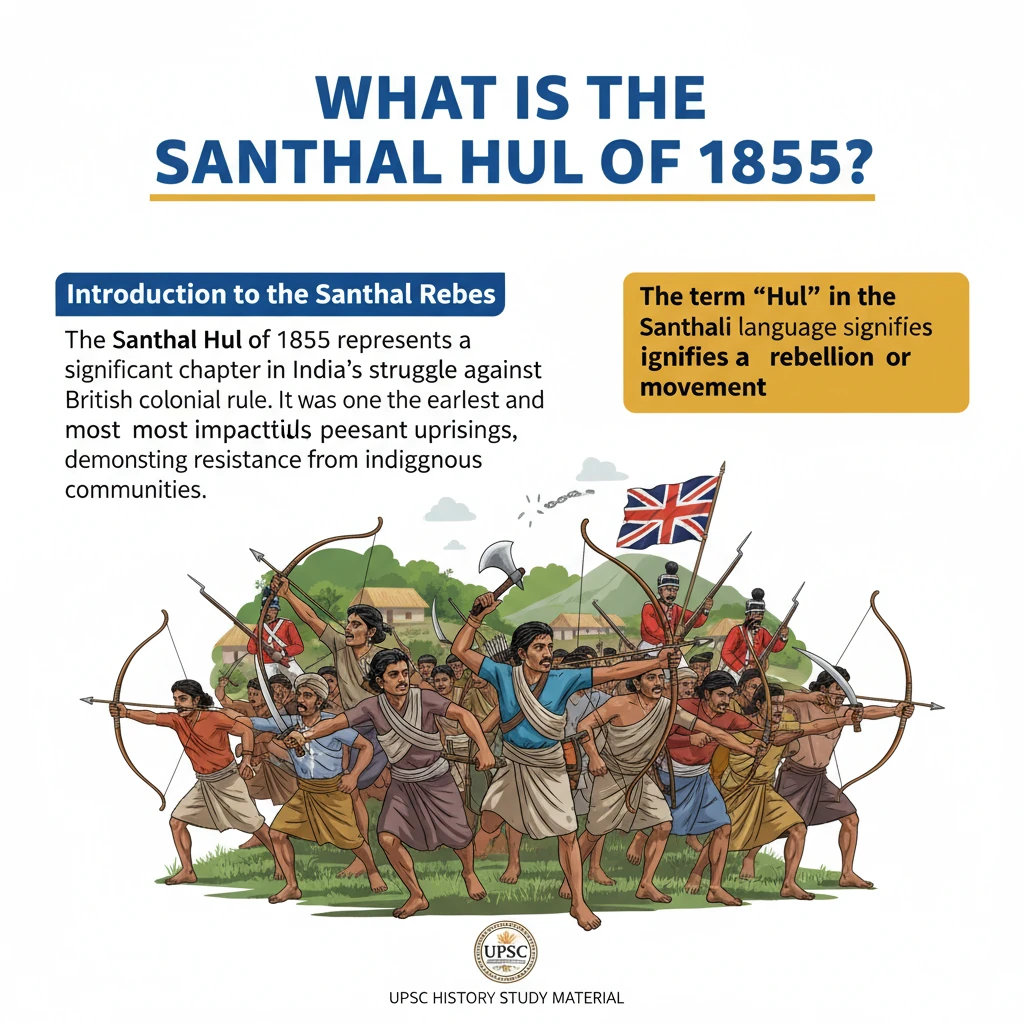
<h4>Introduction to the Santhal Hul</h4><p>The <strong>Santhal Hul of 1855</strong> represents a significant chapter in India's struggle against <strong>British colonial rule</strong>. It was one of the earliest and most impactful <strong>peasant uprisings</strong>, demonstrating fierce resistance from indigenous communities.</p><div class='key-point-box'><p>The term "<strong>Hul</strong>" in the Santhali language signifies a <strong>rebellion</strong> or <strong>movement</strong>, reflecting the intense nature of this revolt.</p></div><h4>Key Leaders of the Revolt</h4><p>The uprising was spearheaded by four charismatic brothers: <strong>Sidho Murmu</strong>, <strong>Kanho Murmu</strong>, <strong>Chand Murmu</strong>, and <strong>Bhairav Murmu</strong>. Their leadership galvanized thousands of Santhals against oppressive forces.</p><p>Crucially, their sisters, <strong>Phulo Murmu</strong> and <strong>Jhano Murmu</strong>, also played pivotal roles, inspiring and mobilizing the Santhal community, highlighting the collective nature of the resistance.</p><h4>Commencement of the Uprising</h4><p>The revolt officially commenced on <strong>June 30, 1855</strong>. This date marks the formal declaration of rebellion, escalating the simmering discontent into a full-scale armed struggle.</p><div class='info-box'><p><strong>Date Initiated:</strong> <strong>June 30, 1855</strong><br><strong>Location:</strong> Primarily the <strong>Damin-i-Koh</strong> region (present-day Jharkhand and West Bengal)<br><strong>Nature:</strong> <strong>Peasant and tribal uprising</strong> against exploitation.</p></div>
💡 Key Takeaways
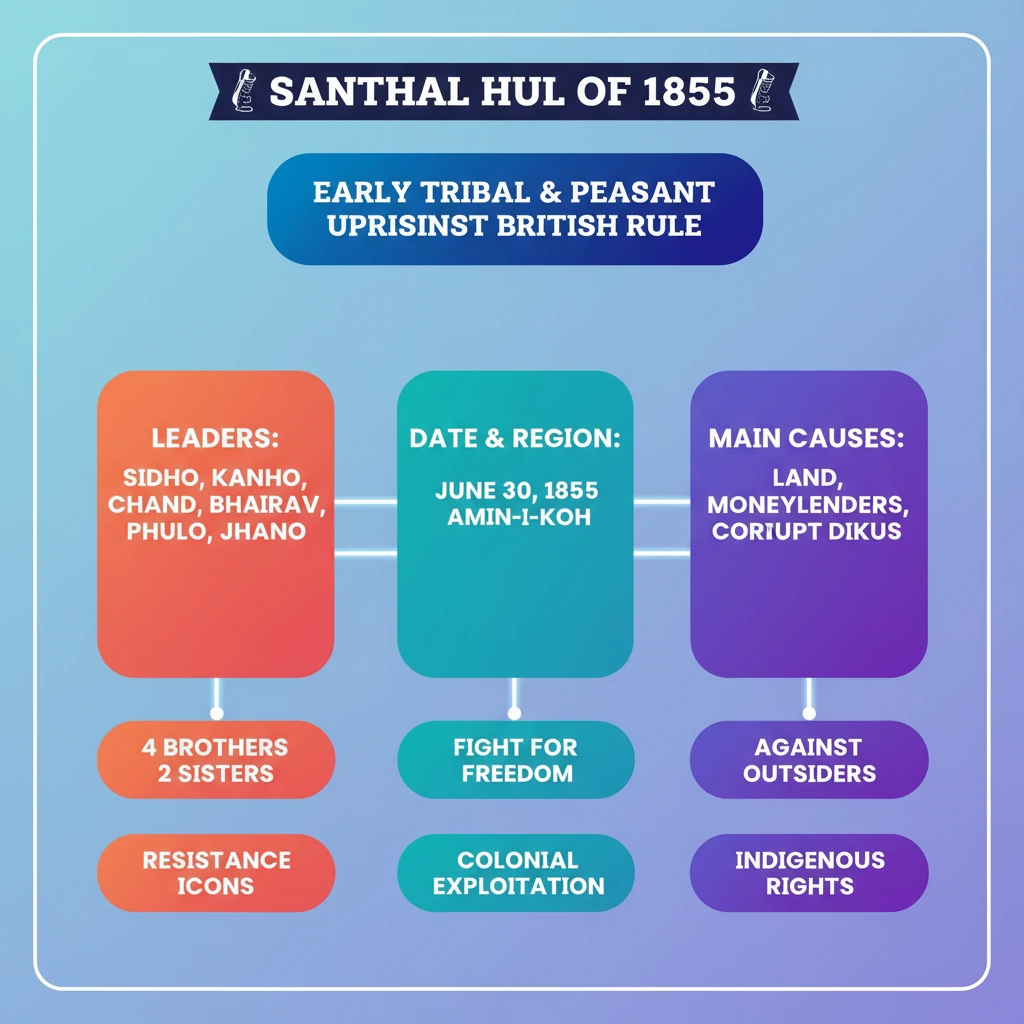
- •The Santhal Hul of 1855 was an early peasant and tribal uprising against British colonial exploitation.
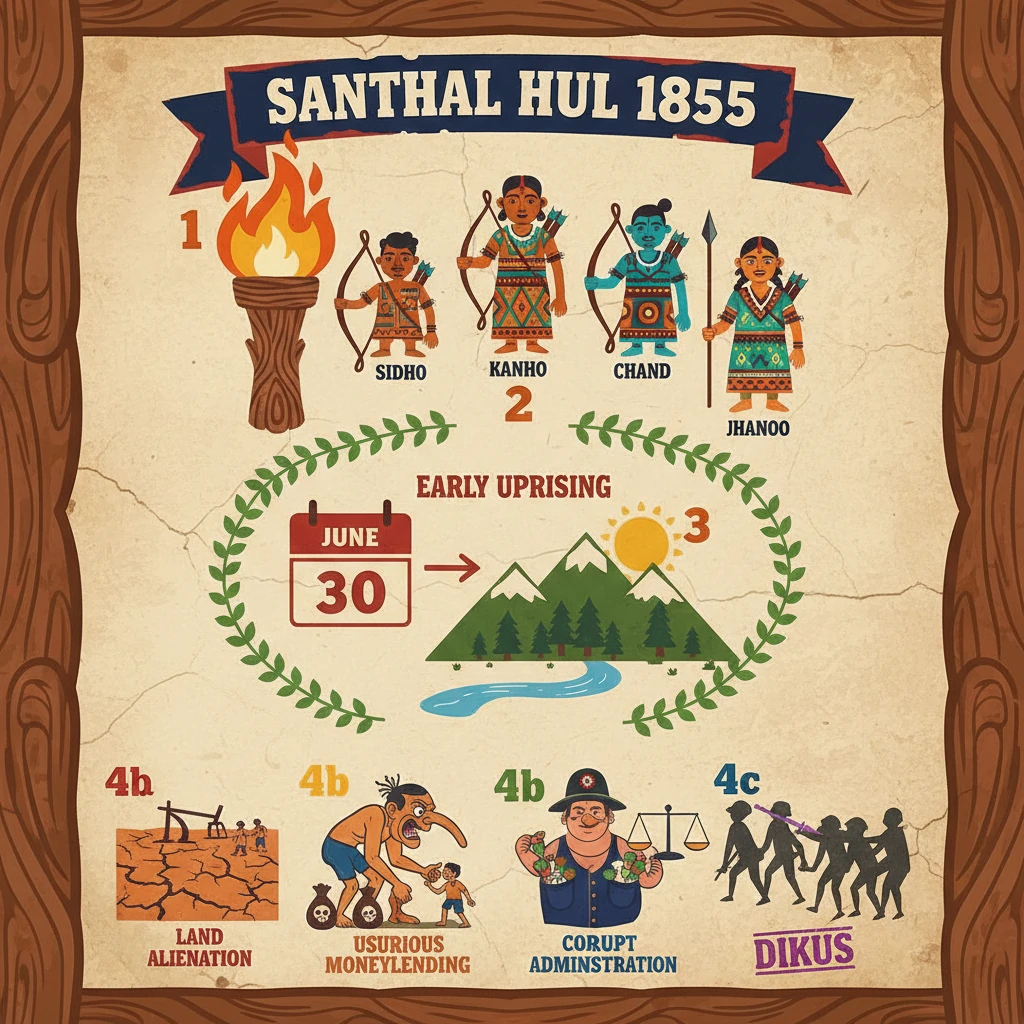
- •It was led by four brothers: Sidho, Kanho, Chand, Bhairav Murmu, and sisters Phulo and Jhano.
- •The revolt began on June 30, 1855, primarily in the Damin-i-Koh region.
- •Key causes included land alienation, usurious moneylending, and corrupt administration by 'Dikus' (outsiders).
- •It highlights the deep-seated resistance of indigenous communities against colonial oppression.
🧠 Memory Techniques
95% Verified Content