Key Sessions of the Indian National Congress - History | UPSC Learning
Topics
0 topics • 0 completed
🔍
No topics match your search
Key Sessions of the Indian National Congress
Medium⏱️ 10 min read
history
📖 Introduction
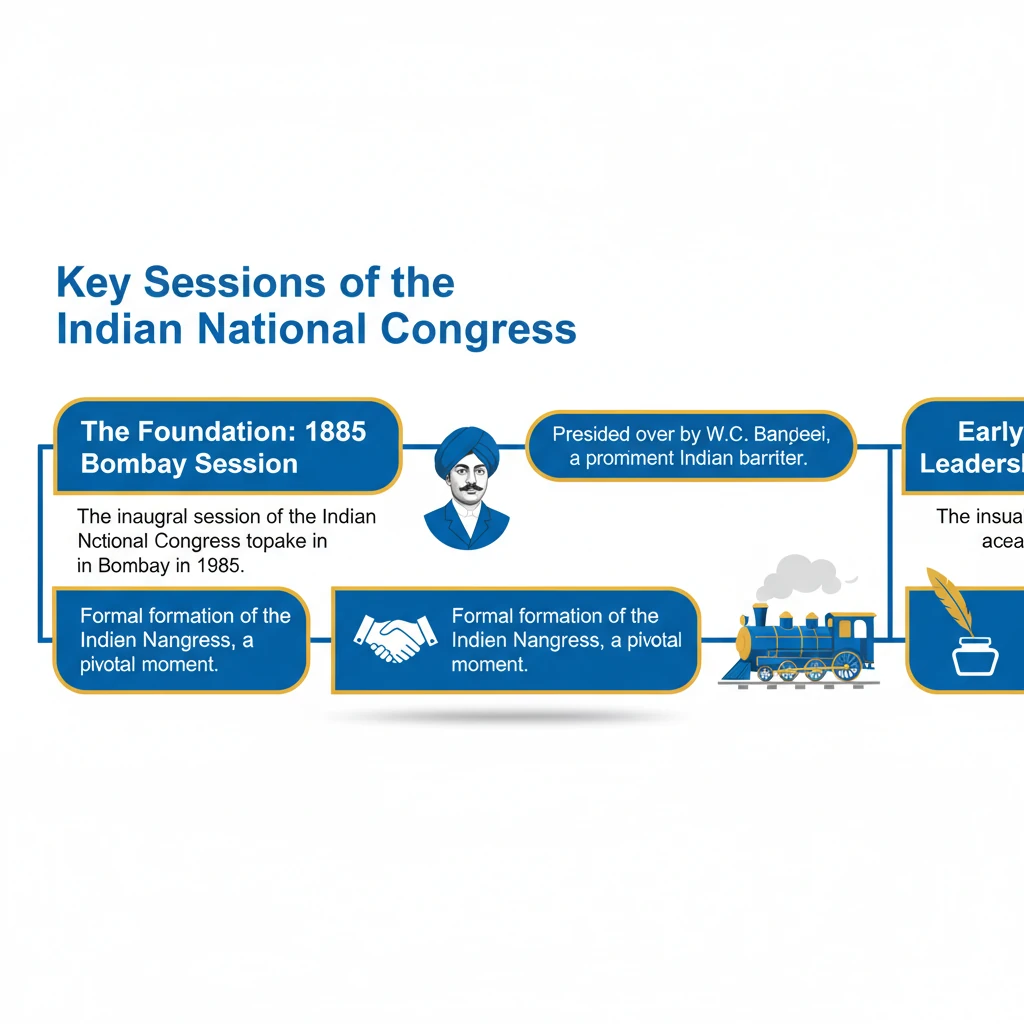
<h4>The Foundation: 1885 Bombay Session</h4><p>The inaugural session of the <strong>Indian National Congress</strong> took place in <strong>Bombay</strong> in <strong>1885</strong>.</p><div class='info-box'><p>It was presided over by <strong>W.C. Banerjee</strong>, a prominent Indian barrister.</p></div><div class='key-point-box'><p>This session marked the formal <strong>formation of the Indian National Congress</strong>, a pivotal moment in India's freedom struggle.</p></div><h4>Early Leadership: 1886 Calcutta Session</h4><p>The second session was held in <strong>Calcutta</strong> in <strong>1886</strong>.</p><div class='info-box'><p>It was presided over by the respected nationalist leader, <strong>Dadabhai Naoroji</strong>, often known as the 'Grand Old Man of India'.</p></div><h4>Breaking Barriers: 1887 Madras Session</h4><p>The third annual session convened in <strong>Madras</strong> in <strong>1887</strong>.</p><div class='info-box'><p><strong>Syed Badruddin Tyabji</strong> made history by becoming the <strong>First Muslim President</strong> of the Indian National Congress during this session.</p></div><h4>International Representation: 1888 Allahabad Session</h4><p>The fourth session was held in <strong>Allahabad</strong> in <strong>1888</strong>.</p><div class='info-box'><p>This session saw <strong>George Yule</strong> elected as the president, making him the <strong>First English President</strong> of the Congress.</p></div><h4>Cultural Significance: 1896 Calcutta Session</h4><p>The <strong>Calcutta</strong> session of <strong>1896</strong> holds cultural importance.</p><div class='key-point-box'><p>During this session, the <strong>National Song 'Vande Mataram'</strong> was sung for the first time by <strong>Rabindranath Tagore</strong>.</p></div><h4>A Future Leader Emerges: 1901 Calcutta Session</h4><p>The <strong>Calcutta</strong> session of <strong>1901</strong> marked a significant moment for the future of Indian nationalism.</p><div class='info-box'><p>It was here that <strong>Mahatma Gandhi</strong> made his <strong>first appearance</strong> on the Congress platform, after his work in South Africa.</p></div><h4>The Rise of Swadeshi: 1905 Benaras Session</h4><p>The <strong>Benaras</strong> session in <strong>1905</strong> was crucial in the anti-partition movement.</p><div class='key-point-box'><p>It saw the <strong>formal proclamation of the Swadeshi Movement</strong>, advocating for self-reliance and boycott of foreign goods.</p></div><div class='info-box'><p>This session was held under the presidency of the moderate leader, <strong>Gopal Krishna Gokhale</strong>.</p></div><h4>Defining National Goals: 1906 Calcutta Session</h4><p>The <strong>Calcutta</strong> session of <strong>1906</strong> was presided over by <strong>Dadabhai Naoroji</strong> again.</p><div class='key-point-box'><p>It passed significant resolutions on <strong>Swaraj</strong> (self-rule), <strong>Boycott</strong>, <strong>Swadeshi</strong>, and <strong>National Education</strong>, outlining the Congress's core objectives.</p></div><h4>The Great Divide: 1907 Surat Session</h4><p>The <strong>Surat</strong> session in <strong>1907</strong> is infamous for a major internal conflict.</p><div class='info-box'><p>Presided over by <strong>Rash Bihari Ghosh</strong>, this session witnessed the unfortunate <strong>split between the Moderates and Extremists</strong> within the Congress.</p></div><div class='exam-tip-box'><p>This split significantly impacted the pace and strategy of the national movement for several years.</p></div><h4>Reconciliation and Alliance: 1916 Lucknow Session</h4><p>The <strong>Lucknow</strong> session of <strong>1916</strong>, presided by <strong>A.C. Majumdar</strong>, was a landmark event.</p><div class='key-point-box'><p>It achieved <strong>unity between the Moderates and Extremists</strong>, who had split at Surat.</p></div><div class='info-box'><p>Crucially, the <strong>Lucknow Pact</strong> was signed during this session, forging an alliance between the <strong>Indian National Congress</strong> and the <strong>Muslim League</strong>.</p></div><h4>Pioneering Leadership: 1917 Calcutta Session</h4><p>The <strong>Calcutta</strong> session of <strong>1917</strong> broke new ground in terms of representation.</p><div class='key-point-box'><p><strong>Annie Besant</strong> became the <strong>First Woman President of Congress</strong>, a significant step towards gender inclusivity in national leadership.</p></div><h4>Post-War Developments: 1919 Amritsar Session</h4><p>The <strong>Amritsar</strong> session in <strong>1919</strong>, presided by <strong>Motilal Nehru</strong>, addressed post-World War I issues.</p><div class='info-box'><p>The Congress expressed its <strong>support for the Khilafat Movement</strong>, aligning with Muslim sentiments regarding the Ottoman Caliphate.</p></div><div class='exam-tip-box'><p>This session demonstrated a strategic alliance between Hindu and Muslim political forces against British rule.</p></div>
💡 Key Takeaways
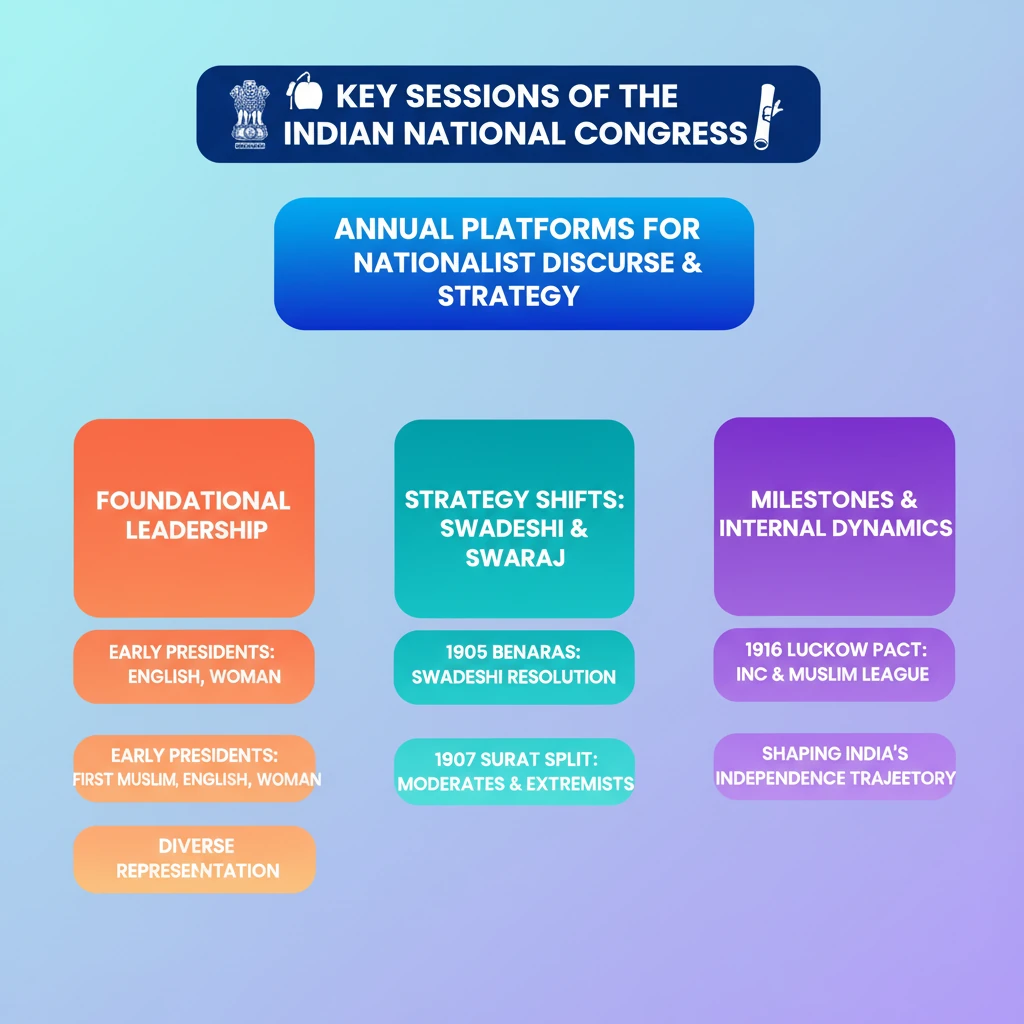
- •INC sessions were annual platforms for nationalist discourse and strategy formulation.
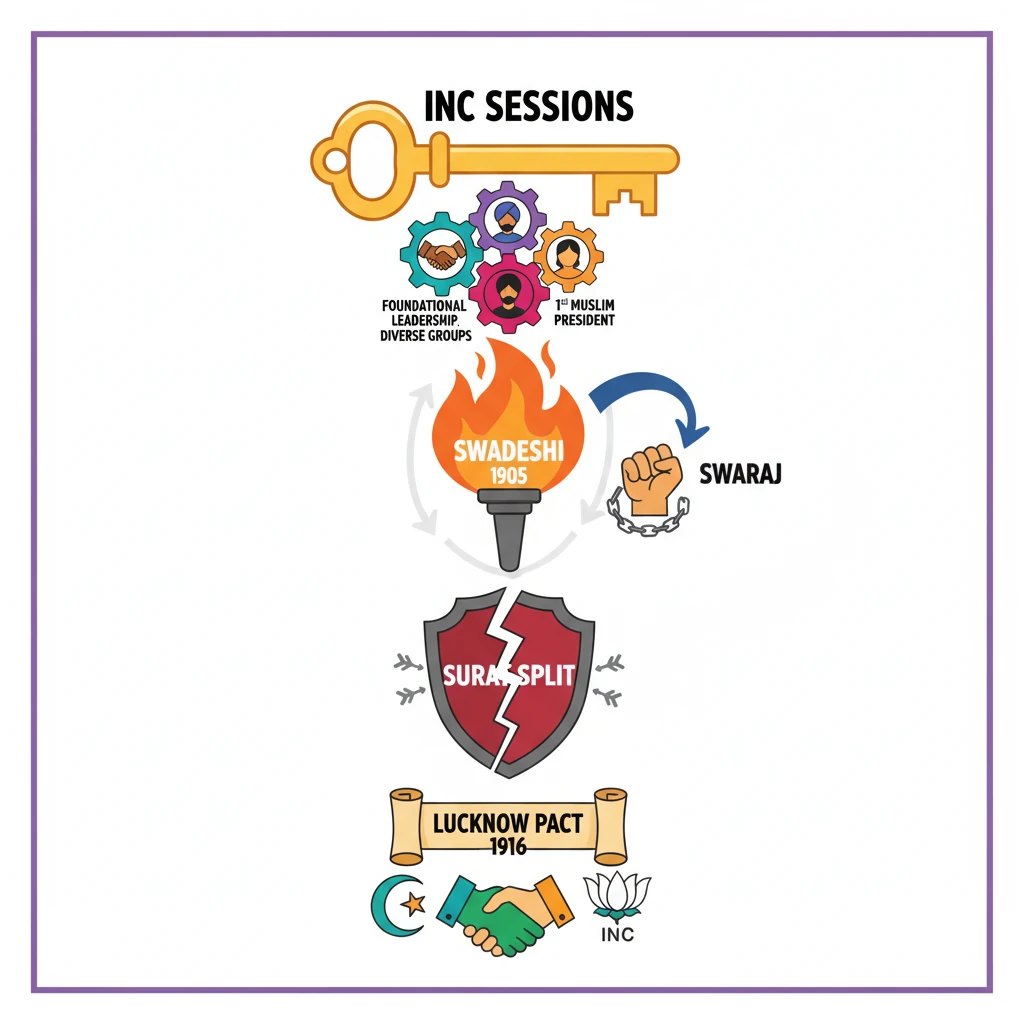
- •Early sessions established foundational leadership and represented diverse groups (first Muslim, first English, first woman presidents).
- •Key sessions marked significant shifts in strategy (Swadeshi, Swaraj) and internal dynamics (Surat Split).
- •Important milestones include the formal proclamation of Swadeshi (1905) and the Lucknow Pact (1916).
- •These sessions collectively shaped the trajectory and leadership of India's independence movement.
🧠 Memory Techniques
95% Verified Content