Simhachalam Temple - History | UPSC Learning
Topics
0 topics • 0 completed
🔍
No topics match your search
Simhachalam Temple
Medium⏱️ 4 min read
history
📖 Introduction
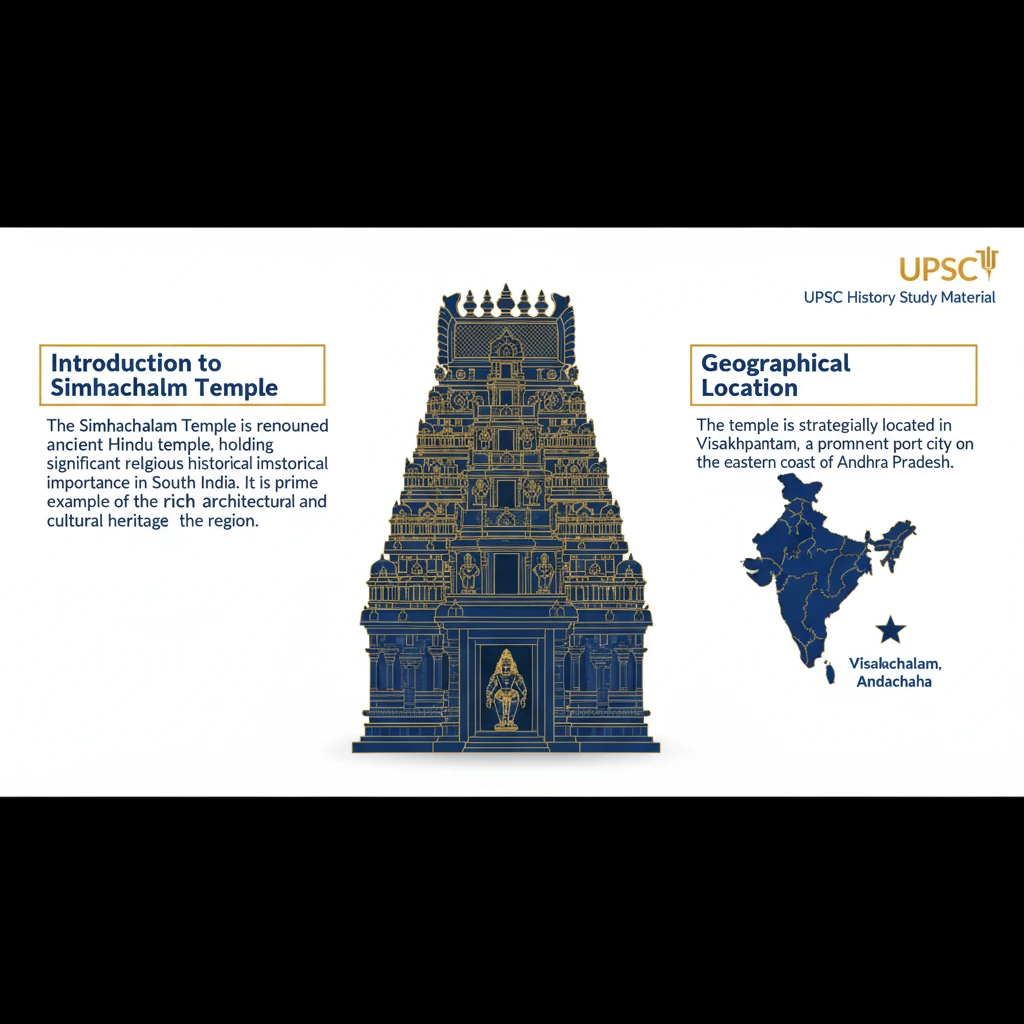
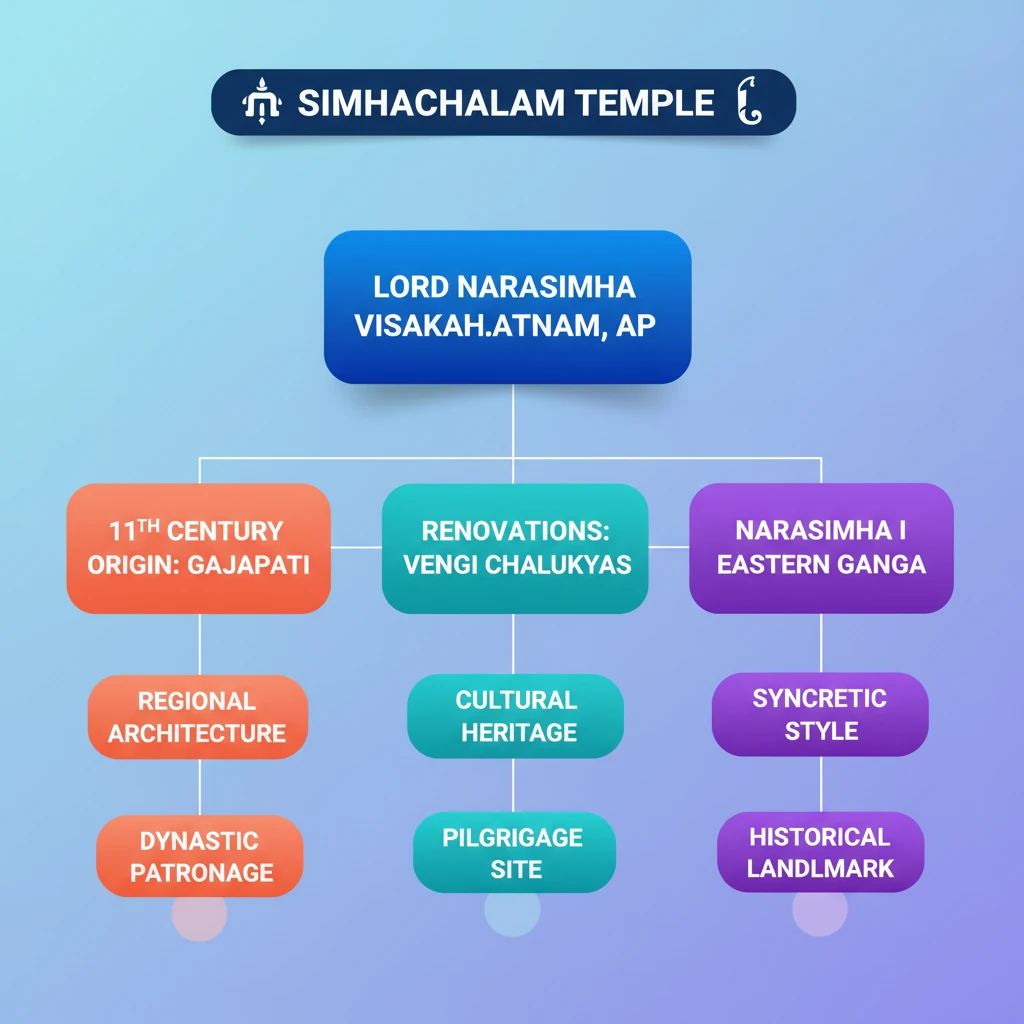
<h4>Introduction to Simhachalam Temple</h4><p>The <strong>Simhachalam Temple</strong> is a renowned ancient Hindu temple, holding significant religious and historical importance in <strong>South India</strong>.</p><p>It is a prime example of the rich architectural and cultural heritage of the region.</p><h4>Geographical Location</h4><p>The temple is strategically located in <strong>Visakhapatnam</strong>, a prominent port city on the eastern coast of <strong>Andhra Pradesh</strong>.</p><p>Its coastal proximity has historically made it accessible to devotees and traders alike.</p><div class='info-box'><p>📍 <strong>Location:</strong> Visakhapatnam, Andhra Pradesh</p></div><h4>Presiding Deity</h4><p>The primary deity worshipped at <strong>Simhachalam Temple</strong> is <strong>Lord Narasimha</strong>, a powerful and revered incarnation of <strong>Lord Vishnu</strong>.</p><p><strong>Lord Narasimha</strong> is depicted in his half-man, half-lion form, symbolizing divine protection and the triumph of good over evil.</p><div class='info-box'><p><strong>Deity:</strong> Lord Narasimha (the fourth incarnation of Vishnu)</p></div><h4>Original Construction and Patronage</h4><p>The initial construction of the <strong>Simhachalam Temple</strong> dates back to the <strong>11th century AD</strong>.</p><p>It was originally built by the powerful <strong>Gajapati rulers of Odisha</strong>, who were significant patrons of art and architecture in their dominion.</p><div class='info-box'><p>📅 <strong>Original Construction:</strong> 11th century</p><p>👑 <strong>Original Builders:</strong> Gajapati rulers of Odisha</p></div><h4>Subsequent Renovations and Dynastic Contributions</h4><p>Over centuries, the temple underwent several crucial renovations and expansions, enhancing its grandeur and architectural integrity.</p><p>These efforts were undertaken by various influential dynasties, reflecting their devotion and political influence.</p><div class='key-point-box'><p>Significant renovations were carried out by the <strong>Vengi Chalukyas</strong> and later by <strong>Narasimha I</strong> of the <strong>Eastern Ganga dynasty</strong>.</p></div><div class='exam-tip-box'><p><strong>UPSC Insight:</strong> Understanding the contributions of different dynasties (<strong>Gajapati, Vengi Chalukyas, Eastern Ganga</strong>) to a single monument like <strong>Simhachalam</strong> highlights the syncretic nature of Indian temple architecture and patronage. This is crucial for <strong>Art & Culture (GS Paper I)</strong>.</p></div>
💡 Key Takeaways
- •Simhachalam Temple is in Visakhapatnam, Andhra Pradesh, dedicated to Lord Narasimha (Vishnu's incarnation).
- •Originally constructed in the 11th century by Gajapati rulers of Odisha.
- •Significantly renovated by Vengi Chalukyas and Narasimha I of the Eastern Ganga dynasty.
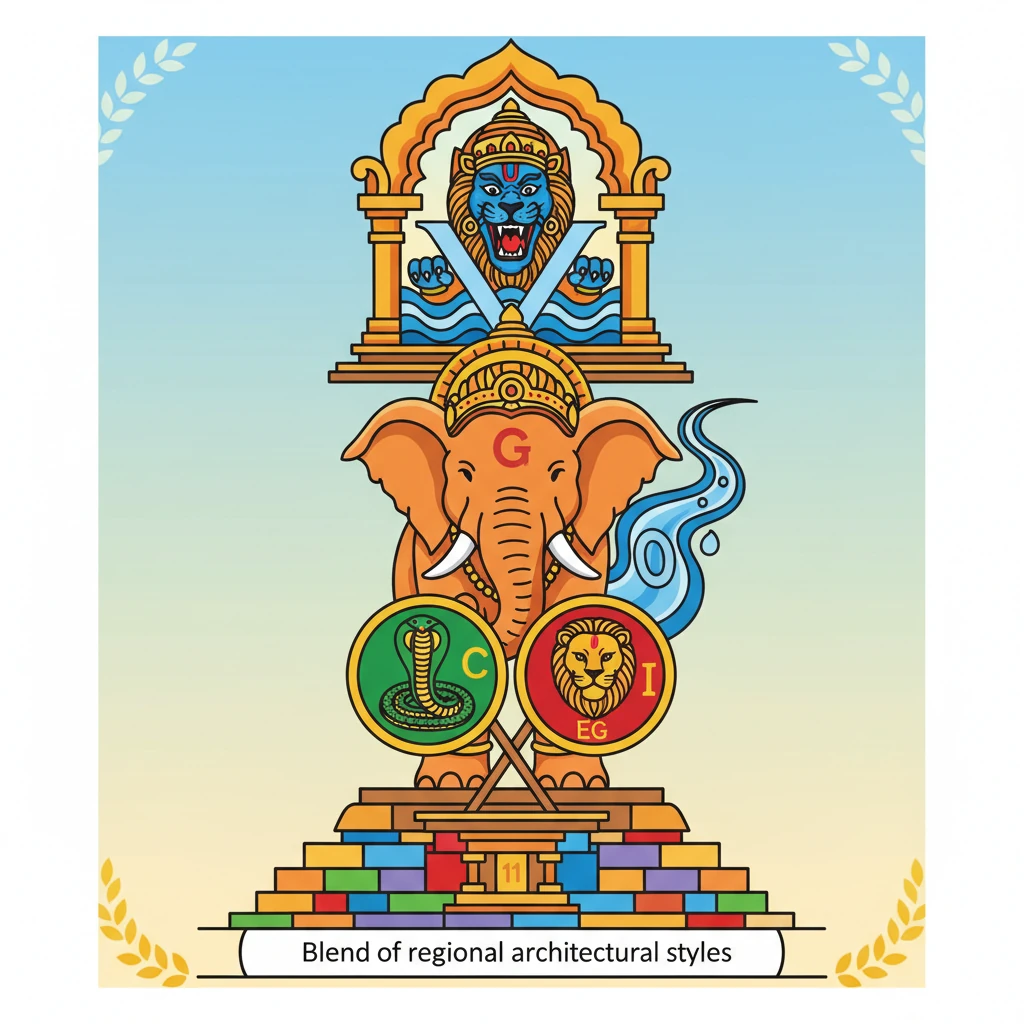
- •Showcases a blend of regional architectural styles and continuous dynastic patronage.
- •Remains a vital pilgrimage site and cultural heritage landmark today.
🧠 Memory Techniques
95% Verified Content
📚 Reference Sources
•NCERT History Textbooks (Class XI & XII)
•Cultural Heritage of India by A.L. Basham (general reference)
•Archaeological Survey of India (ASI) records (general knowledge)