Vittala Temple: Vijayanagara Architecture, Stone Chariot & Musical Pillars - History | UPSC Learning
Topics
0 topics • 0 completed
🔍
No topics match your search
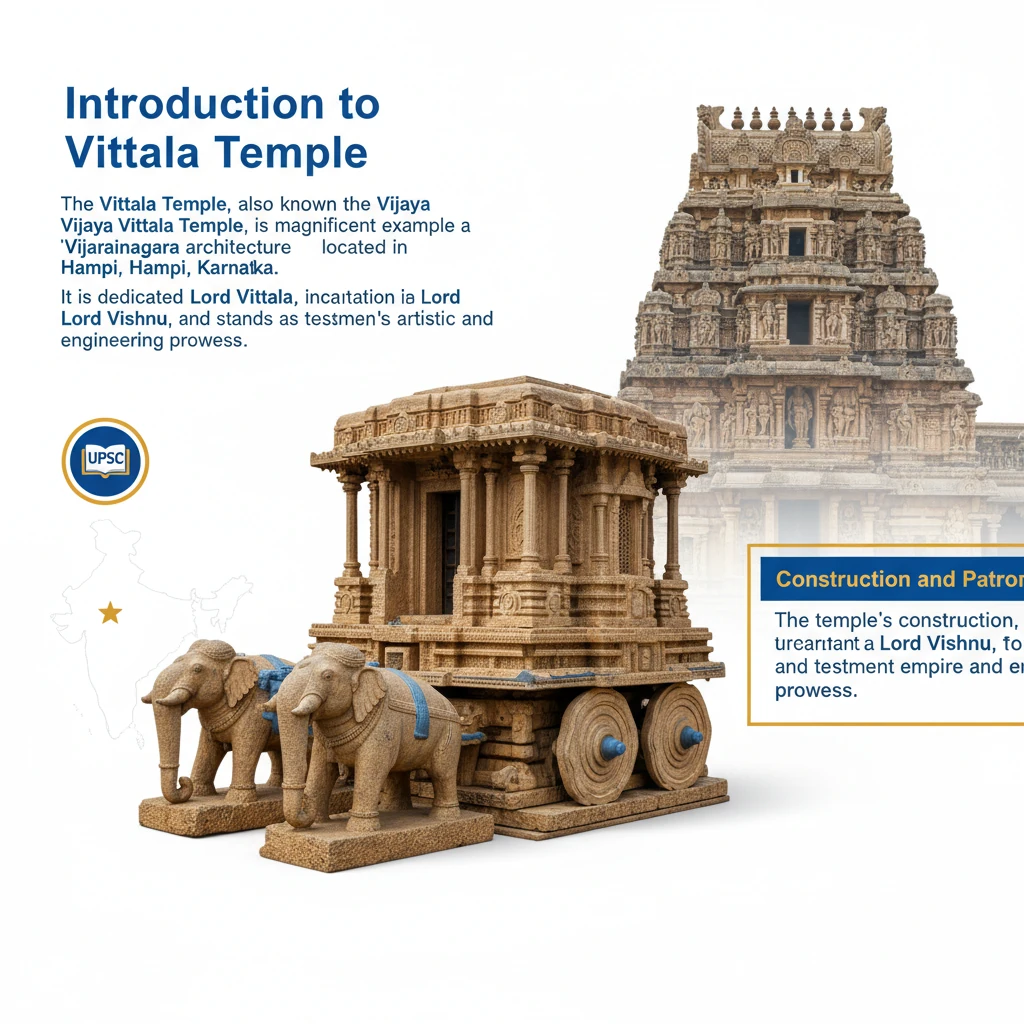
Vittala Temple: Vijayanagara Architecture, Stone Chariot & Musical Pillars
Medium⏱️ 4 min read
history
📖 Introduction
<h4>Introduction to Vittala Temple</h4><p>The <strong>Vittala Temple</strong>, also known as the <strong>Vijaya Vittala Temple</strong>, is a magnificent example of <strong>Vijayanagara architecture</strong> located in <strong>Hampi</strong>, Karnataka.</p><p>It is dedicated to <strong>Lord Vittala</strong>, an incarnation of <strong>Lord Vishnu</strong>, and stands as a testament to the empire's artistic and engineering prowess.</p><h4>Construction and Patronage</h4><p>The temple's construction began in the <strong>15th century</strong>, during the flourishing period of the <strong>Vijayanagara Empire</strong>.</p><div class='info-box'><p>Key Patron: The temple was primarily built during the reign of <strong>King Devaraya II</strong> (1422-1446 CE), one of the prominent rulers of the <strong>Sangama Dynasty</strong>.</p></div><h4>Salient Architectural Features</h4><p>The <strong>Vittala Temple complex</strong> is renowned for its exceptional and intricate architectural elements, showcasing advanced craftsmanship.</p><p>Among its most famous attractions are the iconic <strong>Stone Chariot</strong> and the unique <strong>Musical Pillars</strong>, which draw visitors globally.</p><div class='key-point-box'><p>Symbolic Representation: The <strong>Stone Chariot</strong> is a miniature replica of a temple car, carved entirely out of stone, and is a powerful symbol of <strong>Hampi's rich heritage</strong>.</p></div><p>This architectural marvel, the <strong>Stone Chariot</strong>, is prominently depicted on the reverse side of the <strong>Indian Rs 50 currency note</strong>, highlighting its national significance.</p><h4>Cultural and Historical Significance</h4><p>The temple served not only as a place of worship but also as a center for cultural activities, reflecting the vibrant life of the <strong>Vijayanagara capital</strong>.</p><div class='exam-tip-box'><p><strong>UPSC Insight:</strong> The <strong>Vittala Temple</strong> is a crucial topic for <strong>GS Paper I (Art and Culture)</strong>. Questions often focus on its architectural style, unique features like the <strong>Stone Chariot</strong> and <strong>Musical Pillars</strong>, and its connection to the <strong>Vijayanagara Empire</strong>. Its depiction on the <strong>Rs 50 note</strong> is a direct factual question possibility.</p></div>
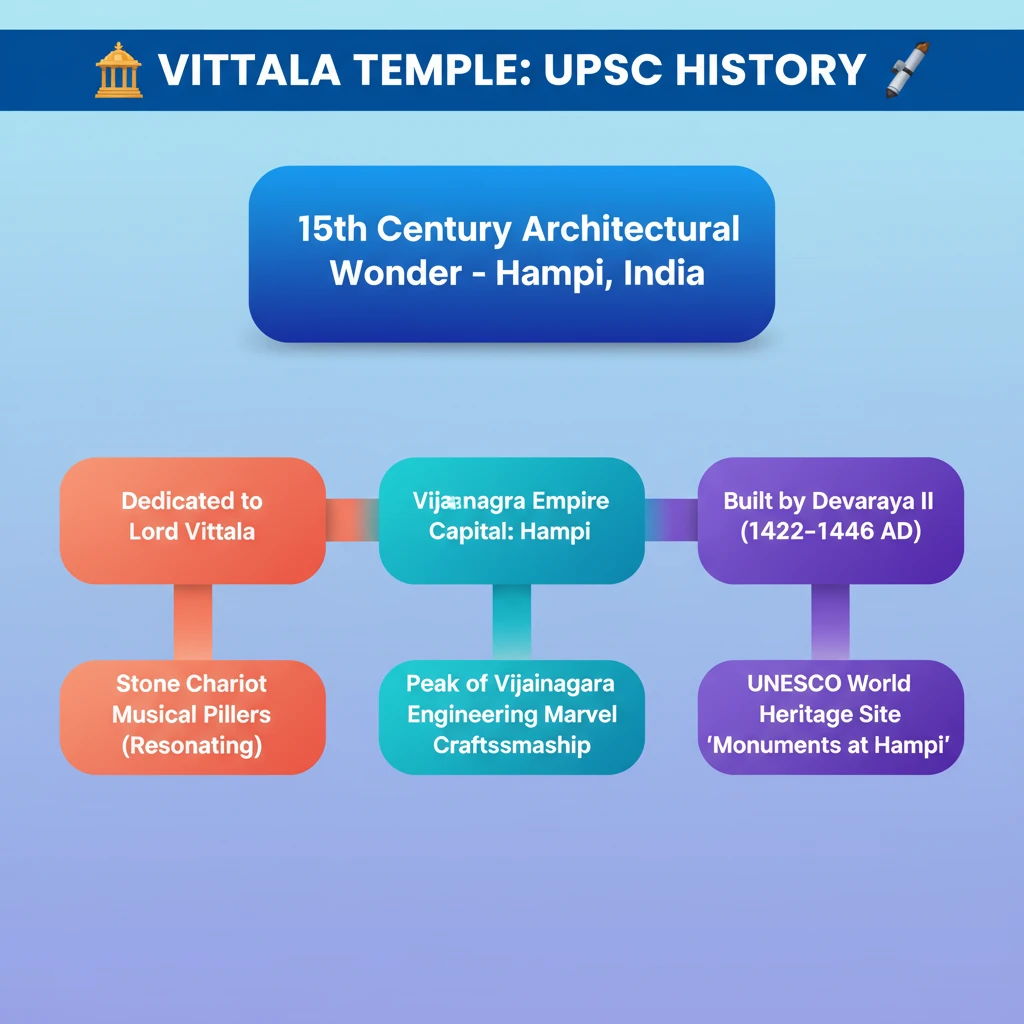
💡 Key Takeaways
- •Vittala Temple: Dedicated to Lord Vittala (Vishnu), built in 15th century by Devaraya II.
- •Located in Hampi, capital of the Vijayanagara Empire.
- •Famous for Stone Chariot (depicted on Rs 50 note) and Musical Pillars.
- •Represents peak of Vijayanagara architecture and engineering.
- •Part of UNESCO World Heritage Site 'Group of Monuments at Hampi'.
🧠 Memory Techniques
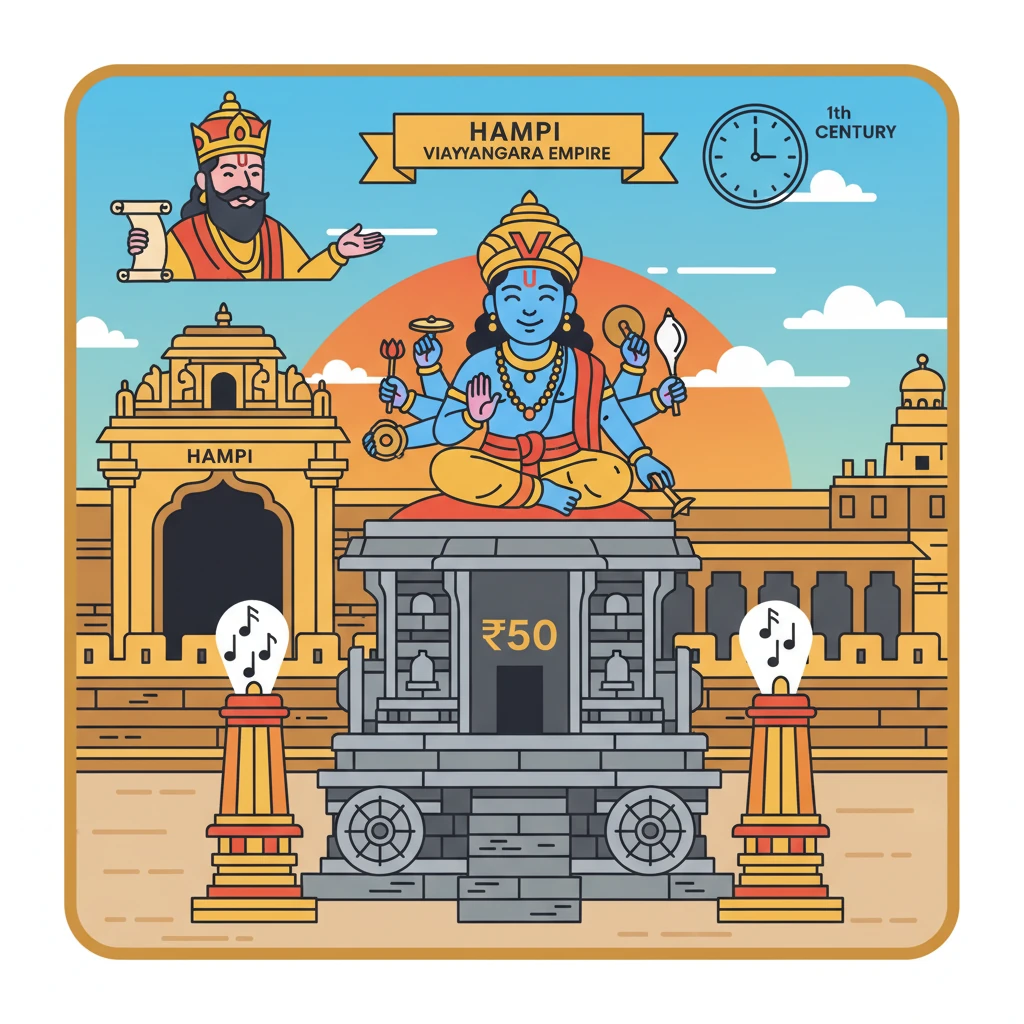
98% Verified Content
📚 Reference Sources
•NCERT Class 12: Themes in Indian History Part II (Chapter 7: An Imperial Capital: Vijayanagara)
•Archaeological Survey of India (ASI) official publications on Hampi
•Reserve Bank of India (RBI) information on currency notes