Social Reforms: English Education Act & Suppression of Thuggee - History | UPSC Learning
Topics
0 topics • 0 completed
🔍
No topics match your search
Social Reforms: English Education Act & Suppression of Thuggee
Medium⏱️ 7 min read
history
📖 Introduction
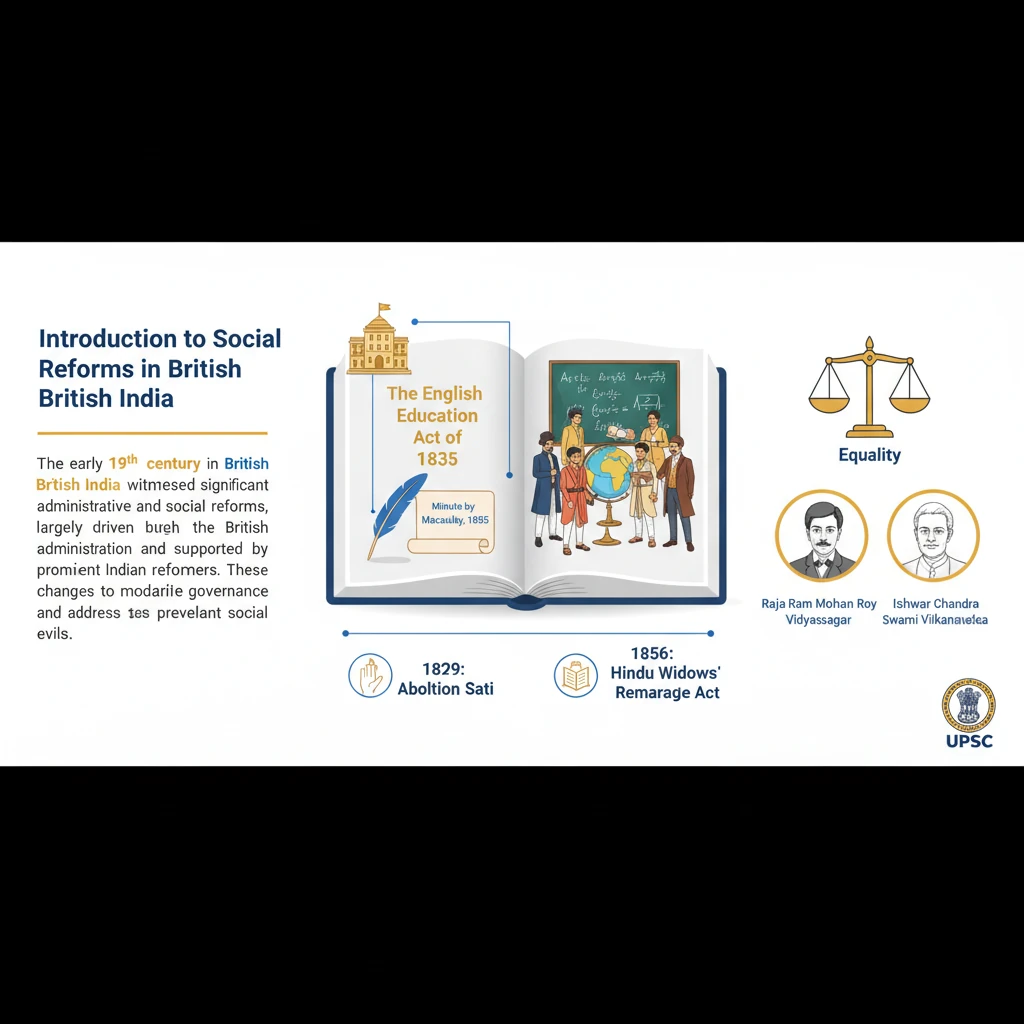
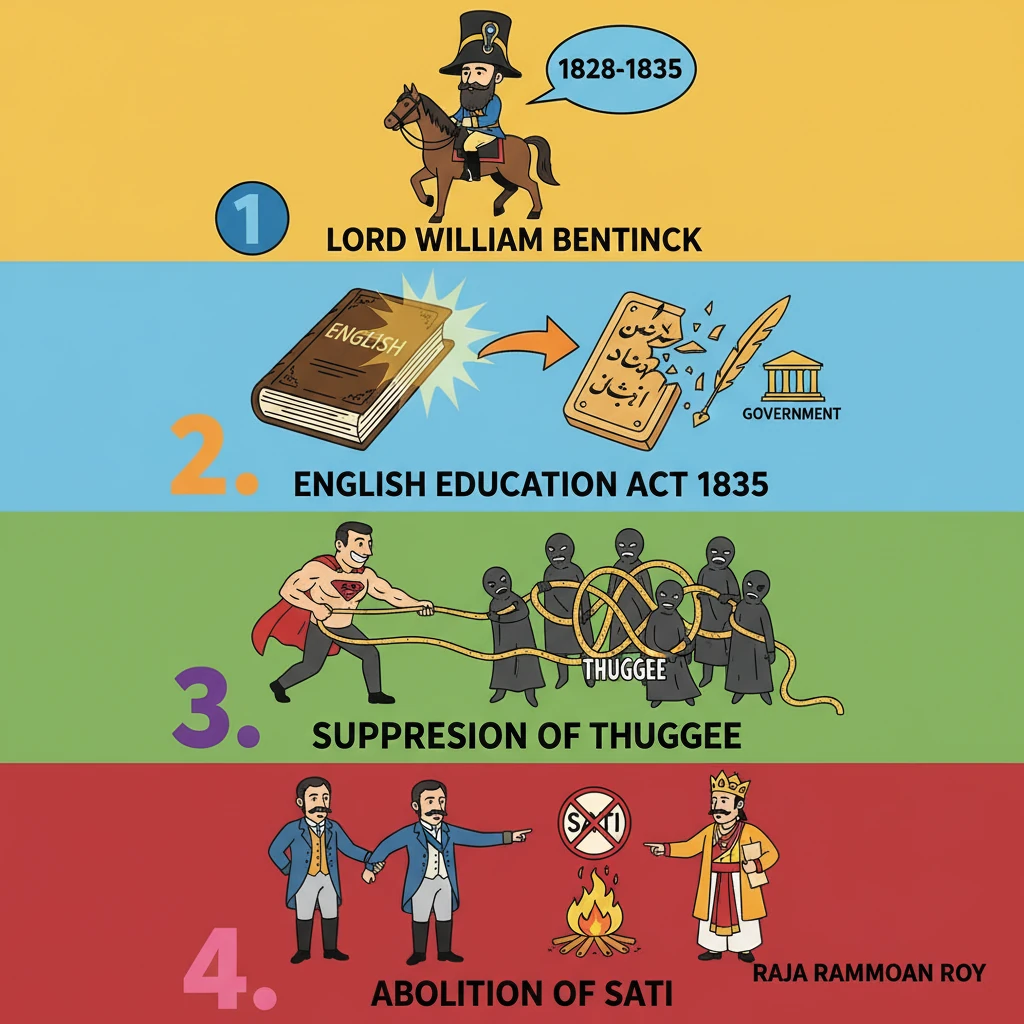
<h4>Introduction to Social Reforms in British India</h4><p>The early <strong>19th century</strong> in <strong>British India</strong> witnessed significant administrative and social reforms, largely driven by the British administration and supported by prominent Indian reformers. These changes aimed to modernize governance and address prevalent social evils.</p><h4>The English Education Act of 1835</h4><p>A pivotal change in administrative policy occurred with the enactment of the <strong>English Education Act</strong> in <strong>1835</strong>. This act marked a significant shift in the official language of the <strong>Government of India</strong>.</p><div class='info-box'><p><strong>Key Change:</strong> The <strong>Persian language</strong>, which had been the official language for administrative and judicial purposes, was formally replaced by <strong>English</strong>.</p></div><p>This reform had far-reaching implications, influencing the education system and the future trajectory of Indian administration and intellectual discourse.</p><h4>Suppression of Thuggee by Lord William Bentinck</h4><p>One of the most notable social reforms undertaken during this period was the suppression of <strong>Thuggee</strong>. This was a significant step towards ensuring public safety and order.</p><div class='key-point-box'><p><strong>What was Thuggee?</strong> It referred to a highly organized <strong>criminal organisation</strong> in India. Its members were known as <strong>Thugs</strong>, who engaged in systematic <strong>robbery</strong> and ritualistic <strong>murder</strong>, often by strangulation, particularly targeting travellers.</p></div><p><strong>Lord William Bentinck</strong>, then the <strong>Governor-General of India</strong>, took decisive action against this practice. His efforts were instrumental in dismantling the network of Thugs.</p><div class='info-box'><p><strong>Outcome:</strong> By the end of the <strong>1830s</strong>, Bentinck's campaigns had successfully <strong>suppressed</strong> the practice of Thuggee, significantly alleviating the fears and anxieties of the populace across various regions.</p></div><h4>Support from Indian Reformers: Raja Rammohan Roy</h4><p>British reform efforts often found crucial support and impetus from enlightened Indian intellectuals and social reformers. Their advocacy played a vital role in the success and acceptance of these changes.</p><div class='key-point-box'><p><strong>Key Figure:</strong> One of the most prominent figures was <strong>Raja Rammohan Roy</strong>. He was a staunch advocate for social reform and actively campaigned against several entrenched social evils.</p></div><p>Roy's support for reforms like the abolition of <strong>Sati</strong> demonstrated the growing internal demand for societal change. His collaboration with the British administration was pivotal in bringing about these reforms.</p><div class='exam-tip-box'><p><strong>UPSC Insight:</strong> Understanding the dual role of British policy and Indian reform movements is crucial. Reforms were not solely imposed but often emerged from a complex interplay of internal and external pressures.</p></div>
💡 Key Takeaways
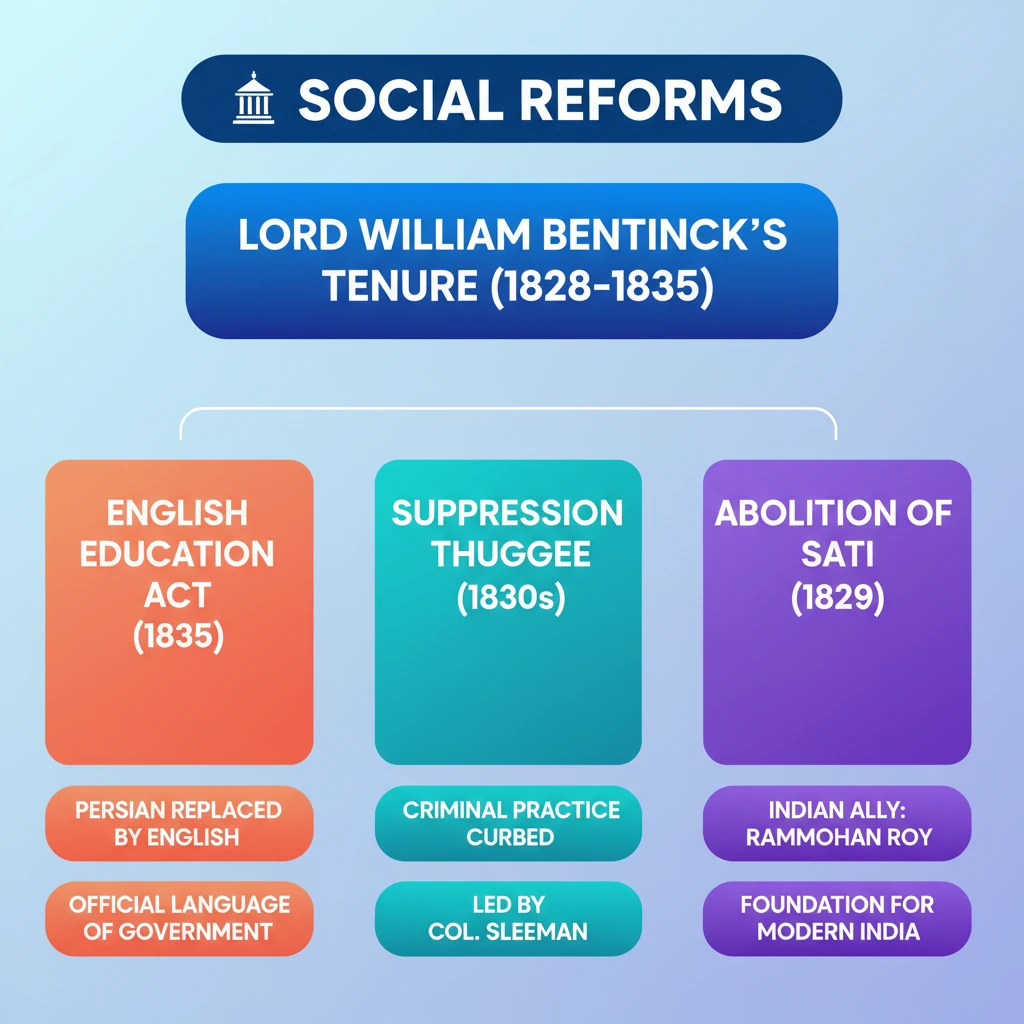
- •Lord William Bentinck's tenure (1828-1835) was marked by significant social and administrative reforms.
- •The English Education Act of 1835 replaced Persian with English as the official language of government.
- •Bentinck successfully suppressed the criminal practice of Thuggee by the late 1830s.
- •Indian reformers like Raja Rammohan Roy were crucial allies, advocating for changes like the abolition of Sati.
- •These reforms laid the foundation for modern Indian legal and social frameworks.
🧠 Memory Techniques
95% Verified Content
📚 Reference Sources
•Bipan Chandra, India's Struggle for Independence
•Spectrum Modern Indian History
•NCERT History Textbooks (Class XII)