Evolution of the Indian National Flag: From Swaraj Flag to Tricolour - History | UPSC Learning
Topics
0 topics • 0 completed
🔍
No topics match your search
Evolution of the Indian National Flag: From Swaraj Flag to Tricolour
Medium⏱️ 7 min read
history
📖 Introduction
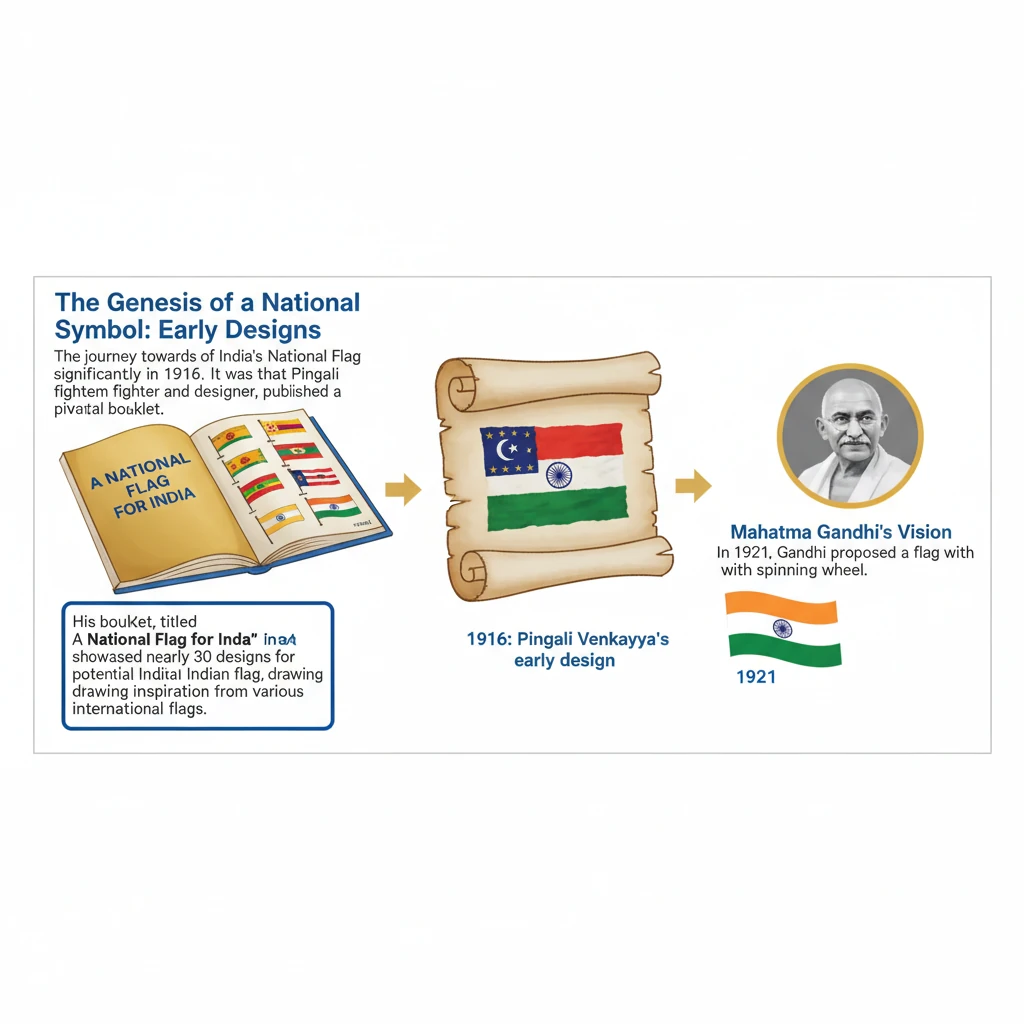
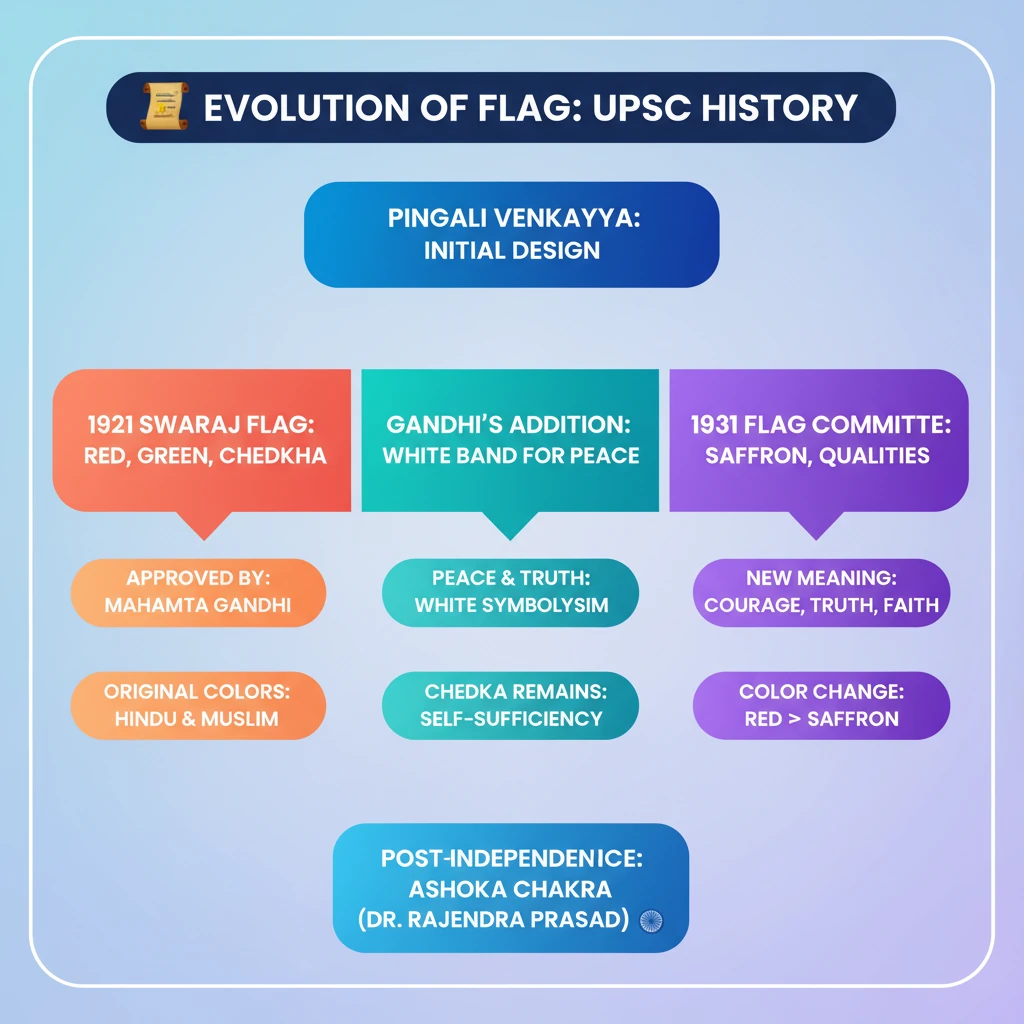
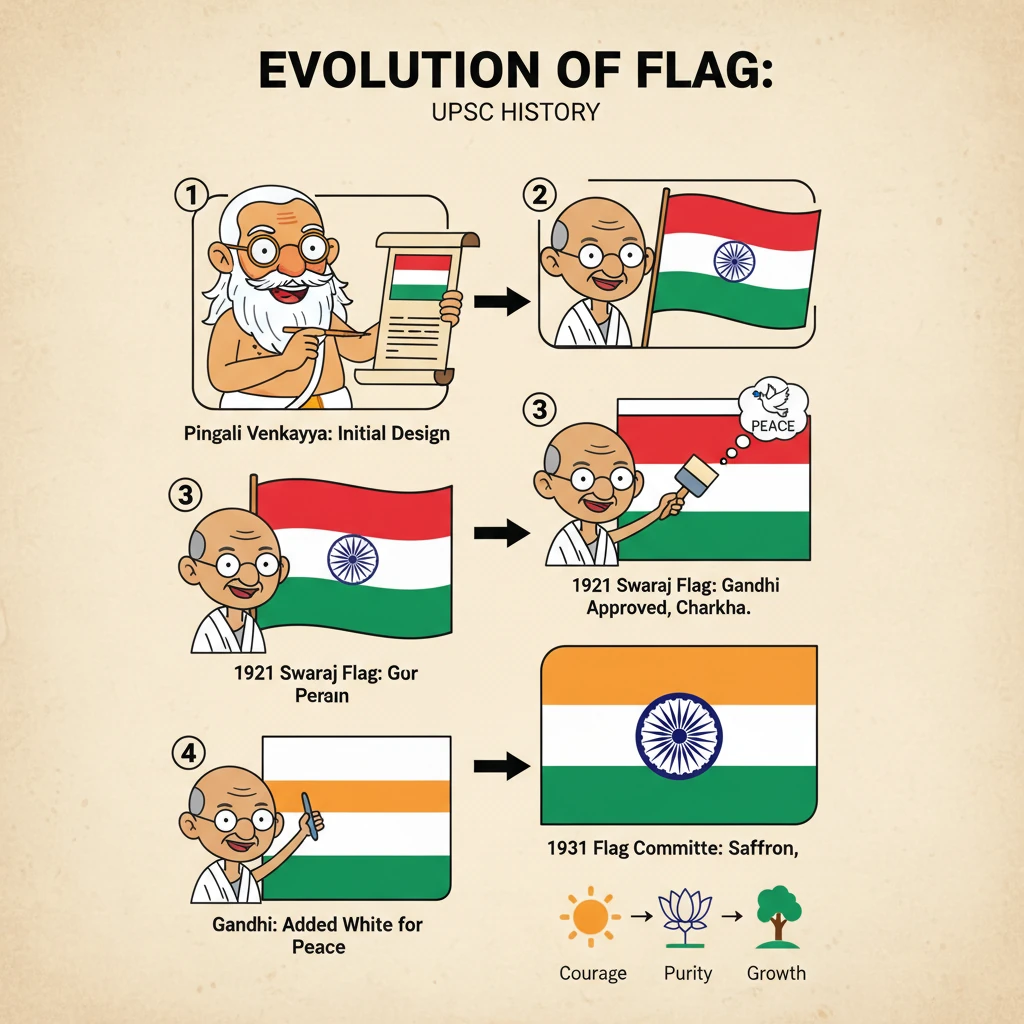
<h4>The Genesis of a National Symbol: Early Designs</h4><p>The journey towards India's National Flag began significantly in <strong>1916</strong>. It was then that <strong>Pingali Venkayya</strong>, a freedom fighter and designer, published a pivotal booklet.</p><div class='info-box'><p>His booklet, titled <strong>A National Flag for India</strong>, showcased nearly <strong>30 designs</strong> for a potential Indian flag, drawing inspiration from various international flags.</p></div><h4>Mahatma Gandhi's Influence and the Swaraj Flag</h4><p><strong>Venkayya's</strong> dedication bore fruit when his design for the National Flag received approval from <strong>Mahatma Gandhi</strong>.</p><p>This significant endorsement occurred during a <strong>Congress meeting</strong> held in <strong>Vijayawada</strong> in <strong>1921</strong>.</p><div class='info-box'><p>The initial flag, known as the <strong>Swaraj Flag</strong>, featured two prominent bands: <strong>red and green</strong>. These colors were intended to represent the <strong>Hindu and Muslim religious communities</strong>, respectively.</p></div><p>Crucially, the <strong>Swaraj Flag</strong> also incorporated a <strong>charkha</strong> (spinning wheel) in its design, symbolizing the concept of <strong>Swaraj</strong> or self-rule.</p><p>Later, <strong>Mahatma Gandhi</strong> suggested an important modification, advising <strong>Venkayya</strong> to add a <strong>white band</strong> to the flag. This addition was meant to symbolize <strong>peace</strong>.</p><h4>The Flag Committee of 1931: Redefining Symbolism</h4><p>A significant change in the flag's design and symbolism came with the formation of the <strong>Flag Committee</strong> in <strong>1931</strong>.</p><div class='info-box'><p>This committee decided to replace the <strong>red</strong> color with <strong>saffron</strong>. The new arrangement placed <strong>saffron</strong> at the top, followed by <strong>white</strong>, and then <strong>green</strong> at the bottom.</p></div><p>The <strong>charkha</strong>, a central element, was strategically placed on the <strong>white band</strong> in the middle of the flag.</p><div class='key-point-box'><p>Importantly, the interpretation of the colors shifted from representing communities to embodying universal qualities:</p><ul><li><strong>Saffron</strong>: Represented <strong>courage and sacrifice</strong>.</li><li><strong>White</strong>: Stood for <strong>truth and peace</strong>.</li><li><strong>Green</strong>: Symbolized <strong>faith and strength</strong>.</li></ul><p>The <strong>charkha</strong> continued to represent the <strong>welfare of the masses</strong> and self-reliance.</p></div><h4>Post-Independence Transformation: The Ashok Chakra</h4><p>Following India's <strong>Independence</strong> in <strong>1947</strong>, a crucial decision was made regarding the national flag.</p><p>A dedicated <strong>national flag committee</strong>, chaired by <strong>President Rajendra Prasad</strong>, was constituted to finalize the design.</p><div class='highlight-box'><p>The most significant change was the replacement of the <strong>charkha</strong> with the <strong>Ashok Chakra</strong> (Wheel of Dharma). This symbolized the nation's progress and eternal law.</p></div>
💡 Key Takeaways
- •Pingali Venkayya designed the initial concepts for the Indian flag.
- •Mahatma Gandhi approved the Swaraj Flag in 1921, featuring red, green, and a charkha.
- •Gandhi later suggested adding a white band for peace.
- •The 1931 Flag Committee replaced red with saffron and redefined colors to represent qualities, not communities.
- •Post-Independence, the charkha was replaced by the Ashok Chakra under Dr. Rajendra Prasad's committee.
- •The flag's evolution reflects India's journey from communal representation to universal values and ancient heritage.
🧠 Memory Techniques
98% Verified Content
📚 Reference Sources
•NCERT History Textbooks (relevant chapters on Indian National Movement)
•Constituent Assembly Debates (specifically on the adoption of the National Flag)