What were the Important Sites of Harappan Civilization? - History | UPSC Learning
Topics
0 topics • 0 completed
🔍
No topics match your search
What were the Important Sites of Harappan Civilization?
Easy⏱️ 7 min read
history
📖 Introduction
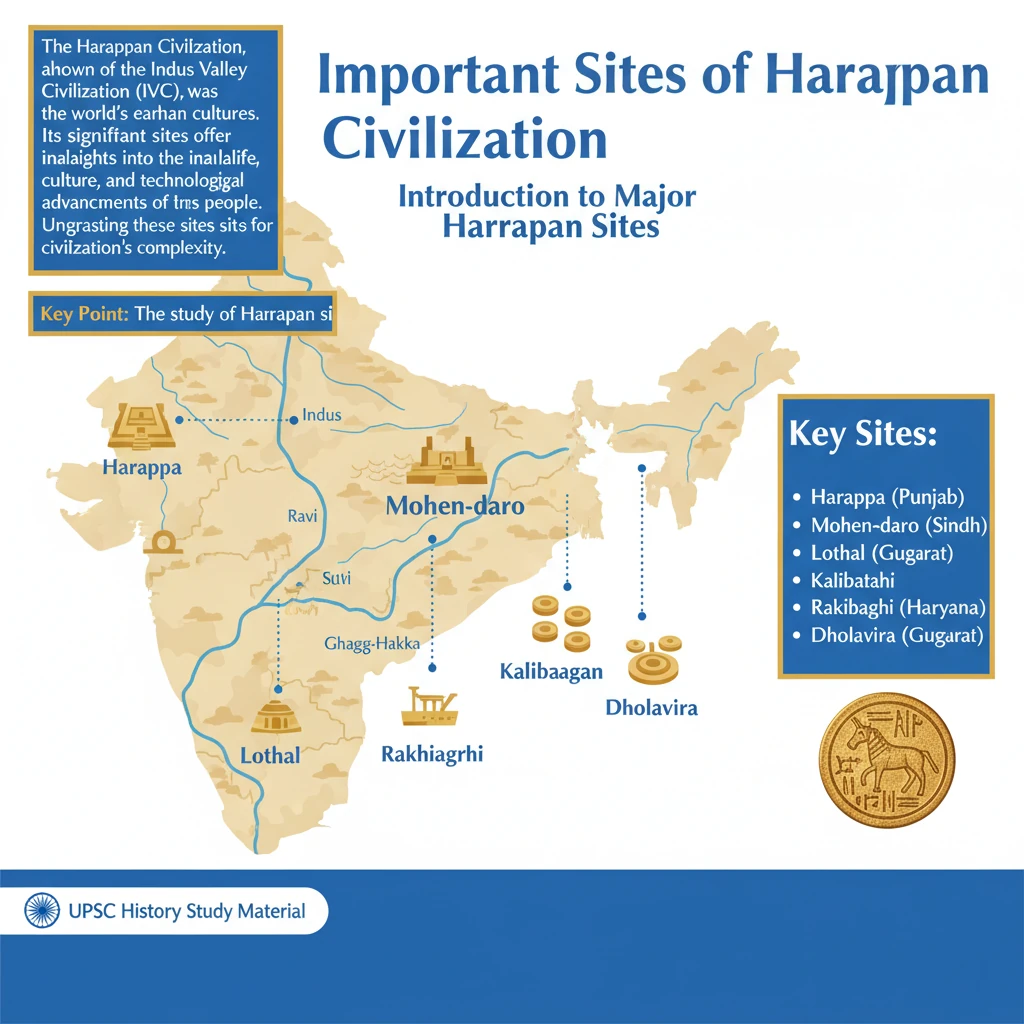
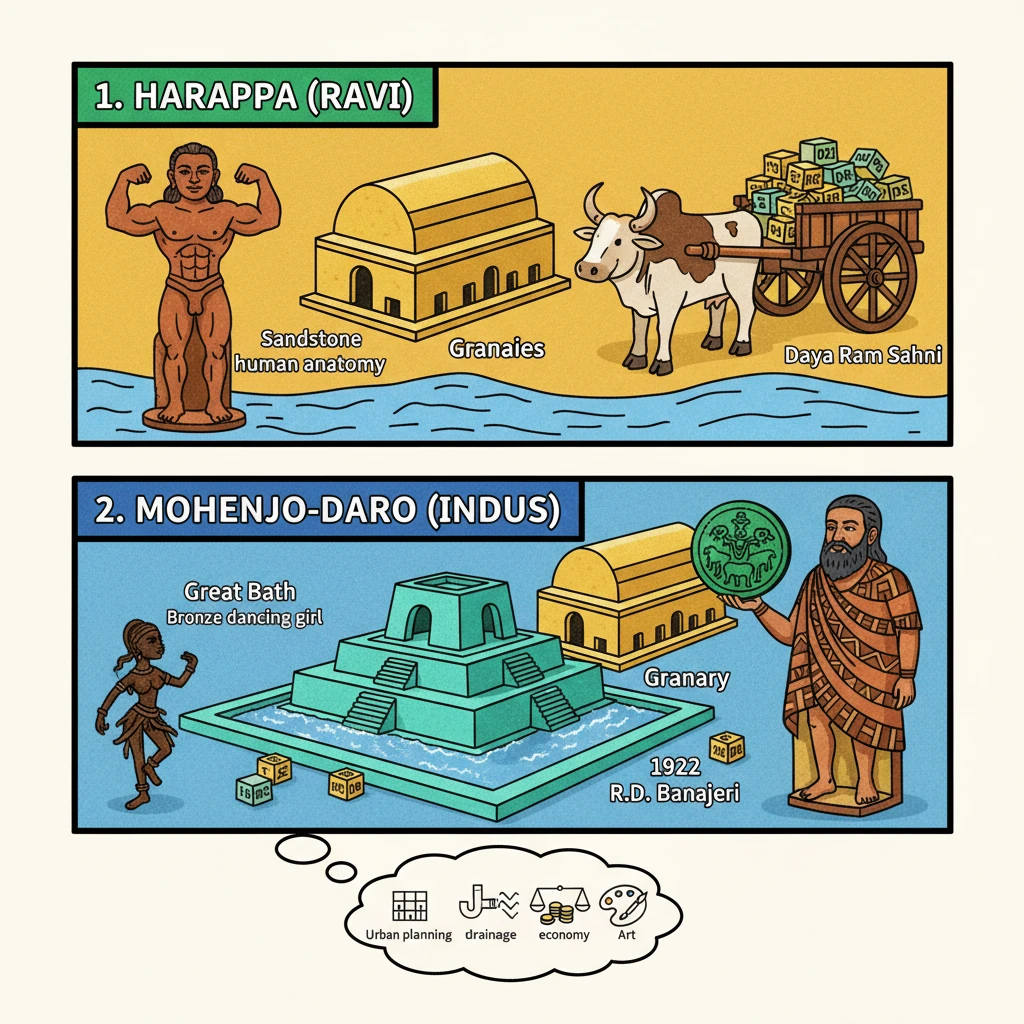
<h4>Introduction to Major Harappan Sites</h4><p>The <strong>Harappan Civilization</strong>, also known as the <strong>Indus Valley Civilization (IVC)</strong>, was one of the world's earliest urban cultures. Its significant sites offer invaluable insights into the life, culture, and technological advancements of its people. Understanding these sites is crucial for grasping the civilization's complexity.</p><div class='key-point-box'><p><strong>Key Point:</strong> The study of <strong>Harappan sites</strong> provides direct archaeological evidence, helping reconstruct the history of this ancient civilization.</p></div><h4>Harappa: The First Discovered City</h4><p><strong>Harappa</strong> holds the distinction of being the first site of the <strong>Indus Valley Civilization</strong> to be excavated. Its discovery was pivotal in recognizing the existence of a sophisticated ancient culture in the Indian subcontinent.</p><div class='info-box'><ul><li><strong>Excavated by:</strong> <strong>Daya Ram Sahni</strong> in <strong>1921</strong></li><li><strong>Location:</strong> Bank of the <strong>River Ravi</strong>, in the <strong>Montgomery district</strong> of <strong>Punjab (Pakistan)</strong></li></ul></div><p>The archaeological findings at Harappa reveal a highly organized urban settlement with advanced civic amenities. These discoveries shed light on the daily lives and artistic expressions of the Harappan people.</p><div class='info-box'><p><strong>Important Findings at Harappa:</strong></p><ul><li><strong>Sandstone statues</strong> of <strong>Human anatomy</strong>, indicating advanced sculptural skills.</li><li>Extensive <strong>Granaries</strong>, suggesting organized agricultural surplus management and storage.</li><li>Numerous <strong>Bullock carts</strong>, highlighting their modes of transport and trade.</li></ul></div><div class='exam-tip-box'><p><strong>UPSC Insight:</strong> Remember <strong>Harappa</strong> as the <strong>first site discovered</strong>. Questions often test the chronology of discoveries and specific findings associated with each major site.</p></div><h4>Mohenjo-Daro: The Mound of the Dead</h4><p><strong>Mohenjo-Daro</strong>, meaning "Mound of the Dead," is another exceptionally well-preserved and extensively excavated site of the <strong>Harappan Civilization</strong>. It is renowned for its impressive urban planning and monumental structures.</p><div class='info-box'><ul><li><strong>Excavated by:</strong> <strong>R.D. Banerjee</strong> in <strong>1922</strong></li><li><strong>Location:</strong> Bank of the <strong>River Indus</strong>, in the <strong>Larkana district</strong> of <strong>Punjab (Pakistan)</strong></li></ul></div><p>The findings at Mohenjo-Daro showcase remarkable engineering and artistic prowess. The site provides a comprehensive picture of a thriving Harappan city, complete with public and private structures.</p><div class='info-box'><p><strong>Important Findings at Mohenjo-Daro:</strong></p><ul><li>The <strong>Great Bath</strong>, a large public bathing area, indicating ritualistic practices or communal hygiene.</li><li>A massive <strong>Granary</strong>, similar to Harappa, signifying sophisticated economic organization.</li><li>The iconic <strong>Bronze dancing girl</strong> statue, a masterpiece of Harappan metallurgy and art.</li><li>A unique <strong>Seal of Pasupathi</strong> (Proto-Shiva), suggesting early religious beliefs.</li><li>A distinctive <strong>Steatite statue of a bearded man</strong> (Priest-King), representing elite figures.</li><li>A piece of <strong>woven cotton</strong>, providing evidence of textile production and agriculture.</li></ul></div><div class='exam-tip-box'><p><strong>UPSC Insight:</strong> <strong>Mohenjo-Daro</strong> is often highlighted for its unique structures like the <strong>Great Bath</strong> and iconic artifacts like the <strong>Dancing Girl</strong>. Be prepared to differentiate its findings from other sites.</p></div><h4>Significance of Major Harappan Sites</h4><p>The detailed study of sites like <strong>Harappa</strong> and <strong>Mohenjo-Daro</strong> allows historians and archaeologists to reconstruct the socio-economic, political, and religious aspects of the <strong>Indus Valley Civilization</strong>. These sites are foundational to understanding India's ancient past.</p><div class='key-point-box'><p><strong>Core Significance:</strong> These sites reveal advanced <strong>urban planning</strong>, sophisticated <strong>drainage systems</strong>, evidence of <strong>trade networks</strong>, and a rich <strong>artistic and religious culture</strong>, making them crucial for UPSC Mains answers.</p></div>
💡 Key Takeaways
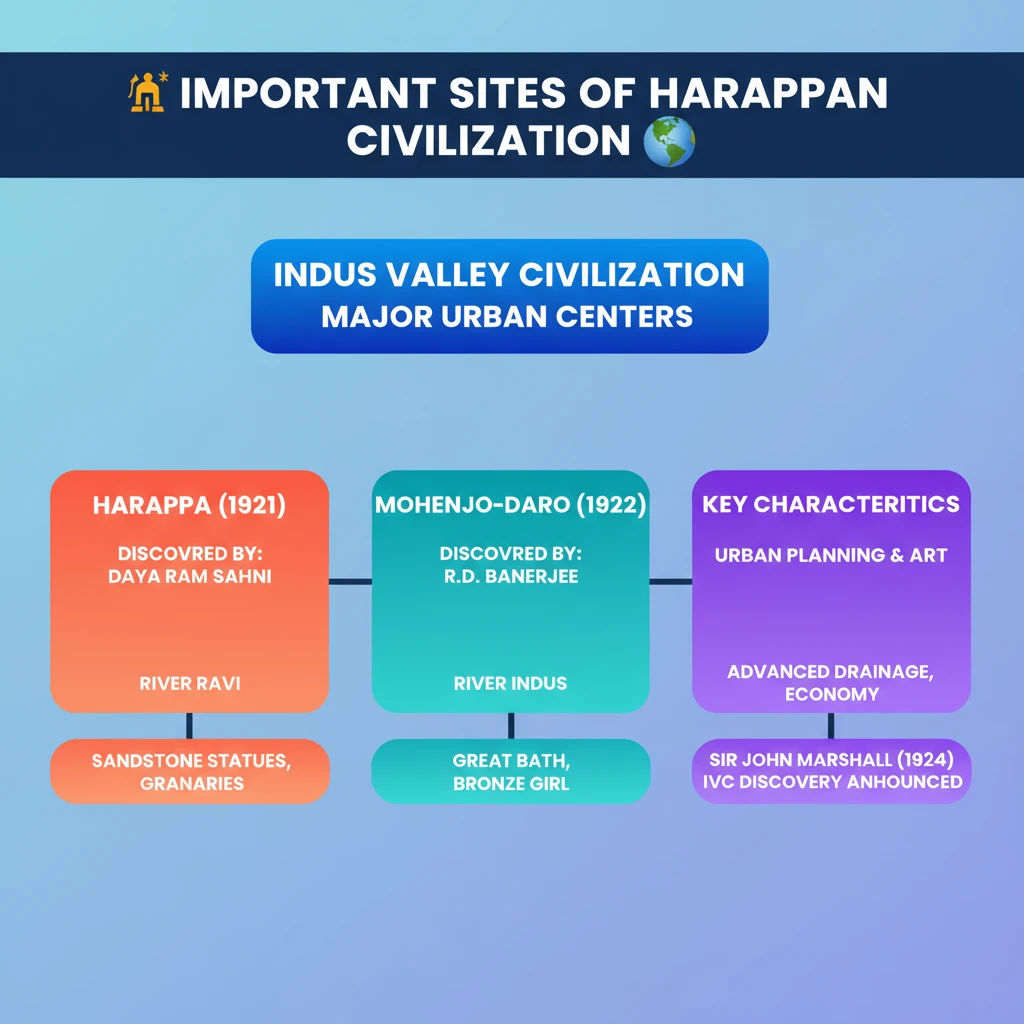
- •Harappa (1921, Daya Ram Sahni, River Ravi) and Mohenjo-Daro (1922, R.D. Banerjee, River Indus) are two primary Harappan sites.
- •Harappa's key finds include sandstone human anatomy statues, granaries, and bullock carts.
- •Mohenjo-Daro is famous for the Great Bath, Granary, Bronze dancing girl, Pasupathi seal, and bearded man statue.
- •These sites showcase advanced urban planning, sophisticated drainage, and evidence of organized economy and art.
- •Sir John Marshall announced the IVC discovery in 1924, pushing back India's urban history significantly.
🧠 Memory Techniques
98% Verified Content
📚 Reference Sources
•NCERT Class XI History - An Introduction to Indian Art, Chapter 1
•NCERT Class XII History - Themes in Indian History Part I, Chapter 1
•Archaeological Survey of India (ASI) official records (general knowledge)