Geographical Distribution - History | UPSC Learning
Topics
0 topics • 0 completed
🔍
No topics match your search
Geographical Distribution
Medium⏱️ 5 min read
history
📖 Introduction
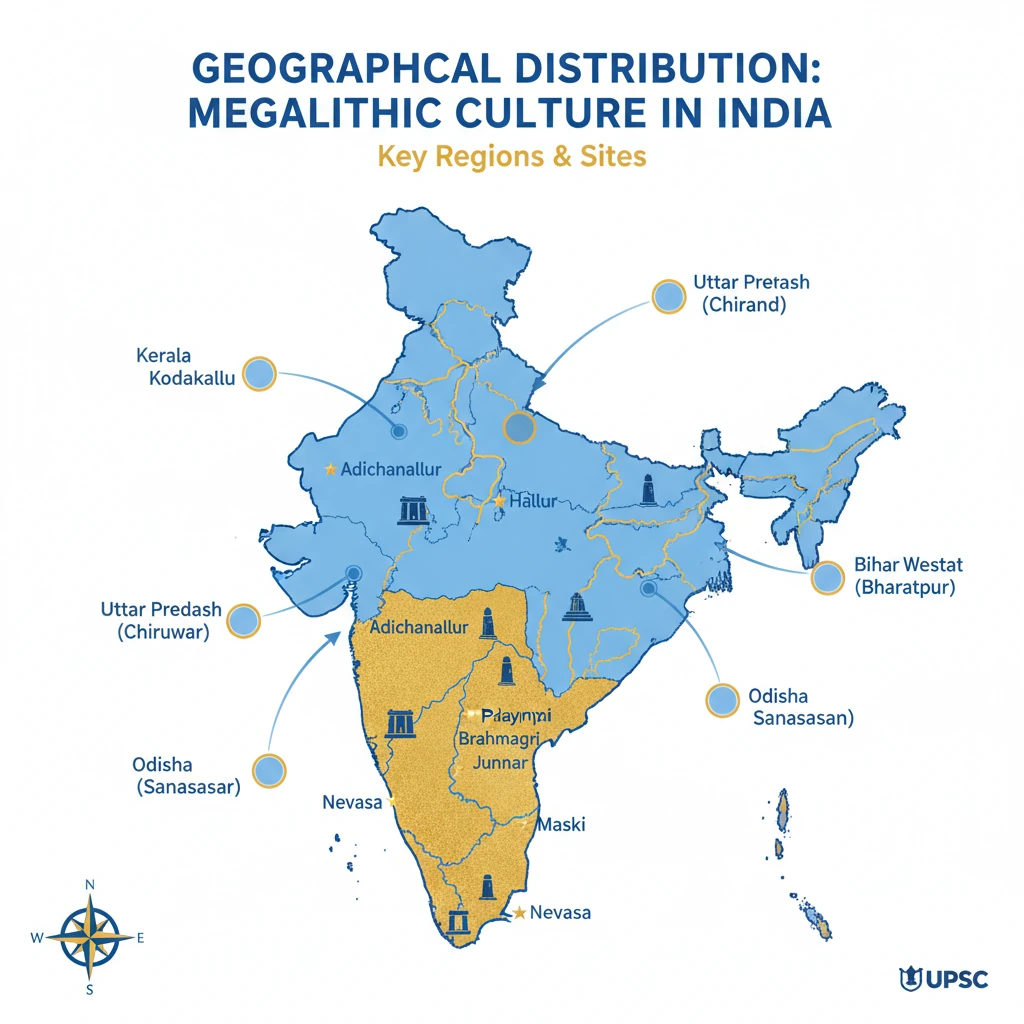
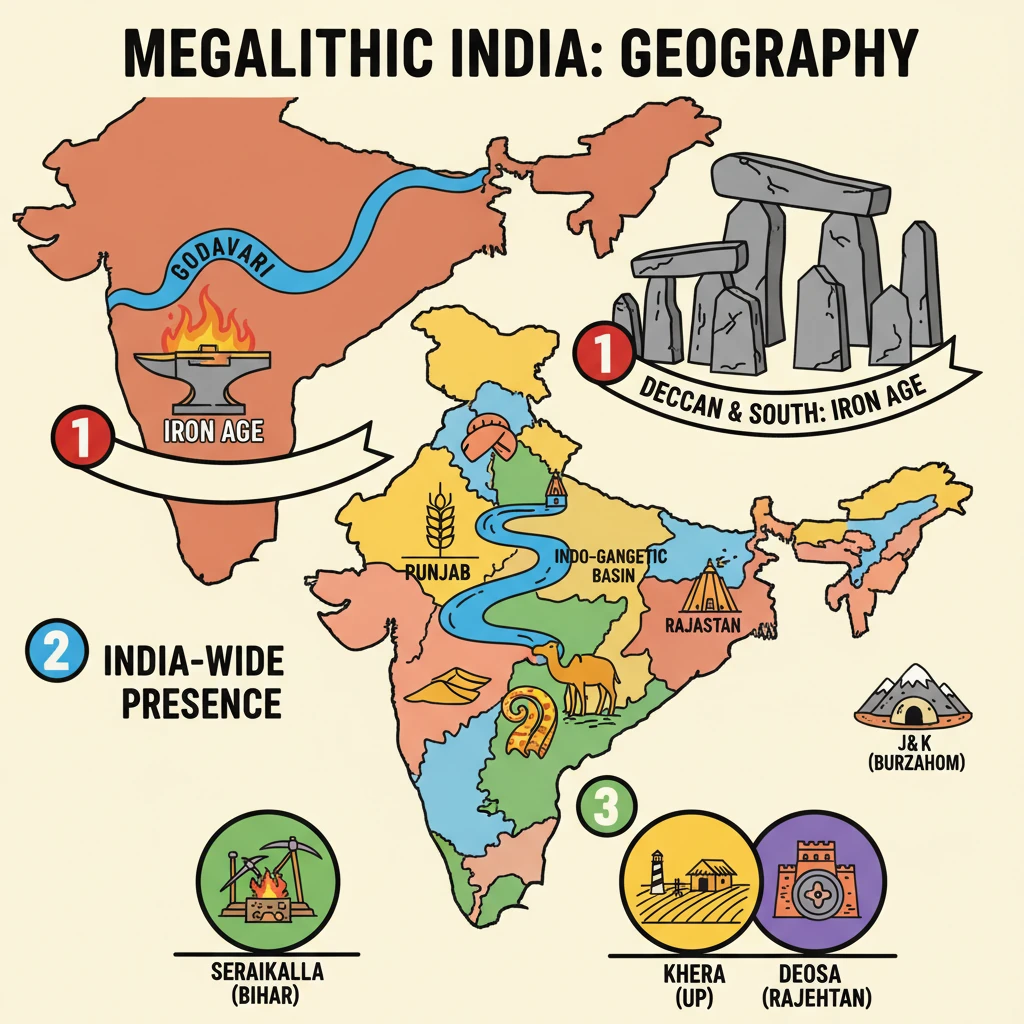
<h4>Geographical Spread of Megalithic Culture</h4><p>The <strong>Megalithic culture</strong> in India exhibited a wide geographical spread, though its primary concentration was in specific regions.</p><p>The main areas of development and density were in the <strong>Deccan region</strong>, particularly south of the <strong>Godavari River</strong>.</p><h4>Key Regions and Sites</h4><p>Beyond the Deccan, evidence of Megalithic presence has been discovered across various parts of the Indian subcontinent.</p><ul><li><strong>Northern India:</strong> Presence noted in the <strong>Punjab Plains</strong>, the <strong>Indo-Gangetic basin</strong>, and <strong>Burzahom</strong> in <strong>Jammu and Kashmir</strong>.</li><li><strong>Western India:</strong> Traces found in <strong>Rajasthan</strong> and <strong>Gujarat</strong>.</li><li><strong>Eastern India:</strong> Significant sites like <strong>Seraikalla</strong> in <strong>Bihar</strong>.</li><li><strong>Central India:</strong> Sites such as <strong>Khera</strong> in <strong>Uttar Pradesh</strong> and <strong>Deosa</strong> in <strong>Rajasthan</strong> further illustrate its widespread nature.</li></ul><h4>Iron Age Culture and Technology</h4><p>The <strong>Megalithic period</strong> in <strong>South India</strong> is distinctively recognized as a full-fledged <strong>Iron Age culture</strong>.</p><p>This era saw the complete utilization and mastery of <strong>iron technology</strong>, marking a significant technological advancement.</p><div class='info-box'><p><strong>Evidence of Iron Use:</strong></p><ul><li>Discovery of various <strong>iron weapons</strong>.</li><li>Unearthing of sophisticated <strong>agricultural implements</strong>.</li></ul><p>These artifacts indicate advanced metallurgy and its application in daily life and warfare.</p></div><p>Key sites for these iron finds range from <strong>Junapani</strong> in <strong>Vidarbha</strong> to <strong>Adichanallur</strong> in <strong>Tamil Nadu</strong>.</p><h4>Art and Rock Paintings</h4><p>Artistic expressions were also a part of the <strong>Megalithic culture</strong>, particularly evident through <strong>rock paintings</strong>.</p><p>These paintings, discovered at various megalithic sites, offer insights into their societal activities and beliefs.</p><div class='key-point-box'><p><strong>Depictions in Rock Paintings:</strong></p><ul><li>Scenes of <strong>hunting</strong>, showcasing their subsistence strategies.</li><li>Illustrations of <strong>cattle raids</strong>, suggesting social dynamics and resource acquisition.</li><li>Portrayals of <strong>group dancing</strong>, indicating communal rituals or celebrations.</li></ul></div>
💡 Key Takeaways
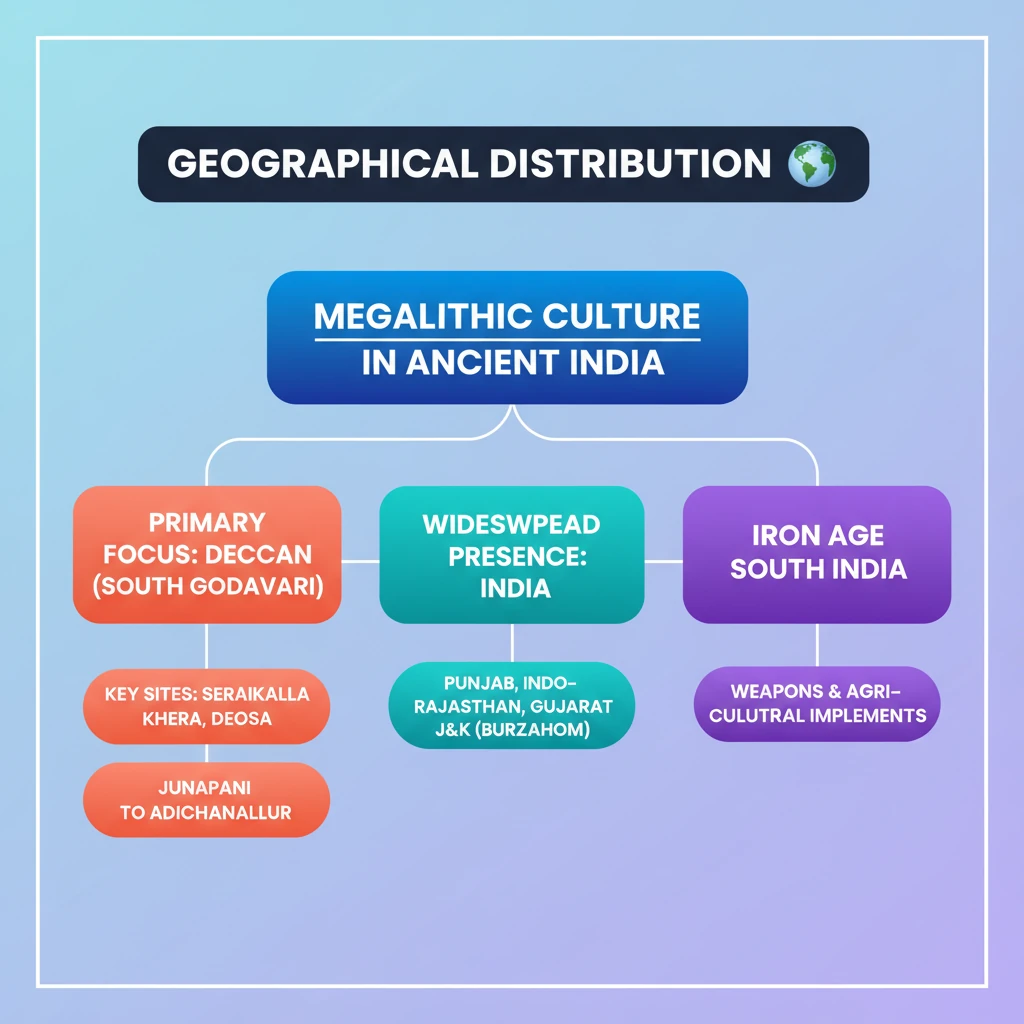
- •Megalithic culture primarily concentrated in the <strong>Deccan, south of the Godavari River</strong>.
- •Widespread presence across India, including <strong>Punjab, Indo-Gangetic basin, Rajasthan, Gujarat, and J&K (Burzahom)</strong>.
- •Key sites include <strong>Seraikalla (Bihar), Khera (UP), and Deosa (Rajasthan)</strong>.
- •The South Indian Megalithic period was a full-fledged <strong>Iron Age culture</strong>.
- •Evidence of iron use (weapons, agricultural implements) found from <strong>Junapani (Vidarbha) to Adichanallur (Tamil Nadu)</strong>.
- •Rock paintings at megalithic sites depict <strong>hunting, cattle raids, and group dancing</strong>.
🧠 Memory Techniques
95% Verified Content
📚 Reference Sources
•NCERT Class XI: An Introduction to Indian Art (for rock paintings context)
•Upinder Singh, A History of Ancient and Early Medieval India: From the Stone Age to the 12th Century
•Archaeological Survey of India (ASI) publications on Megalithic sites