Former PM Shri Atal Bihari Vajpayee’s Punya Tithi - History | UPSC Learning
Topics
0 topics • 0 completed
🔍
No topics match your search
Former PM Shri Atal Bihari Vajpayee’s Punya Tithi
Easy⏱️ 5 min read
history
📖 Introduction
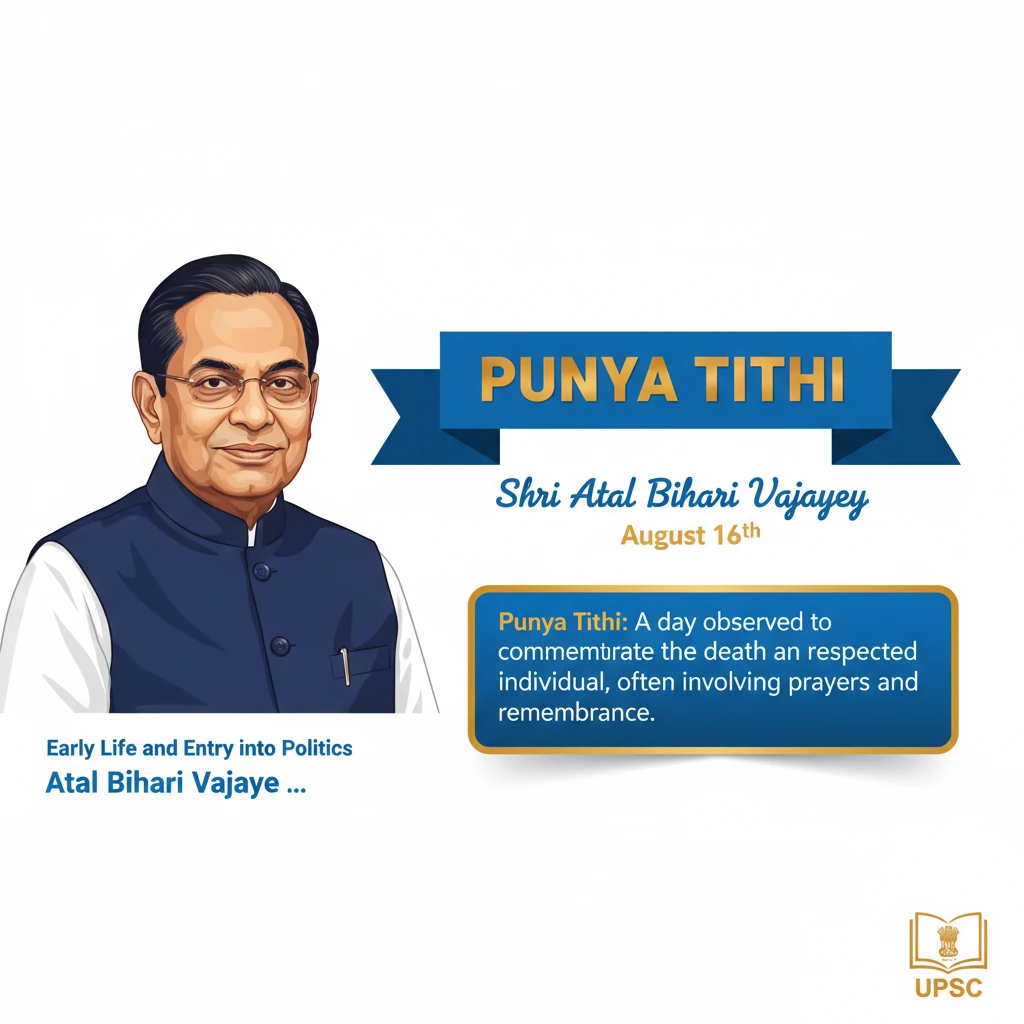
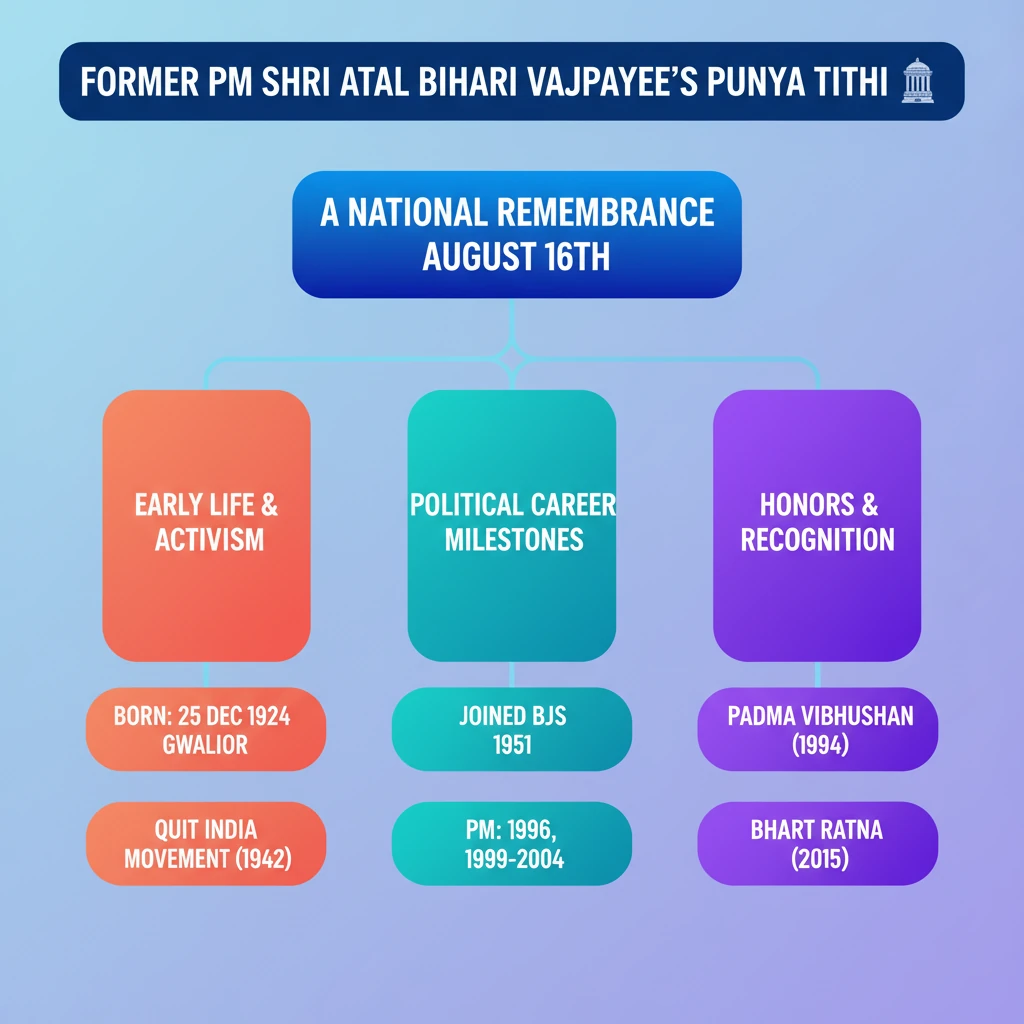
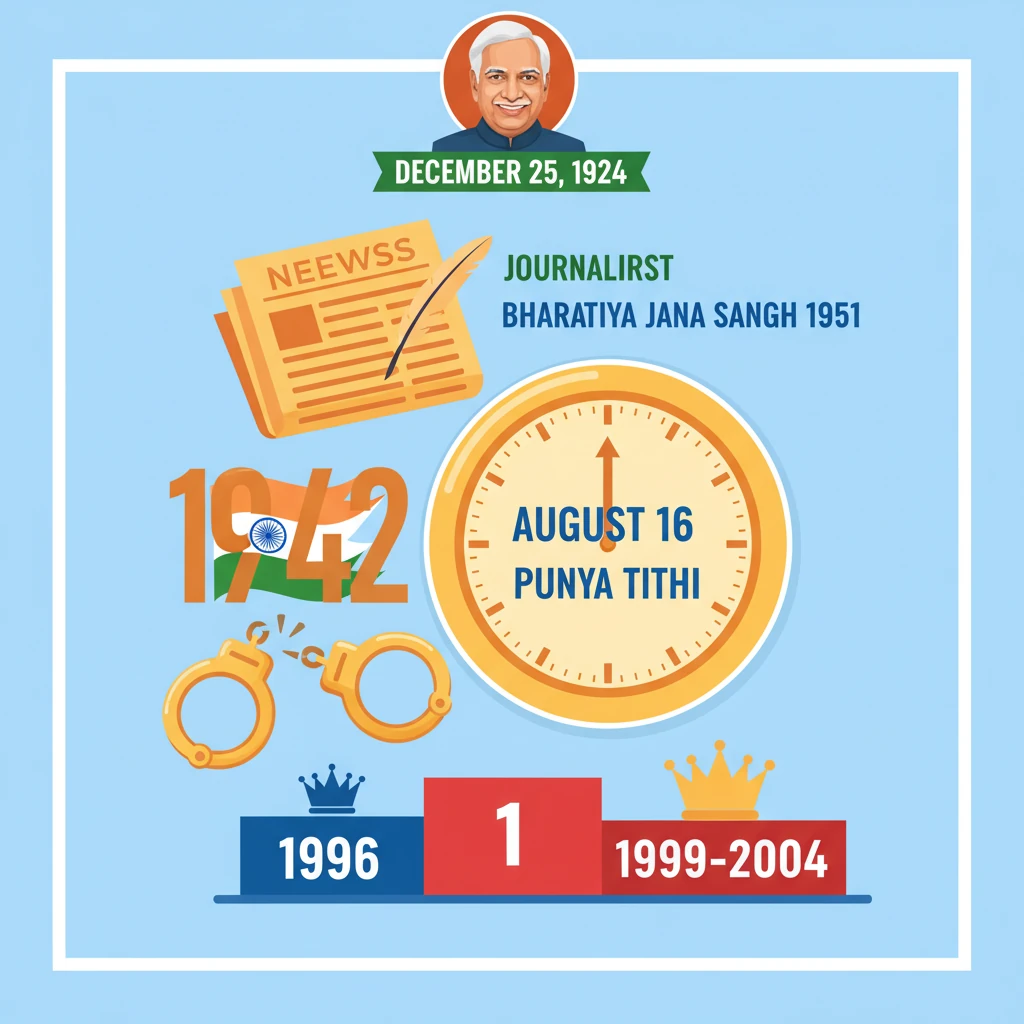
<h4>Introduction to Atal Bihari Vajpayee's Punya Tithi</h4><p>The <strong>Punya Tithi</strong> (death anniversary) of former Prime Minister <strong>Shri Atal Bihari Vajpayee</strong> is observed annually on <strong>August 16th</strong>.</p><div class='info-box'><p><strong>Punya Tithi:</strong> A day observed to commemorate the death anniversary of a respected individual, often involving prayers and remembrance.</p></div><h4>Early Life and Entry into Politics</h4><p><strong>Atal Bihari Vajpayee</strong> was born on <strong>December 25, 1924</strong>, in the erstwhile princely state of <strong>Gwalior</strong>, which is now part of <strong>Madhya Pradesh</strong>.</p><p>His entry into national politics began during the pivotal <strong>Quit India Movement of 1942</strong>. This movement played a crucial role in accelerating the end of <strong>British colonial rule</strong> in India.</p><h4>Journalism and Political Affiliations</h4><p>In <strong>1947</strong>, <strong>Vajpayee</strong> embarked on a career in journalism. He contributed to several prominent newspapers, including:</p><ul><li><strong>Rashtradharma</strong> (a Hindi monthly), edited by <strong>Deendayal Upadhyaya</strong></li><li><strong>Panchjanya</strong> (a Hindi weekly)</li><li>The dailies <strong>Swadesh</strong> and <strong>Veer Arjun</strong></li></ul><p>His political journey took a significant turn in <strong>1951</strong> when he joined the <strong>Bharatiya Jana Sangh</strong>, greatly influenced by <strong>Syama Prasad Mookerjee</strong>.</p><h4>Prime Ministership and Legacy</h4><p><strong>Atal Bihari Vajpayee</strong> served as the <strong>Prime Minister of India</strong> on two occasions: first in <strong>1996</strong> and then for a full term starting in <strong>1999</strong>.</p><p>He was highly regarded as a parliamentarian, earning the prestigious <strong>Pandit Govind Ballabh Pant Award for Best Parliamentarian</strong> in <strong>1994</strong>. This award acknowledged him as “a role model par excellence for all legislators.”</p><p>His contributions were recognized with India's highest civilian honor, the <strong>Bharat Ratna</strong>, in <strong>2015</strong>. He had previously received the second-highest civilian honor, the <strong>Padma Vibhushan</strong>, in <strong>1994</strong>.</p><p><strong>Shri Atal Bihari Vajpayee</strong> passed away on <strong>August 16, 2018</strong>, leaving behind a profound legacy as a statesman and orator.</p>
💡 Key Takeaways
- •Atal Bihari Vajpayee's Punya Tithi is observed on August 16th.
- •Born December 25, 1924, in Gwalior; participated in Quit India Movement 1942.
- •Started as a journalist, joined Bharatiya Jana Sangh in 1951.
- •Served as PM twice (1996, 1999-2004).
- •Awarded Padma Vibhushan (1994), Best Parliamentarian (1994), and Bharat Ratna (2015).
- •Known for statesmanship, parliamentary ethics, and coalition leadership.
🧠 Memory Techniques
95% Verified Content
📚 Reference Sources
•Official Government of India biographical records
•Parliament of India archives