Tribal Revolts in Colonial India - History | UPSC Learning
Topics
0 topics • 0 completed
🔍
No topics match your search
Tribal Revolts in Colonial India
Medium⏱️ 7 min read
history
📖 Introduction
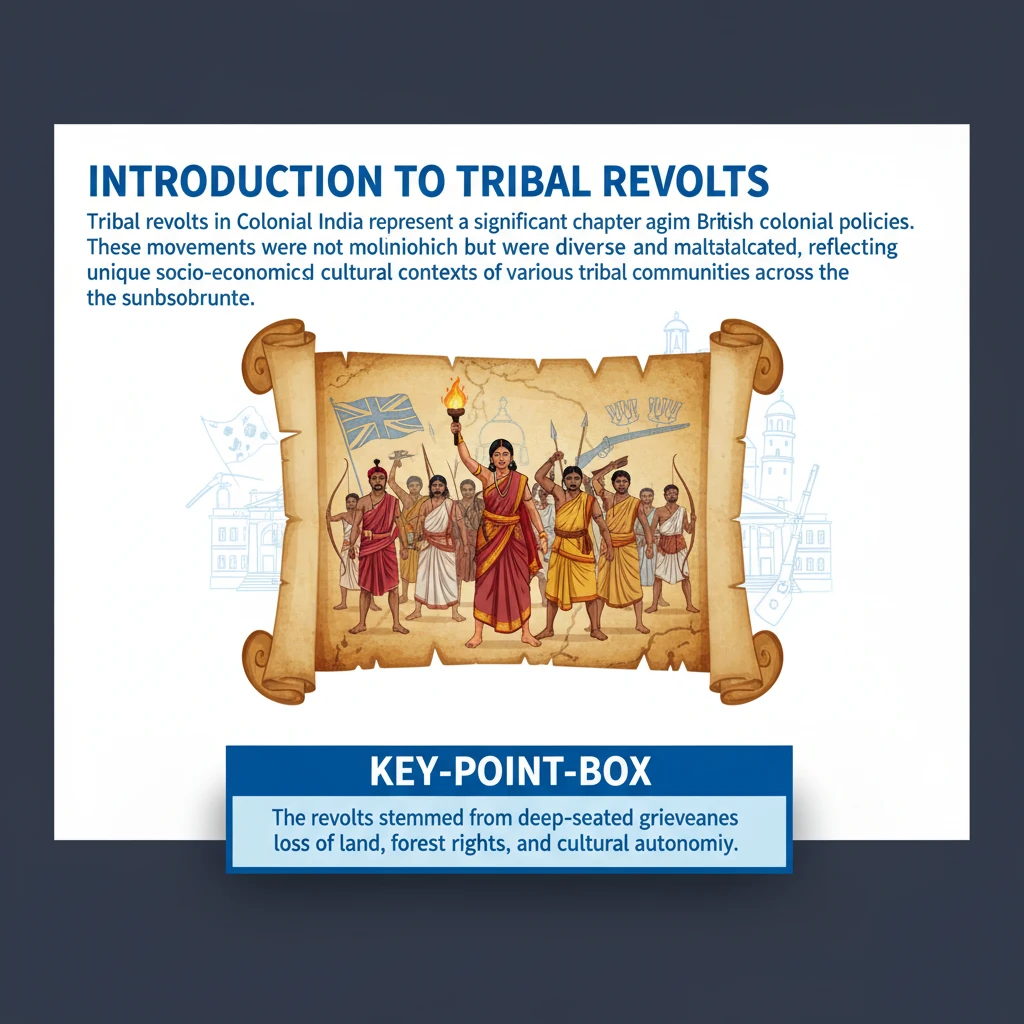
<h4>Introduction to Tribal Revolts</h4><p><strong>Tribal revolts</strong> in <strong>Colonial India</strong> represent a significant chapter of resistance against <strong>British colonial policies</strong>. These movements were not monolithic but were <strong>diverse and multifaceted</strong>, reflecting the unique socio-economic and cultural contexts of various tribal communities across the subcontinent.</p><div class='key-point-box'><p>The revolts stemmed from <strong>deep-seated grievances</strong>, primarily targeting the disruption of traditional tribal life, land systems, and forest rights by the colonial administration and its agents.</p></div><h4>Chronological Span and Categorization</h4><p>These powerful uprisings spanned a vast period, from the <strong>late 18th century</strong> right up to the <strong>eve of Indian independence</strong> in 1947. Their geographical spread allowed for a broad categorization into <strong>mainland tribal revolts</strong> and <strong>frontier tribal revolts</strong>.</p><div class='info-box'><p><strong>Mainland Revolts:</strong> Occurred in areas under direct British administration or princely states, often driven by land alienation, forest laws, and exploitation by moneylenders.</p><p><strong>Frontier Revolts:</strong> Took place in the North-Eastern regions, frequently involving conflicts over territorial sovereignty, cultural interference, and attempts to integrate tribal areas into the colonial administrative framework.</p></div><h4>Impact and Significance</h4><p>The tribal revolts significantly <strong>influenced regional dynamics</strong> and consistently <strong>challenged British authority</strong>. Although often localized and brutally suppressed, they highlighted the deep resentment against colonial exploitation and contributed to the broader narrative of anti-colonial resistance.</p><div class='exam-tip-box'><p>For UPSC, understanding the <strong>causes, nature, and impact</strong> of these revolts is crucial for both <strong>Prelims</strong> (facts, names, locations) and <strong>Mains</strong> (analysis of resistance movements, British policies, and their socio-economic consequences). Focus on the distinct characteristics of tribal resistance compared to peasant or civil uprisings.</p></div>
💡 Key Takeaways
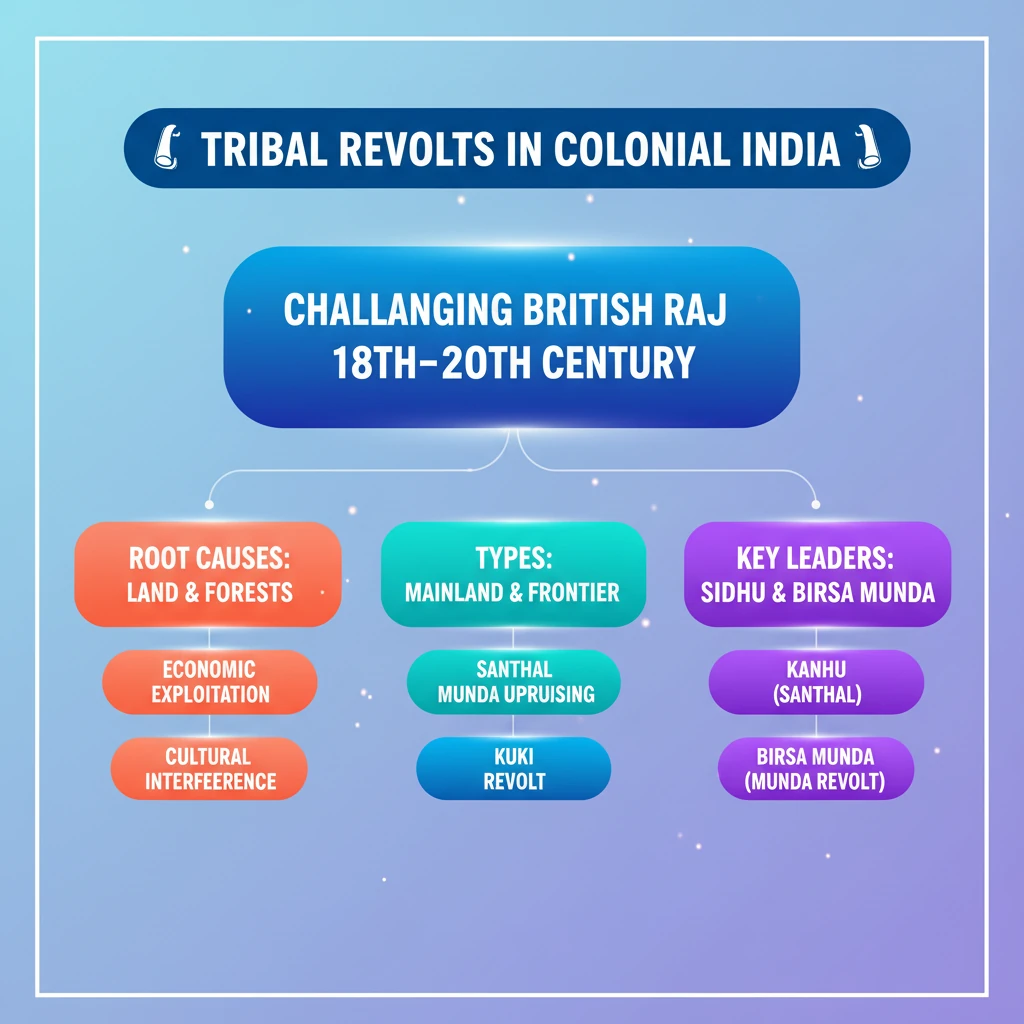
- •Tribal revolts were diverse, spanning from late 18th century to independence.
- •Root causes included land alienation, restrictive forest laws, economic exploitation, and cultural interference.
- •Categorized into mainland (e.g., Santhal, Munda) and frontier (e.g., Kuki) revolts.
- •Leaders like Sidhu, Kanhu, and Birsa Munda symbolized strong resistance.
- •These movements challenged British authority and influenced regional dynamics.
- •Their legacy continues to shape contemporary tribal rights and governance policies (e.g., FRA, PESA).
🧠 Memory Techniques
95% Verified Content
📚 Reference Sources
•Ramachandra Guha, The Unquiet Woods: Ecological Change and Peasant Resistance in the Himalaya
•NCERT History Textbooks (Class XII - Themes in Indian History Part III)
•Government of India Reports on Tribal Affairs
•Sumit Sarkar, Modern India (1885-1947)