Harappan Crafts: Bronze, Textiles, Pottery, and Jewellery - History | UPSC Learning
Topics
0 topics • 0 completed
🔍
No topics match your search
Harappan Crafts: Bronze, Textiles, Pottery, and Jewellery
Easy⏱️ 5 min read
history
📖 Introduction
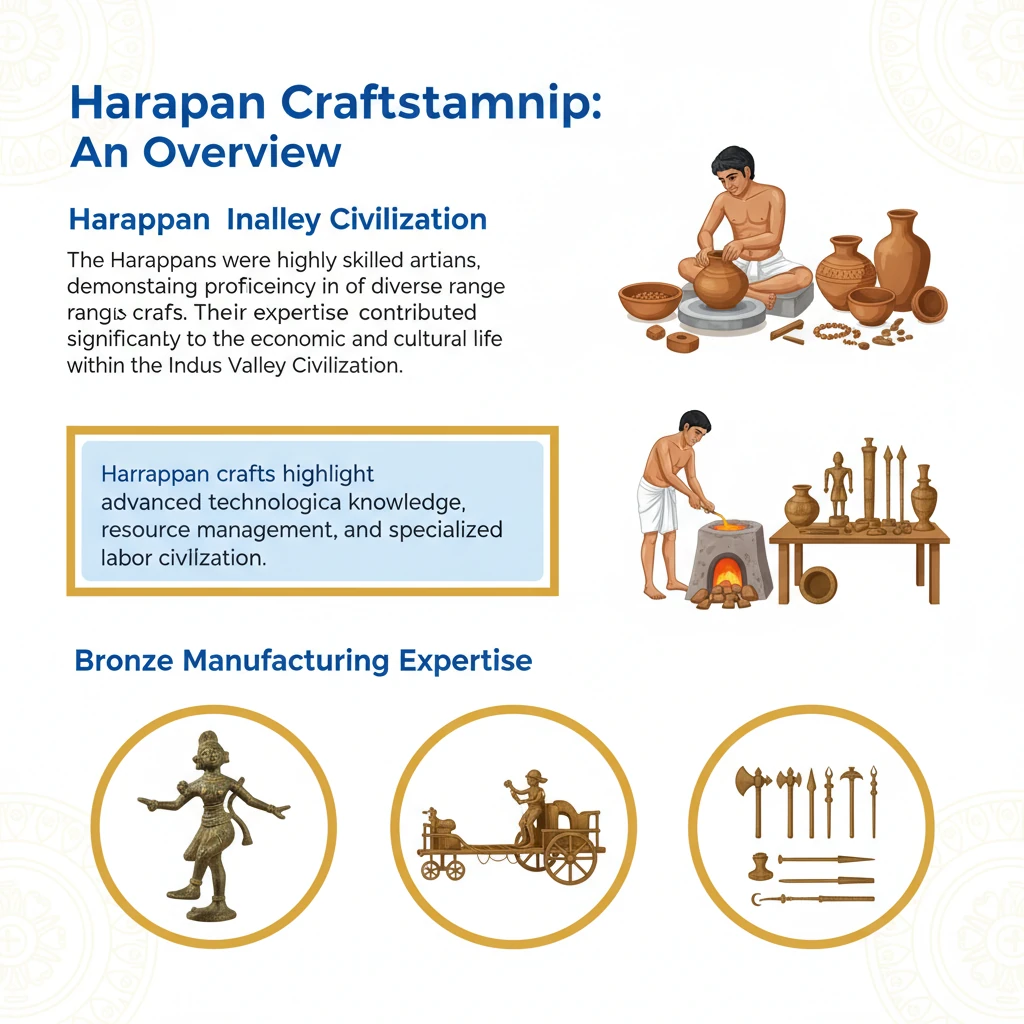
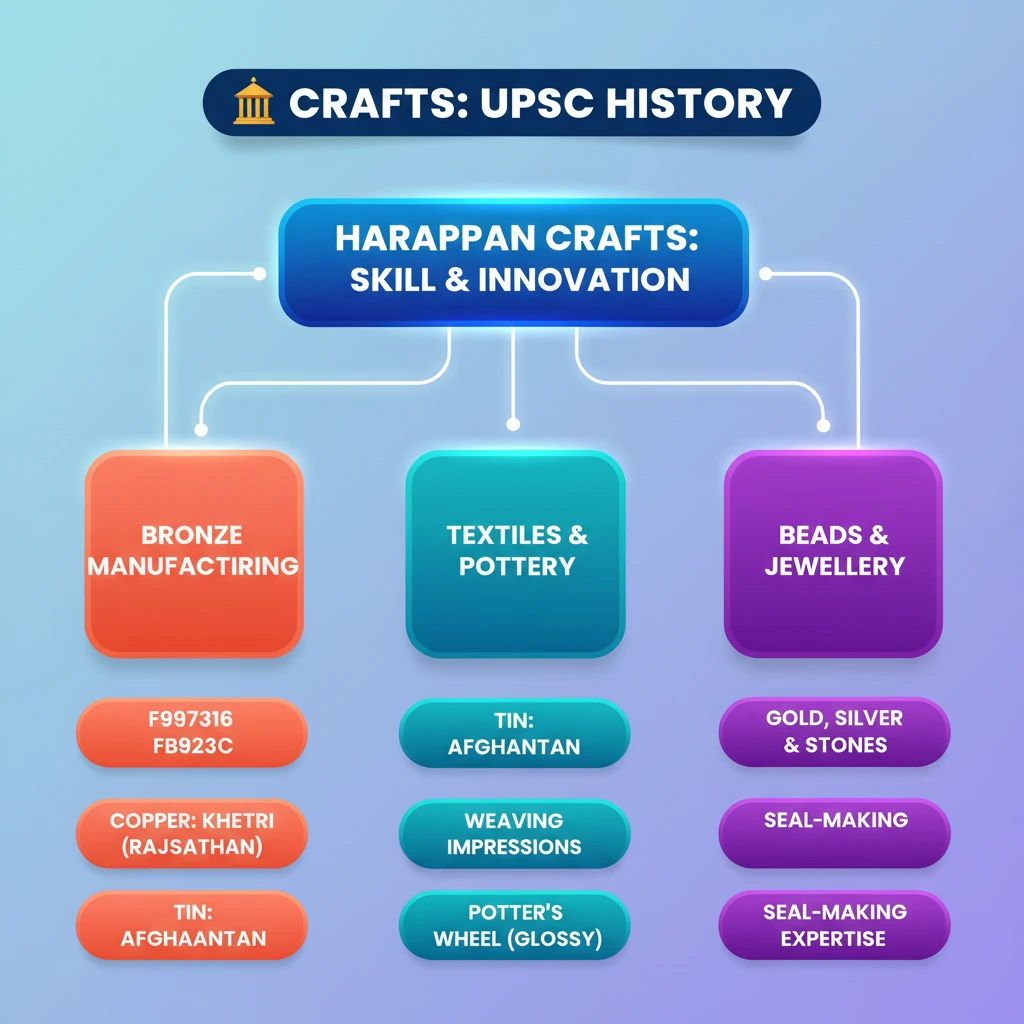
<h4>Harappan Craftsmanship: An Overview</h4><p>The <strong>Harappans</strong> were highly skilled artisans, demonstrating proficiency in a diverse range of crafts. Their expertise contributed significantly to the economic and cultural life of the <strong>Indus Valley Civilization</strong>.</p><div class='key-point-box'><p>Harappan crafts highlight advanced technological knowledge, resource management, and specialized labor within the civilization.</p></div><h4>Bronze Manufacturing Expertise</h4><p>One of the most notable skills of the Harappans was their mastery of <strong>bronze manufacturing</strong>. This involved sophisticated metallurgical techniques to create various tools, weapons, and artistic objects.</p><div class='info-box'><ul><li><strong>Copper Source:</strong> Primarily obtained from the <strong>Khetri mines</strong> in <strong>Rajasthan</strong>.</li><li><strong>Tin Source:</strong> Believed to have been imported, possibly from <strong>Afghanistan</strong>.</li></ul></div><p>The availability and strategic procurement of these raw materials were crucial for their bronze industry.</p><h4>Textile Production and Weaving</h4><p>Evidence suggests that the Harappans possessed knowledge of <strong>textile production</strong> and <strong>weaving</strong>. While direct textile remnants are rare due to preservation challenges, indirect evidence points to this skill.</p><div class='info-box'><p><strong>Textile impressions</strong> found on various objects, such as seals and pottery, provide crucial clues about their weaving capabilities and the types of fabrics produced.</p></div><h4>Diverse Range of Key Crafts</h4><p>Beyond metallurgy and textiles, the Harappan civilization supported a wide array of specialized crafts. These industries catered to both utilitarian needs and aesthetic preferences of the populace.</p><ul><li><strong>Boat-making:</strong> Essential for riverine and coastal trade and transportation.</li><li><strong>Bead-making:</strong> Produced intricate beads from various materials, highly valued for ornamentation.</li><li><strong>Seal-making:</strong> Involved carving unique seals, primarily for administrative and trade purposes.</li><li><strong>Terracotta Production:</strong> Widespread use of baked clay for figurines, toys, and other objects.</li></ul><h4>Goldsmithery and Jewellery</h4><p><strong>Goldsmiths</strong> were prominent craftsmen, creating exquisite ornaments. Their work reflects a high degree of artistic skill and an understanding of precious materials.</p><div class='info-box'><p>Harappan jewellery was fashioned from a variety of valuable materials, including <strong>gold</strong>, <strong>silver</strong>, and various types of <strong>precious stones</strong>.</p></div><h4>Advanced Pottery Techniques</h4><p>Pottery was a ubiquitous craft, with the <strong>potter’s wheel</strong> being widely employed. This technology allowed for efficient and standardized production of ceramic wares.</p><div class='info-box'><p>Harappan pottery is distinctive for its <strong>glossy finish</strong> and diverse forms, indicating advanced firing techniques and aesthetic sensibilities.</p></div><div class='exam-tip-box'><p>Understanding the variety and sophistication of Harappan crafts is vital for questions on the <strong>economic life</strong>, <strong>technological advancements</strong>, and <strong>artistic expressions</strong> of the Indus Valley Civilization in <strong>UPSC Prelims</strong> and <strong>Mains (GS Paper I)</strong>.</p></div>
💡 Key Takeaways
- •Harappans were highly skilled in diverse crafts, including bronze manufacturing, textiles, pottery, bead-making, and seal-making.
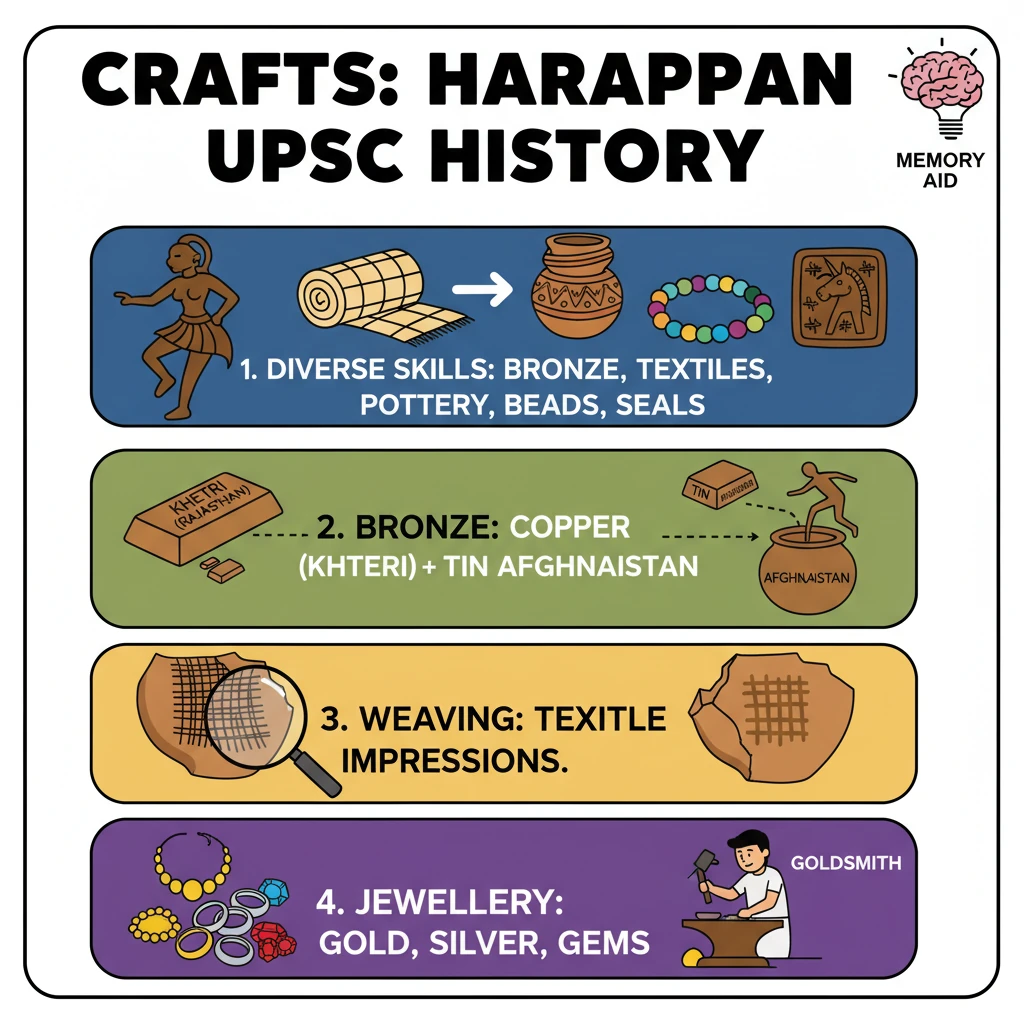
- •Bronze production relied on copper from Khetri (Rajasthan) and tin likely from Afghanistan.
- •Evidence of weaving comes from textile impressions on objects.
- •Goldsmiths created jewellery from gold, silver, and precious stones.
- •The potter's wheel was widely used, producing distinctive, glossy pottery.
🧠 Memory Techniques
98% Verified Content