100 Years of Discovery of IVC - History | UPSC Learning
Topics
0 topics • 0 completed
🔍
No topics match your search
100 Years of Discovery of IVC
Medium⏱️ 8 min read
history
📖 Introduction
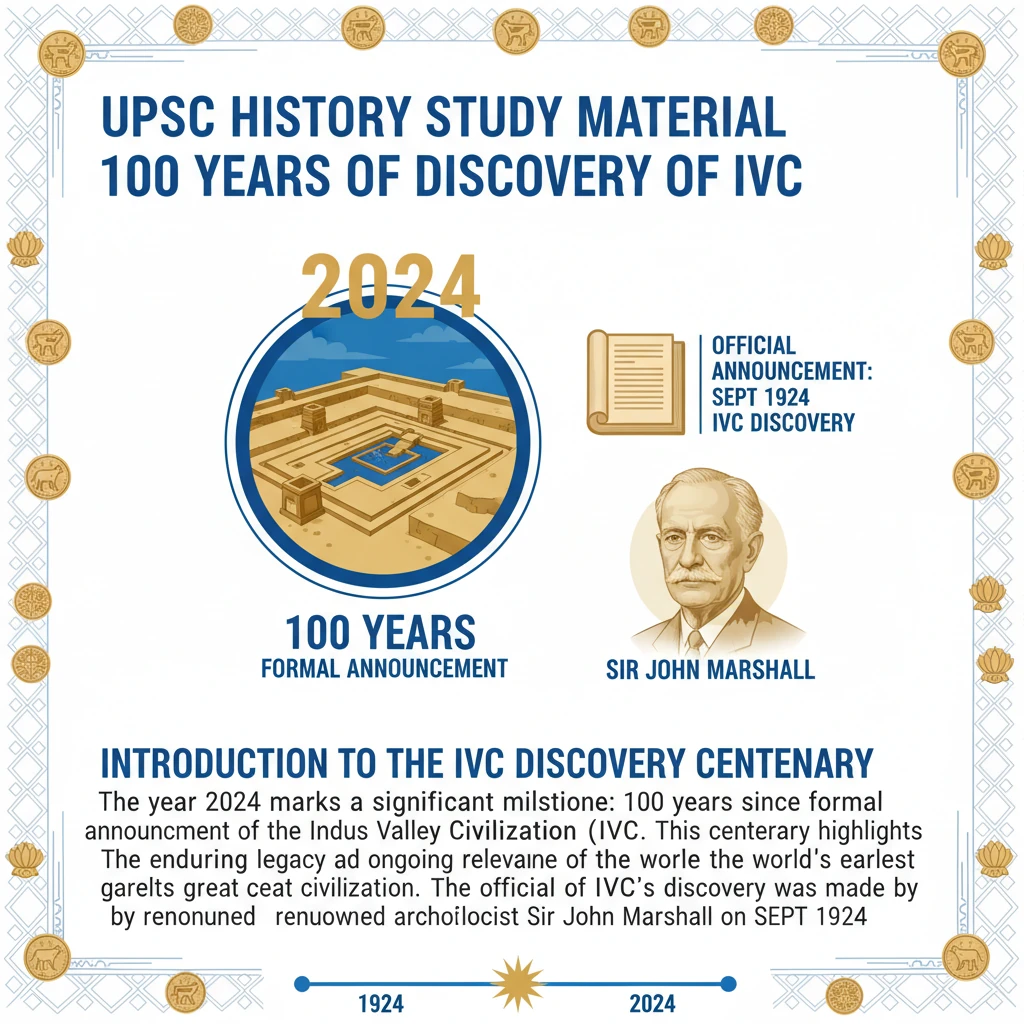
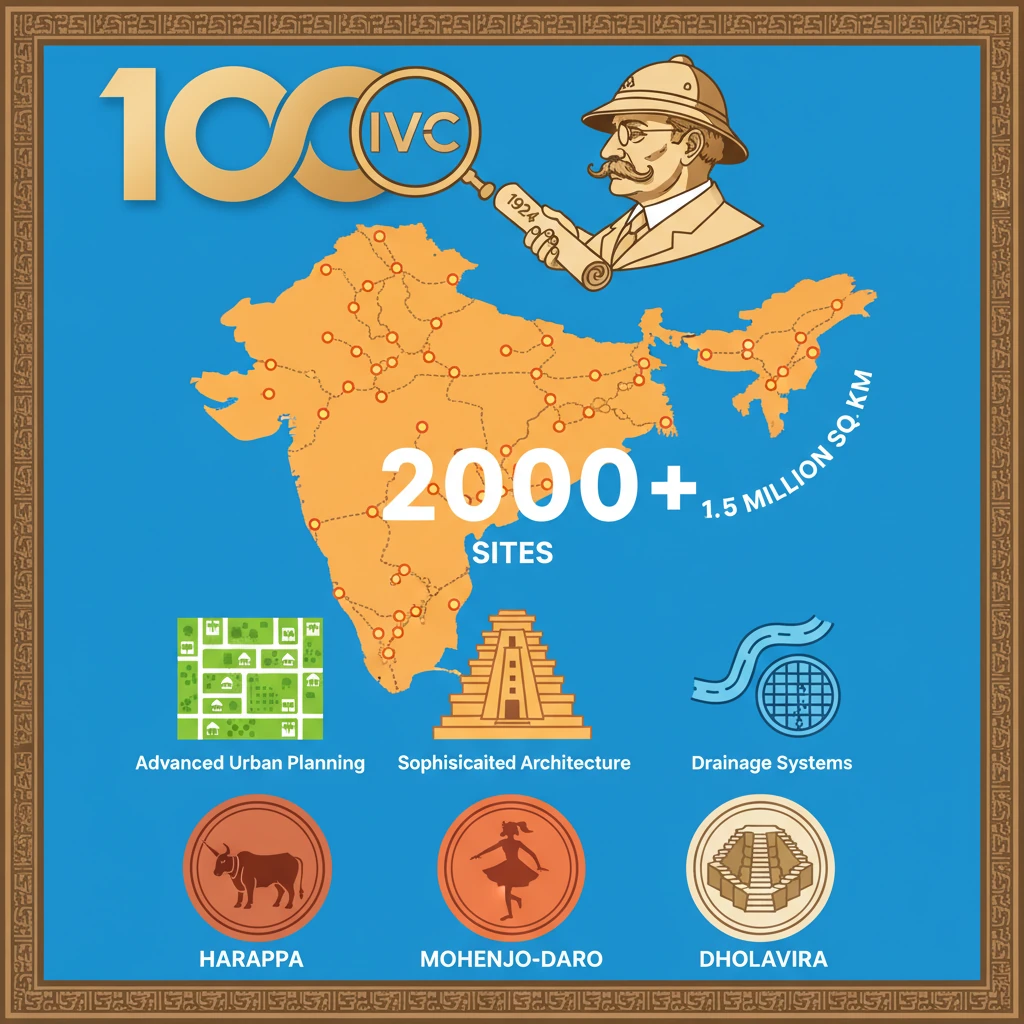
<h4>Introduction to the IVC Discovery Centenary</h4><p>The year <strong>2024</strong> marks a significant milestone: <strong>100 years since the formal announcement</strong> of the <strong>Indus Valley Civilization (IVC)</strong>. This centenary highlights the enduring legacy and ongoing relevance of one of the world's earliest great civilizations.</p><p>The official announcement of the <strong>IVC's discovery</strong> was made by renowned archaeologist <strong>Sir John Marshall</strong> on <strong>20th September 1924</strong>. This declaration brought to light a sophisticated ancient culture that profoundly reshaped our understanding of Indian history.</p><div class='info-box'><p><strong>Key Dates:</strong></p><ul><li><strong>20th September 1924:</strong> Official announcement of IVC discovery by <strong>Sir John Marshall</strong>.</li><li><strong>20th September 2024:</strong> Marks the <strong>100th anniversary</strong> of this pivotal announcement.</li></ul></div><h4>Geographical Extent and Key Features of IVC</h4><p>The <strong>Indus Valley Civilization</strong> was remarkably widespread, encompassing over <strong>2,000 known sites</strong>. These sites are distributed across a vast area of approximately <strong>1.5 million sq. km</strong>.</p><p>The civilization's geographical spread includes modern-day <strong>India</strong>, <strong>Pakistan</strong>, and parts of <strong>Afghanistan</strong>. This expansive reach signifies its profound influence and advanced organizational capabilities.</p><div class='key-point-box'><p><strong>Defining Characteristics:</strong></p><ul><li><strong>Advanced Urban Planning:</strong> Cities like Mohenjo-Daro and Harappa showcased meticulous grid layouts, standardized brick sizes, and elaborate drainage systems.</li><li><strong>Sophisticated Architecture:</strong> Evidence of monumental structures, granaries, and public baths demonstrates advanced engineering skills.</li></ul></div><div class='exam-tip-box'><p>For <strong>UPSC Prelims</strong>, remember the <strong>date of announcement</strong> and the <strong>archaeologist</strong>. For <strong>Mains</strong>, focus on the <strong>significance of the discovery</strong> and the <strong>civilization's key features</strong> as foundational knowledge.</p></div>
💡 Key Takeaways
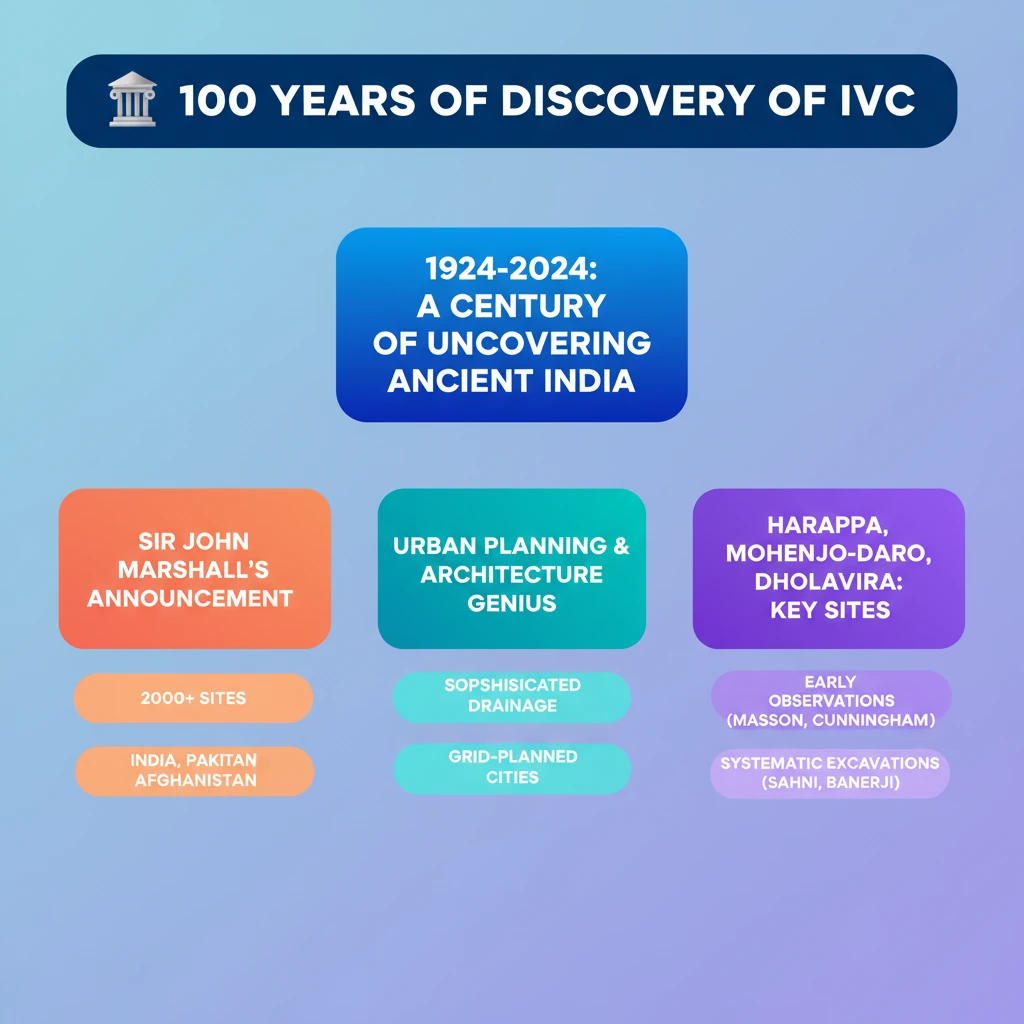
- •2024 marks 100 years since Sir John Marshall's 1924 announcement of IVC discovery.
- •IVC spans 2,000+ sites across 1.5 million sq. km in India, Pakistan, Afghanistan.
- •Known for advanced urban planning, sophisticated architecture, and drainage systems.
- •Key sites like Harappa, Mohenjo-Daro, and Dholavira showcase its ingenuity.
- •Discovery involved early observations (Masson, Cunningham) followed by systematic excavations (Sahni, Banerji) leading to Marshall's formal announcement.
- •IVC offers lessons for modern urban planning, water management, and cultural heritage preservation.
🧠 Memory Techniques
98% Verified Content
📚 Reference Sources
•Archaeological Survey of India (ASI) Publications
•Drishti IAS Study Material on Ancient History
•Upinder Singh, 'A History of Ancient and Early Medieval India'
•Reports by Sir John Marshall, R.D. Banerji, Dayaram Sahni