Virupaksha Temple, Hampi: Vijayanagara Architecture & Deva Raya II - History | UPSC Learning
Topics
0 topics • 0 completed
🔍
No topics match your search
Virupaksha Temple, Hampi: Vijayanagara Architecture & Deva Raya II
Easy⏱️ 6 min read
history
📖 Introduction
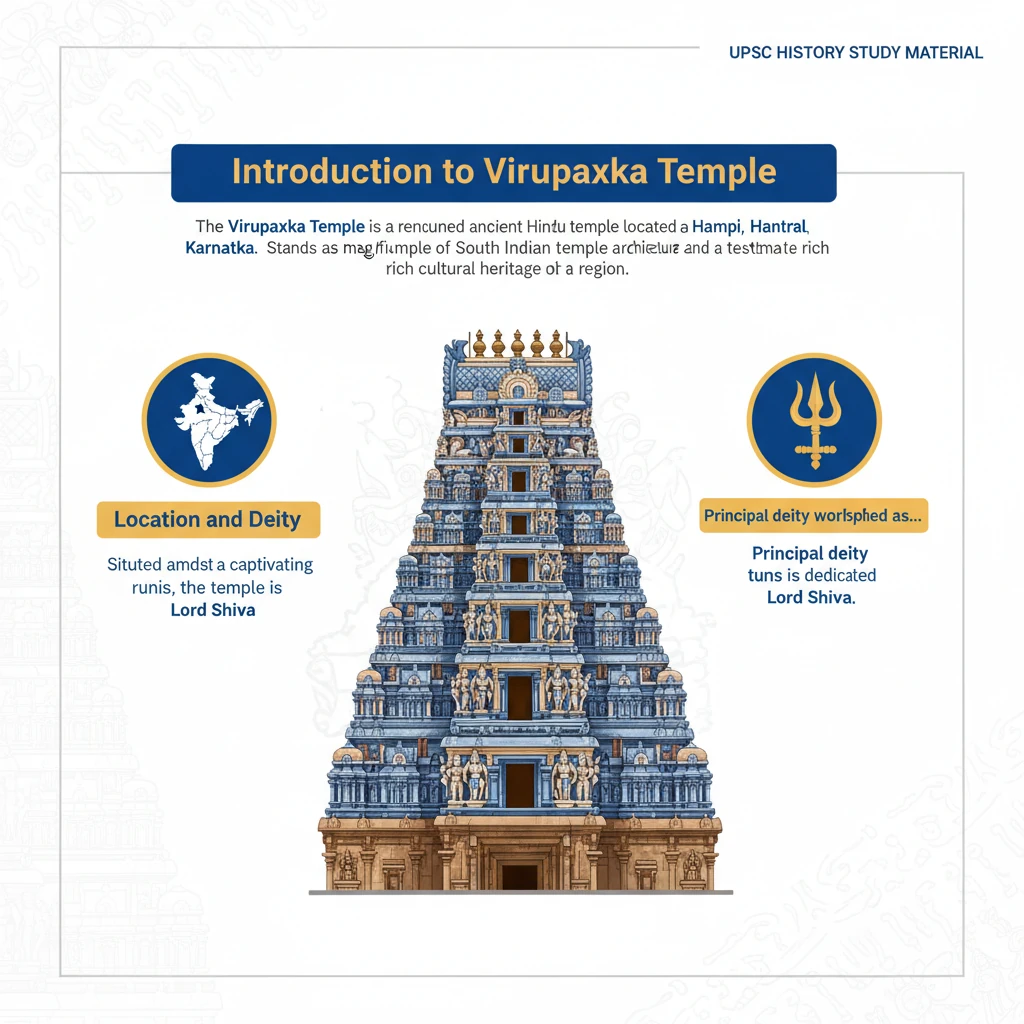
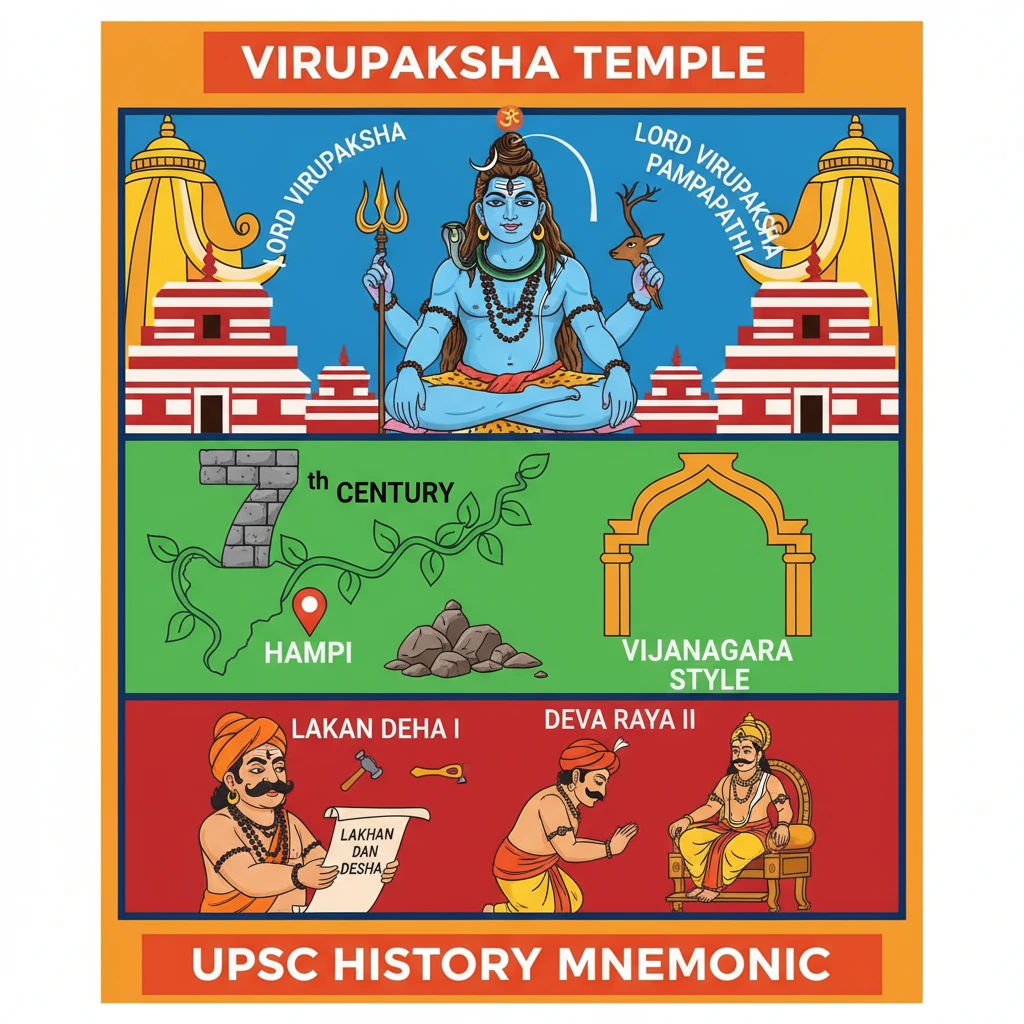
<h4>Introduction to Virupaksha Temple</h4><p>The <strong>Virupaksha Temple</strong> is a renowned ancient Hindu temple located in <strong>Hampi</strong>, <strong>Central Karnataka</strong>. It stands as a magnificent example of South Indian temple architecture and a testament to the rich cultural heritage of the region.</p><h4>Location and Deity</h4><p>Situated amidst the captivating ruins of <strong>Hampi</strong>, the temple is dedicated to <strong>Lord Shiva</strong>. The principal deity worshipped here is <strong>Lord Virupaksha</strong>, who is also reverently known as <strong>Pampapathi</strong>.</p><div class='info-box'><p><strong>Location:</strong> Hampi, Central Karnataka, India</p><p><strong>Main Deity:</strong> Lord Virupaksha (Pampapathi), a form of Lord Shiva</p></div><h4>Architectural Style</h4><p>The temple showcases the distinctive <strong>Vijayanagara style of architecture</strong>, which flourished under the powerful <strong>Vijayanagara Empire</strong>. This style is characterized by its grandeur, intricate carvings, and unique structural elements.</p><div class='key-point-box'><p><strong>Architectural Style:</strong> Vijayanagara Architecture</p><p>Known for its robust yet ornate structures, massive gopurams, pillared mandapas, and detailed sculptural work.</p></div><h4>Construction and Patronage</h4><p>While the temple's origins trace back to the <strong>7th century CE</strong>, its current majestic form largely developed during the <strong>Vijayanagara period</strong>. It was significantly built and expanded by <strong>Lakhan Dandesha</strong>.</p><p><strong>Lakhan Dandesha</strong> was a prominent <strong>nayaka</strong> (chief or military governor) serving under the illustrious ruler <strong>Deva Raya II</strong> of the <strong>Vijayanagara Empire</strong>.</p><div class='info-box'><p><strong>Original Foundation:</strong> 7th Century CE</p><p><strong>Major Construction/Expansion:</strong> During the Vijayanagara Empire</p><p><strong>Builder:</strong> Lakhan Dandesha (a nayaka)</p><p><strong>Patron Ruler:</strong> Deva Raya II (Vijayanagara Empire)</p></div><div class='exam-tip-box'><p><strong>UPSC Insight:</strong> Understanding the specific architectural styles like <strong>Vijayanagara</strong> and identifying key patrons like <strong>Deva Raya II</strong> and builders like <strong>Lakhan Dandesha</strong> are crucial for <strong>GS Paper I (Art & Culture)</strong>. Note the temple's dual identity as a 7th-century shrine expanded later.</p></div>
💡 Key Takeaways
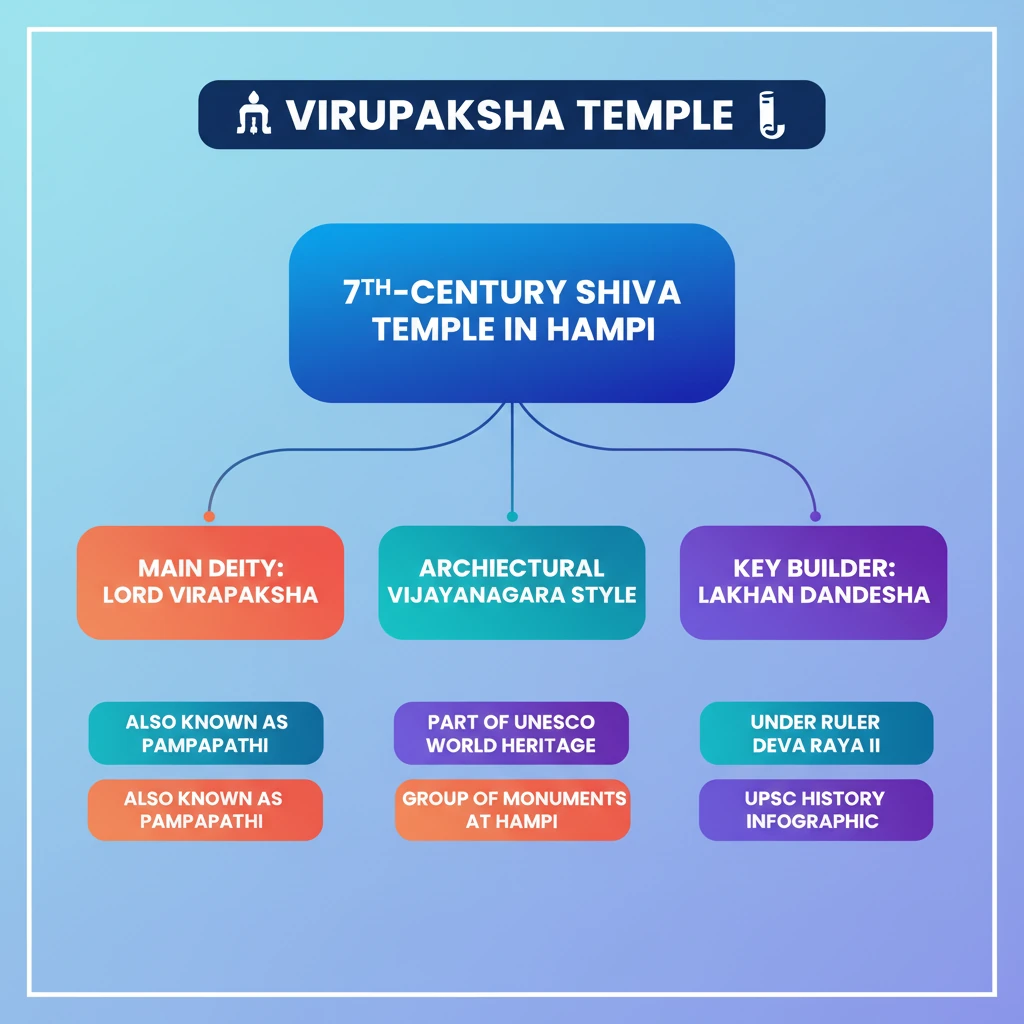
- •Virupaksha Temple: 7th-century Shiva temple in Hampi, Central Karnataka.
- •Main deity: Lord Virupaksha, also known as Pampapathi.
- •Architectural style: Predominantly Vijayanagara style.
- •Key builder: Lakhan Dandesha, a nayaka under ruler Deva Raya II.
- •Part of the UNESCO World Heritage Site 'Group of Monuments at Hampi'.
- •Remains an active place of worship, blending history with living tradition.
🧠 Memory Techniques
98% Verified Content
📚 Reference Sources
•NCERT Textbooks on Indian Art and Culture
•Official UNESCO World Heritage Centre documentation for Hampi
•Reputable historical and architectural journals/websites