What are Key Facts About the Hampi? - History | UPSC Learning
Topics
0 topics • 0 completed
🔍
No topics match your search
What are Key Facts About the Hampi?
Medium⏱️ 6 min read
history
📖 Introduction
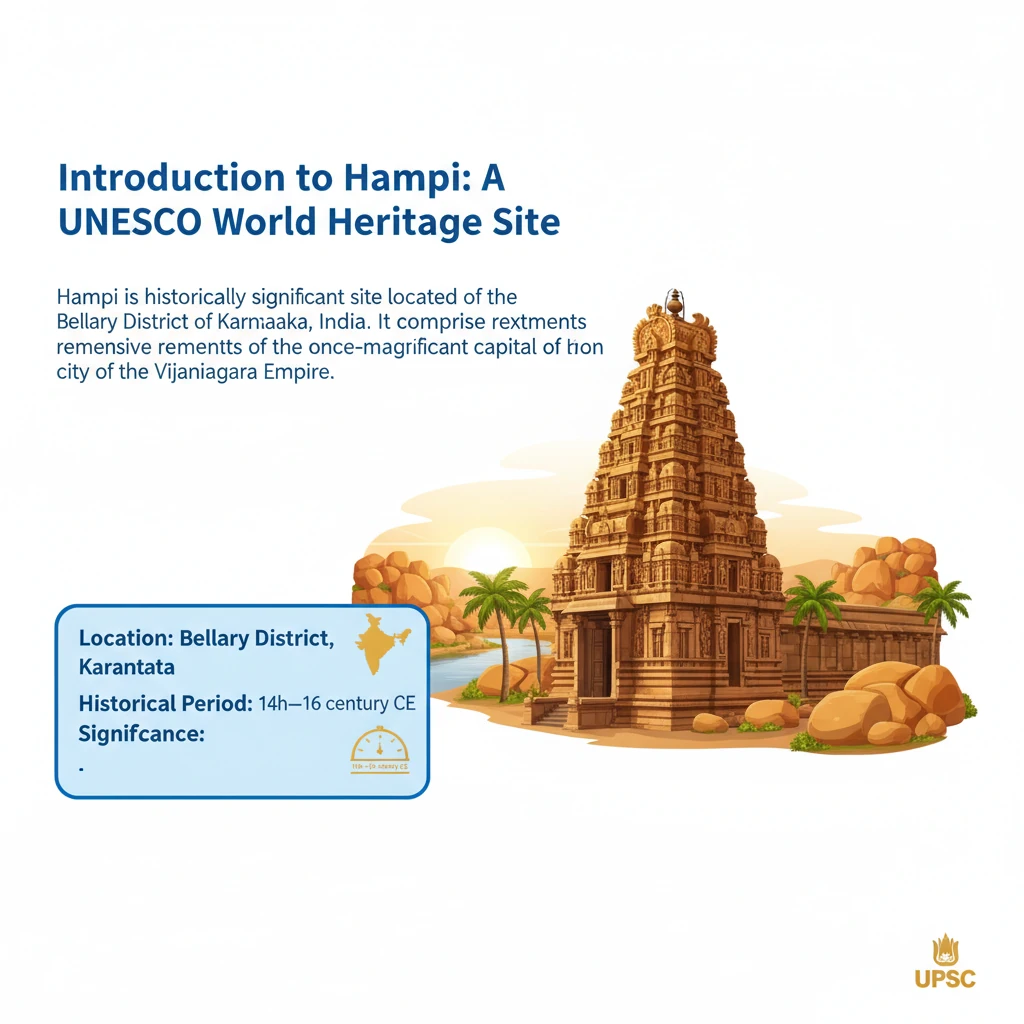
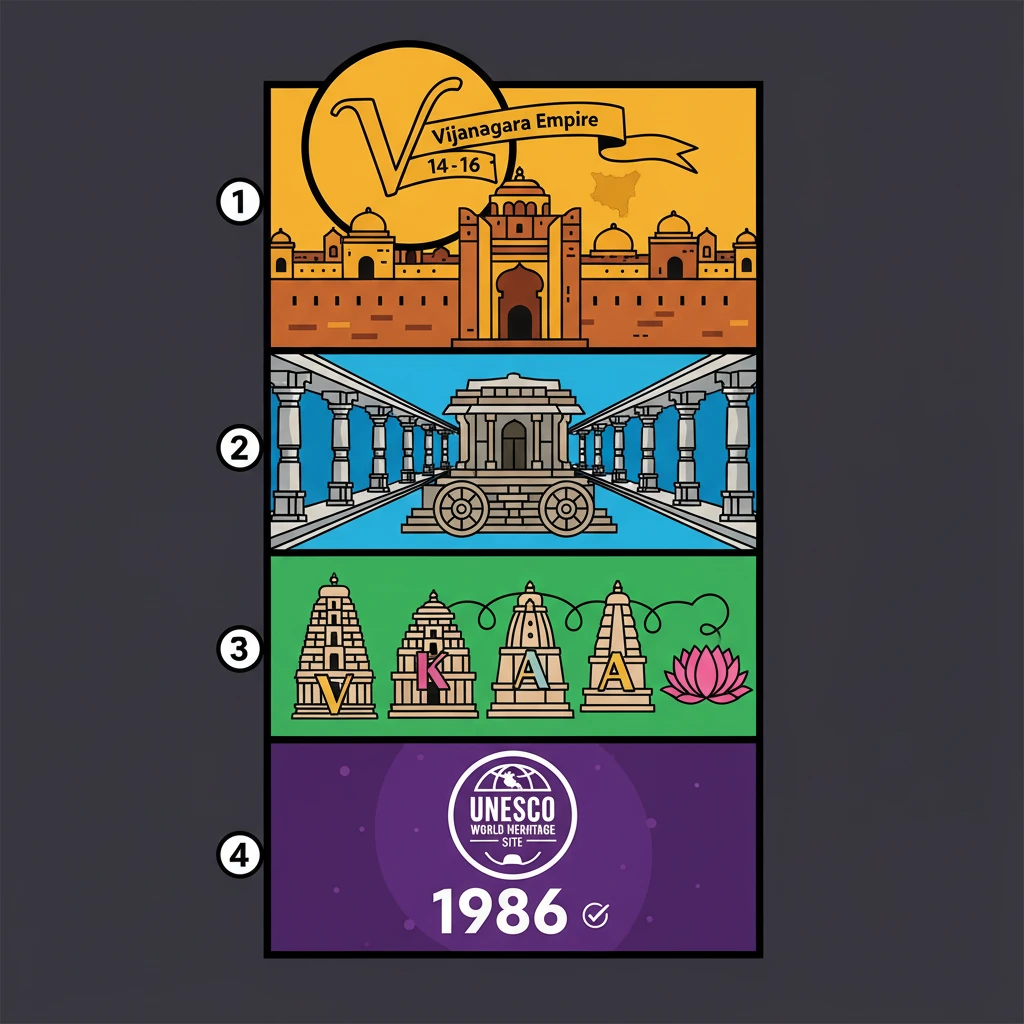
<h4>Introduction to Hampi: A UNESCO World Heritage Site</h4><p><strong>Hampi</strong> is a historically significant site located in the <strong>Bellary District</strong> of <strong>Karnataka</strong>, India. It comprises the extensive remnants of the once-magnificent capital city of the <strong>Vijayanagara Empire</strong>.</p><div class='info-box'><p><strong>Location:</strong> Bellary District, Karnataka</p><p><strong>Historical Period:</strong> 14th–16th century CE</p><p><strong>Significance:</strong> Capital of the <strong>Vijayanagara Empire</strong></p></div><h4>Architectural Grandeur: Unique Features</h4><p>One of the most striking and unique features of the temples at Hampi is their wide <strong>chariot streets</strong>. These grand avenues were specifically designed for religious processions and public gatherings.</p><p>These chariot streets are typically flanked by a continuous row of <strong>pillared mandapas</strong>. These mandapas served various purposes, including housing markets, shelters for pilgrims, and spaces for religious discourses.</p><div class='key-point-box'><p><strong>Key Architectural Features:</strong></p><ul><li>Wide <strong>chariot streets</strong></li><li>Flanked by <strong>pillared mandapas</strong></li></ul></div><h4>Prominent Temple Complexes and Structures</h4><p>Hampi is home to numerous iconic temple complexes and structures, each showcasing the unparalleled architectural and artistic prowess of the <strong>Vijayanagara period</strong>.</p><ul><li><strong>Krishna Temple Complex</strong></li><li><strong>Narasimha Temple</strong></li><li><strong>Ganesa Temple</strong></li><li><strong>Hemakuta Group of Temples</strong></li><li><strong>Achyutaraya Temple Complex</strong></li><li><strong>Vitthala Temple Complex</strong> (famous for its stone chariot)</li><li><strong>Pattabhirama Temple Complex</strong></li><li><strong>Lotus Mahal Complex</strong></li></ul><h4>UNESCO World Heritage Status</h4><p>The exceptional historical and architectural value of Hampi has been globally recognized. It was officially declared a <strong>World Heritage Site</strong> by <strong>UNESCO</strong> in <strong>1986</strong>.</p><div class='exam-tip-box'><p><strong>UPSC Insight:</strong> The <strong>UNESCO World Heritage Site</strong> status of Hampi makes it a crucial topic for <strong>Art and Culture</strong> in <strong>GS Paper I</strong>. Questions can relate to its architectural style, historical significance, or the importance of heritage preservation.</p></div>
💡 Key Takeaways
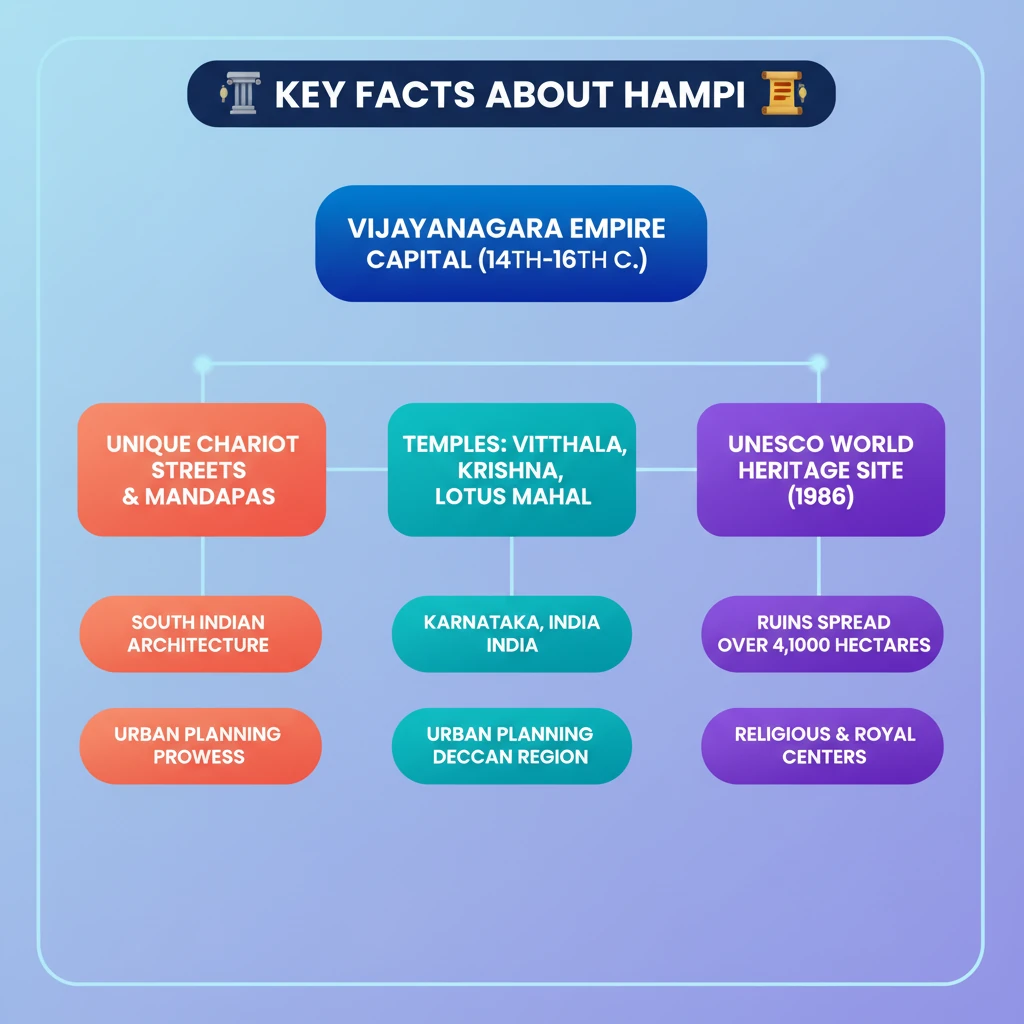
- •Hampi is the capital city remnant of the Vijayanagara Empire (14th-16th century CE) in Karnataka.
- •Known for unique wide chariot streets flanked by pillared mandapas.
- •Features famous complexes like Vitthala, Krishna, Achyutaraya, and Lotus Mahal.
- •Declared a UNESCO World Heritage Site in 1986.
- •Represents a pinnacle of South Indian architectural and urban planning prowess.
🧠 Memory Techniques
95% Verified Content