What is Mahavir Jayanti? - History | UPSC Learning
Topics
0 topics • 0 completed
🔍
No topics match your search
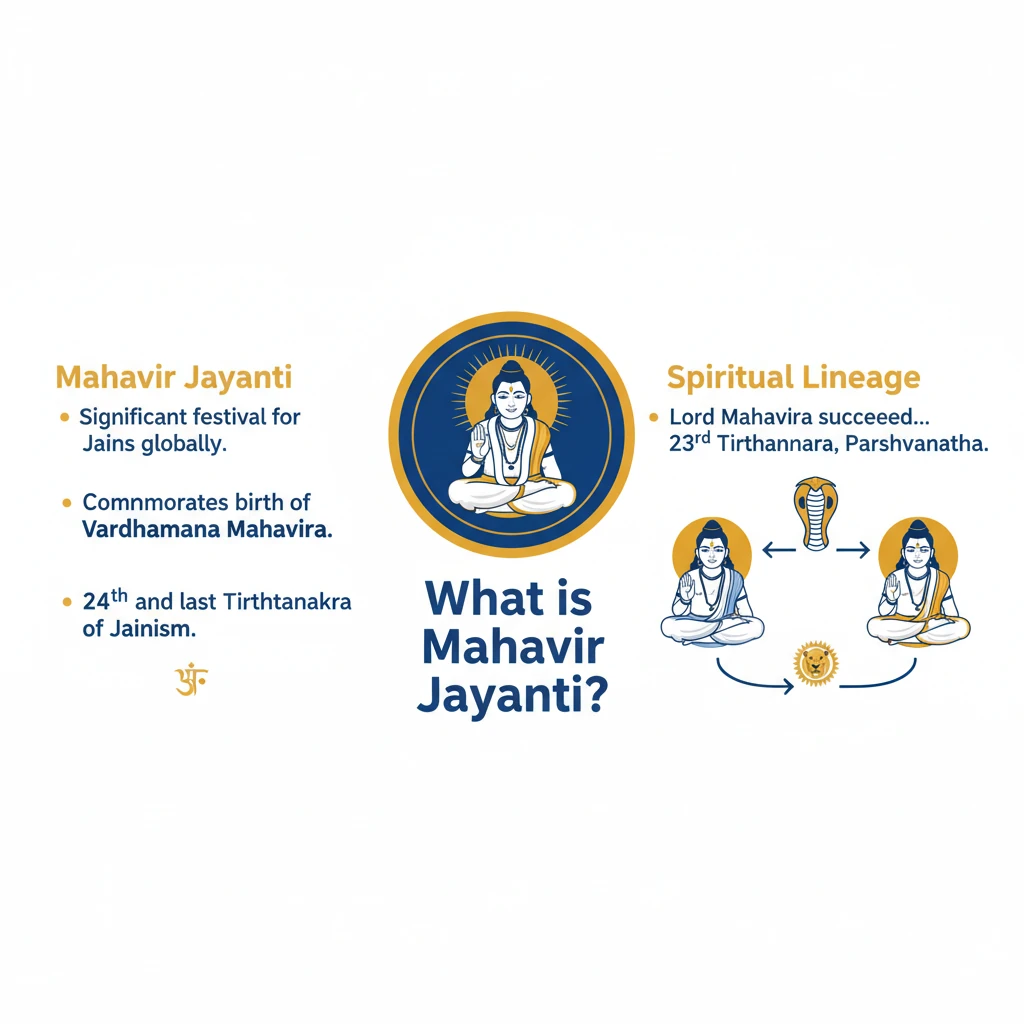
What is Mahavir Jayanti?
Easy⏱️ 4 min read
history
📖 Introduction
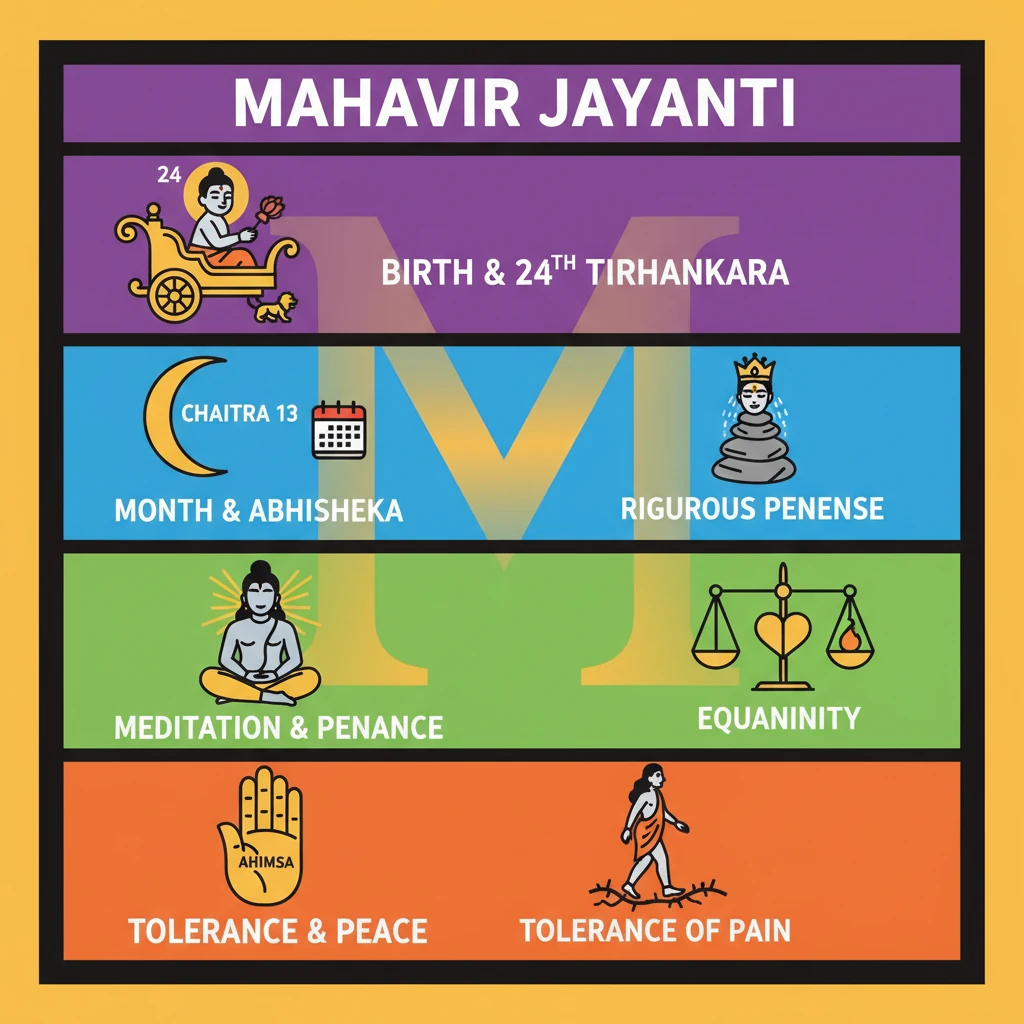
<h4>What is Mahavir Jayanti?</h4><p><strong>Mahavir Jayanti</strong> is one of the most significant and auspicious festivals celebrated by the <strong>Jain community</strong> across the globe. It commemorates the birth of <strong>Vardhamana Mahavira</strong>, the <strong>24th and last Tirthankara</strong> of Jainism.</p><p>This sacred day marks the culmination of a spiritual lineage, as <strong>Lord Mahavira</strong> succeeded the <strong>23rd Tirthankara, Parshvanatha</strong>, carrying forward the profound teachings of Jain philosophy.</p><div class='info-box'><p><strong>Birth Details:</strong> According to <strong>Jain texts</strong>, <strong>Lord Mahavira</strong> was born on the <strong>13th day of the bright half of the month of Chaitra</strong>. In the <strong>Gregorian calendar</strong>, this usually falls in <strong>March or April</strong>.</p></div><h4>Celebrations and Rituals</h4><p>The celebrations of <strong>Mahavir Jayanti</strong> are marked by vibrant processions and devotional practices. A key highlight is the <strong>Rath Yatra</strong>, a grand procession featuring the idol of <strong>Lord Mahavira</strong>.</p><p>Devotees engage in reciting <strong>stavans</strong>, which are sacred <strong>Jain prayers</strong>. A significant ritual involves giving the statues of <strong>Lord Mahavira</strong> a ceremonial bath, known as <strong>abhishekа</strong>, symbolizing purification and reverence.</p><h4>The Life and Teachings of Lord Mahavira</h4><p><strong>Bhagwan Mahavir Swami</strong> left an indelible mark on humanity through his profound spiritual practices and teachings. He was originally named <strong>Vardhamana</strong>, a name that signifies <strong>'one who grows'</strong>, reflecting his spiritual evolution.</p><div class='key-point-box'><p><strong>Lord Mahavira's Extraordinary Qualities:</strong> During his <strong>twelve-year period of intense spiritual practices</strong>, <strong>Bhagwan Mahavir</strong> exhibited four remarkable qualities:</p><ul><li><strong>Deep and Undisturbed Meditation:</strong> His unwavering focus led to profound spiritual insights.</li><li><strong>Rigorous Penance:</strong> He endured extreme physical hardships to purify his soul.</li><li><strong>Tolerance of Pain:</strong> <strong>Mahavir Swami</strong> demonstrated exceptional endurance and resilience.</li><li><strong>Ultimate Equanimity:</strong> His inner balance and composure remained unshaken through all circumstances.</li></ul></div><p>His spiritual journey reached a pivotal moment on the <strong>tenth day of the Vaishakh</strong>, when he attained <strong>Kevala Jnana</strong> (omniscience).</p><h4>Core Teachings and Contributions</h4><p>Among the <strong>five fundamental teachings of Jainism</strong>, <strong>Brahmacharya (Celibacy/Chastity)</strong> was specifically added and emphasized by <strong>Lord Mahavira</strong>, solidifying its place as a core tenet of the faith.</p><div class='exam-tip-box'><p><strong>UPSC Insight:</strong> Understanding <strong>Mahavir Jayanti</strong> and <strong>Lord Mahavira's</strong> contributions is crucial for <strong>Ancient Indian History (GS Paper 1)</strong> and <strong>Indian Culture and Heritage</strong>. Questions often relate to the tenets of <strong>Jainism</strong> and its impact on society.</p></div>
💡 Key Takeaways
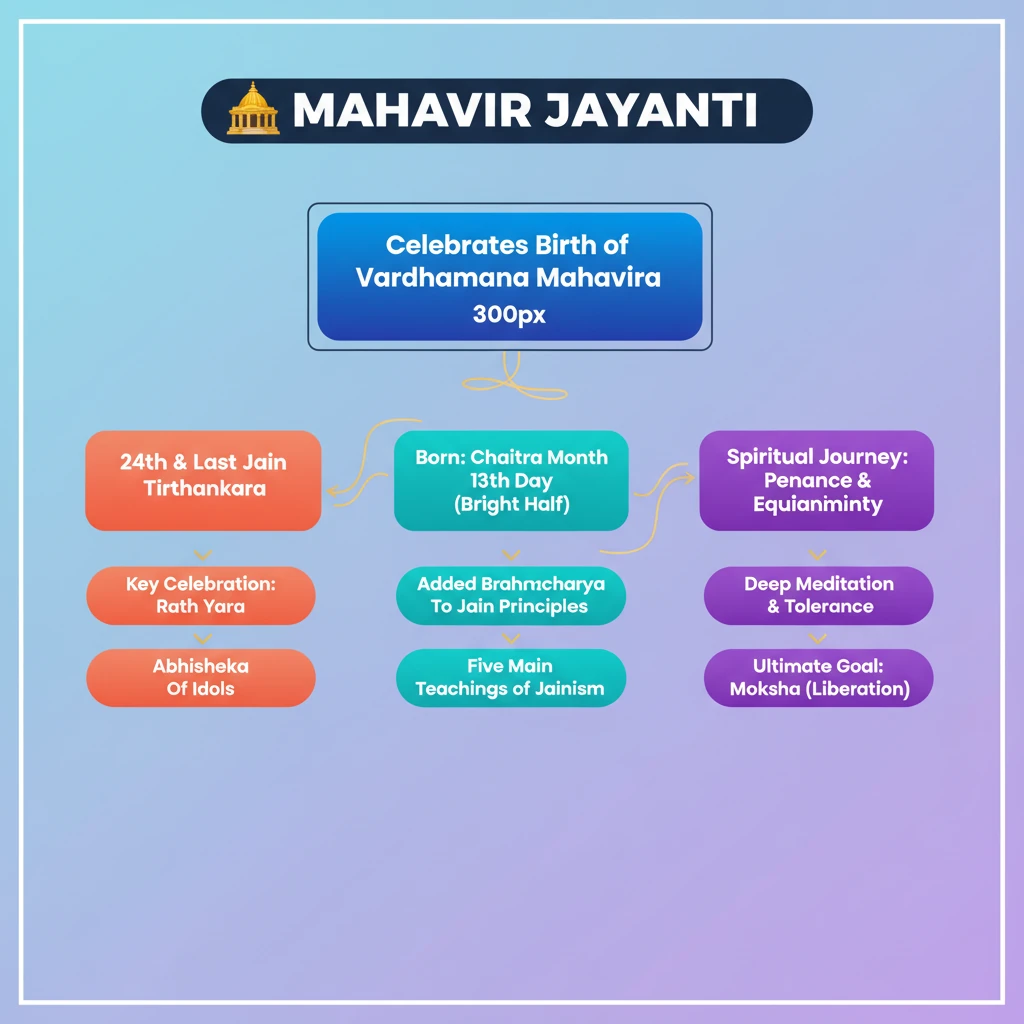
- •Mahavir Jayanti celebrates the birth of Vardhamana Mahavira, the 24th and last Jain Tirthankara.
- •Lord Mahavira was born on the 13th day of the bright half of Chaitra month.
- •Key celebrations include Rath Yatra and Abhishekа of Mahavira's idols.
- •Mahavira's spiritual journey involved deep meditation, rigorous penance, tolerance of pain, and ultimate equanimity.
- •He added Brahmacharya (celibacy) to the five main teachings of Jainism.
- •His teachings emphasize non-violence, truth, non-stealing, and non-possession.
- •The festival highlights Jainism's enduring cultural and ethical significance in India.
🧠 Memory Techniques
95% Verified Content