What are the Other Reforms Undertaken by William Bentinck (1828-1835)? - History | UPSC Learning
Topics
0 topics • 0 completed
🔍
No topics match your search
What are the Other Reforms Undertaken by William Bentinck (1828-1835)?
Easy⏱️ 5 min read
history
📖 Introduction
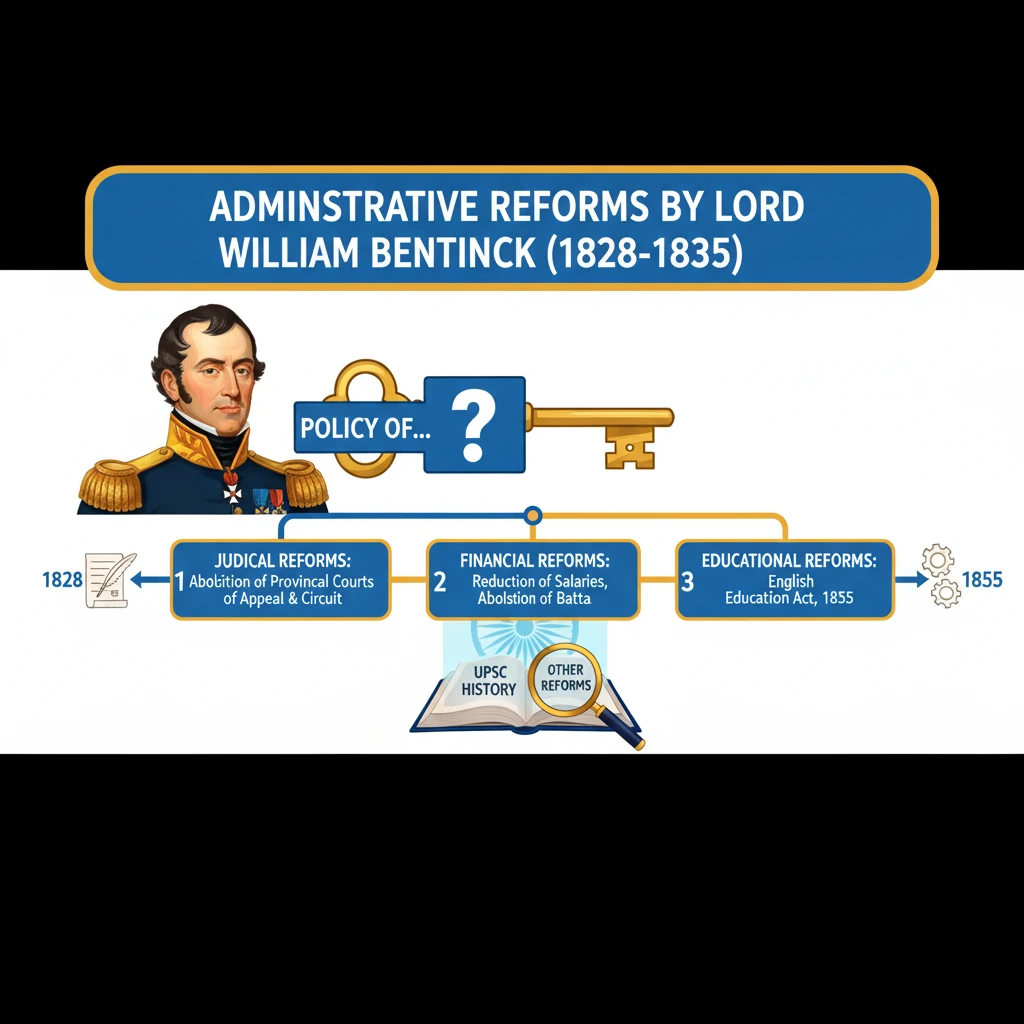
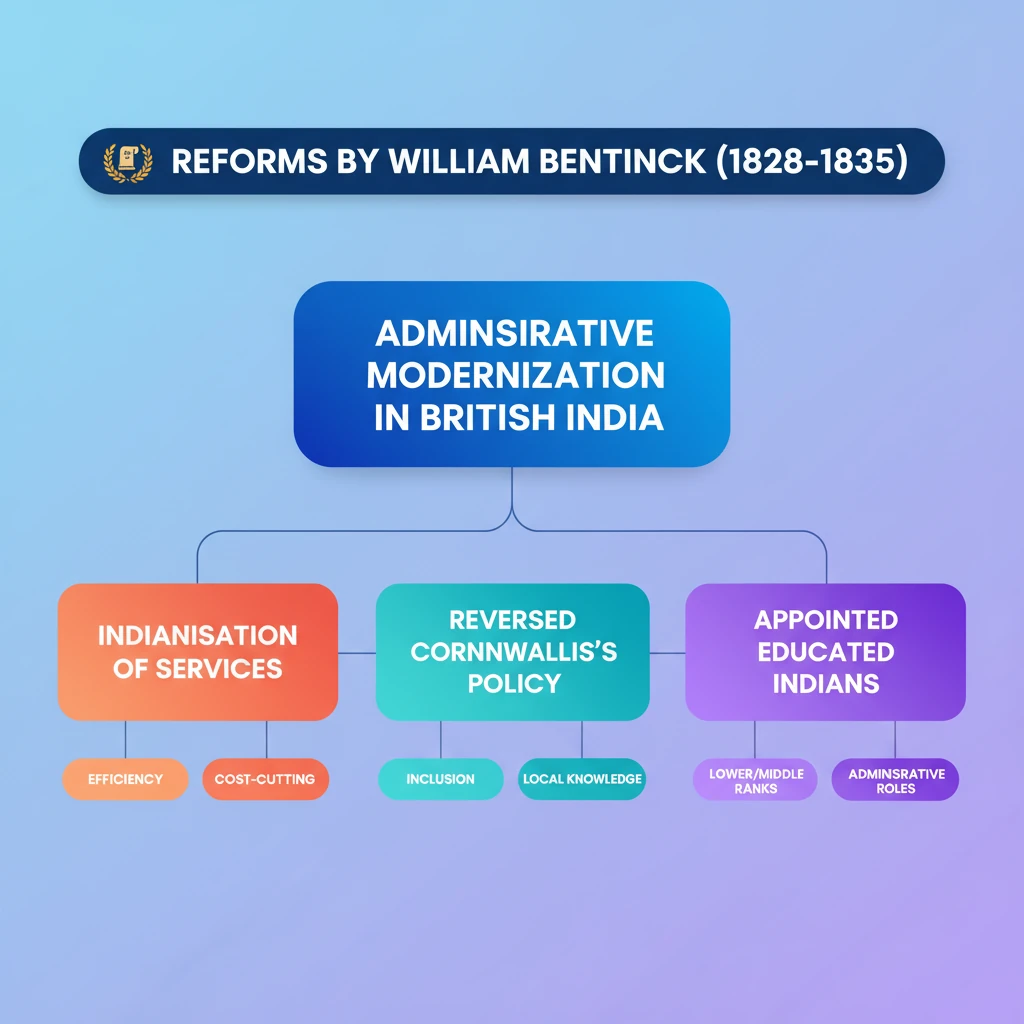
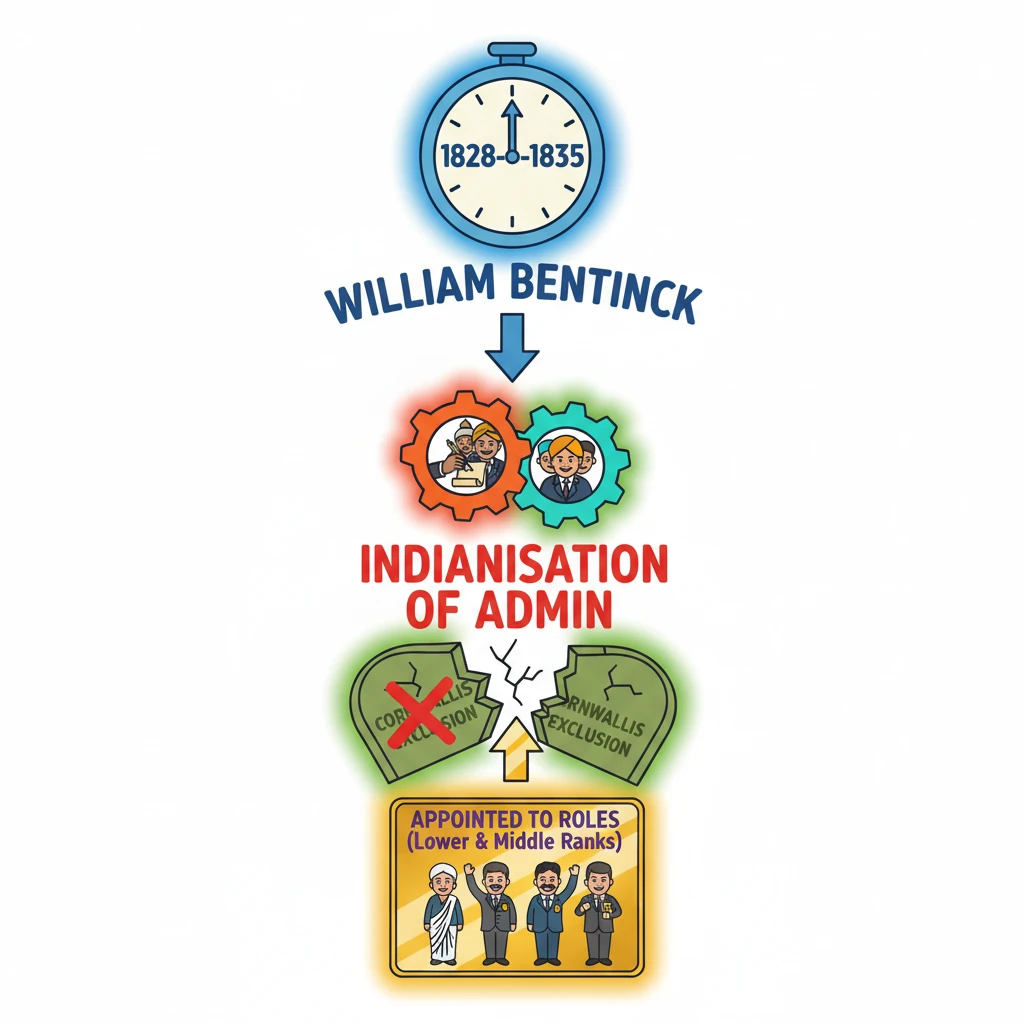
<h4>Administrative Reforms by Lord William Bentinck (1828-1835)</h4><p><strong>Lord William Bentinck</strong>, who served as the Governor-General of India from <strong>1828 to 1835</strong>, is renowned for initiating several significant reforms. Among these, his <strong>administrative reforms</strong> were particularly noteworthy for their progressive outlook and long-term impact.</p><div class='key-point-box'><p>One of Bentinck's most crucial administrative initiatives was the policy of <strong>Indianisation of Administration</strong>. This represented a significant and deliberate shift in the British approach to governance in India, aiming to involve local talent.</p></div><h4>Indianisation of Administration: A Policy Reversal</h4><p>The policy of <strong>Indianisation of Administration</strong> aimed at integrating qualified Indian individuals into the lower and middle ranks of the British administrative structure. This was a direct reversal of previous exclusionary policies that had kept Indians out of such roles.</p><div class='info-box'><p>Bentinck specifically reversed <strong>Lord Cornwallis's policy</strong>, which had systematically excluded Indians from holding administrative roles within the East India Company's government. Cornwallis's policy was largely based on mistrust and a desire to maintain exclusive British control.</p></div><p>Under Bentinck's new directive, the administration began appointing <strong>educated Indians</strong> to various positions. This move was driven by a combination of factors, including the pragmatic need for efficient governance and financial considerations to reduce administrative costs.</p><div class='exam-tip-box'><p>For UPSC, understanding the shift from <strong>Cornwallis's exclusion</strong> to <strong>Bentinck's inclusion</strong> is vital. It highlights the evolving nature of British policy and the early, albeit often pragmatic, recognition of Indian talent in administration. This is crucial for <strong>GS Paper I (Modern Indian History)</strong>.</p></div>
💡 Key Takeaways
- •Lord William Bentinck (1828-1835) undertook significant administrative reforms in British India.
- •He initiated the policy known as 'Indianisation of Administration'.
- •This policy directly reversed Lord Cornwallis's earlier exclusionary stance against Indians in administration.
- •Educated Indians were appointed to various administrative roles, particularly in the lower and middle ranks.
- •The reform was driven by a combination of factors, including administrative efficiency and financial considerations.
🧠 Memory Techniques
95% Verified Content
📚 Reference Sources
•Bipan Chandra - India's Struggle for Independence
•Spectrum - A Brief History of Modern India
•NCERT History Textbooks (Class XII)