Chalukya Architecture: Cave, Aihole, Badami & Pattadakal Temples - History | UPSC Learning
Topics
0 topics • 0 completed
🔍
No topics match your search
Chalukya Architecture: Cave, Aihole, Badami & Pattadakal Temples
Medium⏱️ 8 min read
history
📖 Introduction
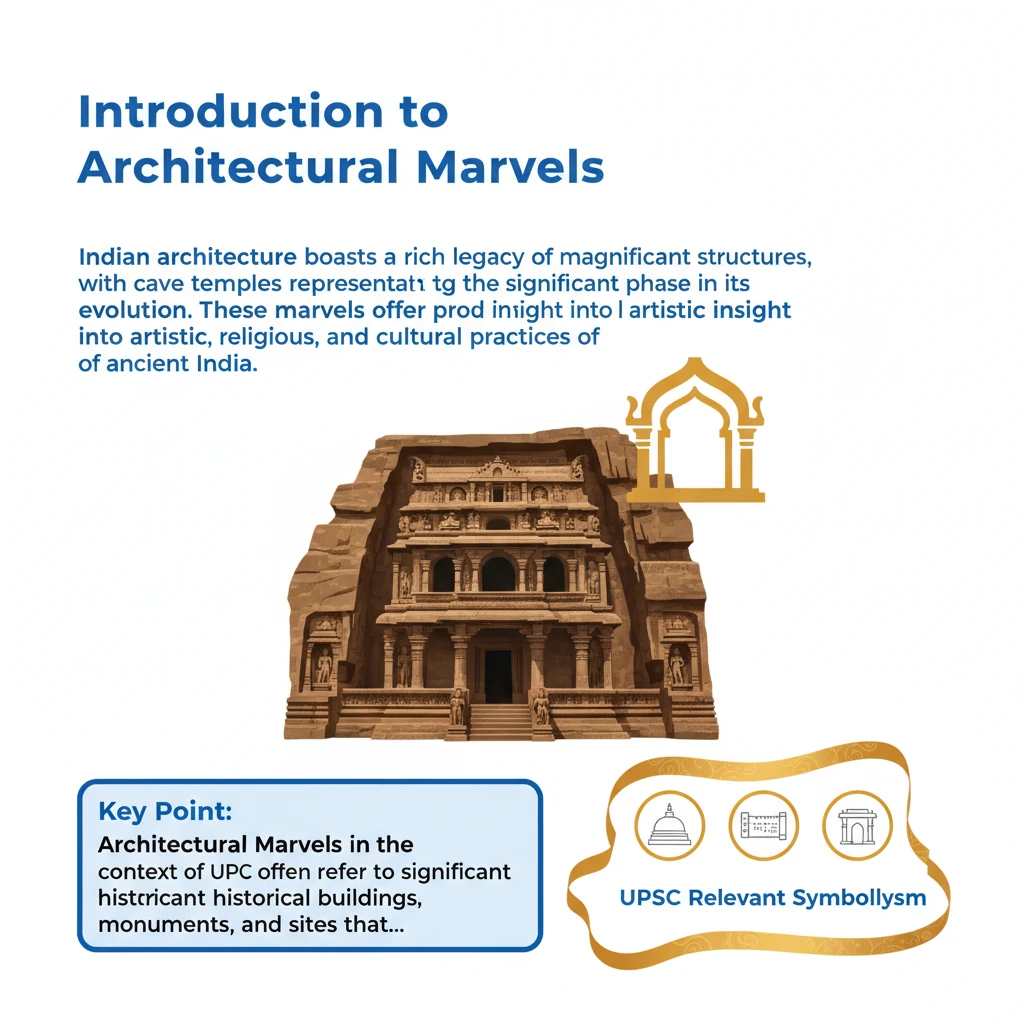
<h4>Introduction to Architectural Marvels</h4><p><strong>Indian architecture</strong> boasts a rich legacy of magnificent structures, with <strong>cave temples</strong> representing a significant phase in its evolution. These marvels offer a profound insight into the artistic, religious, and cultural practices of ancient India.</p><div class='key-point-box'><p><strong>Architectural Marvels</strong> in the context of UPSC often refer to significant historical buildings, monuments, and sites that showcase advanced engineering, artistic skill, and cultural significance from different periods of Indian history.</p></div><h4>The Significance of Cave Temples</h4><p><strong>Cave temples</strong> are unique architectural achievements carved directly out of natural rock formations. They served as important centers for religious worship and spiritual practices, reflecting the devotion of various communities.</p><p>These temples were not limited to religious themes; many also incorporated <strong>secular themes</strong> in their designs. They were frequently adorned with intricate sculptures and beautiful <strong>mural paintings</strong>, providing a visual narrative of the era.</p><div class='info-box'><ul><li><strong>Religious Themes:</strong> Depictions of deities, mythological stories, and spiritual symbols.</li><li><strong>Secular Themes:</strong> Scenes from daily life, royal processions, courtly activities, and nature.</li></ul></div><h4>Notable Temple Complexes and Their Features</h4><p>The <strong>Deccan region</strong>, particularly Karnataka, is home to several prominent temple complexes that exemplify the grandeur of ancient Indian rock-cut and structural architecture. These sites are crucial for understanding the transition in temple building styles.</p><ul><li><strong>Aihole Temples:</strong> Known as the "Cradle of Indian Temple Architecture," <strong>Aihole</strong> showcases an experimental phase with various styles.</li><li><strong>Badami Temples:</strong> Famous for its exquisite rock-cut cave temples, <strong>Badami</strong> served as the capital of the early <strong>Chalukyas</strong>.</li><li><strong>Pattadakal Temples:</strong> A <strong>UNESCO World Heritage site</strong>, <strong>Pattadakal</strong> represents the culmination of <strong>Chalukyan architecture</strong>, featuring both <strong>Nagara</strong> and <strong>Dravida</strong> styles.</li></ul><h4>Aihole: Cradle of Temple Architecture</h4><p><strong>Aihole</strong> is a significant archaeological site in Karnataka, housing over 125 temples. It is often referred to as the "laboratory" where different architectural styles were experimented with by the <strong>Chalukyan artisans</strong>.</p><div class='info-box'><p><strong>Key Temples at Aihole:</strong></p><ul><li><strong>Lady Khan Temple (Surya Temple):</strong> One of the earliest stone temples, initially a Vaishnava temple, later dedicated to Surya.</li><li><strong>Durga Temple:</strong> Unique for its apsidal plan, resembling a Buddhist chaitya hall, showcasing a blend of architectural influences.</li><li><strong>Huchimalligudi Temple:</strong> An early example of a structural temple, indicating the transition from rock-cut to freestanding structures.</li></ul></div><h4>Badami: Chalukyan Rock-Cut Grandeur</h4><p>The town of <strong>Badami</strong> (formerly Vatapi) is renowned for its four magnificent rock-cut cave temples, primarily dedicated to Hindu deities and one to Jainism. These caves are carved out of soft sandstone cliffs.</p><div class='key-point-box'><p>The <strong>Badami Cave Temples</strong> are noted for their exquisite sculptures, detailed carvings, and vibrant mural paintings, offering a glimpse into the religious syncretism of the <strong>Chalukya dynasty</strong>.</p></div><h4>Pattadakal: A UNESCO World Heritage Site</h4><p><strong>Pattadakal</strong>, located on the banks of the Malaprabha River, is a spectacular complex that served as the coronation site for the <strong>Chalukyan kings</strong>. It stands as a testament to the architectural prowess of the 7th and 8th centuries.</p><p>This site is particularly important as it showcases a harmonious blend of two major Indian temple architectural styles: the <strong>Nagara style</strong> (Northern Indian) and the <strong>Dravida style</strong> (Southern Indian). There are <strong>10 temples</strong> in total, reflecting this unique synthesis.</p><div class='info-box'><p><strong>Prominent Temples at Pattadakal:</strong></p><ul><li><strong>Virupaksha Temple:</strong> A grand <strong>Dravida style</strong> temple built by Queen Lokamahadevi to commemorate Vikramaditya II's victory over the Pallavas. It is known for its intricate sculptures and inscriptions.</li><li><strong>Sangameshwara Temple:</strong> Another significant <strong>Dravida style</strong> temple, also known as the Vijayeshwara Temple, built by King Vijayaditya Satyashraya.</li><li>Other notable temples include the <strong>Papanatha Temple</strong> (Nagara style) and the <strong>Jambulinga Temple</strong>.</li></ul></div><div class='exam-tip-box'><p>For UPSC, remember the <strong>UNESCO World Heritage status</strong> of <strong>Pattadakal</strong> and its unique representation of both <strong>Nagara</strong> and <strong>Dravida</strong> architectural styles. This makes it a frequent topic in Art & Culture questions.</p></div>
💡 Key Takeaways
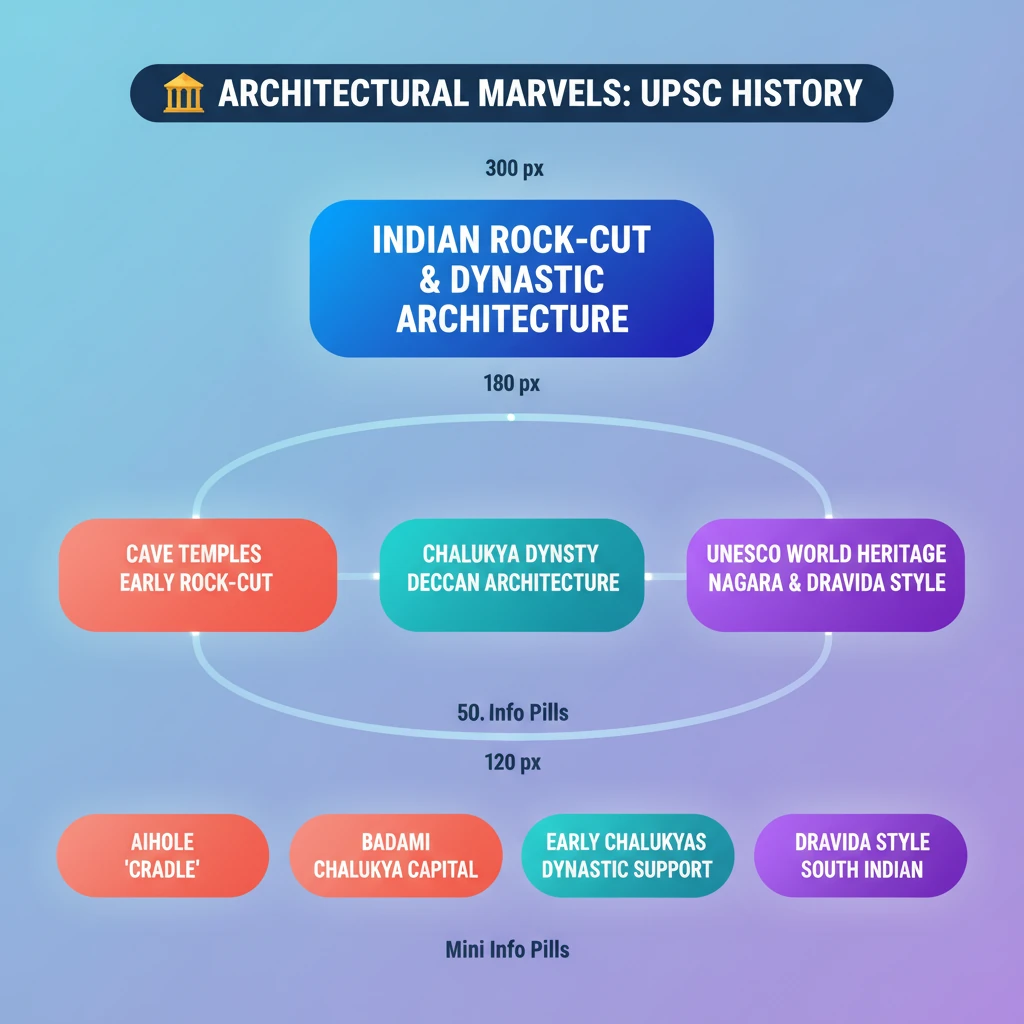
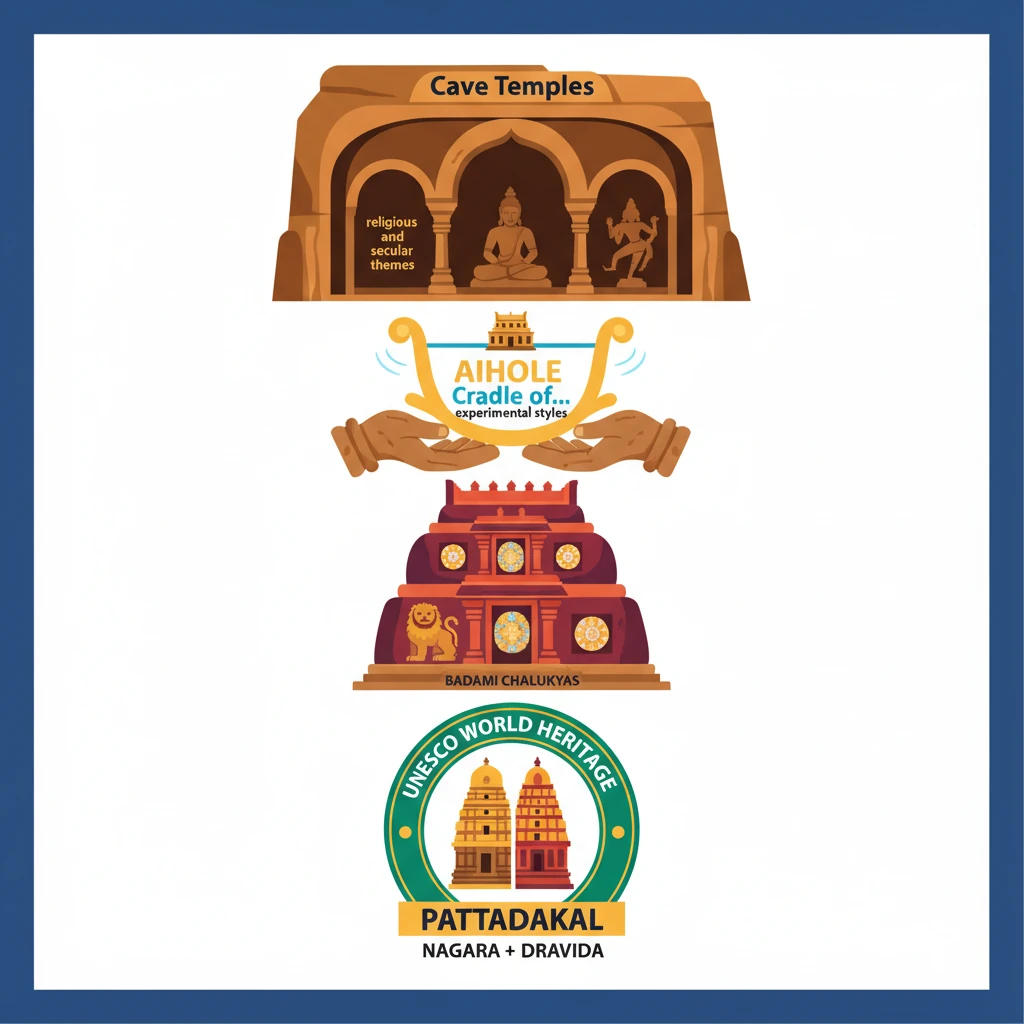
- •<strong>Cave Temples</strong> represent early rock-cut architecture with both religious and secular themes.
- •<strong>Aihole</strong> is known as the 'Cradle of Indian Temple Architecture' for its experimental styles.
- •<strong>Badami</strong> features exquisite rock-cut cave temples, capital of early <strong>Chalukyas</strong>.
- •<strong>Pattadakal</strong> is a <strong>UNESCO World Heritage site</strong>, showcasing a unique blend of <strong>Nagara</strong> and <strong>Dravida</strong> styles.
- •The <strong>Chalukya dynasty</strong> was instrumental in developing these architectural marvels in the Deccan.
- •Understanding the transition from rock-cut to structural temples is key to Indian architectural history.
🧠 Memory Techniques
95% Verified Content
📚 Reference Sources
•NCERT Fine Arts Class 11
•Archaeological Survey of India (ASI) official website
•UNESCO World Heritage Centre website