What are the Key Facts about the Nataraja Statue - History | UPSC Learning
Topics
0 topics • 0 completed
🔍
No topics match your search
What are the Key Facts about the Nataraja Statue
Medium⏱️ 6 min read
history
📖 Introduction
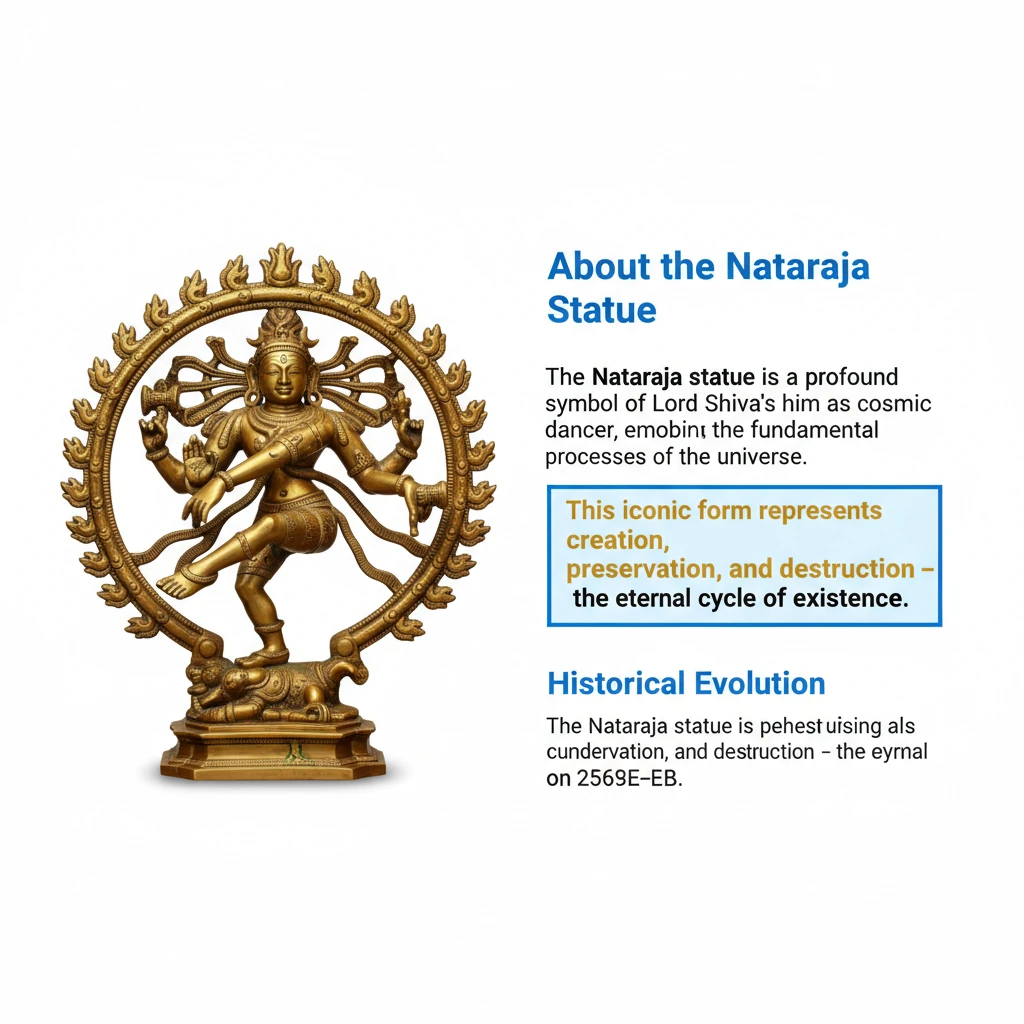
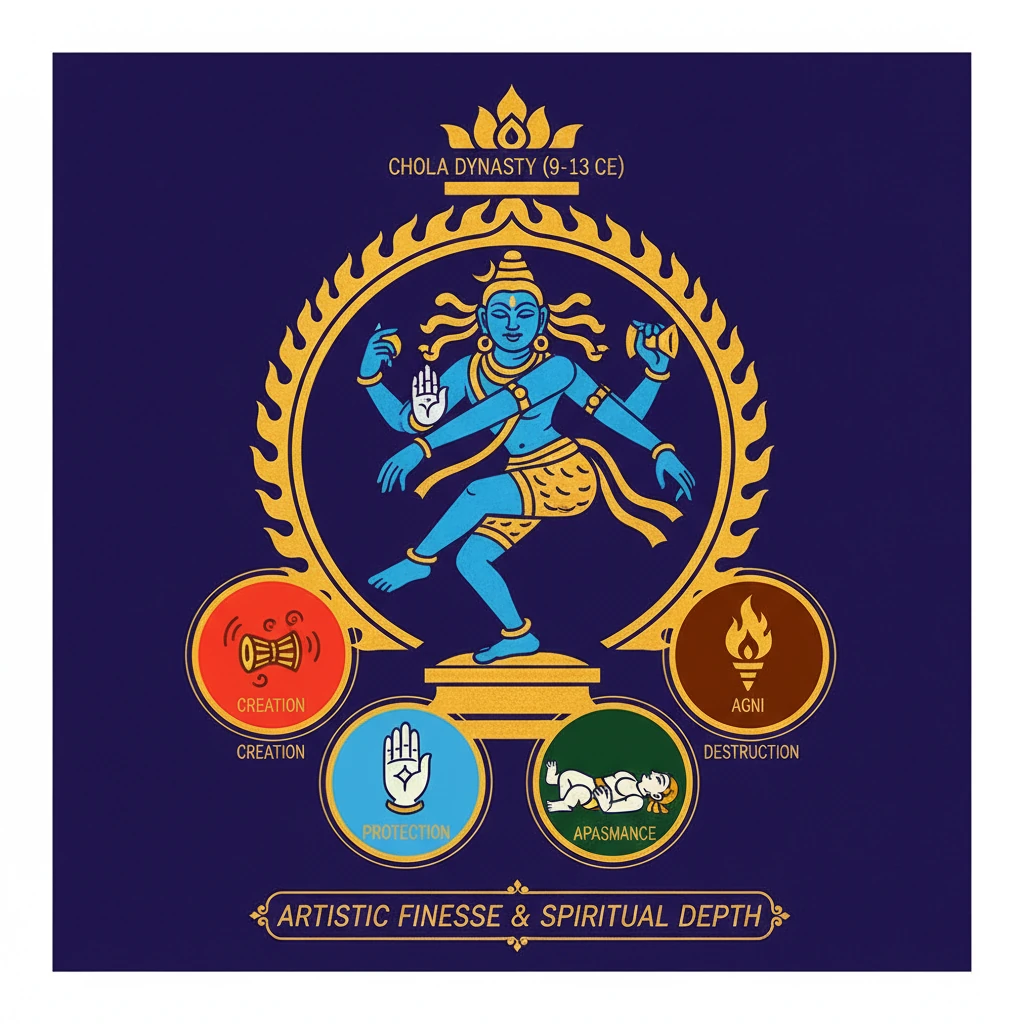
<h4>Understanding the Nataraja Statue</h4><p>The <strong>Nataraja statue</strong> is a profound symbol of <strong>Lord Shiva</strong>, revered as the <strong>cosmic dancer</strong>.</p><p>This iconic form embodies the fundamental cosmic functions: <strong>creation</strong>, <strong>preservation</strong>, and <strong>destruction</strong> of the universe.</p><div class='info-box'><p><strong>Nataraja</strong>: A portmanteau of <strong>Nata</strong> (dance) and <strong>Raja</strong> (king), signifying the <strong>'Lord of Dance'</strong>.</p></div><h4>Historical Origins and Chola Patronage</h4><p>The earliest known sculptures depicting <strong>Lord Shiva</strong> in a dancing posture date back to the <strong>5th century CE</strong>.</p><p>However, the globally recognized and iconic form of <strong>Nataraja</strong> significantly evolved during the illustrious reign of the <strong>Chola dynasty</strong>.</p><div class='info-box'><p><strong>Chola Dynasty Period</strong>: <strong>9th–13th century CE</strong>. This era marked significant artistic and cultural advancements in South India.</p></div><p>The <strong>Chola period</strong> is celebrated for its exceptional bronze craftsmanship, which brought the <strong>Nataraja</strong> form to its artistic zenith.</p><h4>The Significance of Ananda Tandava</h4><p>The dance performed by <strong>Lord Shiva</strong> as <strong>Nataraja</strong> is known as <strong>Ananda Tandava</strong>, or the <strong>'Dance of Bliss'</strong>.</p><p>This cosmic dance symbolizes the <strong>eternal rhythm of the universe</strong>, encapsulating the continuous cycle of <strong>creation</strong> and <strong>destruction</strong>.</p><div class='key-point-box'><p>It represents the perpetual flow of <strong>time</strong> and the dynamic interplay of cosmic forces, essential to the universe's existence.</p></div><h4>Key Symbolic Features of Nataraja</h4><p>Each element of the <strong>Nataraja statue</strong> is imbued with deep philosophical and cosmic symbolism:</p><ul><li><strong>Flaming Halo (Prabhamandala)</strong>: Encircling the deity, it represents the entire <strong>cosmos</strong> and the cyclical nature of <strong>time</strong>, encompassing <strong>destruction</strong> and <strong>renewal</strong>.</li><li><strong>Damaru (Upper Right Hand)</strong>: The small hand drum signifies the <strong>first sound of creation (Shabda Brahma)</strong> and establishes the fundamental <strong>rhythm of the universe</strong>.</li><li><strong>Agni (Upper Left Hand)</strong>: The flame held here symbolizes <strong>destruction</strong>, marking the inevitable end of each cosmic cycle and the purification of the universe.</li><li><strong>Abhayamudra (Lower Right Hand)</strong>: This gesture offers <strong>reassurance</strong> and <strong>protection</strong> to devotees, effectively dispelling all forms of fear.</li><li><strong>Left-Hand Gesture</strong>: This hand points towards the <strong>raised left foot</strong>, symbolizing a path to <strong>refuge</strong> and ultimate <strong>liberation (moksha)</strong> for the troubled soul.</li><li><strong>Apasmara Purusha</strong>: The dwarf figure crushed under <strong>Shiva's right foot</strong> represents <strong>ignorance</strong> or <strong>illusion (maya)</strong>, which misleads humanity.</li><li><strong>Raised Left Foot</strong>: This elevated foot is a powerful symbol of <strong>grace</strong> and the divine path leading to <strong>salvation</strong>.</li></ul><h4>Chola Dynasty's Artistic Legacy</h4><p>The <strong>Chola bronzes</strong> are celebrated globally for their unparalleled <strong>finesse</strong>, exquisite <strong>intricate detailing</strong>, and profound <strong>spiritual symbolism</strong>.</p><div class='info-box'><p>The <strong>Nataraja statue</strong> was predominantly crafted in <strong>bronze</strong>, showcasing the exceptional expertise of <strong>Chola-era metallurgists</strong> and skilled artists.</p></div><p>This period set a benchmark for sculptural art, leaving an enduring legacy on Indian aesthetics and religious iconography.</p><h4>Global Recognition and Modern Symbolism</h4><p>The universal appeal of the <strong>Nataraja statue</strong> is evident in its global recognition.</p><div class='exam-tip-box'><p>A replica of the <strong>Nataraja statue</strong> stands proudly outside <strong>CERN (European Organization for Nuclear Research)</strong> in Geneva.</p></div><p>This placement at a leading scientific institution symbolizes the cosmic dance of particles in physics, drawing parallels between ancient spiritual wisdom and modern scientific understanding.</p>
💡 Key Takeaways
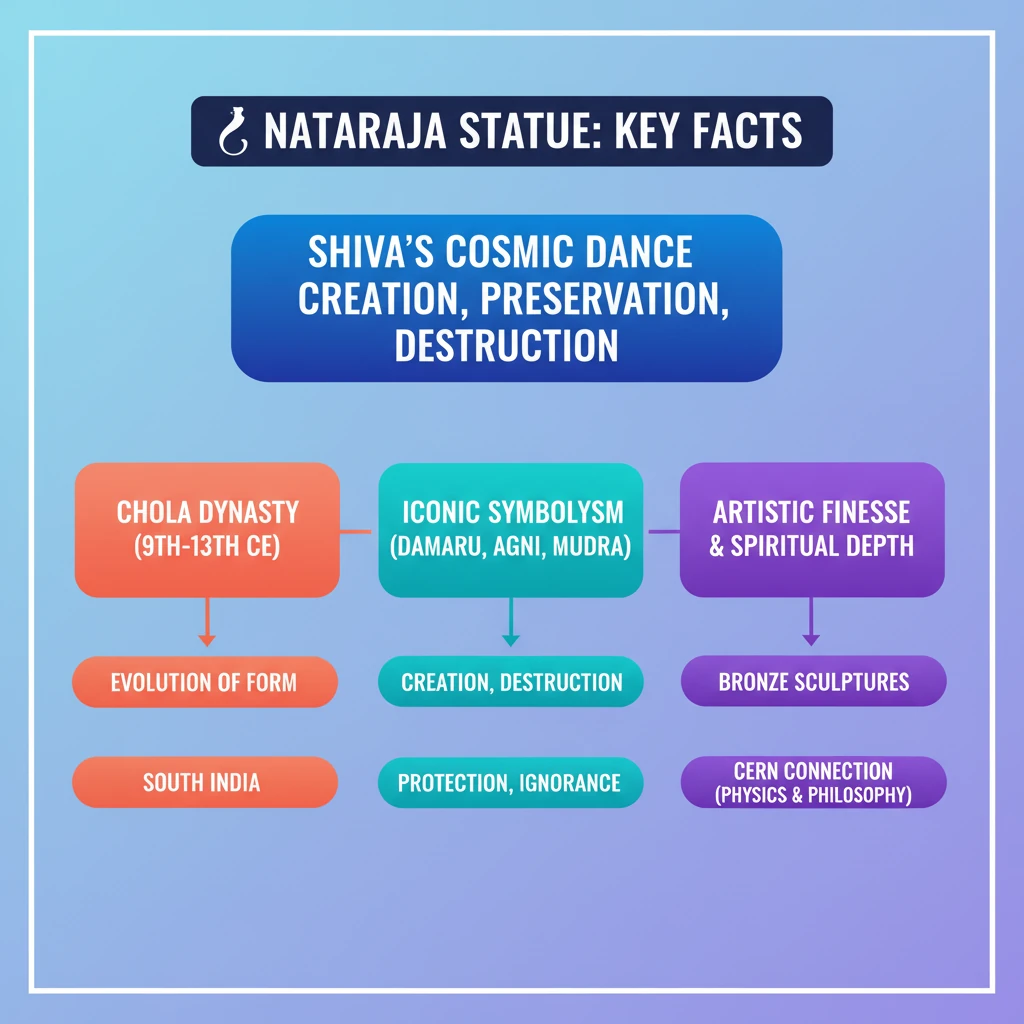
- •Nataraja symbolizes Shiva as the cosmic dancer, embodying creation, preservation, and destruction.
- •The iconic form evolved significantly during the Chola dynasty (9th-13th century CE), known for exquisite bronze craftsmanship.
- •Key symbolic features include the flaming halo (cosmos), Damaru (creation sound), Agni (destruction flame), Abhayamudra (protection), Apasmara Purusha (ignorance), and raised left foot (salvation).
- •The dance is called Ananda Tandava (Dance of Bliss), representing the universe's eternal rhythm.
- •A replica at CERN highlights the global recognition and connection between ancient wisdom and modern science.
🧠 Memory Techniques
95% Verified Content
📚 Reference Sources
•NCERT Class XI - An Introduction to Indian Art
•Official CERN website (for Nataraja replica details)