Vijayanagara School of Temple Architecture - History | UPSC Learning
Topics
0 topics • 0 completed
🔍
No topics match your search
Vijayanagara School of Temple Architecture
Medium⏱️ 7 min read
history
📖 Introduction
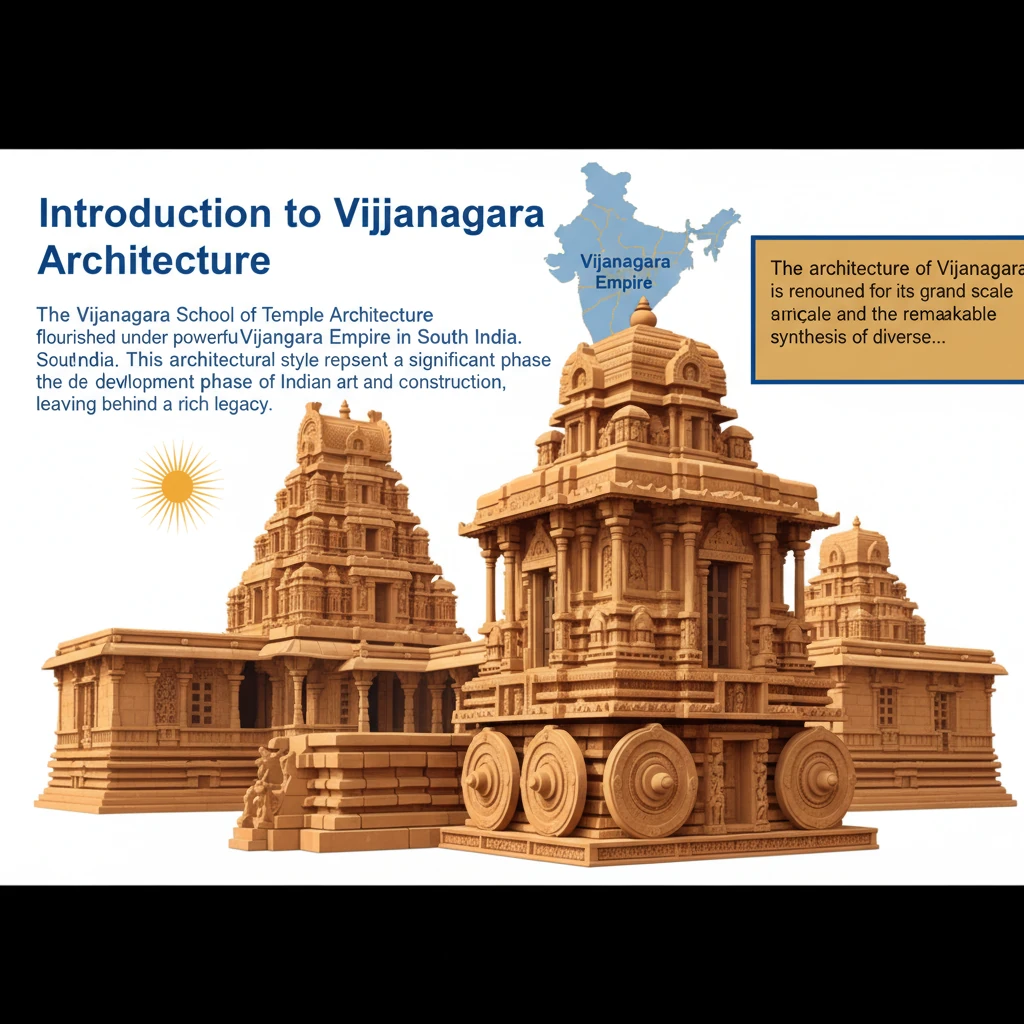
<h4>Introduction to Vijayanagara Architecture</h4><p>The <strong>Vijayanagara School of Temple Architecture</strong> flourished under the powerful <strong>Vijayanagara Empire</strong> in South India. This architectural style represents a significant phase in the development of Indian art and construction, leaving behind a rich legacy.</p><div class='key-point-box'><p>The architecture of Vijayanagara is renowned for its <strong>grand scale</strong> and the remarkable <strong>synthesis of diverse styles</strong>, reflecting the empire's cultural dynamism.</p></div><h4>Diverse Structural Forms</h4><p>The architectural output of the <strong>Vijayanagara Empire</strong> was incredibly varied, extending beyond just religious structures. It encompassed a wide range of constructions designed for both sacred and secular purposes.</p><ul><li><strong>Temples:</strong> The most prominent structures, often large and elaborately decorated.</li><li><strong>Monolithic Sculptures:</strong> Carved from single blocks of stone, showcasing immense skill.</li><li><strong>Palaces:</strong> Royal residences, though many are now in ruins, their foundations reveal grandeur.</li><li><strong>Official Buildings:</strong> Administrative structures necessary for governing the vast empire.</li><li><strong>Cities:</strong> Well-planned urban centers like <strong>Hampi</strong>, the capital.</li><li><strong>Irrigation Systems:</strong> Advanced systems for water management, crucial for agriculture.</li><li><strong>Step Wells and Tanks:</strong> Essential for water storage and public use, often architecturally impressive.</li></ul><div class='info-box'><p>The sheer diversity of structures highlights the <strong>comprehensive approach</strong> to urban planning and public works adopted by the Vijayanagara rulers.</p></div><h4>Unique Blend of Styles</h4><p>A defining characteristic of <strong>Vijayanagara architecture</strong> is its distinctive integration of various architectural traditions. This synthesis created a unique aesthetic that set it apart from earlier styles.</p><div class='key-point-box'><p>The architecture uniquely integrated elements from both <strong>Hindu</strong> (primarily <strong>Dravidian</strong>) and <strong>Islamic</strong> architectural styles, a testament to the empire's cultural interactions and adaptability.</p></div><p>This blend is visible in decorative motifs, structural elements, and overall planning, showcasing a harmonious fusion rather than mere imitation.</p><h4>Key Features of Vijayanagara Temples</h4><p>The temples built during the <strong>Vijayanagara period</strong> exhibit several distinct features that contribute to their grandeur and artistic merit. These elements are crucial for identifying the style.</p><ul><li><strong>Highly Decorated Walls:</strong> The exterior walls of the temples were extensively adorned with intricate <strong>carvings</strong> and sophisticated <strong>geometrical patterns</strong>. These depicted mythological scenes, deities, and daily life.</li><li><strong>Gopurams on All Sides:</strong> Unlike earlier <strong>Dravidian temples</strong> where <strong>gopurams</strong> (ornate entrance towers) were typically on one or two sides, <strong>Vijayanagara temples</strong> often featured prominent <strong>gopurams</strong> on all four sides, enhancing their imposing appearance.</li><li><strong>Monolithic Rock Pillars:</strong> A hallmark feature was the extensive use of <strong>monolithic rock pillars</strong>, often highly sculpted and forming grand colonnades within temple complexes. These pillars frequently featured rearing horses or mythical beasts.</li></ul><div class='exam-tip-box'><p>For UPSC, remember the <strong>three key temple features</strong>: decorated walls, multi-sided gopurams, and monolithic pillars. These are strong distinguishing points for descriptive answers.</p></div>
💡 Key Takeaways
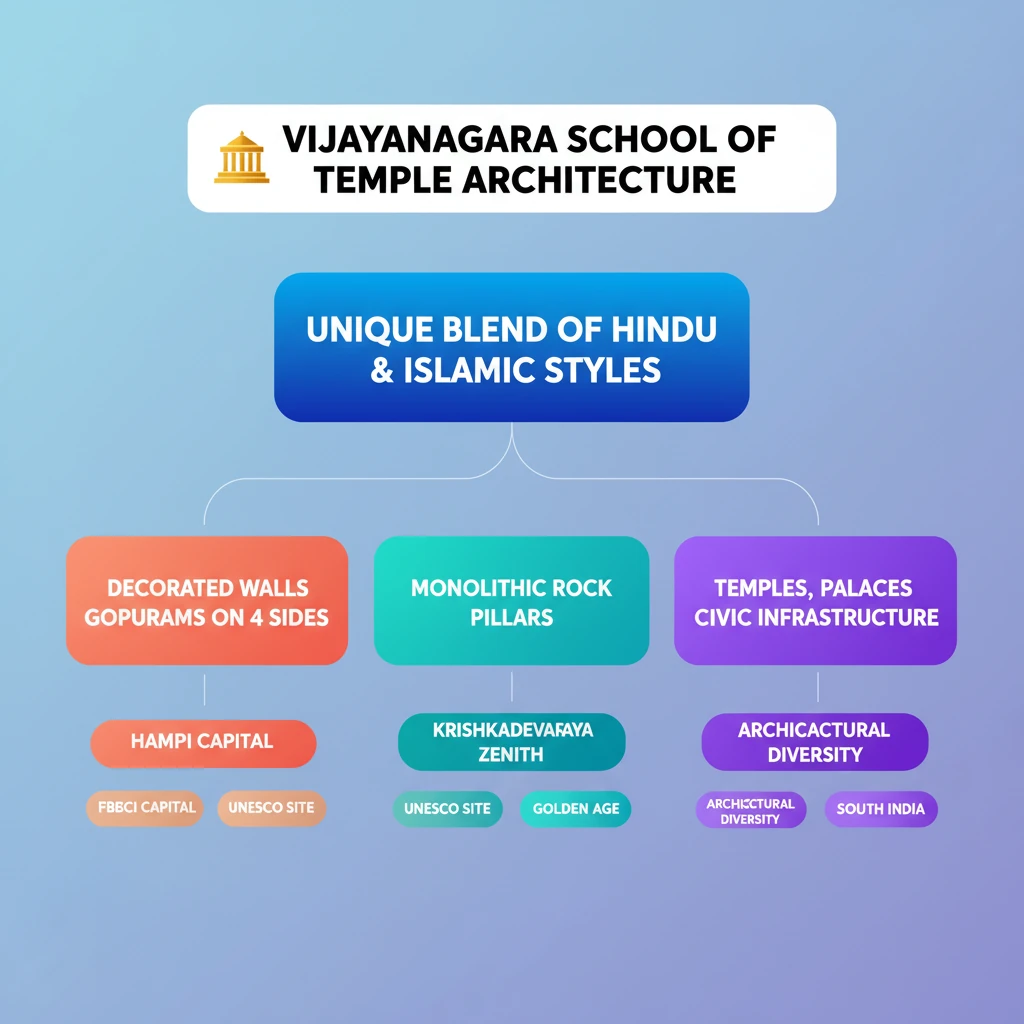
- •Vijayanagara architecture encompassed diverse structures, including temples, palaces, and advanced civic infrastructure.
- •A hallmark was the unique blend of Hindu (Dravidian) and Islamic architectural styles.
- •Key temple features included highly decorated walls, gopurams on all four sides, and monolithic rock pillars.
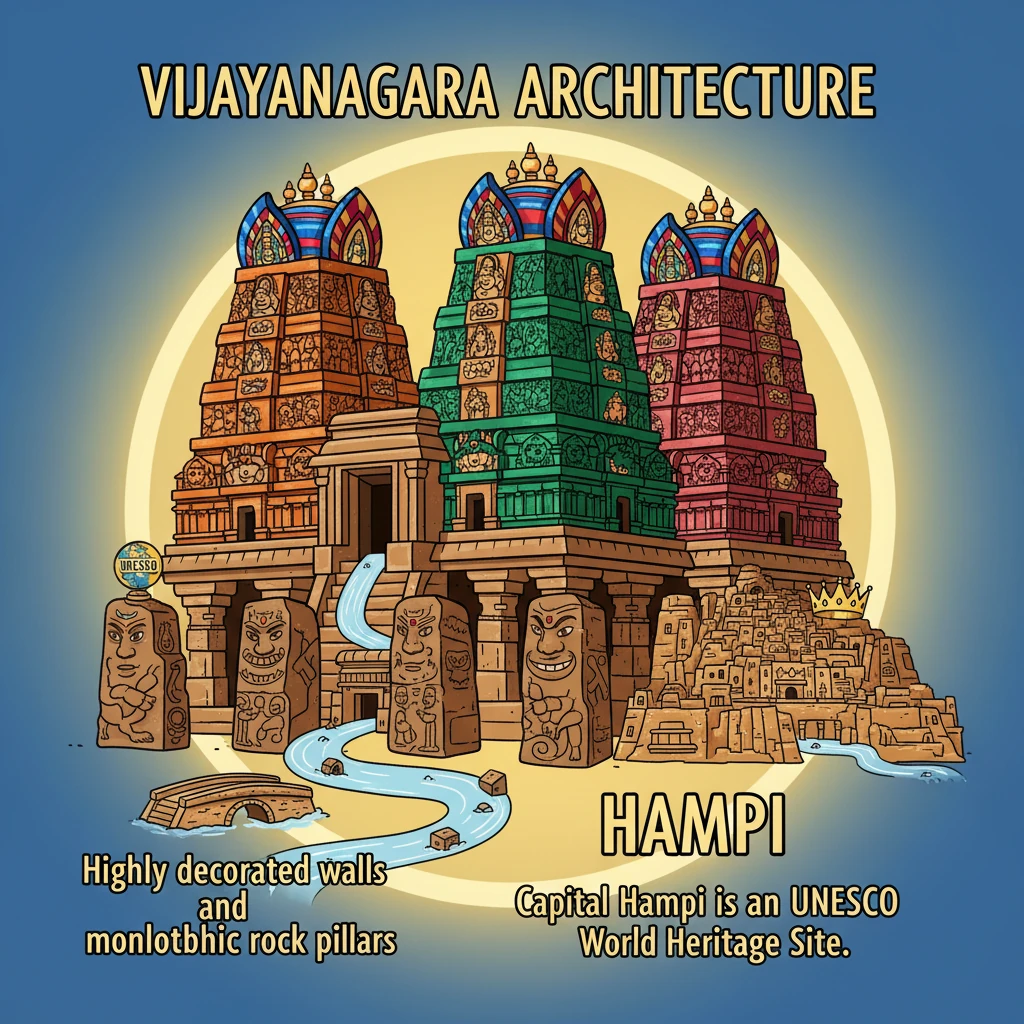
- •The empire's capital, Hampi, is a UNESCO World Heritage Site, showcasing the pinnacle of this style.
- •The period of Krishnadevaraya marked the zenith of Vijayanagara architectural development.
🧠 Memory Techniques
95% Verified Content
📚 Reference Sources
•NCERT Class XI - An Introduction to Indian Art
•Wikipedia (Hampi, Vijayanagara Empire, Vijayanagara Architecture)
•Cultural India (Indian Architecture - Vijayanagara)