Shivaji Maharaj: Death and Key Battles - History | UPSC Learning
Topics
0 topics • 0 completed
🔍
No topics match your search
Shivaji Maharaj: Death and Key Battles
Medium⏱️ 8 min read
history
📖 Introduction
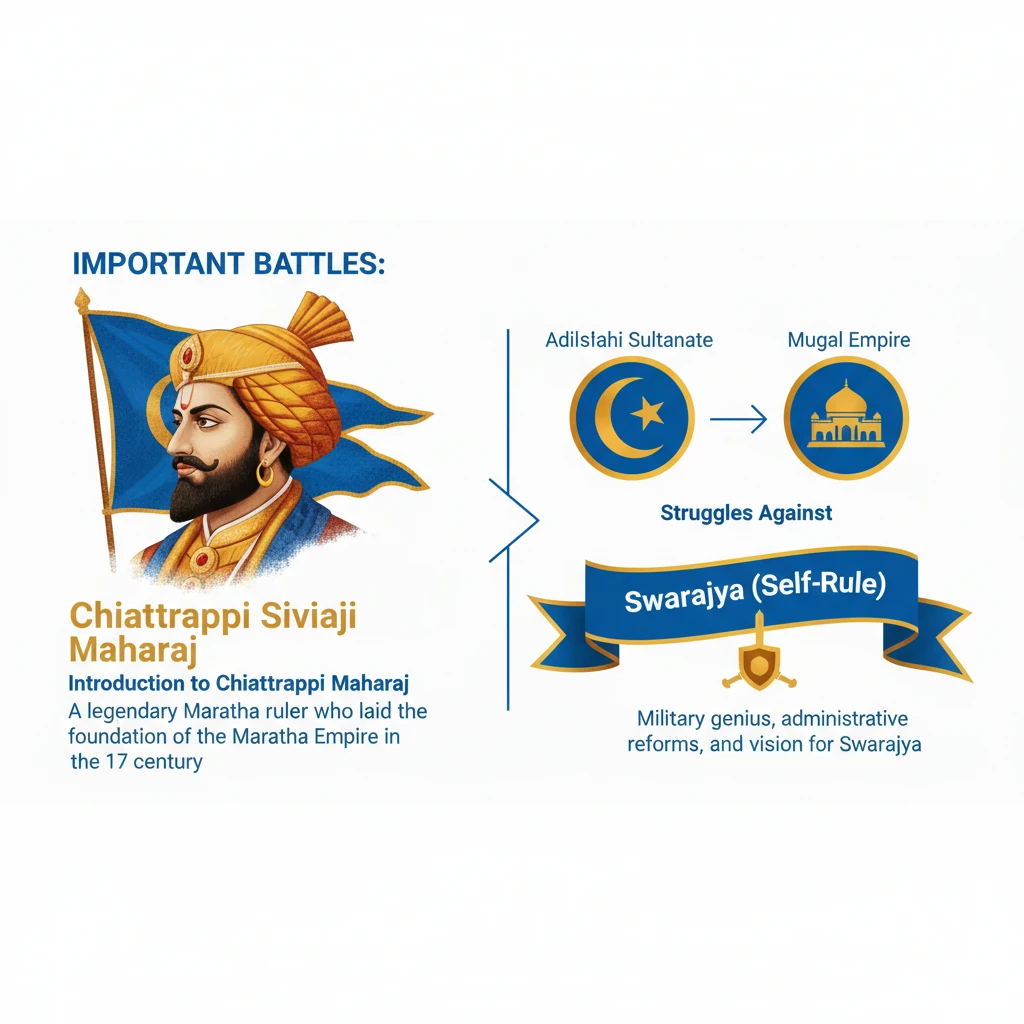
<h4>Introduction to Chhatrapati Shivaji Maharaj</h4><p><strong>Chhatrapati Shivaji Maharaj</strong> was a legendary Maratha ruler who laid the foundation of the <strong>Maratha Empire</strong> in the 17th century. His life was marked by continuous struggles against the <strong>Adilshahi Sultanate</strong> of Bijapur and the formidable <strong>Mughal Empire</strong>.</p><p>His military genius, administrative reforms, and vision for <strong>Swarajya</strong> (self-rule) make him one of the most revered figures in Indian history. The battles he fought were crucial in establishing Maratha dominance.</p><h4>Demise of Chhatrapati Shivaji Maharaj</h4><p>The great Maratha warrior, <strong>Chhatrapati Shivaji Maharaj</strong>, passed away on <strong>3rd April 1680</strong>. His death occurred at <strong>Raigad Fort</strong>, which served as the capital of his burgeoning empire.</p><div class='info-box'><p><strong>Date of Demise:</strong> <strong>3rd April 1680</strong></p><p><strong>Location:</strong> <strong>Raigad Fort</strong></p><p><strong>Cause:</strong> After a three-week fever, leading to his unfortunate demise.</p></div><h4>Key Battles of Chhatrapati Shivaji Maharaj</h4><p><strong>Shivaji Maharaj's</strong> military career was punctuated by several pivotal battles that showcased his strategic brilliance and leadership. These engagements were instrumental in expanding and securing the <strong>Maratha Empire</strong>.</p><p>Understanding these battles is crucial for grasping the dynamics of 17th-century Indian politics and warfare.</p><table class='info-table'><tr><th>Battle Name</th><th>Year</th><th>Parties Involved</th></tr><tr><td><strong>Battle of Pratapgad</strong></td><td><strong>1659</strong></td><td><strong>Maratha forces</strong> (led by <strong>Chhatrapati Shivaji Maharaj</strong>) vs. <strong>Adilshahi general Afzal Khan</strong></td></tr><tr><td><strong>Battle of Surat</strong></td><td><strong>1664</strong></td><td><strong>Chhatrapati Shivaji Maharaj</strong> vs. <strong>Inayat Khan</strong> (Mughal Governor)</td></tr><tr><td><strong>Battle of Purandar</strong></td><td><strong>1665</strong></td><td><strong>Chhatrapati Shivaji Maharaj</strong> vs. <strong>Mughal commander Jai Singh</strong></td></tr><tr><td><strong>Battle of Sangamner</strong></td><td><strong>1679</strong></td><td><strong>Mughal Empire</strong> vs. <strong>Maratha Empire</strong></td></tr></table><div class='key-point-box'><p>The <strong>Battle of Sangamner (1679)</strong> holds particular significance as it was the <strong>last battle</strong> in which <strong>Chhatrapati Shivaji Maharaj</strong> personally participated before his death in 1680.</p></div><div class='exam-tip-box'><p>For UPSC, remember not just the names and dates, but also the <strong>key adversaries</strong> and the <strong>strategic significance</strong> of each battle. Questions often test the chronology and the broader impact on the <strong>Maratha-Mughal relations</strong>.</p></div>
💡 Key Takeaways
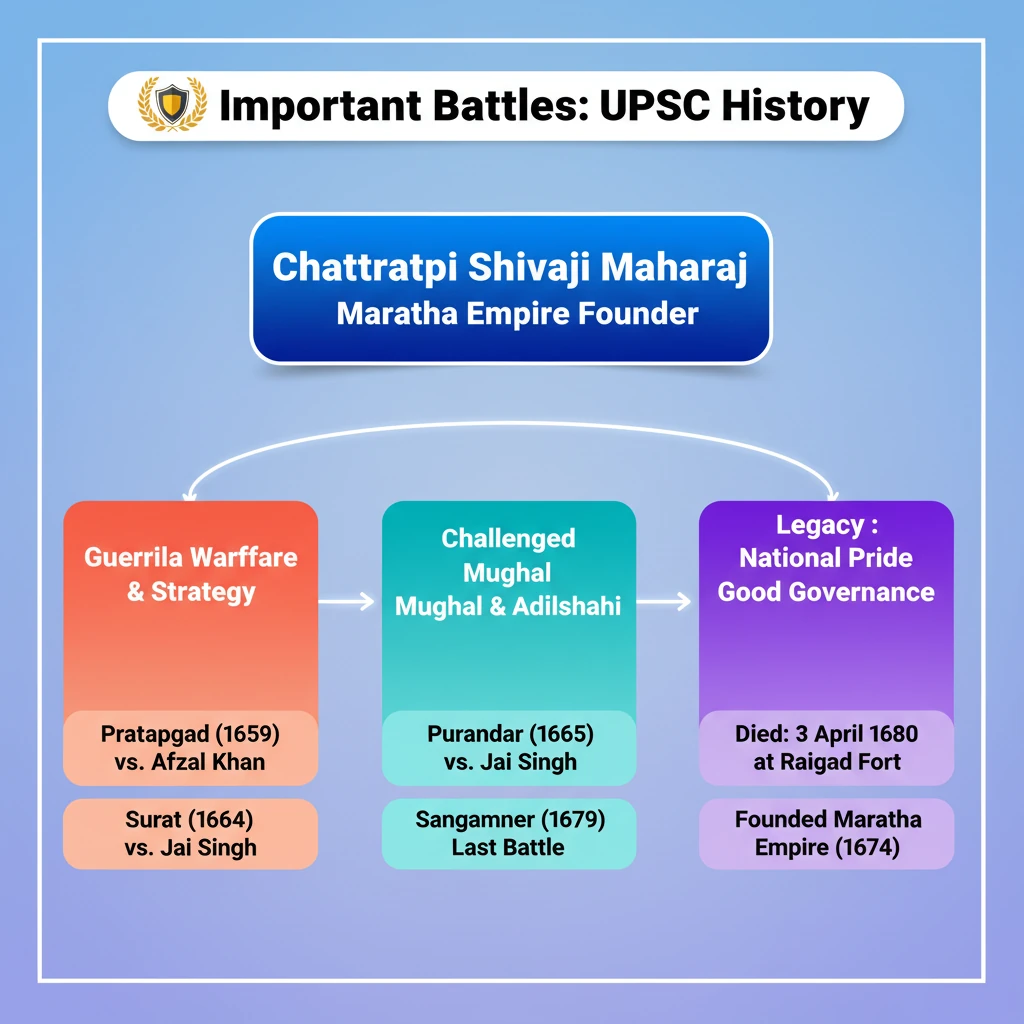
- •Chhatrapati Shivaji Maharaj founded the Maratha Empire, challenging Adilshahi and Mughal powers.
- •He died on 3rd April 1680 at Raigad.
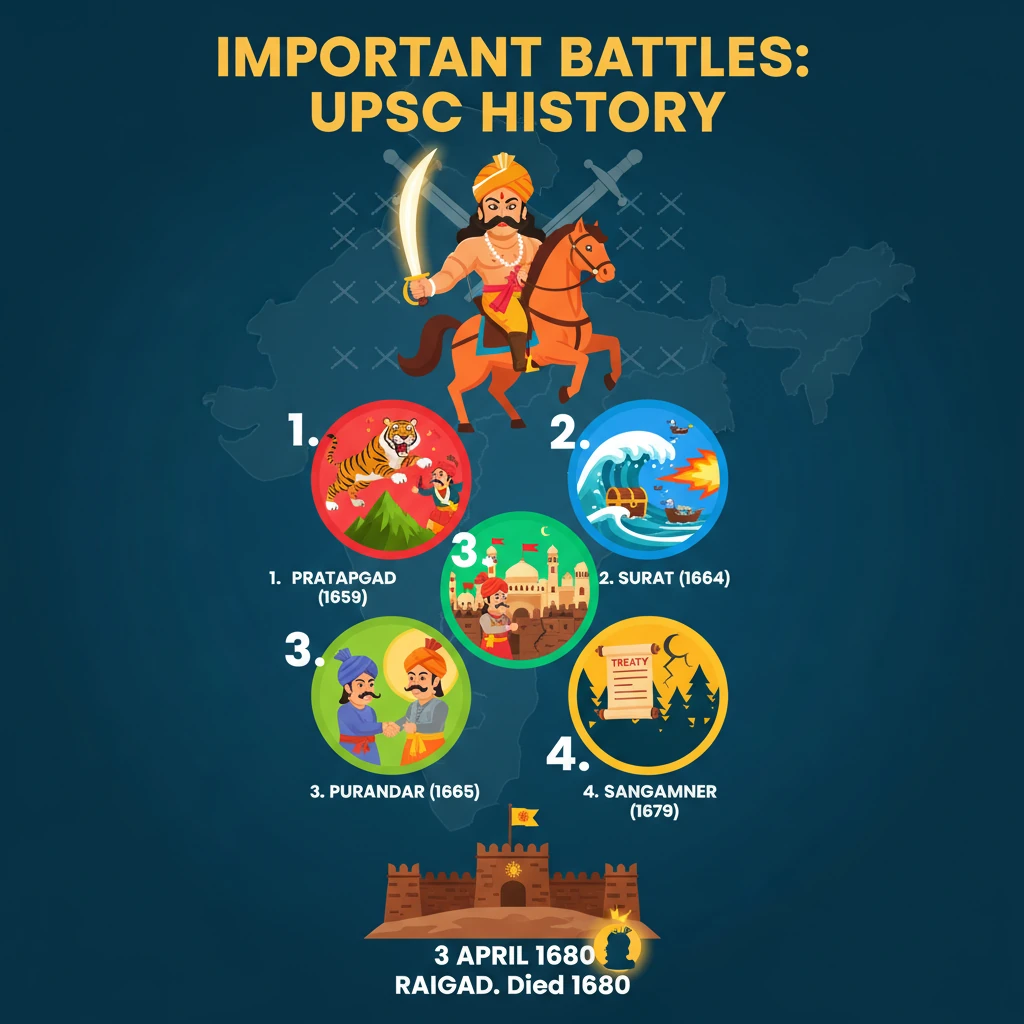
- •Key battles include Pratapgad (1659, vs. Afzal Khan), Surat (1664, vs. Mughals), Purandar (1665, vs. Jai Singh), and Sangamner (1679, his last battle).
- •Shivaji was a master of guerrilla warfare and strategic planning.
- •His legacy continues to inspire national pride and principles of good governance.
🧠 Memory Techniques
95% Verified Content
📚 Reference Sources
•NCERT History Textbooks (Class XI & XII)
•A History of the Marathas by James Grant Duff (for historical context)
•Shivaji and His Times by Jadunath Sarkar (for detailed accounts)