Nalanda Mahavihara: Huna & Gauda Attacks and Restoration - History | UPSC Learning
Topics
0 topics • 0 completed
🔍
No topics match your search

Nalanda Mahavihara: Huna & Gauda Attacks and Restoration
Medium⏱️ 6 min read
history
📖 Introduction
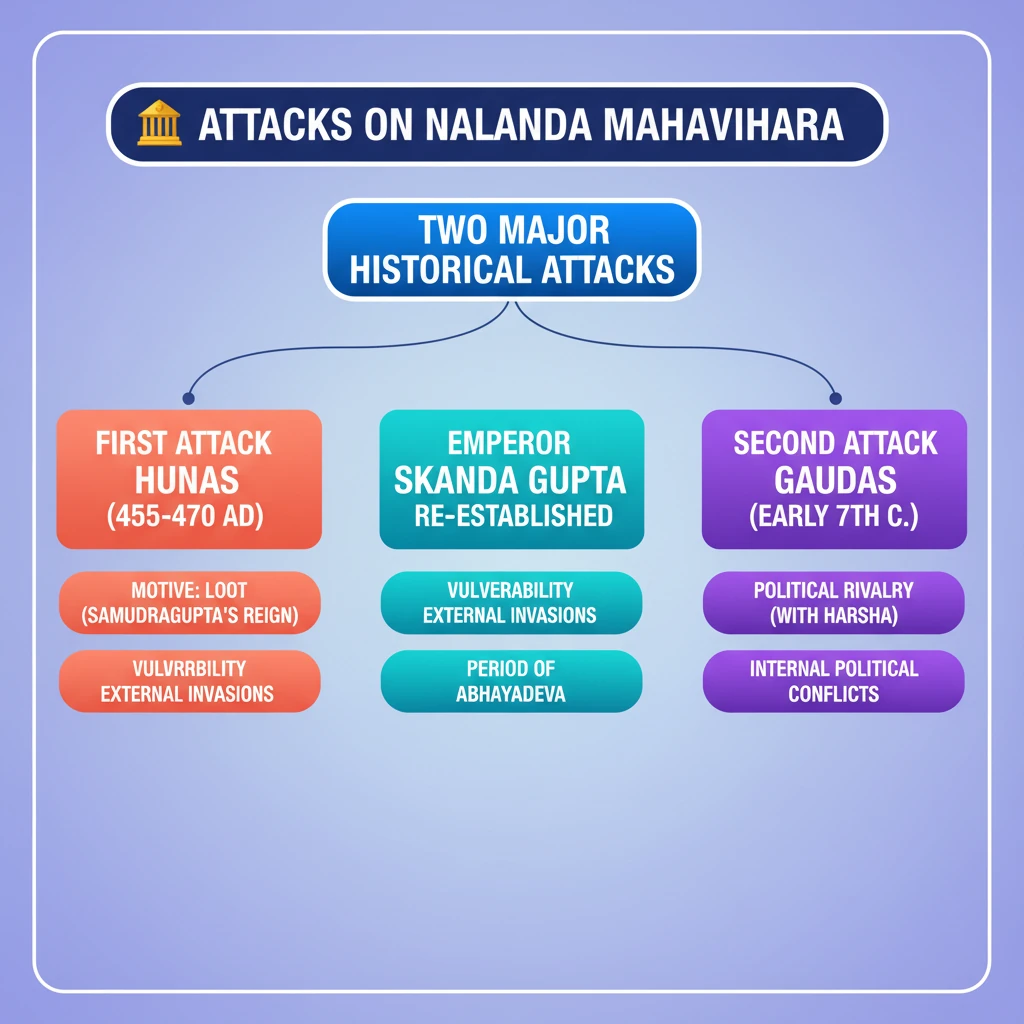
<h4>Introduction to Attacks on Nalanda Mahavihara</h4><p>The esteemed ancient learning center, <strong>Nalanda Mahavihara</strong>, faced significant periods of destruction throughout its history. These attacks highlight the vulnerability of educational institutions to both external invasions and internal political strife.</p><div class='key-point-box'><p>Understanding these attacks provides crucial insight into the socio-political dynamics of ancient India and the challenges faced by centers of knowledge.</p></div><h4>The First Huna Attack (455-470 AD)</h4><p>The <strong>first major attack</strong> on <strong>Nalanda Mahavihara</strong> occurred between <strong>455-470 AD</strong>. This period coincided with the reign of <strong>Emperor Samudragupta</strong> of the <strong>Gupta Empire</strong>, as per the source material.</p><div class='info-box'><p><strong>Attackers:</strong> The <strong>Hunas</strong>, a formidable <strong>Central Asian tribal group</strong>, were responsible for this initial assault.</p><p><strong>Motivation:</strong> Their primary objective was to <strong>loot the university’s valuable resources</strong>, including its vast collection of manuscripts and precious artifacts.</p></div><h4>Re-establishment by Skanda Gupta</h4><p>Following the devastating <strong>Huna attack</strong>, the task of restoring <strong>Nalanda Mahavihara</strong> fell to <strong>Emperor Skanda Gupta</strong>. He played a pivotal role in its re-establishment and revitalization.</p><div class='info-box'><p>During <strong>Emperor Skanda Gupta’s</strong> reign, the renowned librarian <strong>Abhayadeva</strong> flourished, contributing significantly to the academic resurgence of the university.</p></div><h4>The Second Gauda Attack (Early 7th Century)</h4><p>A second significant assault on <strong>Nalanda Mahavihara</strong> took place in the <strong>early 7th century</strong>. This attack stemmed from different motivations compared to the first.</p><div class='info-box'><p><strong>Planners:</strong> The attack was orchestrated by the <strong>Gaudas emperors of Bengal</strong>.</p><p><strong>Motivation:</strong> The primary driver behind this assault was <strong>political tensions</strong> and rivalry with <strong>Emperor Harshavardhana of Kannauj</strong>, rather than mere plunder.</p></div><div class='exam-tip-box'><p><strong>UPSC Insight:</strong> Questions on <strong>Nalanda Mahavihara</strong> often focus on its academic contributions and patronage. However, understanding the attacks provides a complete picture of its historical trajectory, relevant for <strong>GS-I Ancient History</strong>.</p></div>
💡 Key Takeaways
- •Nalanda Mahavihara faced two significant attacks in its early history.
- •The first attack (455-470 AD) was by the Hunas, motivated by loot, during Emperor Samudragupta's reign.
- •Emperor Skanda Gupta later re-established Nalanda, fostering a period where librarian Abhayadeva thrived.
- •The second attack (early 7th century) was by Gaudas emperors of Bengal, driven by political rivalry with Emperor Harshavardhana.
- •These attacks highlight the vulnerability of ancient learning centers to external invasions and internal political conflicts.
🧠 Memory Techniques

90% Verified Content
📚 Reference Sources
•General historical accounts of Nalanda Mahavihara and Gupta/Post-Gupta periods