Mauryan Pillars: Features, Structure, and Significance - History | UPSC Learning
Topics
0 topics • 0 completed
🔍
No topics match your search
Mauryan Pillars: Features, Structure, and Significance
Medium⏱️ 7 min read
history
📖 Introduction
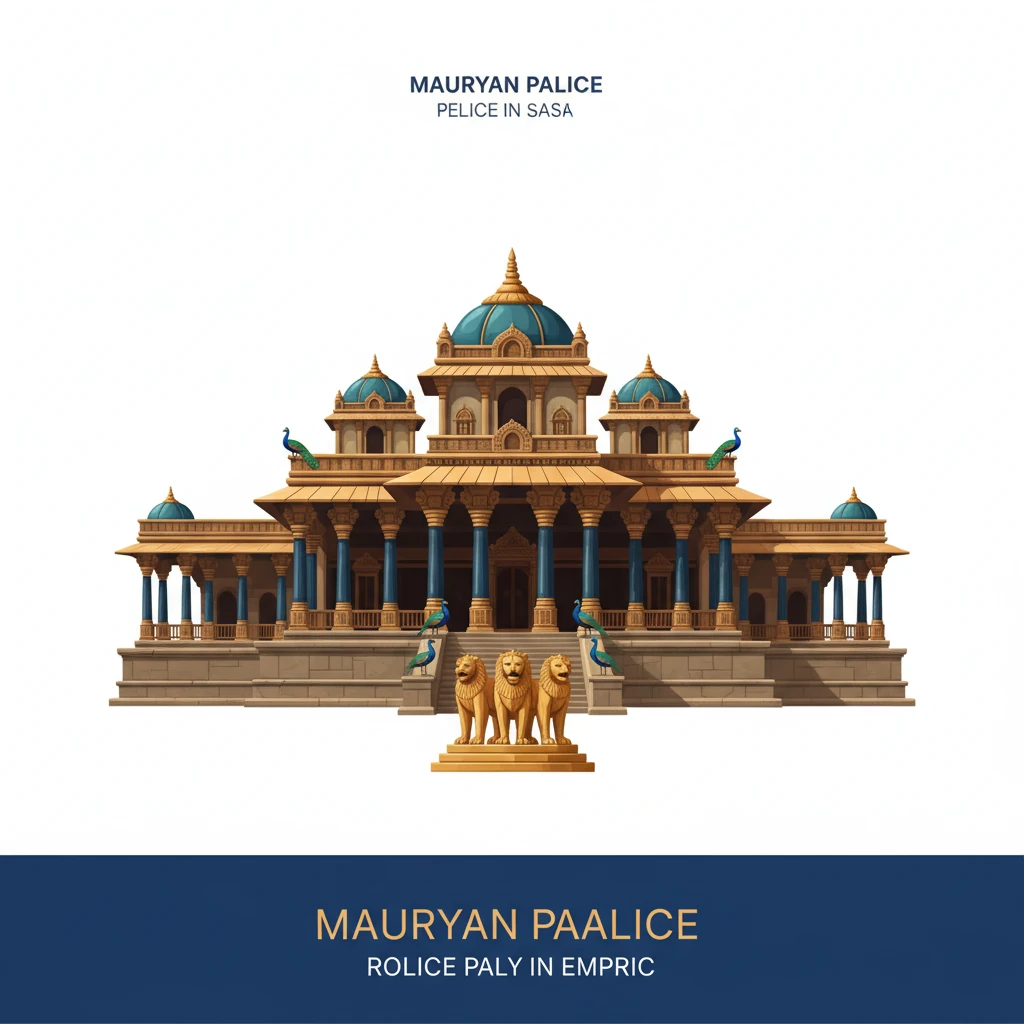
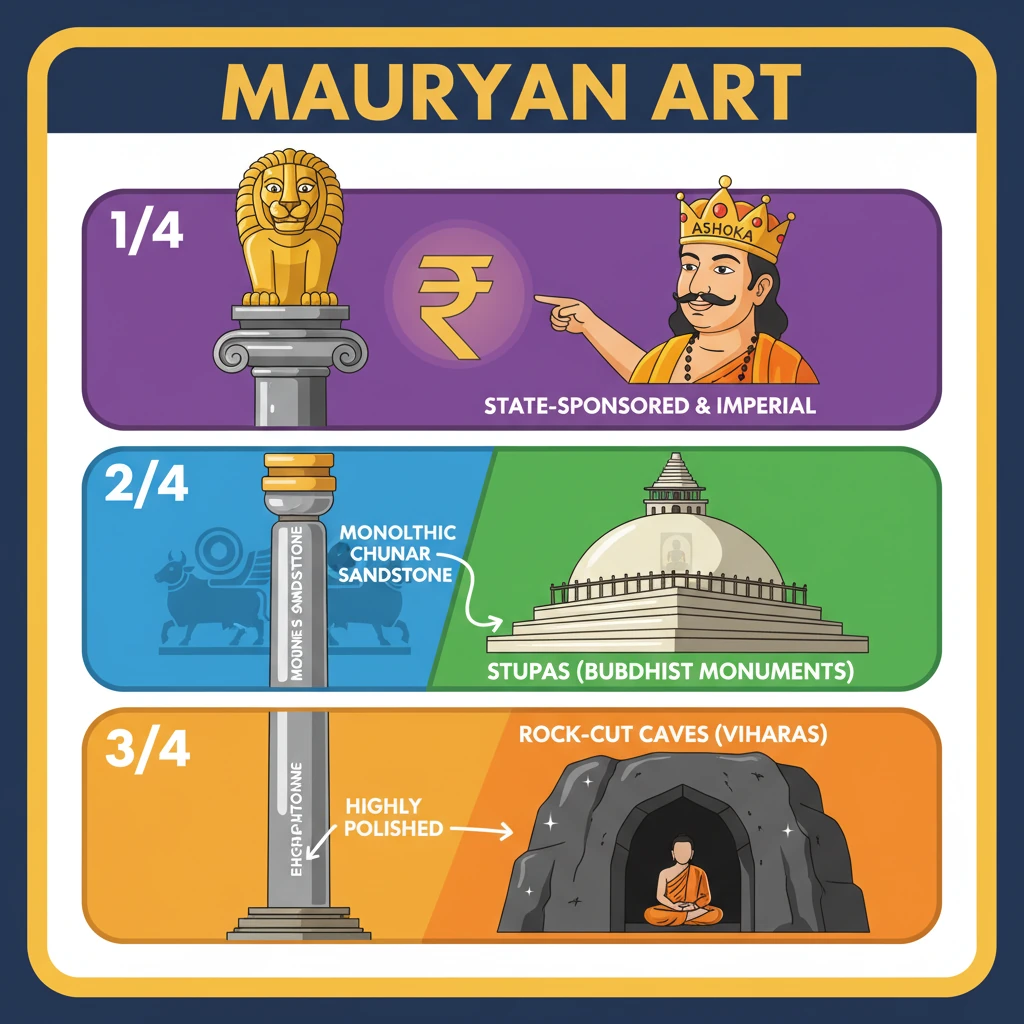
<h4>Mauryan Palaces: Grandeur and Scale</h4><p>The <strong>Mauryan period</strong> saw the construction of magnificent palaces, reflecting the imperial power and sophisticated administration of the empire. These structures were primarily associated with the rulers like <strong>Ashoka</strong> and <strong>Chandragupta Maurya</strong>.</p><div class='info-box'><p><strong>Notable Examples:</strong></p><ul><li><strong>Ashoka’s palace at Kumrahar</strong> (near Pataliputra)</li><li><strong>Chandragupta’s palace</strong></li></ul></div><p>These palaces were known for their grand scale, often incorporating elements of wood and brick, though little remains due to the perishable nature of the materials.</p><h4>Mauryan Pillars: A Symbol of State and Dhamma</h4><p><strong>Mauryan pillars</strong> are among the most distinctive and enduring examples of <strong>Mauryan art</strong>. They are renowned for their unique architectural and artistic characteristics.</p><div class='info-box'><p><strong>Key Features of Mauryan Pillars:</strong></p><ul><li><strong>Tall</strong> and <strong>free-standing</strong> structures.</li><li>Predominantly <strong>monolithic</strong>, meaning carved from a single block of stone.</li><li>Made of <strong>sandstone</strong>, often quarried from <strong>Chunar</strong>.</li><li>Feature a distinctive <strong>lustrous polish</strong>, known as 'Mauryan polish'.</li></ul></div><div class='key-point-box'><p><strong>Mauryan vs. Achaemenian Pillars:</strong></p><ul><li><strong>Mauryan pillars</strong> are <strong>rock-cut</strong>, showcasing exceptional carving skills from a single stone.</li><li><strong>Achaemenian pillars</strong> were constructed in <strong>pieces</strong> and then assembled.</li><li>Similarities include <strong>polished stones</strong>, motifs like the <strong>lotus</strong>, and the practice of inscribing <strong>proclamations</strong>.</li></ul></div><p><strong>Ashoka’s pillars</strong> were erected across <strong>north India</strong>, serving as a medium for disseminating <strong>Buddhist teachings</strong> (Dhamma) and <strong>court orders</strong>.</p><div class='info-box'><p><strong>Inscriptions and Capitals:</strong></p><ul><li>Inscriptions were typically in <strong>Pali</strong>, <strong>Prakrit</strong>, <strong>Greek</strong>, and <strong>Aramaic</strong>.</li><li>Capitals often featured intricate <strong>animal figures</strong> such as <strong>lions</strong> and <strong>bulls</strong>, symbolizing the state's power and authority.</li></ul></div><p>The structure of a <strong>Mauryan pillar</strong> typically comprises four main parts, demonstrating advanced engineering and artistic execution.</p><div class='info-box'><p><strong>Structure of Mauryan Pillars:</strong></p><ol><li>A <strong>monolithic shaft</strong> (the main body).</li><li>A <strong>lotus- or bell-shaped capital</strong> (inverted lotus).</li><li>An <strong>abacus</strong> (a square or round slab above the capital).</li><li>A <strong>capital figure</strong> (animal sculpture, e.g., Lion Capital).</li></ol></div><h4>Stupas: Sacred Buddhist Monuments</h4><p><strong>Stupas</strong> are hemispherical structures containing relics, primarily associated with <strong>Buddhism</strong>. They served as places of meditation and veneration.</p><div class='info-box'><p><strong>Typical Stupa Structure:</strong></p><ul><li><strong>Cylindrical drum</strong> (base).</li><li><strong>Hemispherical mound (anda)</strong>, representing the cosmos.</li><li><strong>Harmika</strong> (a square railing on top of the anda).</li><li><strong>Chhatra</strong> (a central pillar supporting a triple umbrella form), symbolizing the three jewels of Buddhism.</li></ul></div><p>The construction of <strong>stupas</strong> involved specific materials and decorative techniques. The core was made of <strong>unburnt bricks</strong>, while the outer surface used <strong>burnt bricks</strong>, covered with plaster and adorned with <strong>wooden sculptures</strong>.</p><div class='info-box'><p><strong>Famous Mauryan Stupas:</strong></p><ul><li><strong>Sanchi Stupa</strong> (Madhya Pradesh): Most famous <strong>Ashokan stupa</strong>.</li><li><strong>Piprahwa Stupa</strong> (Uttar Pradesh): Considered the <strong>oldest stupa</strong>.</li></ul></div><p>Numerous stupas were built after <strong>Buddha’s death</strong> to enshrine his relics and spread his teachings across the subcontinent.</p><div class='info-box'><p><strong>Other Post-Buddha Stupas:</strong></p><ul><li><strong>Rajagriha</strong></li><li><strong>Vaishali</strong></li><li><strong>Kapilavastu</strong></li><li><strong>Allakappa</strong></li><li><strong>Ramagrama</strong></li><li><strong>Veṭhadipa</strong></li><li><strong>Pava</strong></li><li><strong>Kushinagar</strong></li><li><strong>Pippalivana</strong></li></ul></div><h4>Mauryan Popular Art: Cave Architecture</h4><p>Beyond royal patronage, the <strong>Mauryan period</strong> also witnessed the emergence of popular art forms, most notably <strong>cave architecture</strong>.</p><p>These caves were primarily excavated to serve as <strong>viharas</strong> (dwelling places) for <strong>Jain</strong> and <strong>Buddhist monks</strong>, providing them with shelter and solitude for meditation.</p><div class='info-box'><p><strong>Characteristics of Mauryan Caves:</strong></p><ul><li>Known for their <strong>highly polished interiors</strong>, mimicking the polish seen on Mauryan pillars.</li><li>Often featured <strong>decorative gateways</strong>, showcasing early rock-cut architectural embellishments.</li></ul></div><div class='exam-tip-box'><p><strong>UPSC Insight:</strong> Differentiate between <strong>state-sponsored art</strong> (palaces, pillars, stupas) and <strong>popular art</strong> (cave architecture, terracotta figures, pottery) in the Mauryan period. Emphasize the religious motivations behind popular art forms.</p></div>
💡 Key Takeaways
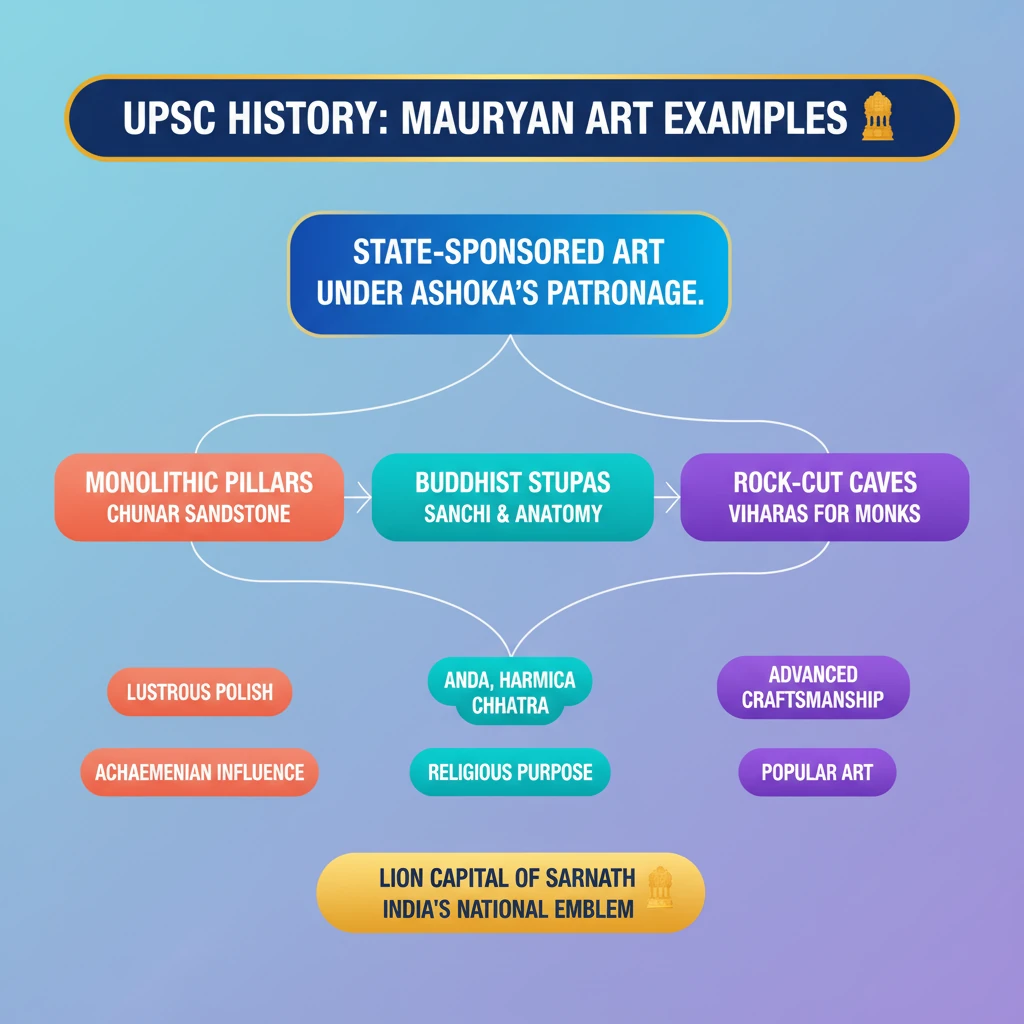
- •Mauryan art was largely state-sponsored, especially under Emperor Ashoka, for imperial and religious purposes.
- •Mauryan pillars are distinctive for being monolithic, made of Chunar sandstone, and having a lustrous polish, showing Achaemenian influence.
- •Stupas like Sanchi were key Buddhist monuments, featuring a specific structural anatomy (anda, harmika, chhatra).
- •Popular art included highly polished rock-cut caves (viharas) for monks, demonstrating advanced craftsmanship.
- •The Lion Capital of Sarnath is the most iconic Mauryan sculpture and serves as India's National Emblem.
🧠 Memory Techniques
98% Verified Content
📚 Reference Sources
•NCERT Class XI - An Introduction to Indian Art, Chapter 3: Arts of the Mauryan Period
•Indian Art and Culture by Nitin Singhania