Mauryan Art: Yaksha-Yakshi Sculptures & NBPW Pottery - History | UPSC Learning
Topics
0 topics • 0 completed
🔍
No topics match your search
Mauryan Art: Yaksha-Yakshi Sculptures & NBPW Pottery
Easy⏱️ 5 min read
history
📖 Introduction
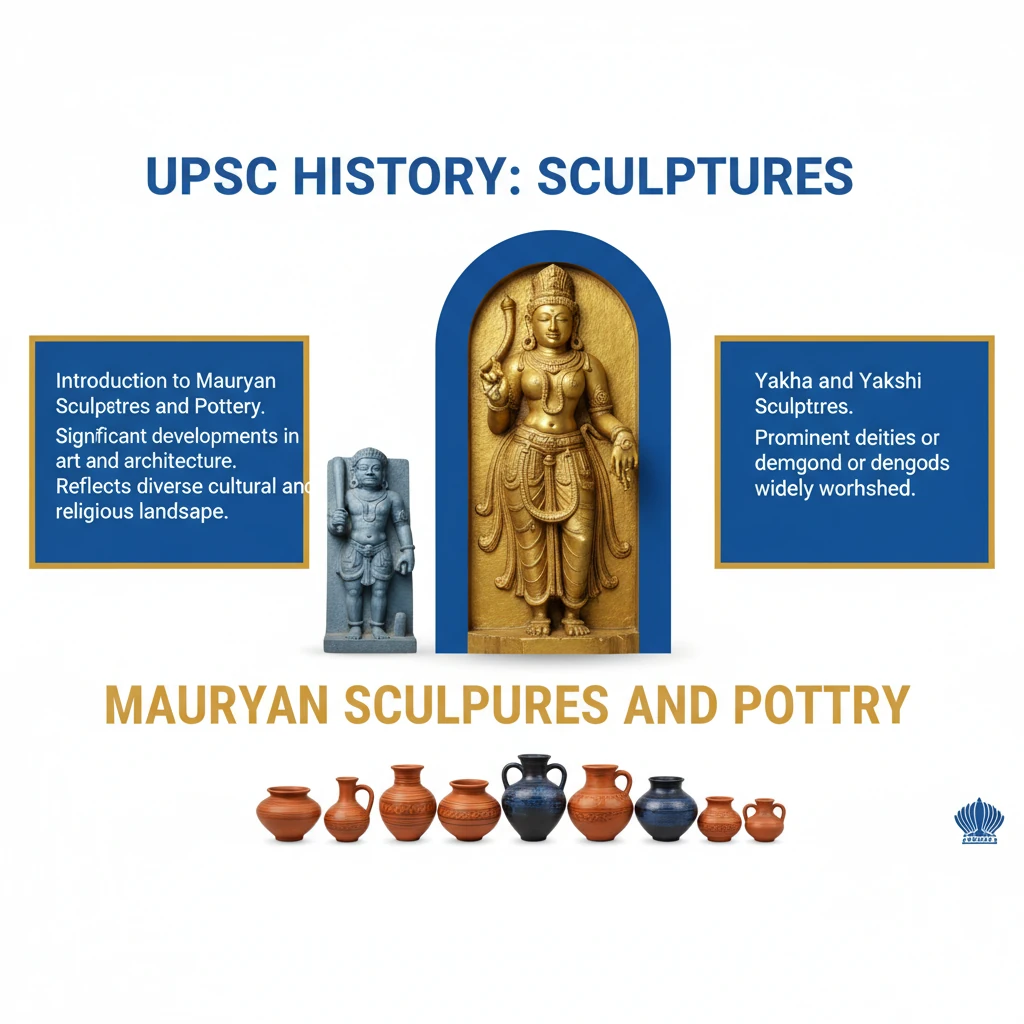
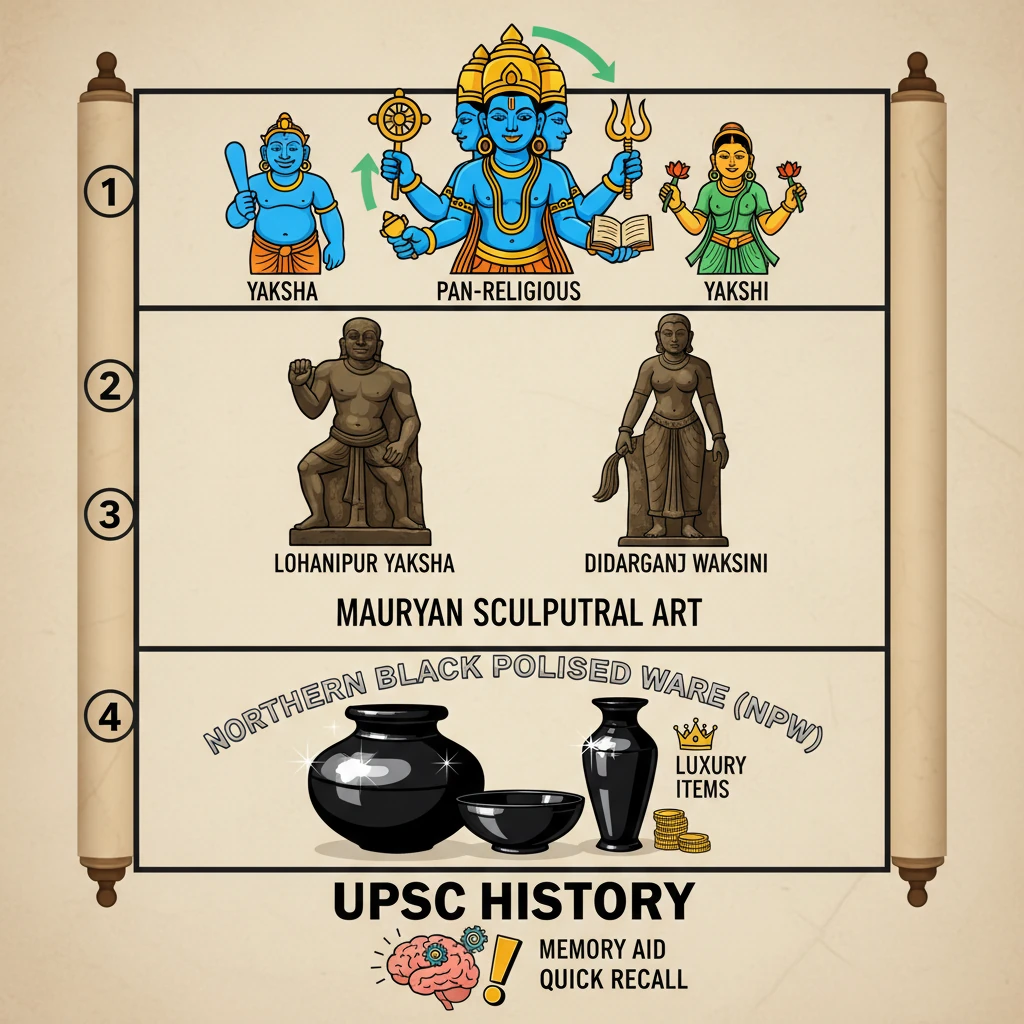
<h4>Introduction to Mauryan Sculptures and Pottery</h4><p>The <strong>Mauryan period</strong> witnessed significant developments in art and architecture, including distinctive sculptures and pottery styles. These artistic expressions reflect the diverse cultural and religious landscape of ancient India.</p><h4>Yaksha and Yakshi Sculptures</h4><div class='key-point-box'><p><strong>Yaksha</strong> and <strong>Yakshi</strong> figures were prominent deities or demigods worshipped widely across various ancient Indian religions.</p></div><p>These powerful nature spirits were revered in <strong>Jainism</strong>, <strong>Hinduism</strong>, and <strong>Buddhism</strong>, indicating a shared cultural substratum.</p><p>Their sculptures often depicted robust, life-sized figures, symbolizing fertility, wealth, and natural abundance.</p><ul><li><strong>Pan-Indian Worship:</strong> The widespread veneration of Yakshas and Yakshis highlights their integral role in the popular religious practices of the time, transcending specific sectarian boundaries.</li></ul><h4>Key Examples of Yaksha and Yakshi Sculptures</h4><div class='info-box'><p>Two notable examples from the Mauryan era include:</p><ul><li><strong>Lohanipur Yaksha:</strong> This sculpture is primarily known for its <strong>torso of a nude male figure</strong>, showcasing the early mastery of stone carving and anatomical representation.</li><li><strong>Didargunj Yakshni:</strong> Found near <strong>Patna</strong>, this is one of the most celebrated examples, depicting a graceful female figure often holding a fly-whisk (<em>chauri</em>), indicative of royalty or divinity.</li></ul></div><div class='exam-tip-box'><p>For UPSC, remember the <strong>Lohanipur Yaksha</strong> and <strong>Didargunj Yakshni</strong> as prime examples of Mauryan sculptural art, often asked in prelims for identification or in mains for discussing art forms.</p></div><h4>Mauryan Pottery: Northern Black Polished Ware (NBPW)</h4><p>The pottery of the Mauryan period is largely characterized by the distinctive <strong>Northern Black Polished Ware (NBPW)</strong>.</p><div class='info-box'><p><strong>NBPW Characteristics:</strong></p><ul><li><strong>Black Paint:</strong> Known for its characteristic <strong>black surface</strong>.</li><li><strong>Lustrous Finish:</strong> Possesses a remarkable <strong>lustrous, glossy finish</strong>, giving it a metallic sheen.</li><li><strong>High Quality:</strong> This pottery was typically made from fine clay and fired at high temperatures, resulting in a thin, strong, and durable ware.</li></ul></div><p><strong>Usage:</strong> <strong>NBPW</strong> was often associated with <strong>luxury items</strong> and used by the elite, indicating its high value and sophisticated production process.</p><div class='key-point-box'><p>The presence of <strong>NBPW</strong> sites across the subcontinent is often used by archaeologists as an indicator of <strong>Mauryan influence</strong> and trade networks.</p></div>
💡 Key Takeaways
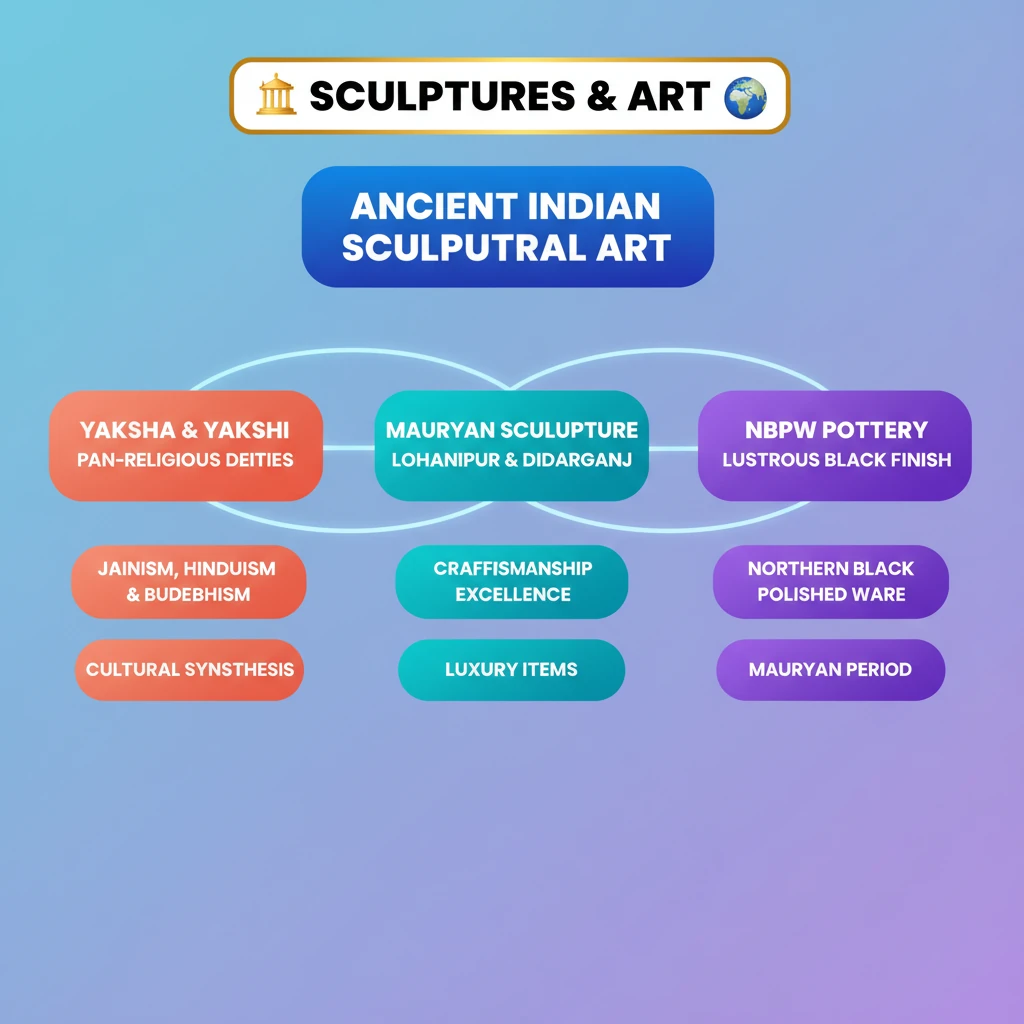
- •Yaksha and Yakshi sculptures were pan-religious deities in Jainism, Hinduism, and Buddhism.
- •Lohanipur Yaksha and Didargunj Yakshni are prime examples of Mauryan sculptural art.
- •Mauryan pottery is known as Northern Black Polished Ware (NBPW).
- •NBPW features a lustrous black finish and was used for luxury items.
- •These art forms reflect advanced craftsmanship and cultural synthesis of the Mauryan period.
🧠 Memory Techniques
95% Verified Content