What are the Key Facts About Muradabad ki Pahadi? - History | UPSC Learning
Topics
0 topics • 0 completed
🔍
No topics match your search
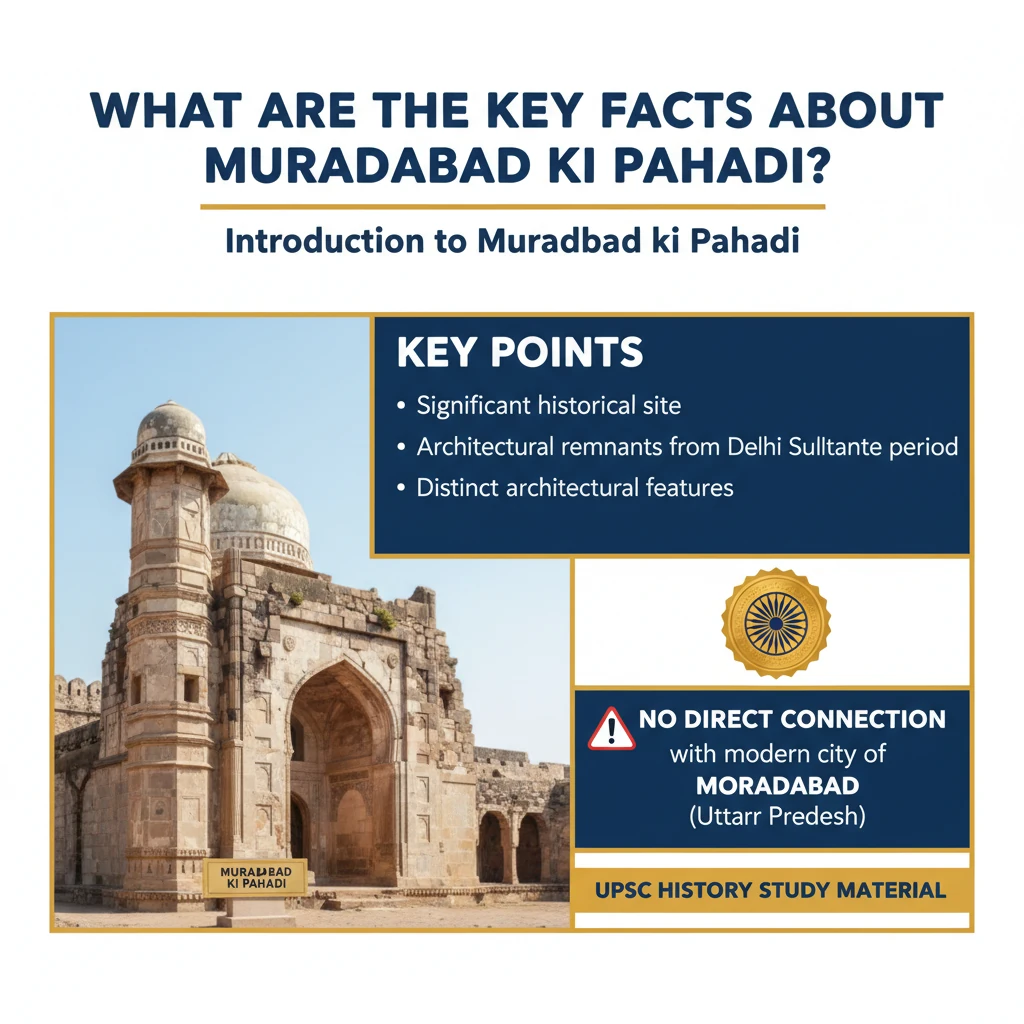
What are the Key Facts About Muradabad ki Pahadi?
Medium⏱️ 5 min read
history
📖 Introduction
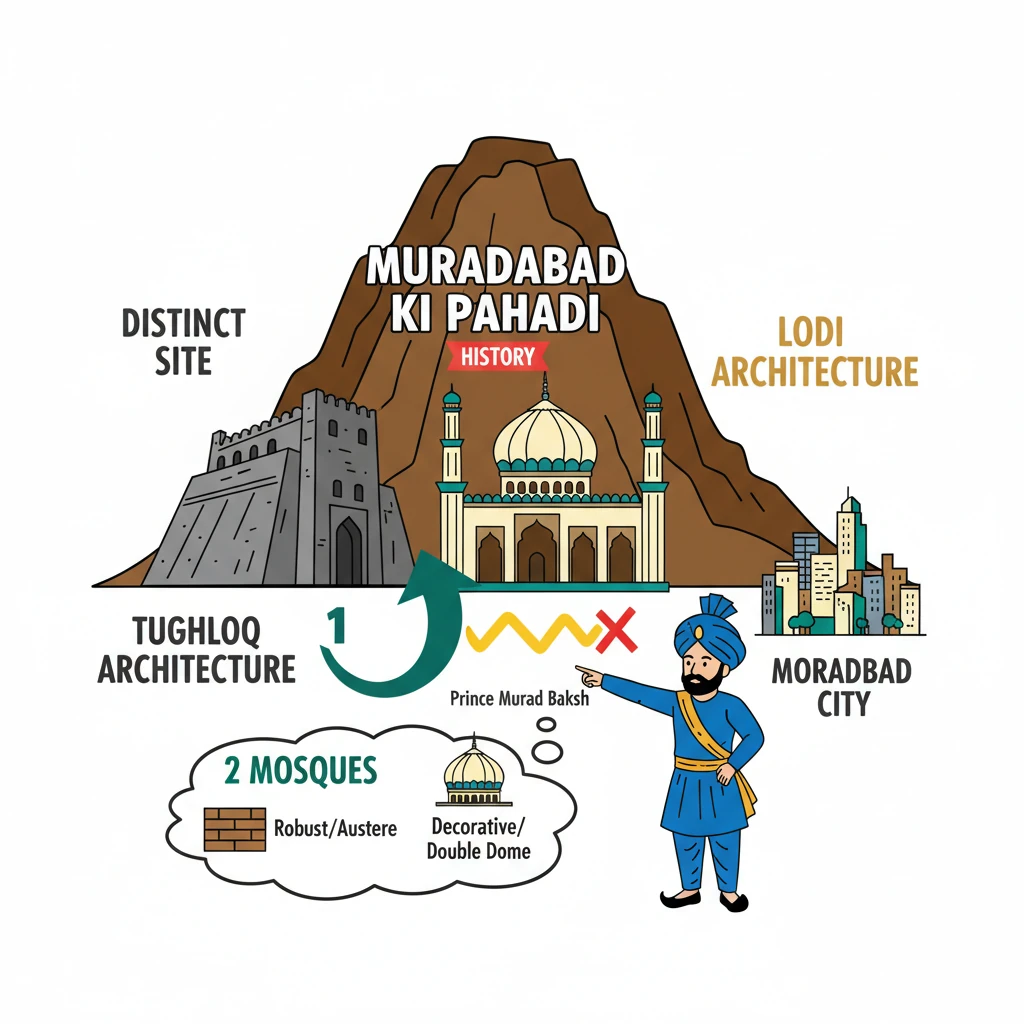
<h4>Introduction to Muradabad ki Pahadi</h4><p><strong>Muradabad ki Pahadi</strong> refers to a significant historical site that holds architectural remnants from the <strong>Delhi Sultanate</strong> period.</p><p>It is crucial to note that this site has <strong>no direct connection</strong> with the modern city of <strong>Moradabad</strong> in Uttar Pradesh.</p><div class='key-point-box'><p>The historical significance of <strong>Muradabad ki Pahadi</strong> lies in its distinct architectural representation of different dynastic periods.</p></div><h4>Clarification on Naming Convention</h4><p>The city of <strong>Moradabad</strong> was established and named after <strong>Prince Murad Baksh</strong>.</p><p><strong>Prince Murad Baksh</strong> was a son of the renowned Mughal Emperor, <strong>Shah Jahan</strong>, during the <strong>Mughal era</strong>.</p><div class='info-box'><p>Despite the similar-sounding names, <strong>Muradabad ki Pahadi</strong> predates the establishment of the Mughal city of <strong>Moradabad</strong> and its association with <strong>Prince Murad Baksh</strong>.</p></div><h4>Architectural Significance of the Site</h4><p>The historical site of <strong>Muradabad ki Pahadi</strong> is notable for housing <strong>two distinct mosques</strong>.</p><p>These mosques serve as important examples of the architectural styles prevalent during the <strong>Tughlaq dynasty</strong> and the <strong>Lodi dynasty</strong>.</p><h4>Dynastic Architectural Styles Represented</h4><p>The presence of structures from both the <strong>Tughlaq</strong> and <strong>Lodi</strong> periods provides valuable insights into the evolution of Islamic architecture in India.</p><div class='info-box'><ul><li>The <strong>Tughlaq architecture</strong> is often characterized by its robust, austere, and functional design, frequently using grey stone and offering a sense of strength.</li><li><strong>Lodi architecture</strong>, on the other hand, introduced more decorative elements, often featuring double domes, enclosed gardens (like tomb gardens), and a shift towards more refined aesthetics.</li></ul></div><div class='exam-tip-box'><p>Understanding these distinct architectural styles is vital for questions on <strong>Medieval Indian Art and Architecture</strong> in <strong>UPSC Prelims</strong> and <strong>Mains GS Paper 1</strong>.</p></div>
💡 Key Takeaways
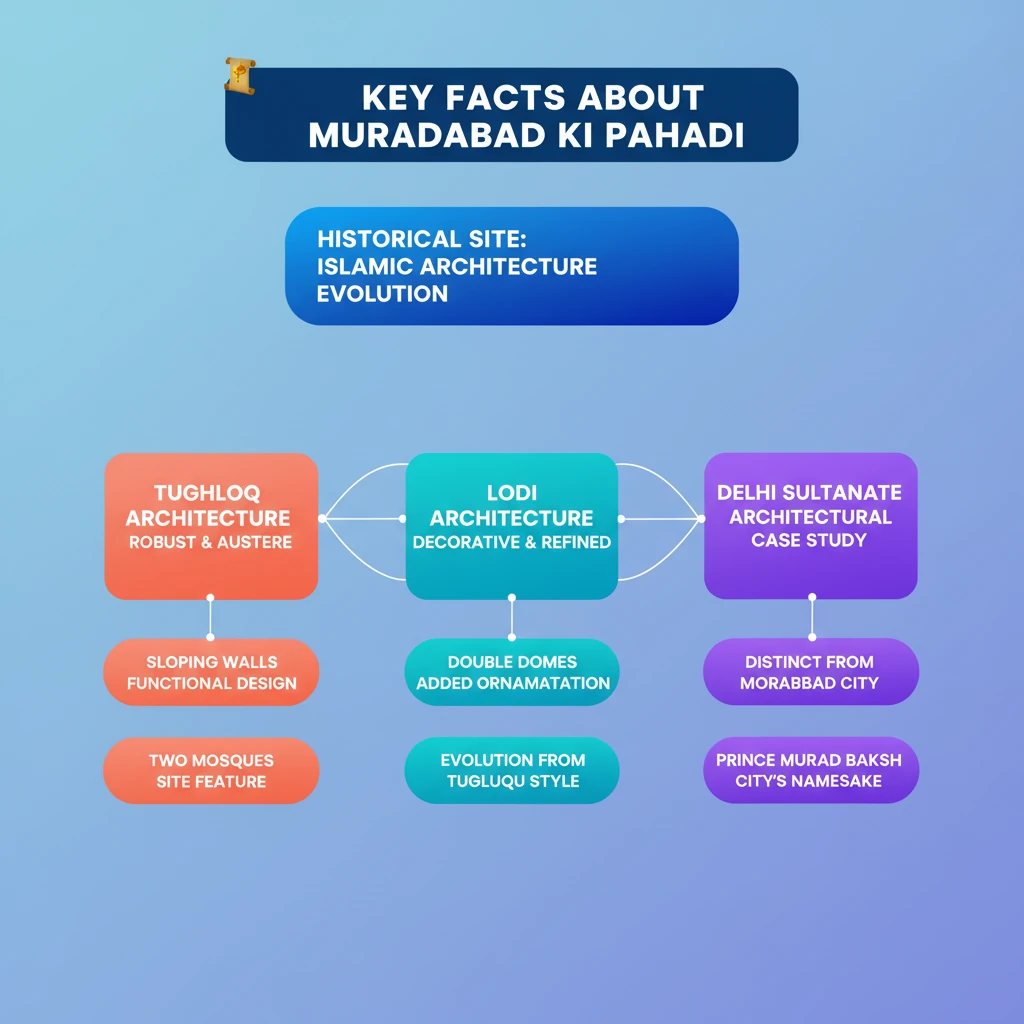
- •Muradabad ki Pahadi is a historical site distinct from the city of Moradabad, which was named after Prince Murad Baksh.
- •The site features two mosques, showcasing the architectural styles of the Tughlaq and Lodi dynasties.
- •Tughlaq architecture is characterized by its robust, austere, and functional design with sloping walls.
- •Lodi architecture introduced more decorative elements, including double domes and refined aesthetics.
- •The site provides a valuable case study for understanding the evolution of Islamic architecture during the Delhi Sultanate.
- •Preservation of such historical sites is crucial for cultural heritage, tourism, and educational purposes.
🧠 Memory Techniques
95% Verified Content
📚 Reference Sources
•NCERT History Textbooks (Class XI/XII - Themes in Indian History Part II)
•Archaeological Survey of India (ASI) Publications on Delhi Sultanate Architecture