Santhal Hul of 1855 - History | UPSC Learning
Topics
0 topics • 0 completed
🔍
No topics match your search
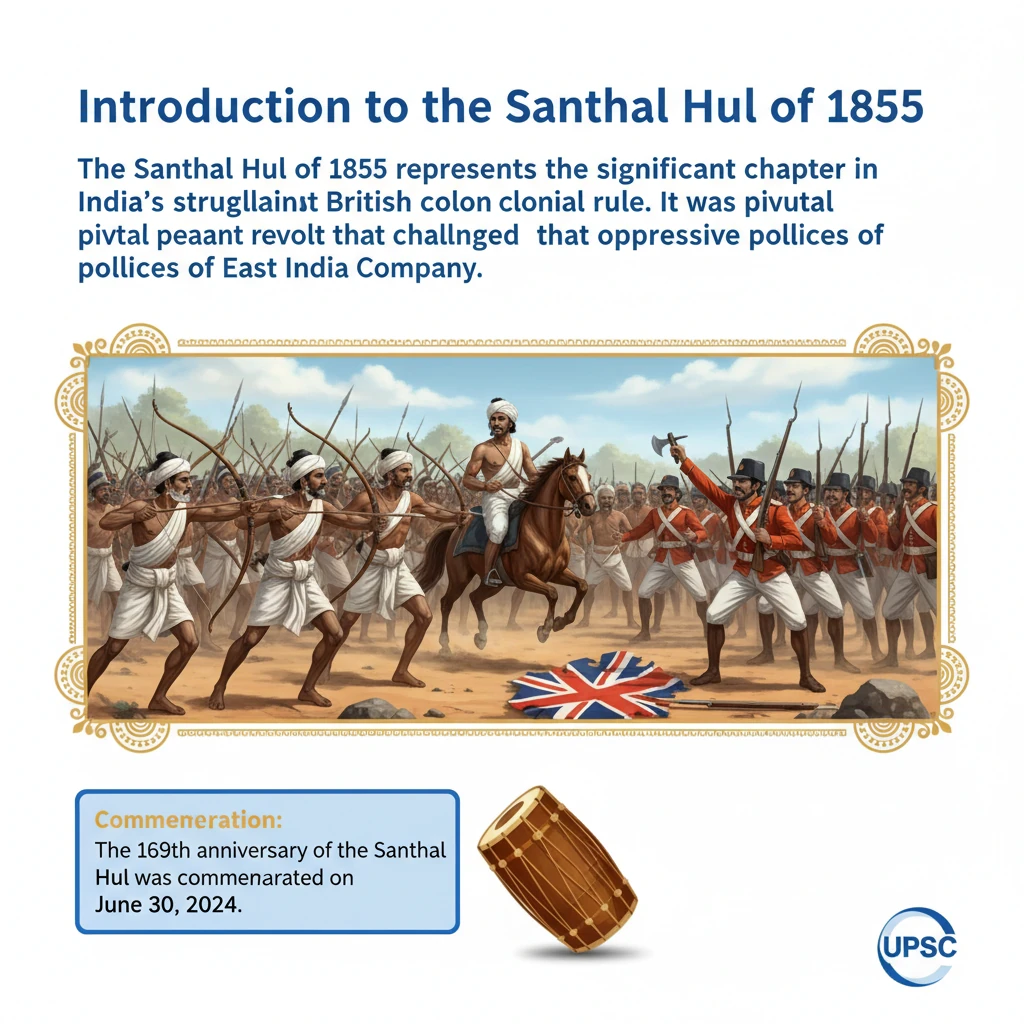
Santhal Hul of 1855
Medium⏱️ 8 min read
history
📖 Introduction
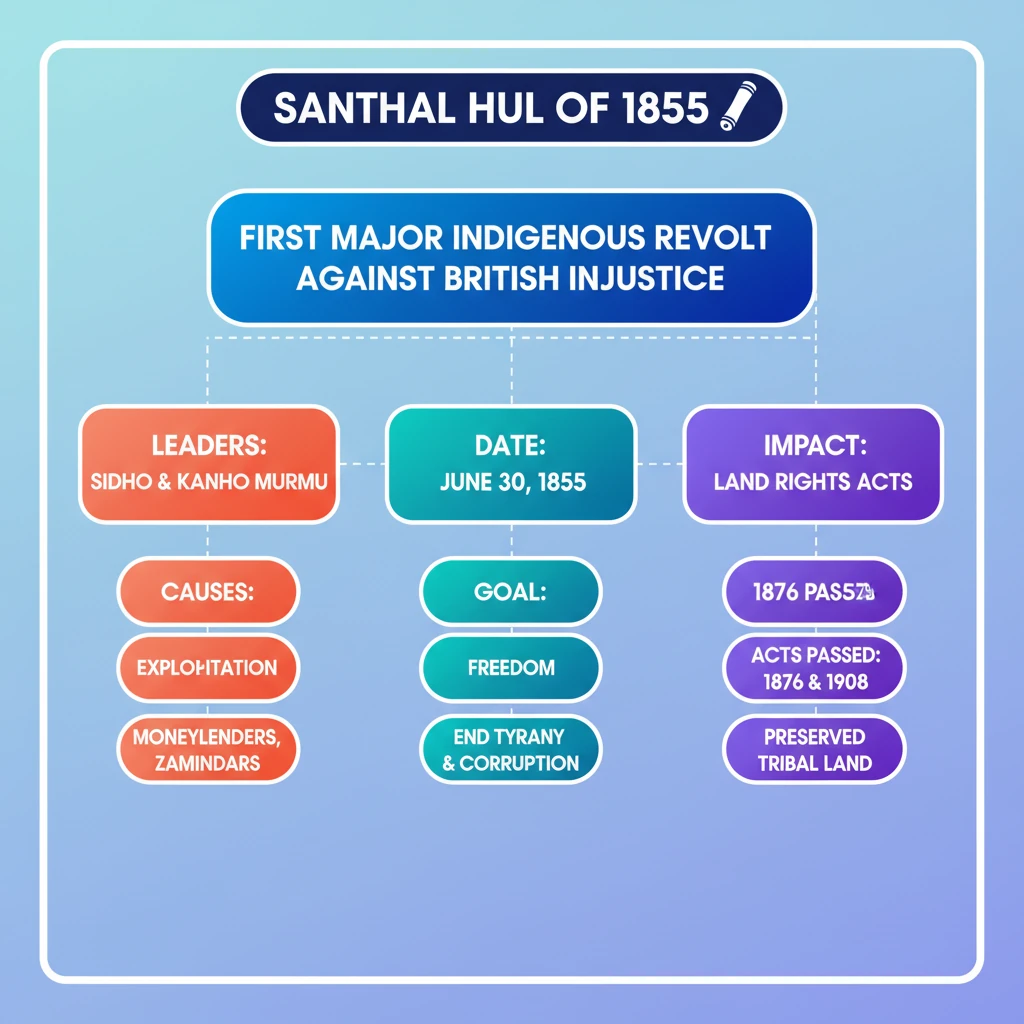
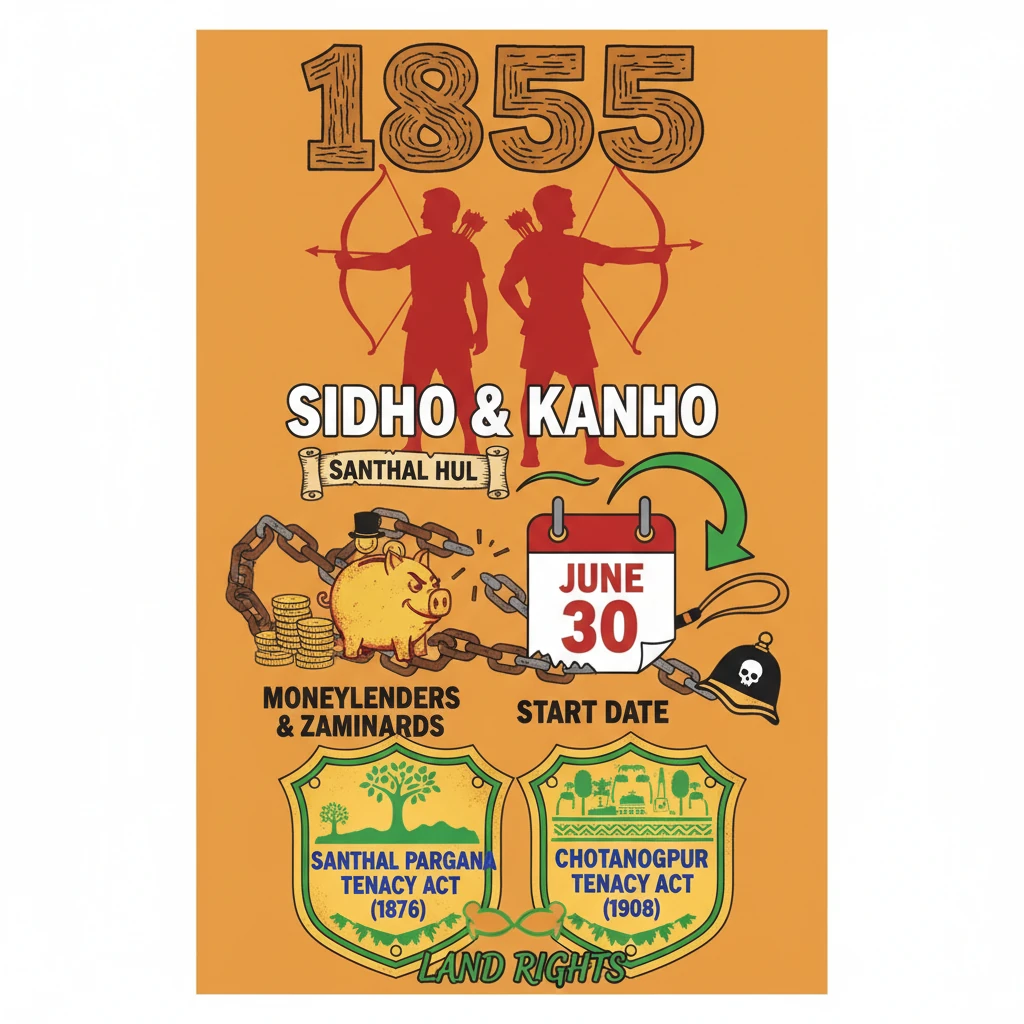
<h4>Introduction to the Santhal Hul of 1855</h4><p>The <strong>Santhal Hul</strong> of <strong>1855</strong> represents a significant chapter in India's struggle against <strong>British colonial rule</strong>. It was a pivotal <strong>peasant revolt</strong> that challenged the oppressive policies of the East India Company.</p><div class='info-box'><p><strong>Commemoration:</strong> The <strong>169th anniversary</strong> of the <strong>Santhal Hul</strong> was commemorated on <strong>June 30, 2024</strong>, highlighting its enduring legacy and importance in Indian history.</p></div><h4>Leadership of the Santhal Hul</h4><p>The revolt was spearheaded by four courageous brothers: <strong>Sidho Murmu</strong>, <strong>Kanho Murmu</strong>, <strong>Chand Murmu</strong>, and <strong>Bhairav Murmu</strong>. Their leadership galvanized the Santhal community.</p><p>Equally vital were the contributions of their sisters, <strong>Phulo Murmu</strong> and <strong>Jhano Murmu</strong>, who played significant roles in mobilizing and supporting the uprising.</p><h4>Origins and Commencement of the Revolt</h4><p>The <strong>Santhal Hul</strong> officially commenced on <strong>June 30, 1855</strong>. It emerged from deep-seated grievances against exploitation by moneylenders, zamindars, and the British administration.</p><div class='key-point-box'><p><strong>Key Concept:</strong> The term '<strong>Hul</strong>' in the Santhali language signifies a <strong>movement</strong> or a <strong>revolt</strong>, encapsulating the spirit of resistance against injustice.</p></div><h4>Legislative Outcomes of the Santhal Hul</h4><p>Despite its suppression, the <strong>Santhal Hul</strong> had profound long-term impacts, leading to crucial legislative changes aimed at protecting tribal rights.</p><ul><li>The <strong>Santhal Pargana Tenancy Act</strong> of <strong>1876</strong> was enacted to safeguard Santhal land from alienation.</li><li>The <strong>Chotanagpur Tenancy Act</strong> of <strong>1908</strong> further extended protections to tribal land rights across the Chotanagpur region.</li></ul><p>These acts were instrumental in preserving <strong>tribal land rights</strong> and fostering <strong>cultural autonomy</strong> for indigenous communities in India.</p><div class='exam-tip-box'><p><strong>UPSC Insight:</strong> The <strong>Santhal Hul</strong> is often cited as one of the earliest and most significant <strong>peasant uprisings</strong> preceding the <strong>Revolt of 1857</strong>. Understanding its causes and consequences is crucial for the <strong>Modern Indian History</strong> section (<strong>GS Paper I</strong>).</p></div>
💡 Key Takeaways
- •The Santhal Hul of 1855 was a significant peasant revolt against British colonial oppression, led by Sidho and Kanho Murmu.
- •It began on June 30, 1855, driven by exploitation from moneylenders, zamindars, and corrupt British officials.
- •The revolt, though suppressed, led to the enactment of the Santhal Pargana Tenancy Act (1876) and Chotanagpur Tenancy Act (1908).
- •These acts were crucial for preserving tribal land rights and cultural autonomy.
- •The Hul is considered one of the earliest major uprisings before the Revolt of 1857, highlighting indigenous resistance.
🧠 Memory Techniques
95% Verified Content
📚 Reference Sources
•General knowledge of Modern Indian History (NCERTs, standard textbooks)