Tectonic Events Changed the Course of Ganga - Geography | UPSC Learning
Topics
0 topics • 0 completed
🔍
No topics match your search
Tectonic Events Changed the Course of Ganga
Medium⏱️ 7 min read
geography
📖 Introduction
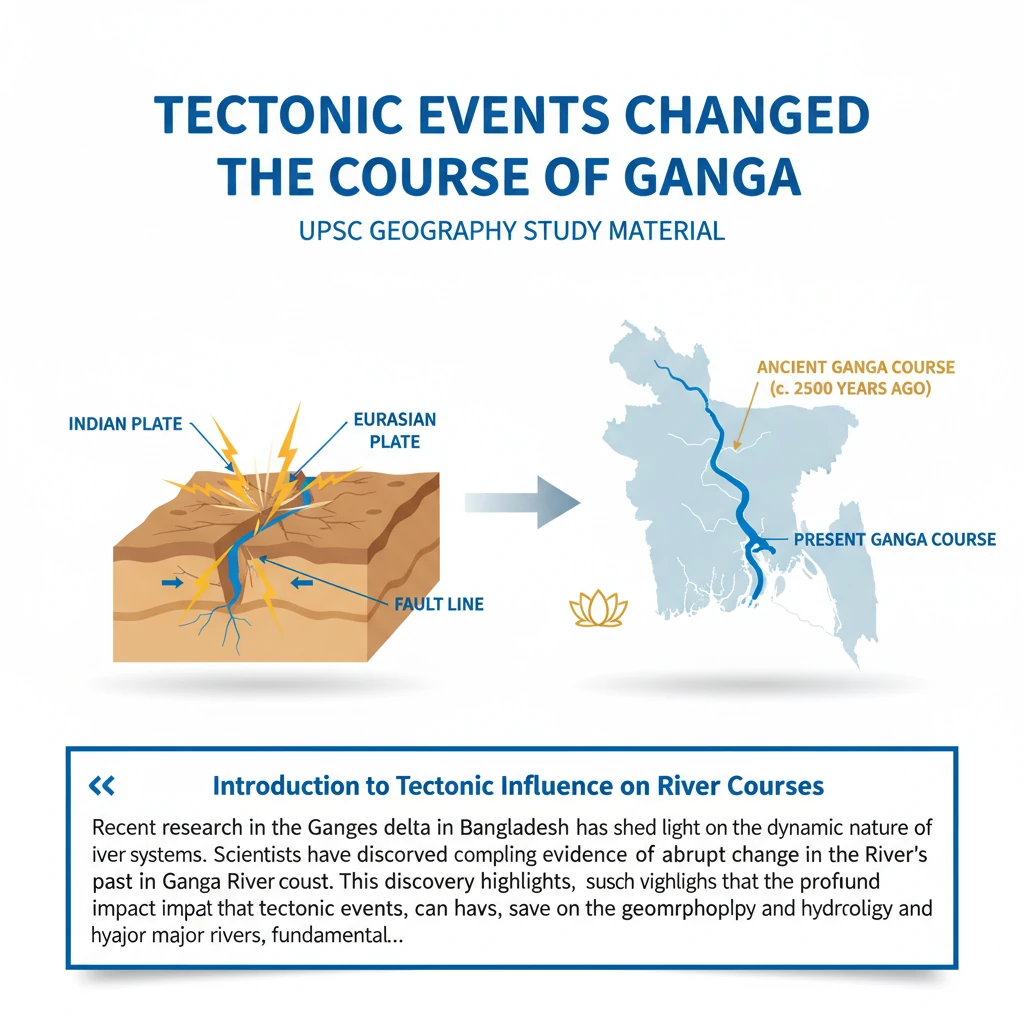
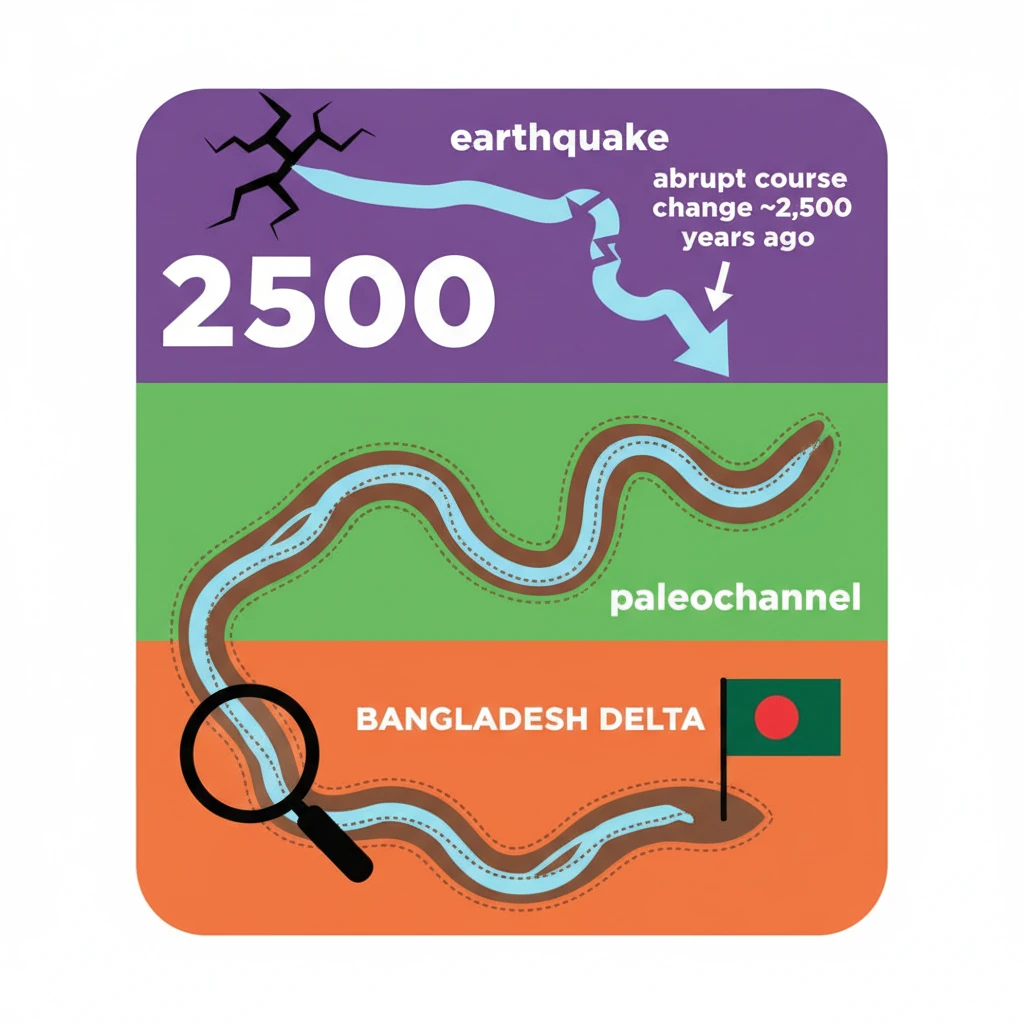
<h4>Introduction to Tectonic Influence on River Courses</h4><p>Recent research in the <strong>Ganges delta in Bangladesh</strong> has shed light on the dynamic nature of large river systems. Scientists have discovered compelling evidence of an abrupt change in the <strong>Ganga River's course</strong> in the past.</p><p>This discovery highlights the profound impact that <strong>tectonic events</strong>, such as earthquakes, can have on the geomorphology and hydrology of major rivers, fundamentally altering their pathways over time.</p><h4>The Discovery of the Paleochannel</h4><p>Researchers meticulously studied ancient river channels, known as <strong>paleochannels</strong>, within the <strong>Ganges delta</strong>. Their findings pointed to a significant geological event that drastically rerouted the Ganga.</p><div class='info-box'><p>A <strong>paleochannel</strong> is a remnant of an inactive river or stream channel that has been filled or buried by younger sediments. Its presence indicates the former path of a river.</p></div><p>The evidence suggests that the <strong>Ganga</strong> changed its course approximately <strong>2,500 years ago</strong>. This dramatic shift is attributed primarily to a powerful <strong>earthquake</strong>, which caused significant land deformation.</p><h4>Mechanism of Tectonic Influence</h4><p><strong>Tectonic events</strong>, particularly <strong>earthquakes</strong>, can induce rapid and substantial changes in river courses. These changes can occur through several mechanisms, including localized uplift or subsidence of landmasses.</p><p>Such geological shifts can alter the <strong>gradient</strong> of the riverbed, create new pathways, or block existing ones. This forces the river to seek a new, more energetically favorable course, often leading to abrupt diversions.</p><h4>Implications for Geological and Hydrological Studies</h4><div class='key-point-box'><p>Understanding the role of <strong>tectonic activity</strong> in shaping river systems is crucial for both <strong>geological</strong> and <strong>hydrological studies</strong>. It helps in reconstructing past landscapes and predicting future river behavior.</p></div><p>The study of <strong>paleochannels</strong> provides invaluable data for comprehending the long-term evolution of river basins. It also informs our understanding of the interplay between Earth's internal forces and surface processes.</p><div class='exam-tip-box'><p>This topic is highly relevant for <strong>UPSC GS Paper I (Geography)</strong>, particularly under <strong>Physical Geography</strong> and <strong>Geomorphology</strong>. Questions can focus on river dynamics, tectonic geomorphology, and their impact on human settlements.</p></div>
💡 Key Takeaways
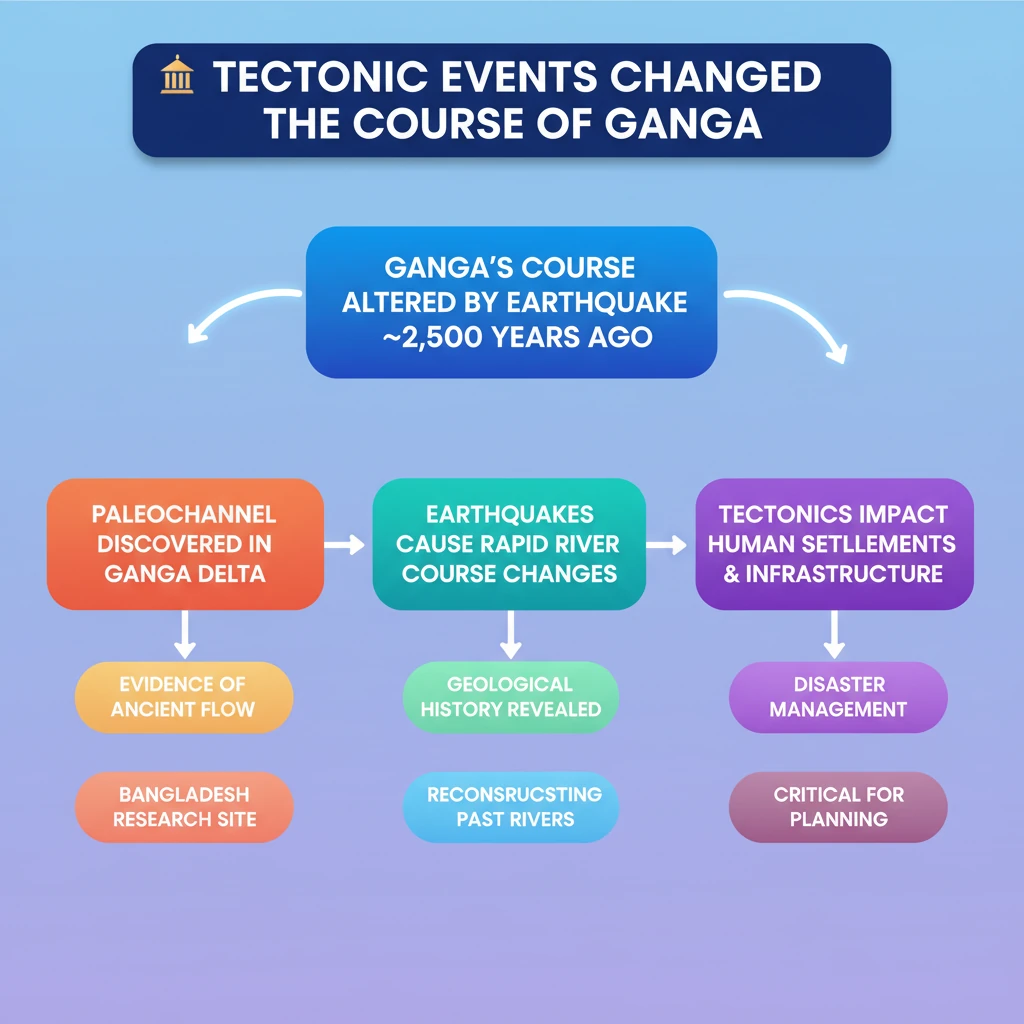
- •Ganga's course changed abruptly ~2,500 years ago due to an earthquake, evidenced by a paleochannel.
- •Researchers discovered this paleochannel in the Ganges delta in Bangladesh.
- •Tectonic events like earthquakes can cause rapid and significant alterations in river courses.
- •Paleochannels are crucial for reconstructing past river systems and understanding geological history.
- •River dynamics influenced by tectonics have major implications for human settlements, infrastructure, and disaster management.
🧠 Memory Techniques
90% Verified Content
📚 Reference Sources
•NCERT Geography Textbooks (Class XI/XII - General Geomorphology and Indian Rivers)
•General geological and geomorphological principles (e.g., fluvial dynamics, plate tectonics)
•Publicly available research summaries on Ganges delta paleochannels (general reference)