India Winter Monsoon Rainfall - Geography | UPSC Learning
Topics
0 topics • 0 completed
🔍
No topics match your search
India Winter Monsoon Rainfall
Medium⏱️ 6 min read
geography
📖 Introduction
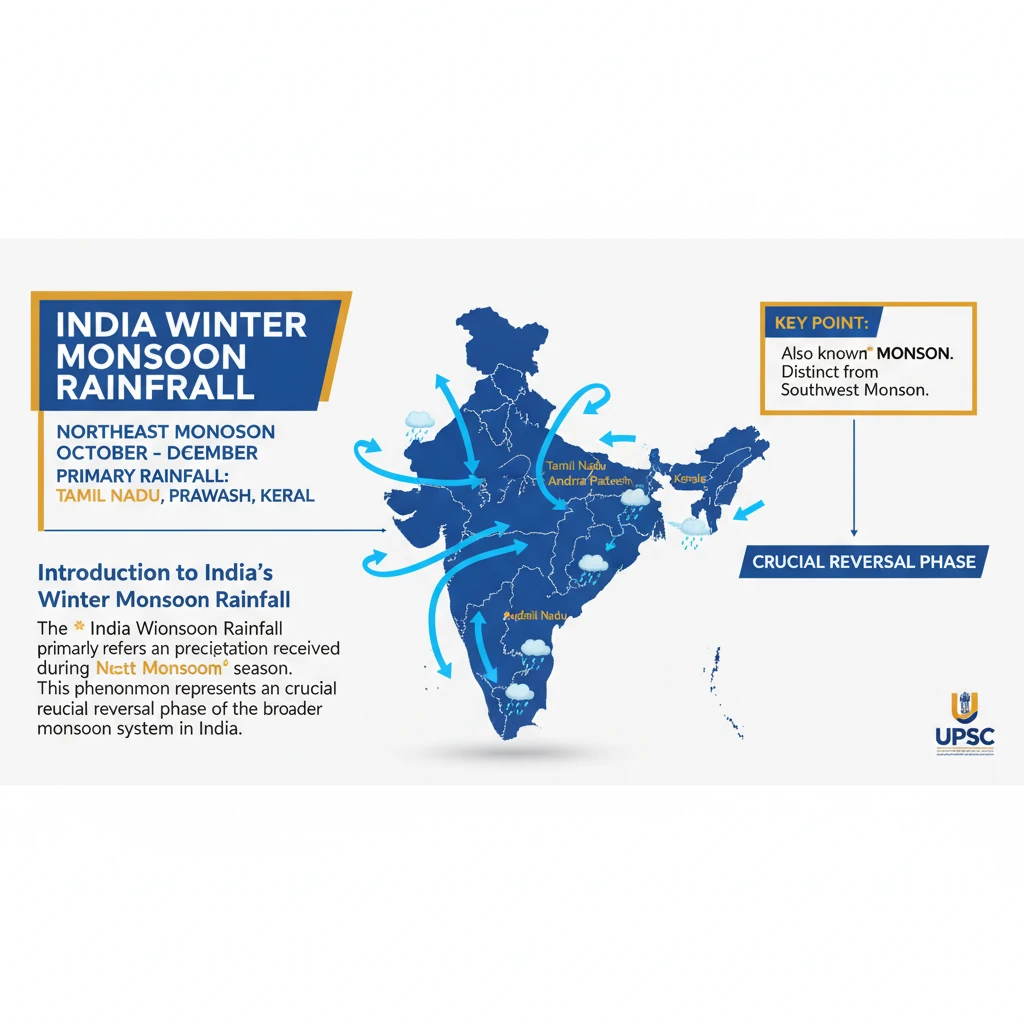
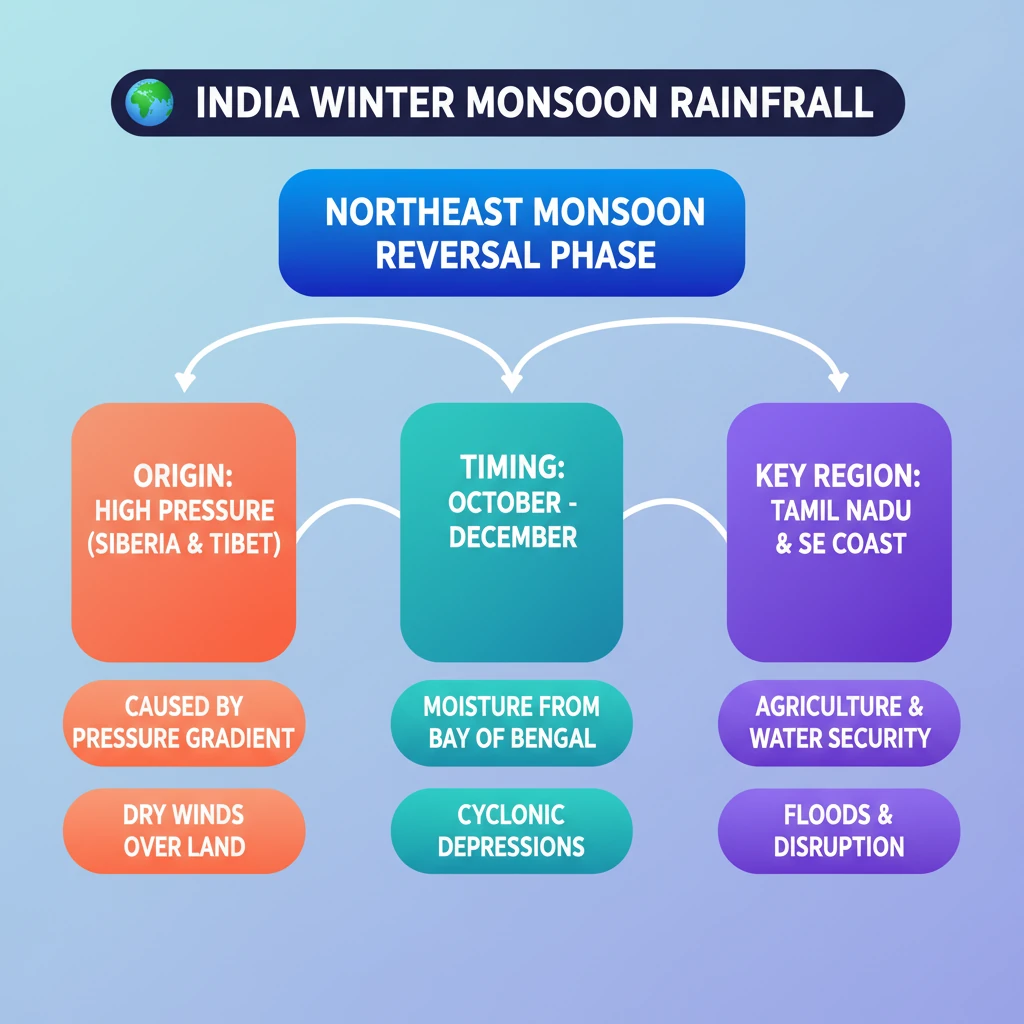
<h4>Introduction to India's Winter Monsoon Rainfall</h4><p>The <strong>India Winter Monsoon Rainfall</strong> primarily refers to the precipitation received during the <strong>Northeast Monsoon</strong> season. This phenomenon represents a crucial reversal phase of the broader monsoon system in India.</p><div class='info-box'><p>The <strong>Northeast Monsoon</strong> is also commonly known as the <strong>Winter Monsoon</strong> in India, distinct from the more widespread Southwest Monsoon.</p></div><h4>Mechanism: The Reversal Phase</h4><p>This monsoon phase is driven by the development of <strong>high-pressure cells</strong> over the vast landmasses of the <strong>Siberian</strong> and <strong>Tibetan plateaus</strong> during the winter months. These high-pressure systems cause winds to blow from land towards the sea.</p><div class='key-point-box'><p>The core mechanism involves the <strong>seasonal reversal of winds</strong>. While the Southwest Monsoon brings moisture-laden winds from the sea, the Northeast Monsoon brings relatively dry winds from the land.</p></div><h4>Timing and Duration</h4><p>The <strong>Northeast Monsoon</strong> typically occurs during the months of <strong>October to December</strong>. This period marks the transition from the retreating Southwest Monsoon to the establishment of winter conditions across the subcontinent.</p><div class='info-box'><p>The rainfall associated with this monsoon is concentrated in specific regions of India, making it vital for their annual water budget.</p></div><h4>Rainfall Distribution and Impact</h4><p>As the dry winds from the landmass blow over the <strong>Bay of Bengal</strong>, they pick up moisture. When these moisture-laden winds hit the eastern coast of <strong>South India</strong>, particularly <strong>Tamil Nadu</strong>, they cause significant rainfall.</p><p>States like <strong>Tamil Nadu</strong>, parts of <strong>Andhra Pradesh</strong>, <strong>Kerala</strong>, and the union territory of <strong>Puducherry</strong> receive a substantial portion of their annual rainfall from the <strong>Northeast Monsoon</strong>.</p><div class='exam-tip-box'><p>For <strong>UPSC Prelims</strong>, remember the key period (<strong>October-December</strong>) and the primary affected region (<strong>Tamil Nadu coast</strong>). For <strong>Mains</strong>, understand the underlying pressure systems and wind patterns.</p></div>
💡 Key Takeaways
- •India's Winter Monsoon Rainfall is primarily due to the Northeast Monsoon.
- •It is a reversal phase caused by high-pressure cells over Siberian and Tibetan plateaus.
- •Occurs from October to December.
- •Key region receiving rainfall is the Southeast coast of India, especially Tamil Nadu.
- •Crucial for agriculture and water security in affected regions, but can also cause floods.
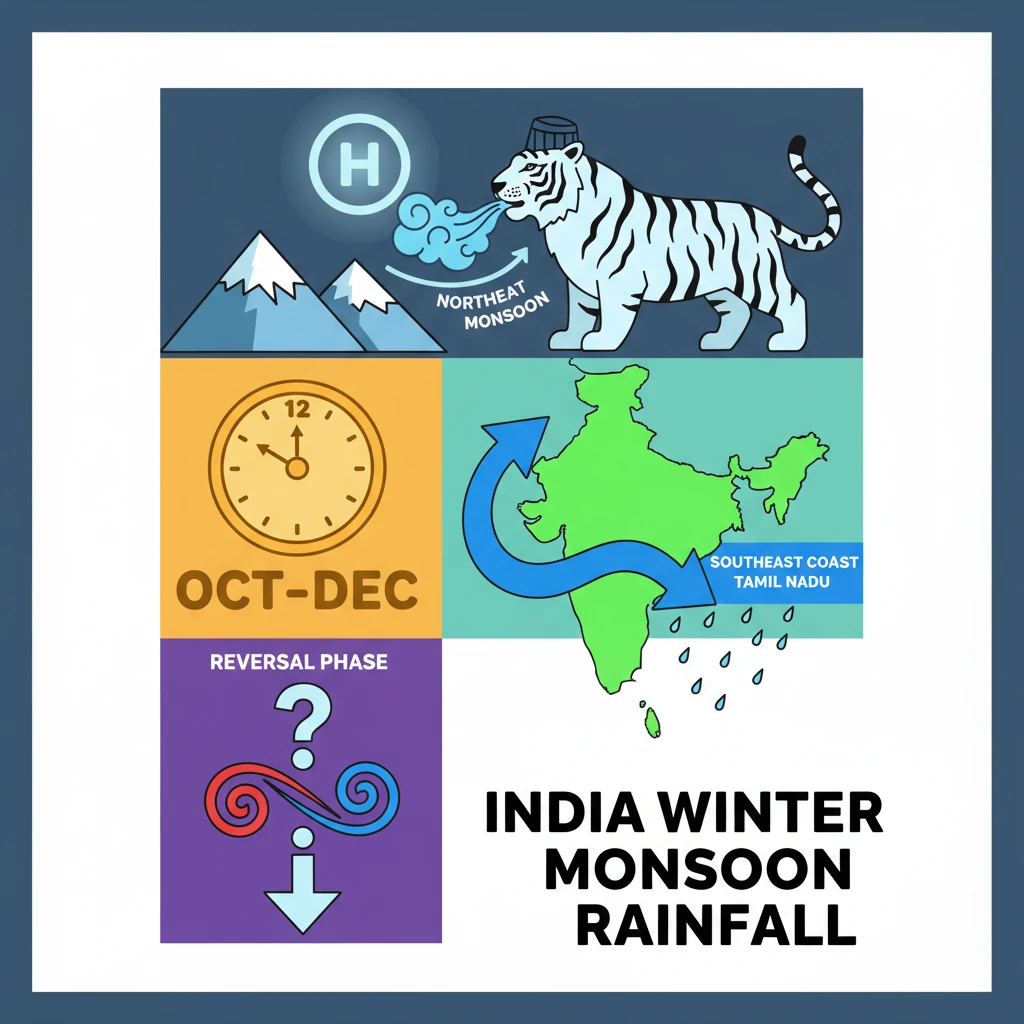
🧠 Memory Techniques
95% Verified Content
📚 Reference Sources
•NCERT Geography Textbooks (Class XI - Fundamentals of Physical Geography, India: Physical Environment)
•India Meteorological Department (IMD) publications and data
•Standard Indian Geography reference books (e.g., D.R. Khullar, Majid Husain)