What are Coral Reefs? - Geography | UPSC Learning
Topics
0 topics • 0 completed
🔍
No topics match your search
What are Coral Reefs?
Medium⏱️ 8 min read
geography
📖 Introduction
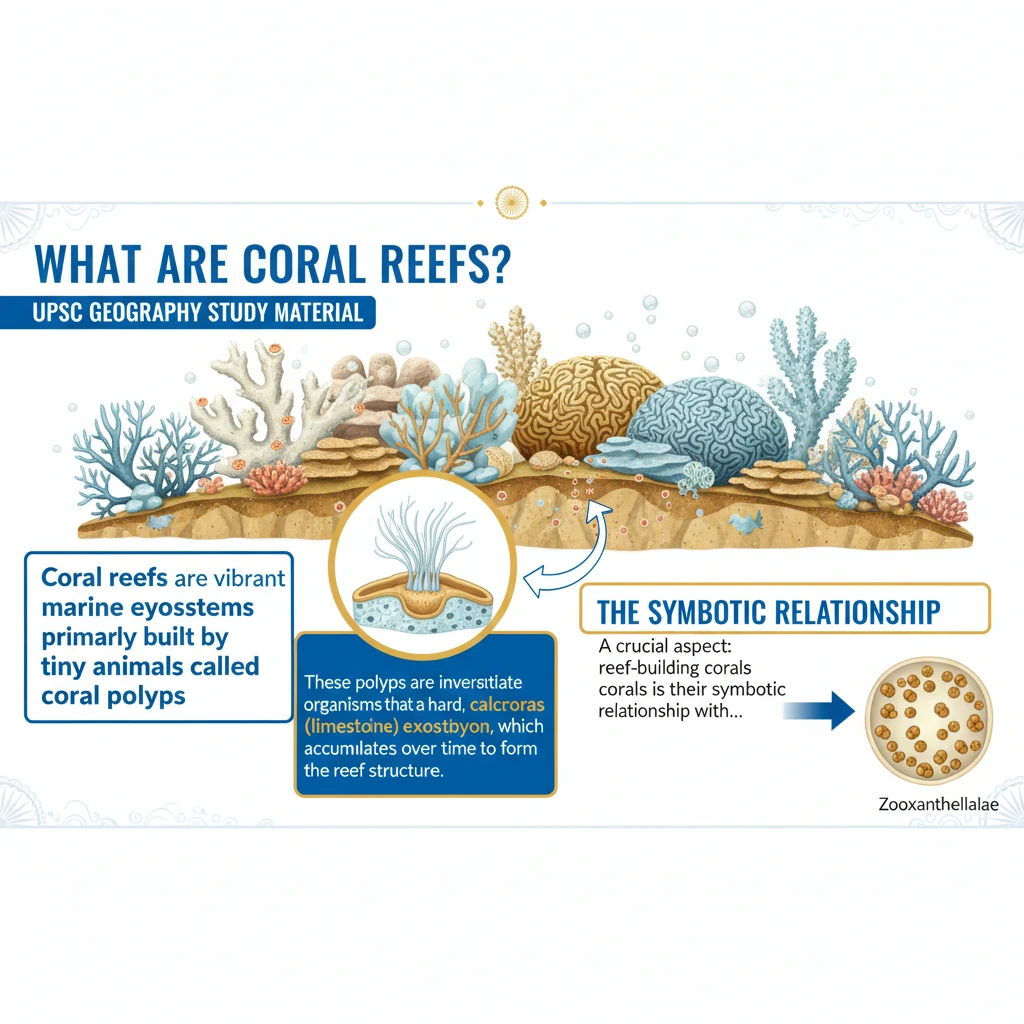
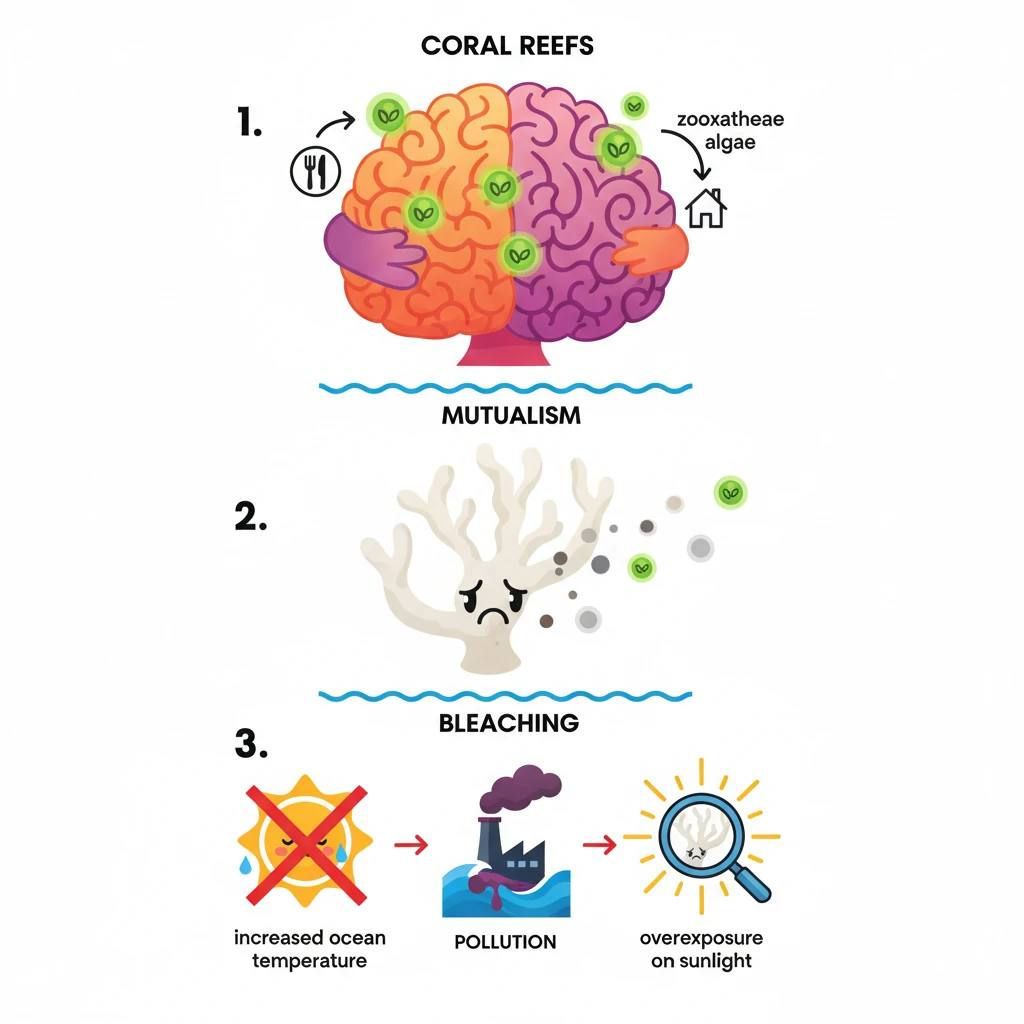
<h4>What are Coral Reefs?</h4><p><strong>Coral reefs</strong> are vibrant <strong>marine ecosystems</strong> primarily built by tiny animals called <strong>coral polyps</strong>.</p><div class='info-box'><p>These polyps are invertebrate organisms that secrete a hard, calcareous (limestone) exoskeleton, which accumulates over time to form the reef structure.</p></div><h4>The Symbiotic Relationship</h4><p>A crucial aspect of reef-building corals is their <strong>symbiotic relationship</strong> with microscopic algae known as <strong>zooxanthellae</strong>.</p><div class='key-point-box'><p>The <strong>zooxanthellae</strong> live within the coral polyps' tissues. They perform <strong>photosynthesis</strong>, providing the corals with vital <strong>nutrients</strong> and <strong>oxygen</strong>.</p></div><p>In return, the corals offer a protected habitat and compounds necessary for the algae's photosynthesis. This <strong>mutualism</strong> is indispensable for the health and survival of the entire coral reef ecosystem.</p><h4>Understanding Coral Bleaching</h4><p><strong>Coral bleaching</strong> is a severe threat where corals lose their vibrant color and become white, indicating stress and potential death.</p><p>It occurs when the <strong>symbiotic relationship</strong> between the coral polyp and its <strong>zooxanthellae</strong> breaks down.</p><p>Without their primary food source, the algae leave the coral tissue. The coral then turns pale or white and becomes highly susceptible to disease.</p><div class='exam-tip-box'><p>Understanding <strong>coral bleaching</strong> is critical for <strong>UPSC GS-III Environment</strong> as it highlights the fragility of marine ecosystems to climate change.</p></div><h4>Causes of Coral Bleaching</h4><ul><li><strong>Changes in Ocean Temperature</strong>: The leading cause is increased water temperature, which stresses the symbiotic algae.</li><li><strong>Runoff and Pollution</strong>: Storms can cause freshwater runoff, rapidly diluting ocean water. Pollutants like <strong>sunscreen</strong> and <strong>industrial waste</strong> can also poison corals.</li><li><strong>Overexposure to Sunlight</strong>: High solar irradiance, especially when temperatures are already elevated, can cause bleaching in shallow-water corals.</li><li><strong>Extreme Low Tides</strong>: Prolonged exposure to air during very low tides can bleach shallow corals.</li></ul><h4>Types of Corals</h4><p>Corals are broadly classified based on their structure and composition:</p><h5>Hydrocorals (Fire Corals)</h5><p>These are <strong>reef-building hydroids</strong> known for their hard, <strong>calcareous exoskeleton</strong>.</p><div class='info-box'><p>They possess <strong>stinging cells</strong> (nematocysts) that can cause a burning sensation upon contact, hence the name <strong>"Fire Corals"</strong>.</p></div><h5>Octocorals (Soft Corals)</h5><p>This group includes organisms like <strong>sea fans</strong> and <strong>sea whips</strong>.</p><div class='info-box'><p>Unlike stony corals, <strong>Octocorals</strong> grow more like fleshy plants and generally <strong>do not form calcium carbonate skeletal structures</strong> that contribute to reef building.</p></div><h5>Antipatharians (Black Corals)</h5><p>Often referred to as a type of 'soft' coral, <strong>Black Corals</strong> are distinguished by their distinctive <strong>jet-black</strong> or <strong>dark brown chitin skeletons</strong>.</p><div class='info-box'><p>They are typically found in deeper waters and are known for their long lifespans.</p></div><h4>Geographical Extent of Reef-Building Corals</h4><p>Corals can be found in oceans worldwide, inhabiting both shallow and deep waters.</p><p>However, the <strong>reef-building corals</strong>, which depend on their symbiotic relationship with algae, have specific environmental requirements.</p><div class='key-point-box'><p>They require <strong>shallow, clear water</strong> to allow sufficient light penetration for the <strong>photosynthesis</strong> carried out by their <strong>zooxanthellae</strong>.</p></div><p>These <strong>stony corals</strong> also thrive in <strong>tropical or subtropical temperatures</strong>, typically found within a band between <strong>30° North and 30° South latitudes</strong>.</p>
💡 Key Takeaways
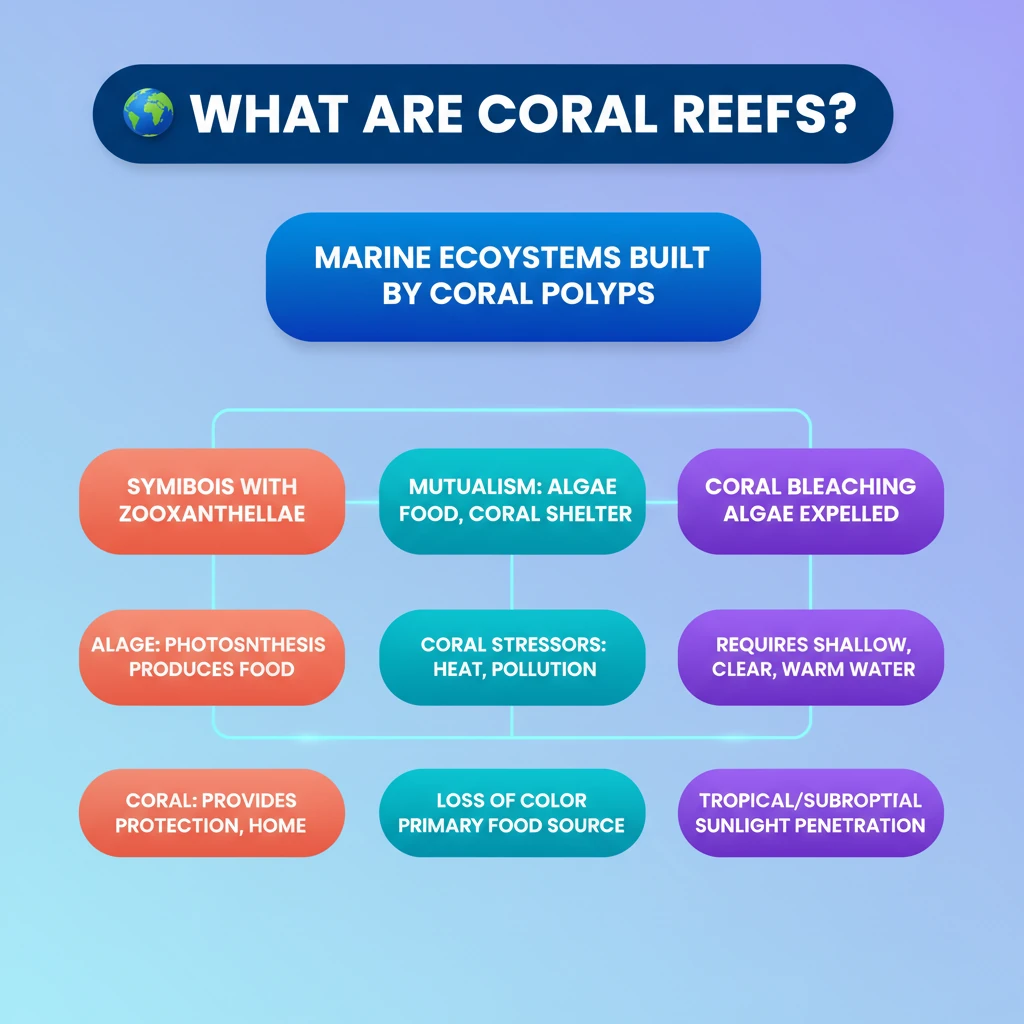
- •Coral reefs are marine ecosystems built by coral polyps in symbiosis with zooxanthellae algae.
- •Zooxanthellae provide food via photosynthesis; corals offer shelter, a mutualistic relationship.
- •Coral bleaching occurs when stressed corals expel zooxanthellae, losing color and primary food source.
- •Primary causes of bleaching include increased ocean temperature, pollution, and overexposure to sunlight.
- •Reef-building corals require shallow, clear, tropical/subtropical waters for light penetration.
- •Types include Hydrocorals (Fire Corals), Octocorals (Soft Corals), and Antipatharians (Black Corals).
🧠 Memory Techniques
95% Verified Content
📚 Reference Sources
•NOAA Coral Reef Conservation Program (https://coralreef.noaa.gov)