Indus River System: India-Pakistan Water Disputes & Tributaries - Geography | UPSC Learning
Topics
0 topics • 0 completed
🔍
No topics match your search
Indus River System: India-Pakistan Water Disputes & Tributaries
Medium⏱️ 6 min read
geography
📖 Introduction
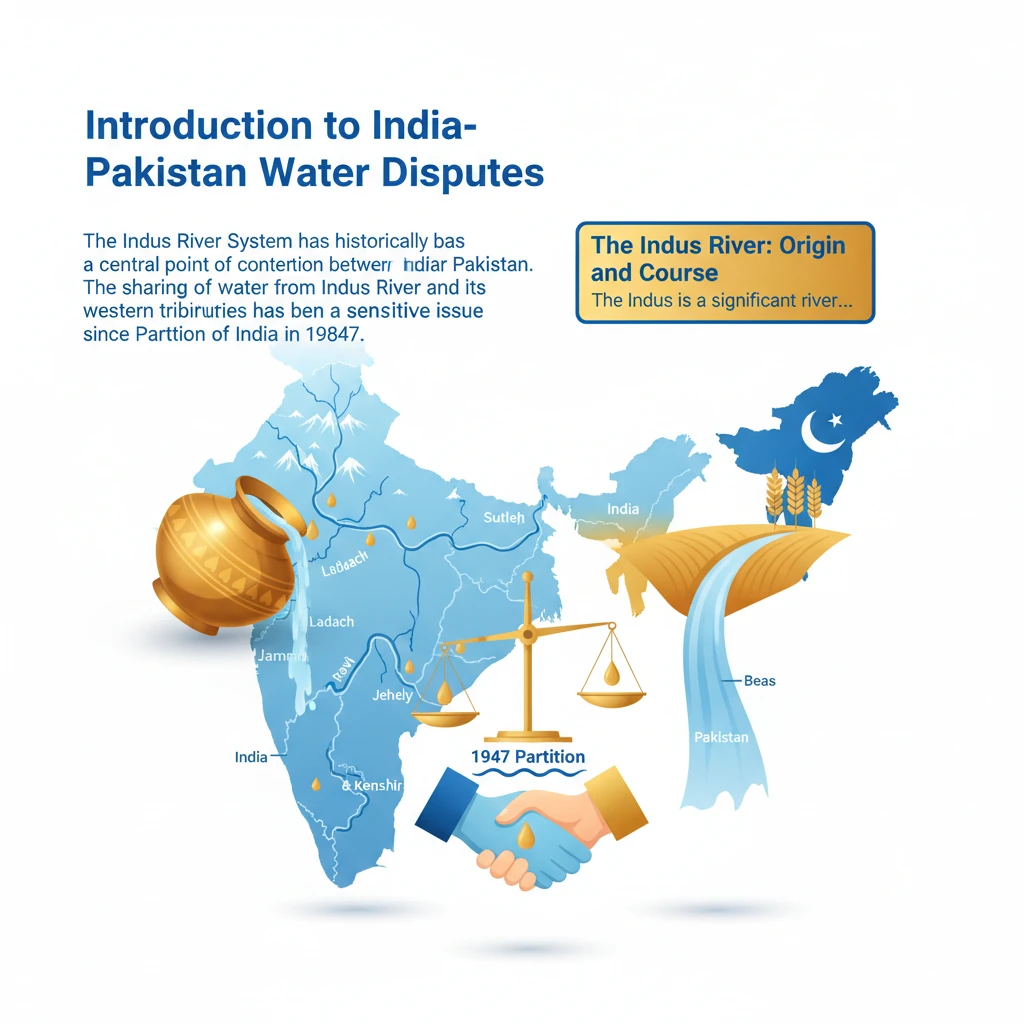
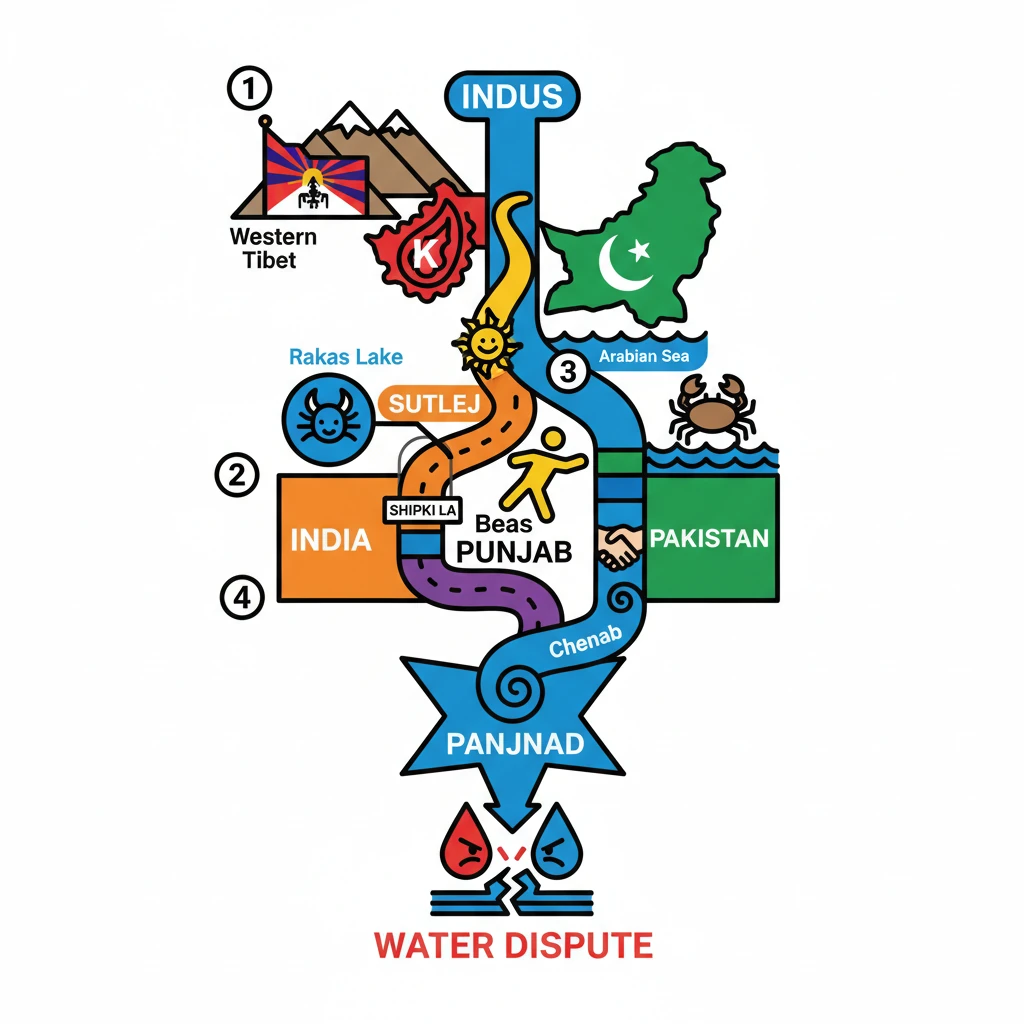
<h4>Introduction to India-Pakistan Water Disputes</h4><p>The <strong>Indus River System</strong> has historically been a central point of contention between <strong>India</strong> and <strong>Pakistan</strong>.</p><p>The sharing of water from the <strong>Indus River</strong> and its western tributaries has been a sensitive issue since the <strong>Partition of India</strong> in <strong>1947</strong>.</p><h4>The Indus River: Origin and Course</h4><p>The <strong>Indus</strong> is a significant <strong>trans-boundary river</strong> in <strong>Asia</strong>, crucial for the livelihoods of millions.</p><div class='info-box'><p><strong>Origin:</strong> <strong>Western Tibet</strong></p><p><strong>Initial Flow:</strong> <strong>Northwest</strong> through <strong>Kashmir</strong></p><p><strong>Main Flow:</strong> <strong>South-by-southwest</strong> through <strong>Pakistan</strong></p><p><strong>Outflow:</strong> Empties into the <strong>Arabian Sea</strong> near <strong>Karachi</strong></p></div><h4>Sutlej River: A Key Tributary</h4><p>The <strong>Sutlej River</strong> is a major <strong>tributary</strong> of the <strong>Indus River System</strong>, playing a vital role in the region's hydrology.</p><div class='info-box'><p><strong>Origin:</strong> <strong>Rakas Lake</strong> in <strong>Pakistan</strong> (as per source material)</p></div><p>It flows parallel to the <strong>Indus River</strong> for approximately <strong>400 kilometres</strong> before entering <strong>India</strong>.</p><h4>Sutlej's Course Through India</h4><p>The <strong>Sutlej</strong> makes its entry into <strong>India</strong> through <strong>Himachal Pradesh's Shipki La Pass</strong>.</p><p>Subsequently, it continues its journey through the plains of <strong>Punjab</strong>, a key agricultural region.</p><h4>Confluence and Final Journey</h4><p>In <strong>Punjab</strong>, the <strong>Sutlej River</strong> converges with the <strong>Beas River</strong>.</p><p>This confluence forms a section of the <strong>India-Pakistan border</strong> before the <strong>Sutlej</strong> eventually joins the <strong>Chenab River</strong>.</p><div class='key-point-box'><p>The combined flow of these rivers creates the <strong>Panjnad River</strong>, which then empties into the main <strong>Indus River</strong>.</p></div><div class='exam-tip-box'><p>Understanding the geography of these rivers, particularly their origins, courses, and confluences, is crucial for questions on <strong>Indo-Pak relations</strong> and <strong>physical geography</strong> in <strong>UPSC Prelims</strong> and <strong>Mains</strong>.</p></div>
💡 Key Takeaways
- •The Indus is a trans-boundary river originating in Western Tibet, flowing through Kashmir and Pakistan to the Arabian Sea.
- •The Sutlej is a major tributary of the Indus, originating at Rakas Lake (as per source), entering India via Shipki La Pass.
- •The Sutlej meets the Beas in Punjab, forms part of the India-Pakistan border, and then joins the Chenab to form the Panjnad, which empties into the Indus.
- •Water sharing from the Indus River System has been a contentious issue between India and Pakistan since independence.
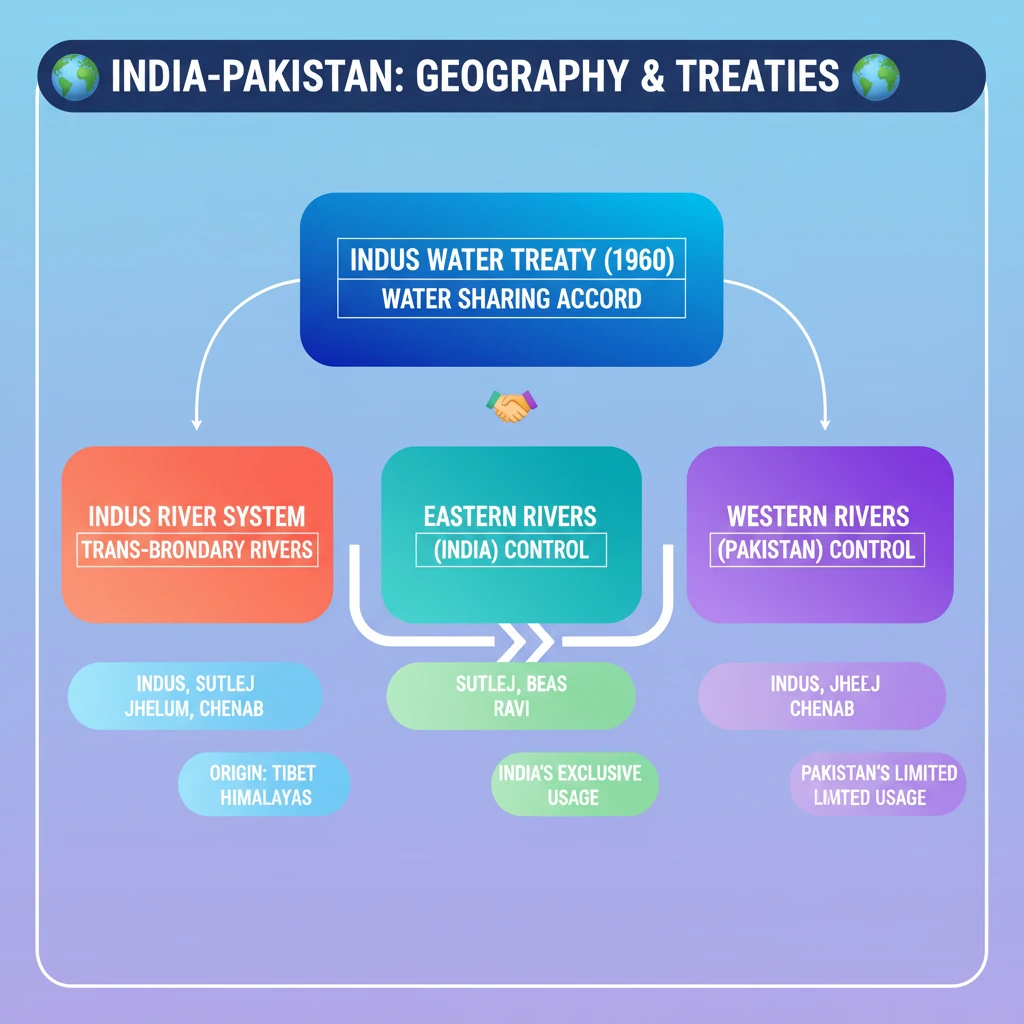
- •The Indus Water Treaty (1960) governs water distribution, but contemporary challenges and disputes persist.
🧠 Memory Techniques
90% Verified Content
📚 Reference Sources
•General knowledge of Indus Water Treaty and Indian Geography