What are the History of Dinosaurs in India? - Geography | UPSC Learning
Topics
0 topics • 0 completed
🔍
No topics match your search
What are the History of Dinosaurs in India?
Easy⏱️ 7 min read
geography
📖 Introduction
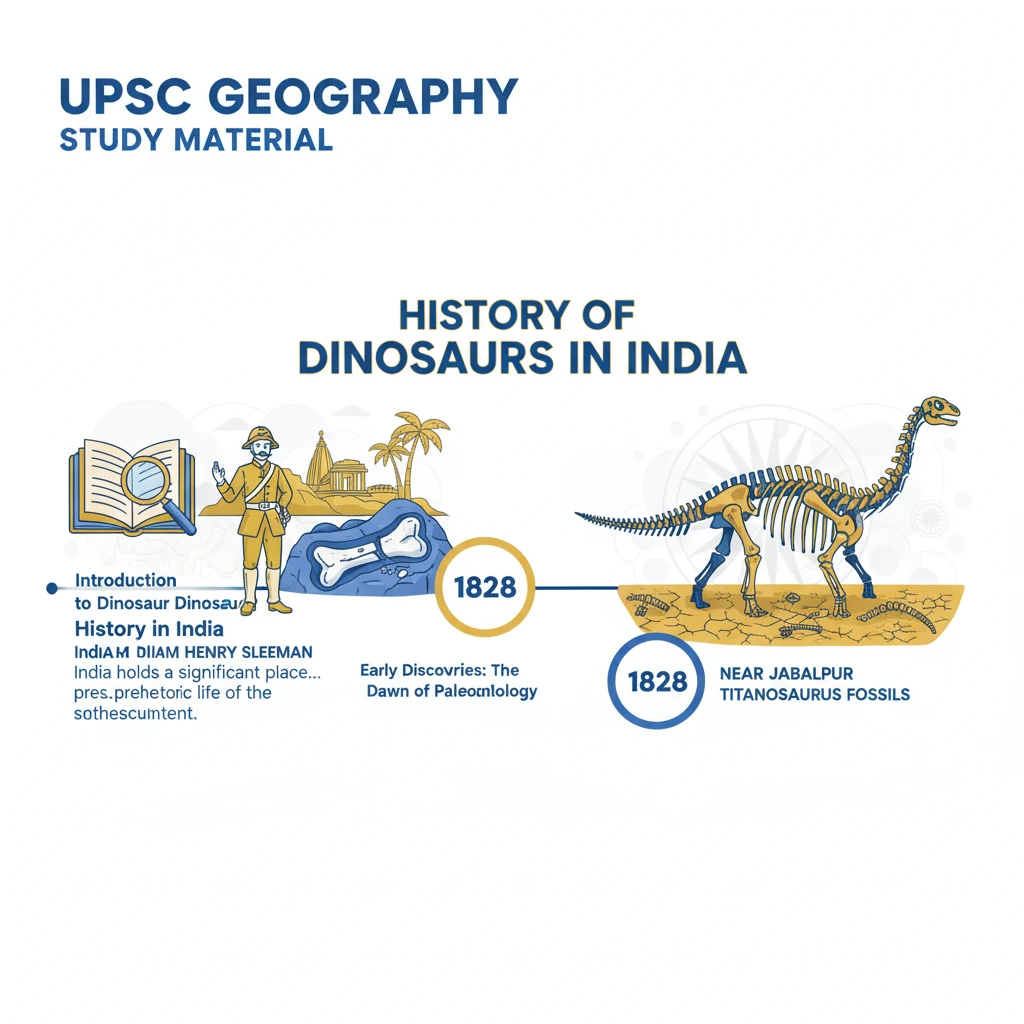
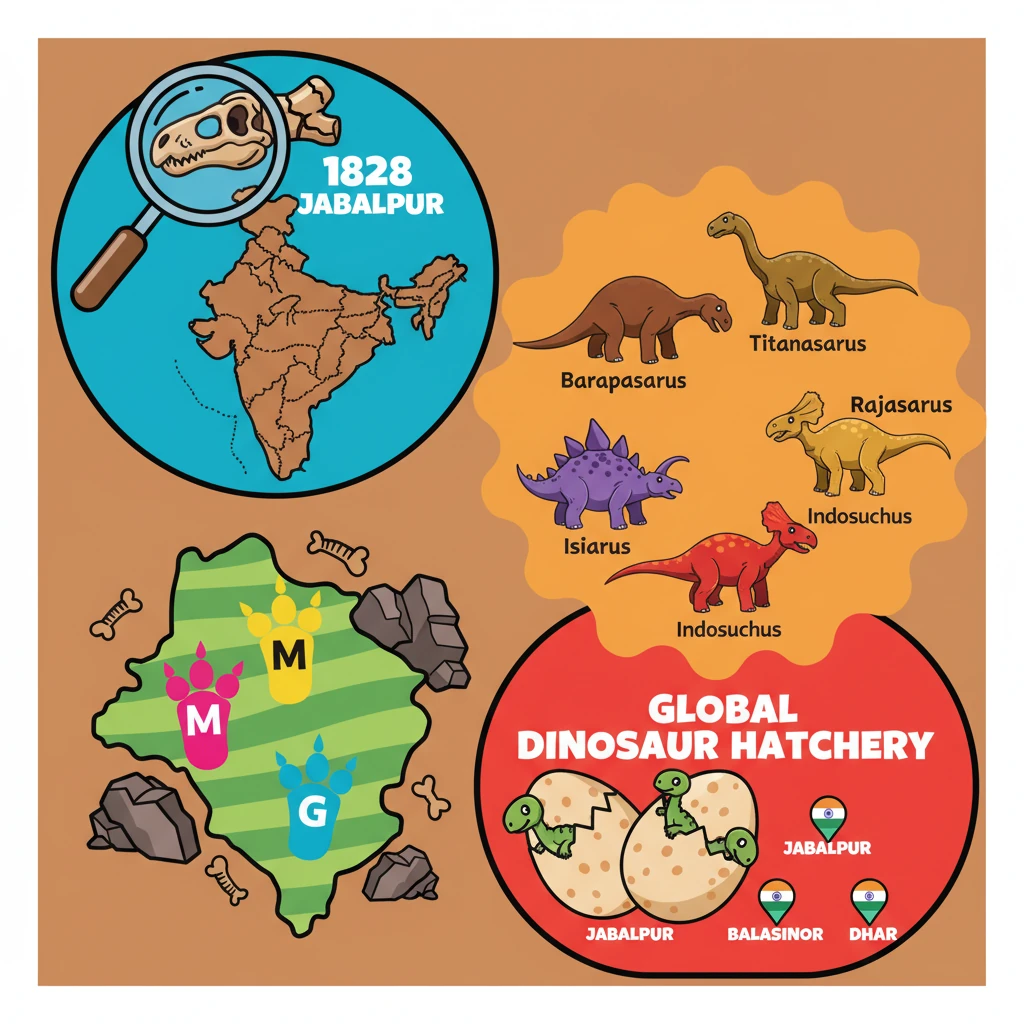
<h4>Introduction to Dinosaur History in India</h4><p>India holds a significant place in the global history of dinosaurs, with some of the earliest and most important discoveries made on its soil. These findings provide crucial insights into the prehistoric life of the subcontinent.</p><h4>Early Discoveries: The Dawn of Paleontology</h4><p>The journey of dinosaur discoveries in India began remarkably early. In <strong>1828</strong>, <strong>Captain William Henry Sleeman</strong> made a groundbreaking find in <strong>Jabalpur, Madhya Pradesh</strong>.</p><p>These initial bones were later identified and formally named <strong>Titanosaurus indicus</strong> in <strong>1877</strong>, marking a pivotal moment in Asian paleontology.</p><div class='info-box'><ul><li><strong>First Discovery:</strong> <strong>1828</strong>, <strong>Jabalpur, Madhya Pradesh</strong></li><li><strong>Discoverer:</strong> <strong>Captain William Henry Sleeman</strong></li><li><strong>Species Named:</strong> <strong>Titanosaurus indicus</strong> in <strong>1877</strong></li></ul></div><h4>Key Fossil-Rich Regions</h4><p>India boasts several regions that are exceptionally rich in dinosaur fossils, providing a treasure trove for paleontological research. These areas have yielded numerous skeletons and eggs.</p><div class='key-point-box'><p>The primary fossil-rich states in India include <strong>Madhya Pradesh</strong>, <strong>Maharashtra</strong>, and <strong>Gujarat</strong>. These regions are critical for understanding dinosaur distribution in Gondwana.</p></div><h4>Significant Dinosaur Species Discovered</h4><p>A diverse array of dinosaur species, both herbivorous and carnivorous, have been unearthed across India, showcasing the rich biodiversity of the subcontinent during the Mesozoic Era.</p><div class='info-box'><p>Important species discovered in India include:</p><ul><li><strong>Barapasaurus:</strong> A large, <strong>herbivorous</strong> dinosaur.</li><li><strong>Isisaurus:</strong> Another significant <strong>herbivorous</strong> species.</li><li><strong>Indosuchus:</strong> A formidable <strong>carnivorous</strong> dinosaur.</li><li><strong>Rajasaurus Narmadensis:</strong> A prominent <strong>carnivorous</strong> theropod, known for its distinctive cranial crest.</li></ul></div><h4>India: A Major Dinosaur Hatchery</h4><p>India is recognized globally as one of the largest <strong>dinosaur hatcheries</strong>, indicating significant nesting and breeding activities during the Late Cretaceous period.</p><p>The discovery of numerous egg clutches and nesting sites provides valuable data on dinosaur reproductive behaviors and population dynamics.</p><div class='info-box'><p>Major dinosaur nesting sites (hatcheries) in India include:</p><ul><li><strong>Jabalpur</strong> (<strong>Madhya Pradesh</strong>)</li><li><strong>Balasinor</strong> (<strong>Gujarat</strong>)</li><li><strong>Dhar District</strong> (<strong>Madhya Pradesh</strong>)</li></ul></div><div class='exam-tip-box'><p>Understanding the locations of dinosaur fossil finds and hatcheries is crucial for <strong>UPSC Prelims</strong>, especially for questions related to India's geographical and geological heritage. Link these sites to modern-day states.</p></div>
💡 Key Takeaways
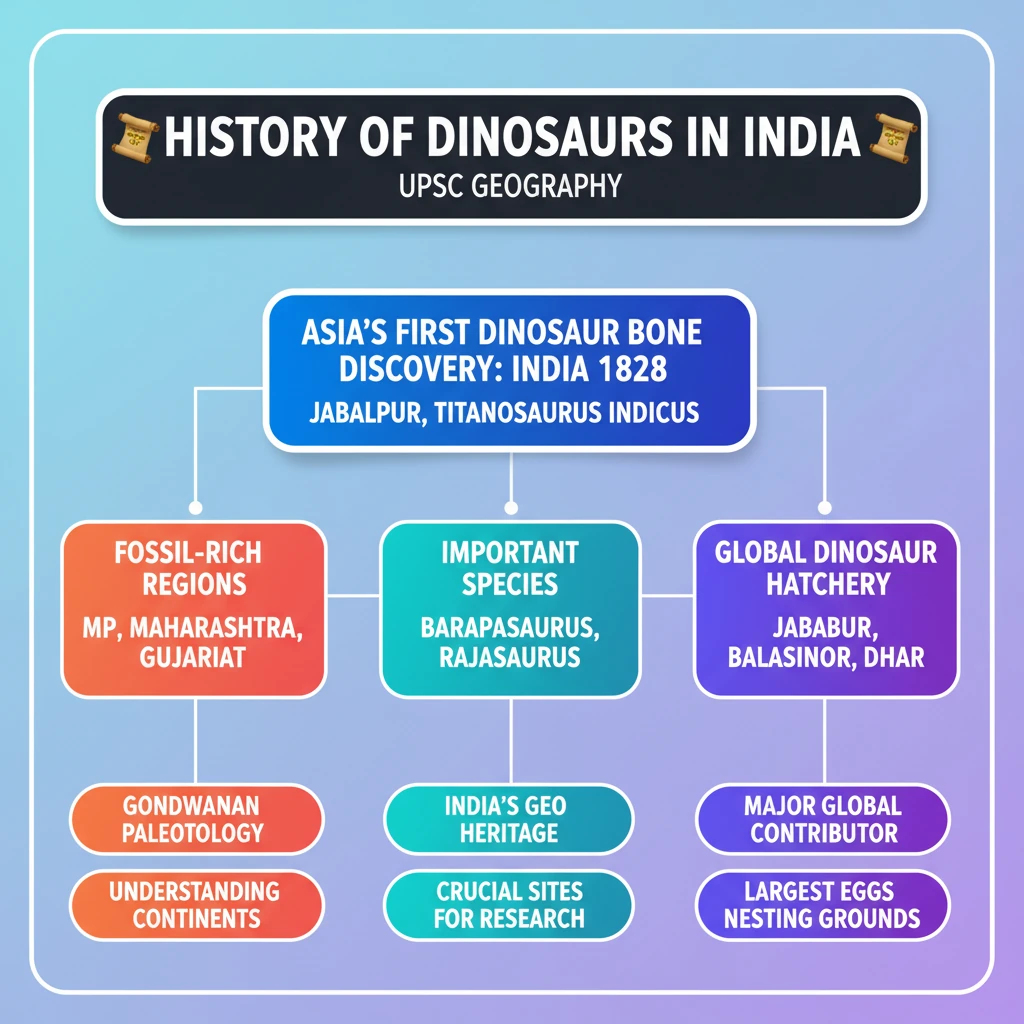
- •India saw Asia's first dinosaur bone discovery in 1828 (Jabalpur, Titanosaurus indicus).
- •Key fossil-rich regions are Madhya Pradesh, Maharashtra, and Gujarat.
- •Important species include Barapasaurus, Isisaurus, Indosuchus, and Rajasaurus Narmadensis.
- •India is a major global dinosaur hatchery, with sites like Jabalpur, Balasinor, and Dhar.
- •These sites are crucial for understanding Gondwanan paleontology and are part of India's geo heritage.
🧠 Memory Techniques
95% Verified Content
📚 Reference Sources
•Geological Survey of India (GSI) publications
•Paleontological research papers on Indian dinosaurs