Waterspouts: Formation, Types, and Recent Occurrence in Sicily - Geography | UPSC Learning
Topics
0 topics • 0 completed
🔍
No topics match your search
Waterspouts: Formation, Types, and Recent Occurrence in Sicily
Medium⏱️ 8 min read
geography
📖 Introduction
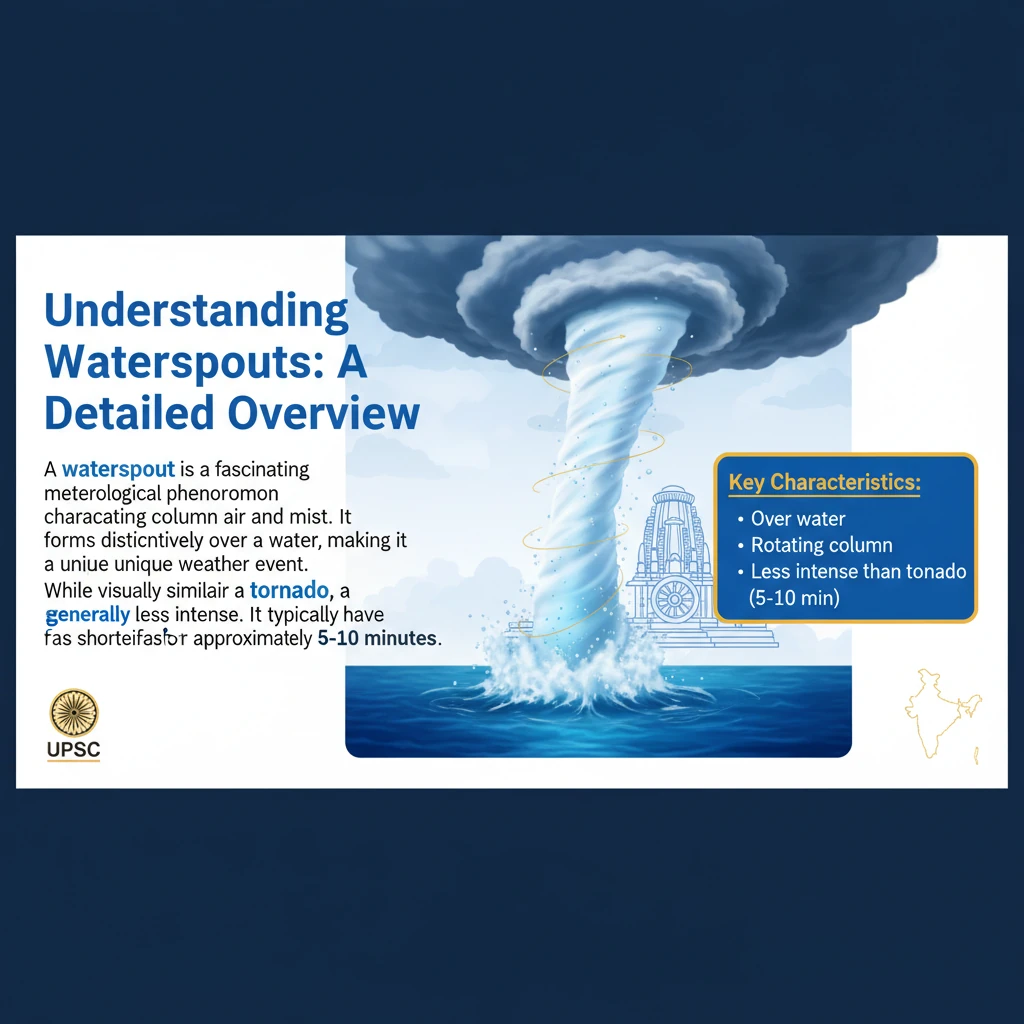
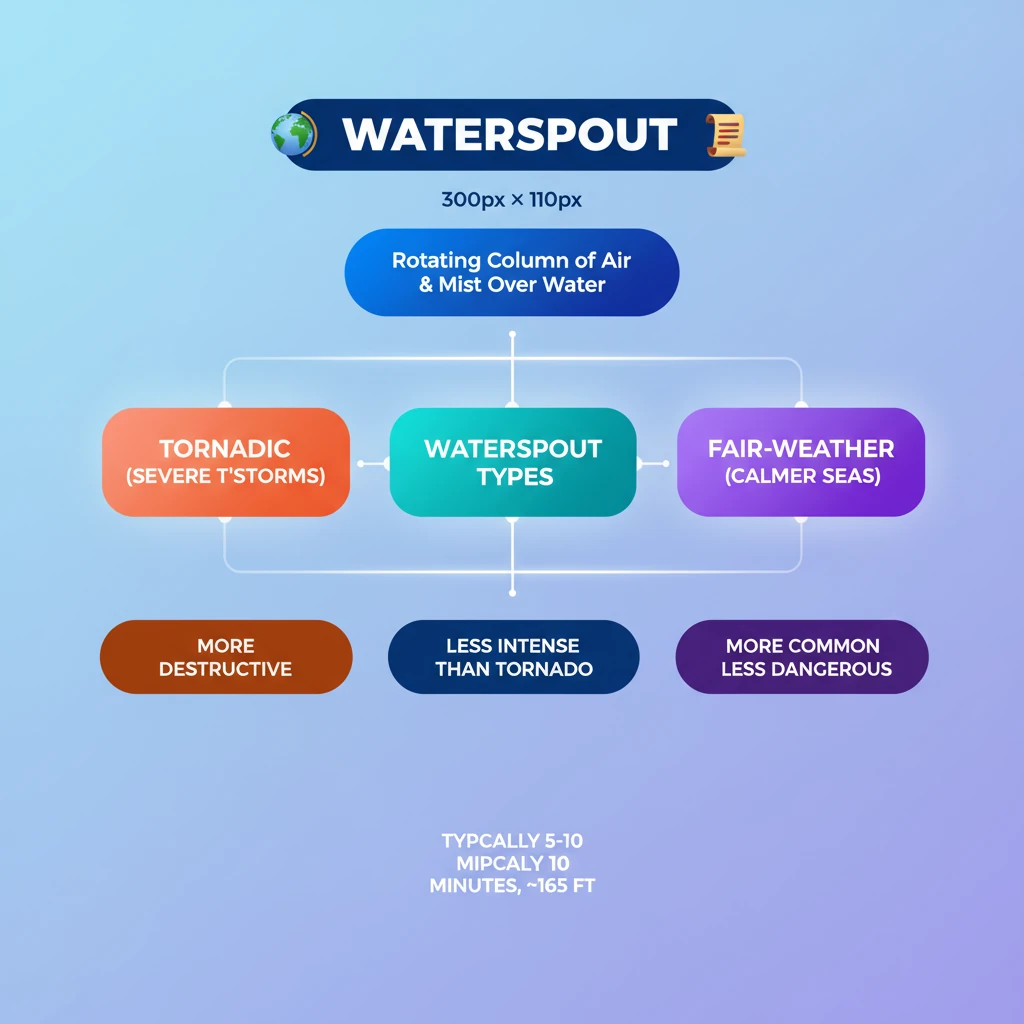
<h4>Understanding Waterspouts: A Detailed Overview</h4><p>A <strong>waterspout</strong> is a fascinating meteorological phenomenon characterized by a rotating column of air and mist. It forms distinctively over a body of water, making it a unique weather event.</p><p>While visually similar to a <strong>tornado</strong>, a waterspout is generally less intense. It typically has a shorter lifespan, persisting for approximately <strong>5-10 minutes</strong>.</p><div class='info-box'><p><strong>Key Characteristics of a Waterspout:</strong></p><ul><li><strong>Diameter:</strong> Approximately <strong>165 feet</strong> on average.</li><li><strong>Wind Speeds:</strong> Can reach up to <strong>100 kilometers per hour</strong>.</li><li><strong>Formation:</strong> Occurs over water bodies.</li></ul></div><h4>Types of Waterspouts</h4><p>Waterspouts are primarily categorized into two main types, each with distinct formation mechanisms and characteristics.</p><h5>Tornadic Waterspouts</h5><p><strong>Tornadic waterspouts</strong> are essentially <strong>tornadoes</strong> that either originate over water or move from land onto a water body. These are the more severe and potentially destructive type.</p><div class='info-box'><p>According to the <strong>National Oceanic and Atmospheric Administration (NOAA)</strong>, tornadic waterspouts are strongly associated with <strong>severe thunderstorms</strong>. They often bring a suite of hazardous weather conditions.</p></div><p>These conditions can include <strong>strong winds</strong>, <strong>rough seas</strong>, the possibility of <strong>large hail</strong>, and frequent, dangerous <strong>lightning</strong>. Due to their nature, tornadic waterspouts can be significant in size and are capable of causing substantial destruction.</p><h5>Fair-Weather Waterspouts</h5><p>In contrast, <strong>fair-weather waterspouts</strong> are much more common and develop exclusively over water. They are typically observed during periods of calm weather, rather than severe storms.</p><p>These waterspouts are generally smaller and pose less danger compared to their tornadic counterparts. Their formation is often linked to localized atmospheric instability over warm water.</p><div class='exam-tip-box'><p><strong>UPSC Insight:</strong> Differentiating between <strong>tornadic</strong> and <strong>fair-weather waterspouts</strong> is crucial. Focus on their formation conditions (severe thunderstorms vs. calm weather) and their destructive potential for both Prelims and Mains questions on extreme weather phenomena.</p></div>
💡 Key Takeaways
- •A waterspout is a rotating column of air and mist forming over water, less intense than a tornado.
- •They typically last 5-10 minutes, with a diameter of ~165 feet and winds up to 100 km/h.
- •Two main types: Tornadic (tornadoes over water, linked to severe thunderstorms) and Fair-Weather (form exclusively over water, calmer conditions).
- •Tornadic waterspouts are more destructive, associated with strong winds, hail, and lightning.
- •Fair-weather waterspouts are more common, smaller, and less dangerous.
- •The Sicily yacht incident highlights their potential danger to maritime activities.
- •Atmospheric rivers are distinct; they are invisible channels of water vapor, influencing precipitation, not localized vortices like waterspouts.
🧠 Memory Techniques

95% Verified Content
📚 Reference Sources
•National Oceanic and Atmospheric Administration (NOAA) official information on waterspouts