Ground Subsidence: Causes & Contributing Factors - Geography | UPSC Learning
Topics
0 topics • 0 completed
🔍
No topics match your search
Ground Subsidence: Causes & Contributing Factors
Medium⏱️ 8 min read
geography
📖 Introduction
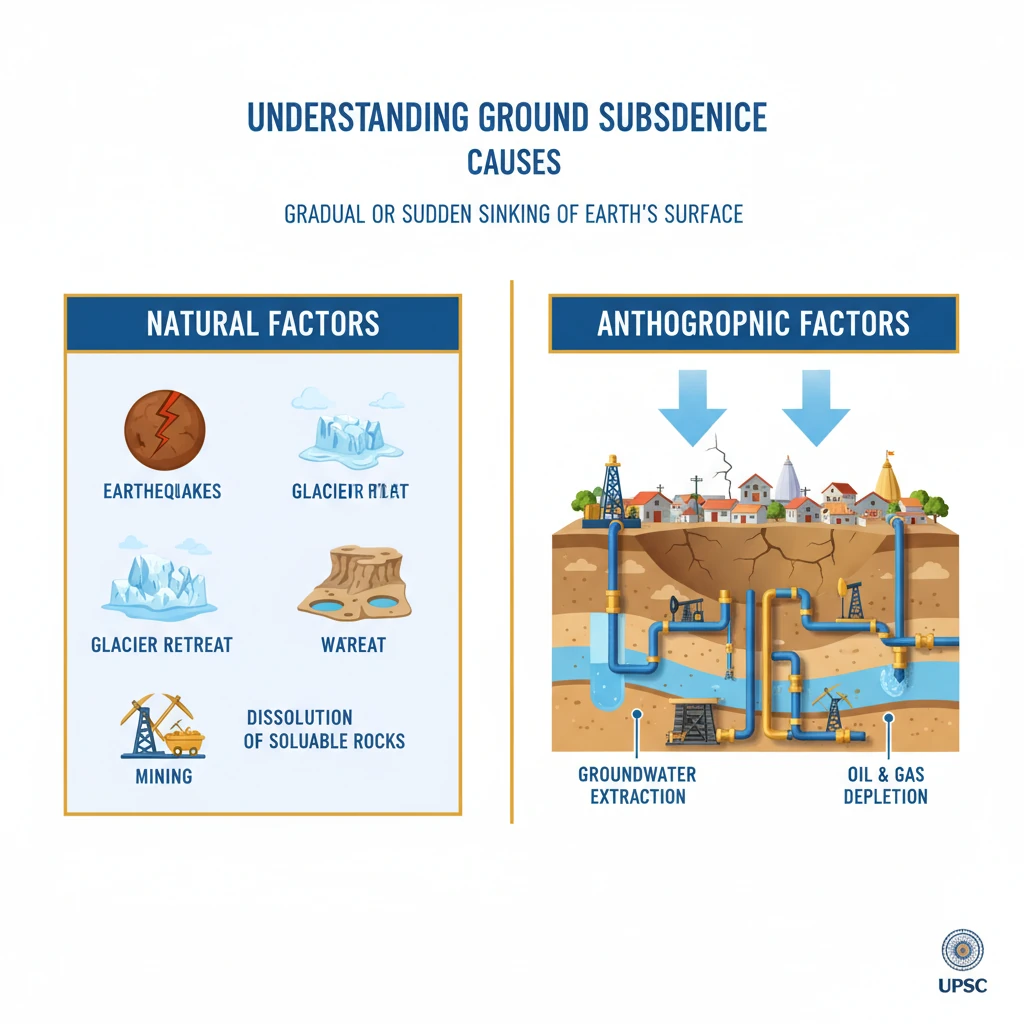
<h4>Understanding Ground Subsidence</h4><p><strong>Ground subsidence</strong> refers to the gradual or sudden sinking of the Earth's surface due to various natural and anthropogenic factors. It is a significant geological hazard with widespread environmental and economic impacts.</p><h4>Overexploitation of Underground Resources</h4><p>One of the primary drivers of <strong>ground subsidence</strong> is the excessive extraction of subsurface resources. This includes vital elements such as <strong>water</strong>, <strong>natural gas</strong>, and <strong>oil</strong>.</p><p>When these resources are removed, it leads to a decrease in <strong>pore pressure</strong> within the underlying rock and soil layers. This reduction in pressure, in turn, increases the <strong>effective stress</strong> on the soil particles, causing them to compact and the ground surface to settle.</p><div class='info-box'><p><strong>Key Statistic:</strong> Over <strong>80%</strong> of the world’s extracted water is utilized for <strong>irrigation</strong> and agricultural purposes. This extensive groundwater withdrawal is a major contributor to regional ground subsidence globally.</p></div><h4>Extraction of Solid Minerals</h4><p>The exploitation of <strong>underground solid mineral resources</strong> also significantly contributes to subsidence. Activities like <strong>mining</strong> create large empty spaces beneath the surface.</p><div class='info-box'><p>These excavated voids are often referred to as <strong>goaf</strong> areas. When the supporting structures or pillars within these goaf areas fail, or when the overlying strata cannot bear the load, the ground above can sink or subside.</p></div><p><strong>Coal mining</strong>, in particular, is a common cause of such subsidence, as vast quantities of coal are extracted, leaving behind extensive goaf regions prone to collapse.</p><h4>Load Exerted on Ground Surface</h4><p>The sheer weight of human-made structures can also induce <strong>ground subsidence</strong>. The construction of <strong>tall buildings</strong> and other <strong>heavy infrastructure</strong> exerts substantial pressure on the underlying soil and geological formations.</p><p>Over extended periods, this continuous load can lead to the <strong>deformation of soil</strong> particles and gradual compaction, resulting in the sinking of the ground surface beneath these structures.</p><h4>Role of Soil Creep</h4><p><strong>Soil creep</strong> is a slow but persistent geomorphological process that can contribute to <strong>ground subsidence</strong>, especially on slopes. It involves the gradual, downhill movement of soil and rock particles.</p><div class='key-point-box'><p>This phenomenon occurs due to the combined effects of <strong>gravity</strong> and continuous, low-level stresses on the soil. Over time, this slow deformation can compromise the stability of foundations and contribute to the overall subsidence of an area.</p></div>
💡 Key Takeaways
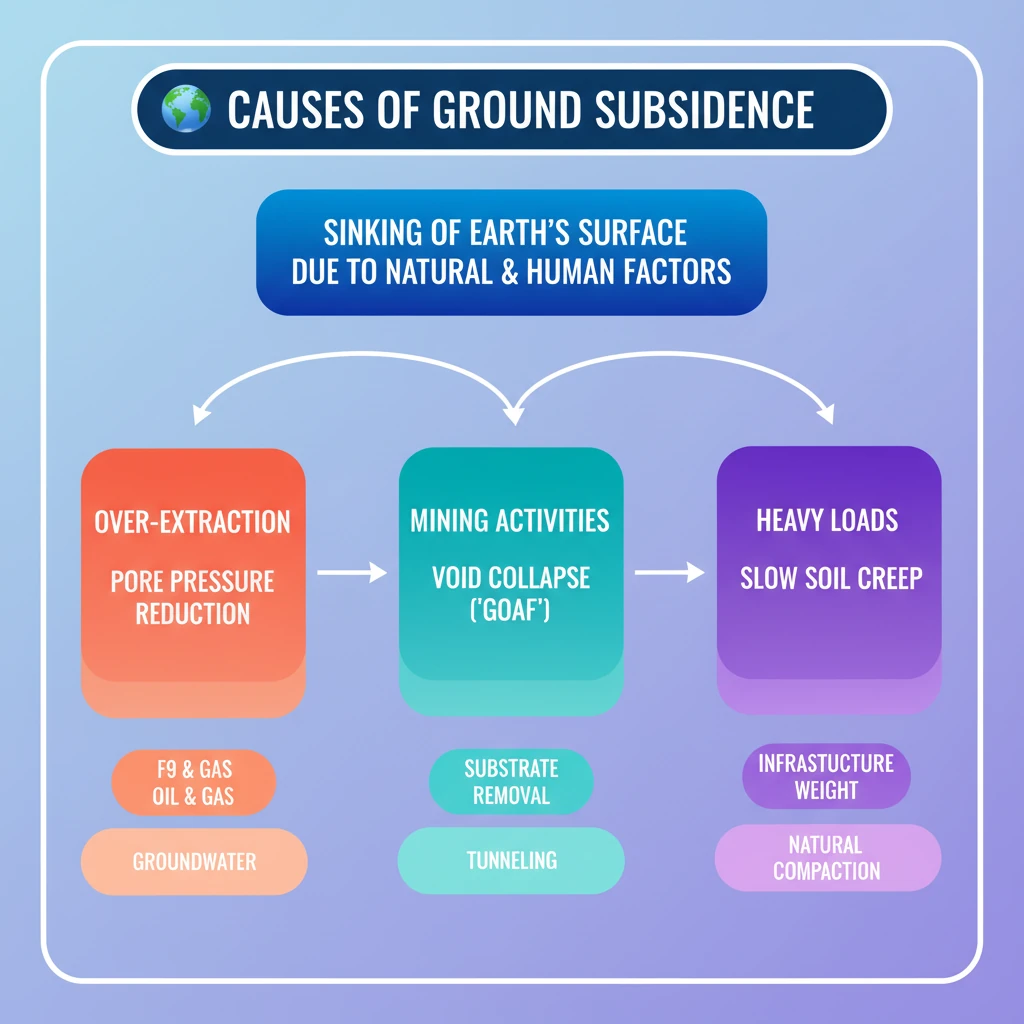
- •Ground subsidence is the sinking of Earth's surface, driven by both natural and human factors.
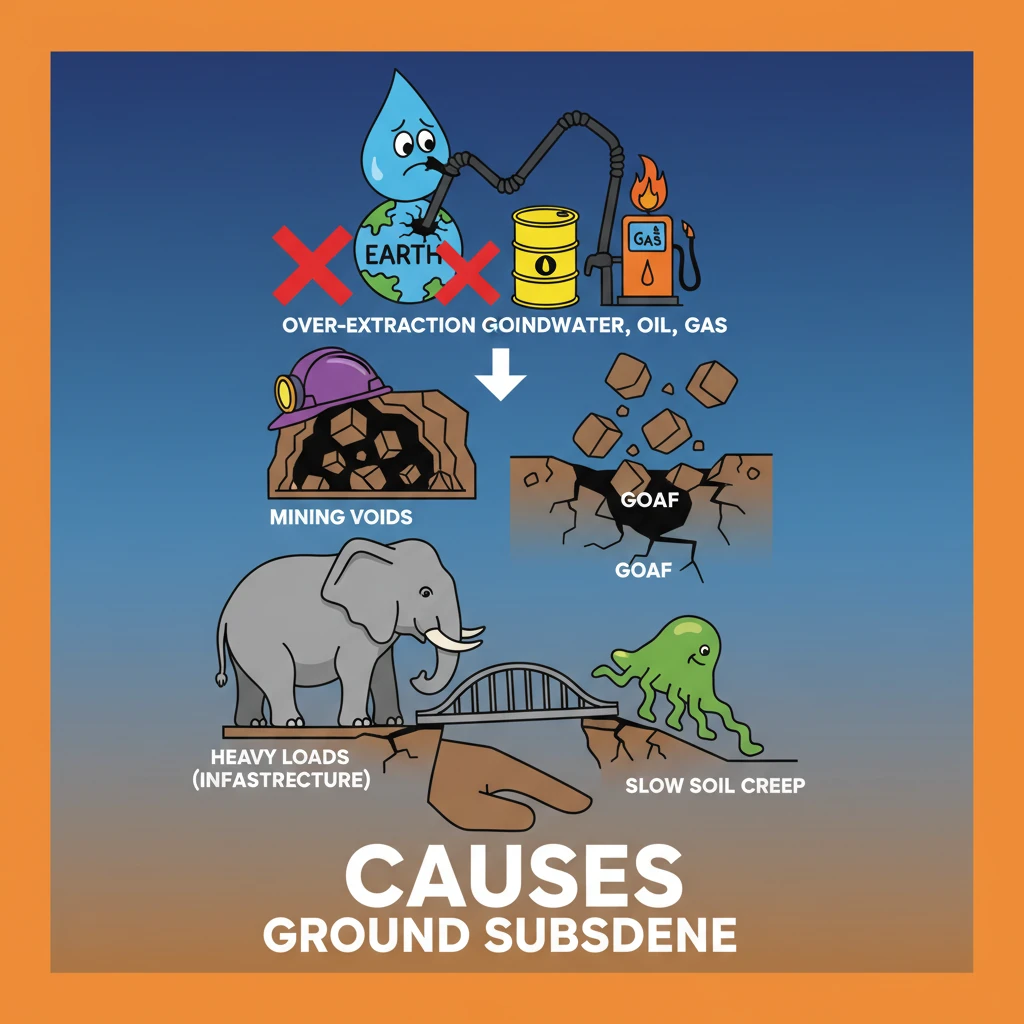
- •Over-extraction of groundwater, oil, and gas reduces pore pressure, leading to soil compaction.
- •Mining activities create 'goaf' voids, which can collapse and cause surface sinking.
- •Heavy loads from infrastructure and slow soil creep also contribute to ground deformation.
- •Subsidence has significant impacts on infrastructure, urban areas, and coastal vulnerability, often exacerbated by climate change.
- •Sustainable resource management and careful urban planning are crucial for mitigation.
🧠 Memory Techniques
95% Verified Content
📚 Reference Sources
•National Water Policy (India)
•Geological Survey of India (GSI) reports on mining areas
•Academic articles on groundwater depletion and subsidence (general knowledge)