India-Nepal Rivers: Kosi, Gandak & Himalayan River Systems - Geography | UPSC Learning
Topics
0 topics • 0 completed
🔍
No topics match your search
India-Nepal Rivers: Kosi, Gandak & Himalayan River Systems
Medium⏱️ 7 min read
geography
📖 Introduction
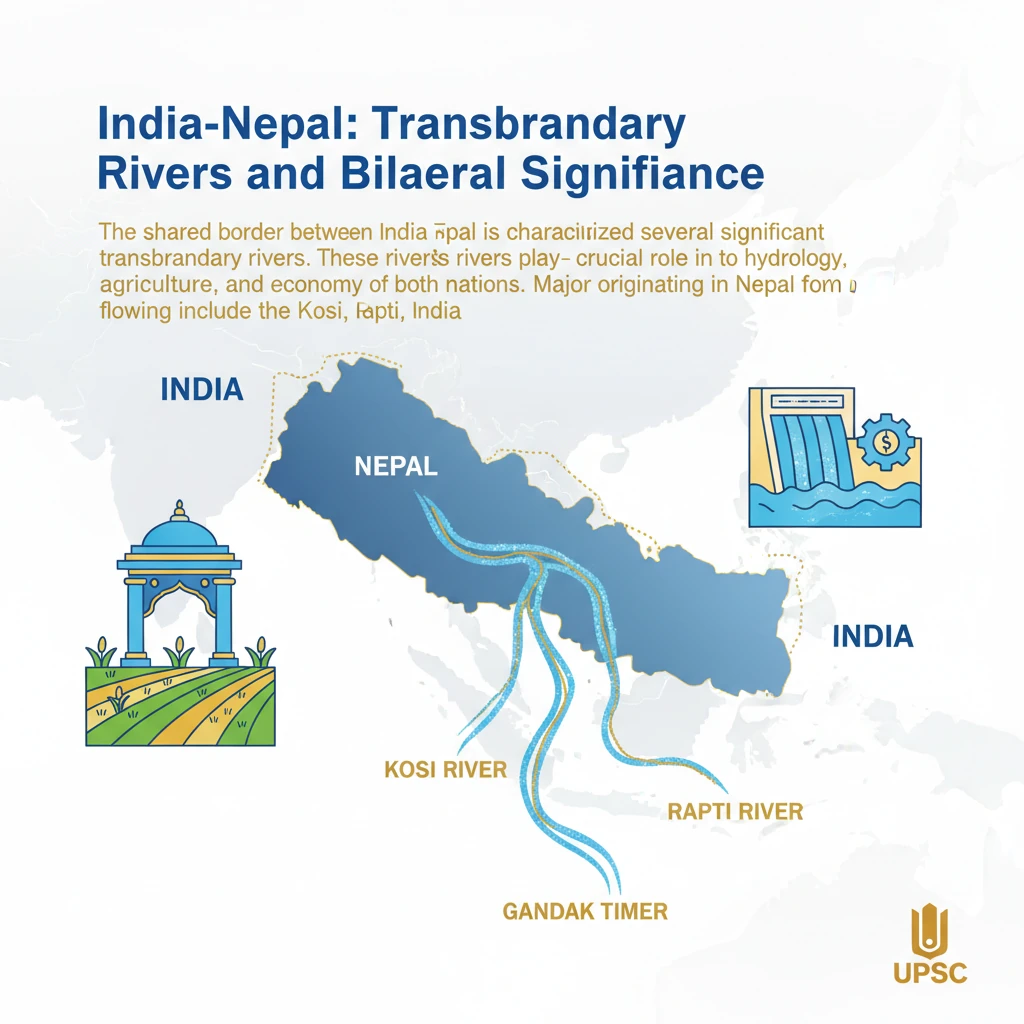
<h4>India-Nepal: Transboundary Rivers and Bilateral Significance</h4><p>The shared border between <strong>India</strong> and <strong>Nepal</strong> is characterized by several significant <strong>transboundary rivers</strong>. These rivers play a crucial role in the hydrology, agriculture, and economy of both nations.</p><p>Major rivers originating in <strong>Nepal</strong> and flowing into <strong>India</strong> include the <strong>Kosi</strong>, <strong>Gandak</strong>, <strong>Rapti</strong>, <strong>Narayani</strong>, and <strong>Kali</strong> (also known as <strong>Sharda</strong> or <strong>Mahakali</strong>).</p><div class='info-box'><p><strong>River Origins:</strong> These rivers primarily originate in the <strong>Tibetan Plateau</strong> and the <strong>Himalayan ranges</strong>, highlighting their glacial and snow-fed nature.</p></div><h4>The Kosi River: The 'Sorrow of Bihar'</h4><p>The <strong>Kosi River</strong> is a vital <strong>transboundary river</strong> that traverses through <strong>China</strong>, <strong>Nepal</strong>, and <strong>India</strong>. It is a major <strong>tributary of the Ganges River</strong>.</p><div class='info-box'><p><strong>Origin and Flow:</strong> The <strong>Kosi</strong> originates from the confluence of three main streams: the <strong>Sun Kosi</strong>, <strong>Arun Kosi</strong>, and <strong>Tamar Kosi</strong> in the <strong>Himalayas</strong>. It flows through <strong>Nepal</strong> and the Indian state of <strong>Bihar</strong> before merging with the <strong>Ganges</strong> in <strong>Bihar</strong>.</p></div><p>The <strong>Kosi</strong> is infamous for its frequent <strong>course changes</strong> and devastating <strong>flooding</strong>. This characteristic has earned it the poignant nickname, the <strong>“sorrow of Bihar.”</strong></p><h4>The Gandak River: A Himalayan Lifeline</h4><p>Also known as the <strong>Gandaki</strong> or <strong>Narayani River</strong>, the <strong>Gandak</strong> is another significant river flowing through <strong>Nepal</strong> and <strong>northern India</strong>.</p><div class='info-box'><p><strong>Origin:</strong> The <strong>Gandak River</strong> originates in <strong>Tibet</strong>, near the <strong>Nepal border</strong>, at an impressive altitude of <strong>7,620 metres</strong>.</p><p><strong>Course:</strong> It flows through the Indian states of <strong>Bihar</strong> and <strong>Uttar Pradesh</strong>. It eventually merges with the <strong>Ganges River</strong> near <strong>Patna</strong>.</p><p><strong>Major Tributaries:</strong> Key tributaries of the <strong>Gandak</strong> include the <strong>Mayangadi</strong>, <strong>Bari</strong>, <strong>Trisuli</strong>, <strong>Panchnad</strong>, <strong>Sarhad</strong>, and <strong>Budhi Gandak</strong>.</p></div><h4>The Sharda/Kali/Mahakali River: A Border River with Disputes</h4><p>The <strong>Sharda River</strong>, also known as the <strong>Kali</strong> or <strong>Mahakali River</strong>, holds particular geopolitical significance due to its role as a border delineator.</p><div class='info-box'><p><strong>Origin:</strong> This river originates at <strong>Kalapani</strong> in <strong>Uttarakhand</strong>, <strong>India</strong>.</p><p><strong>Course:</strong> It flows along the <strong>western border of Nepal</strong> and <strong>India</strong>. After merging with the <strong>Ghaghra River</strong>, it passes through the hills as the <strong>Kali River</strong>. Upon entering the <strong>Terai plains</strong>, it becomes known as the <strong>Sharda River</strong>.</p></div><p>A major proposed initiative on this river is the <strong>Pancheshwar Dam</strong>. This is a <strong>joint India-Nepal project</strong> envisioned for both <strong>irrigation</strong> and <strong>hydroelectric power generation</strong>.</p><div class='exam-tip-box'><p><strong>UPSC Insight: The Sugauli Treaty Dispute</strong><br><strong>India</strong> and <strong>Nepal</strong> have a long-standing disagreement regarding the interpretation of the <strong>Sugauli Treaty of 1816</strong>. This treaty delimited the boundary along the <strong>Maha Kali River</strong>. The core of the dispute lies in the differing views on which specific stream constitutes the <strong>source of the river</strong>, impacting territorial claims, particularly around <strong>Kalapani</strong>, <strong>Lipulekh</strong>, and <strong>Limpiyadhura</strong>.</p></div>
💡 Key Takeaways
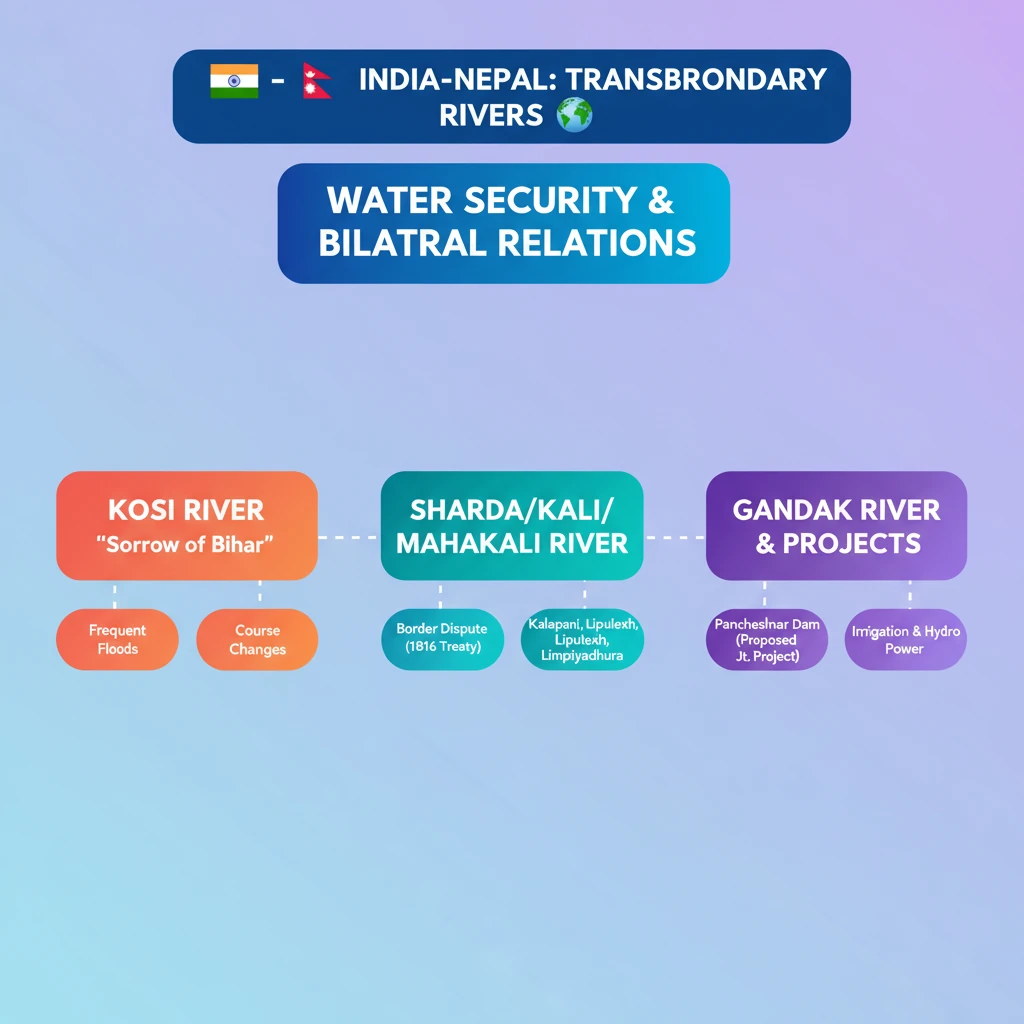
- •Kosi, Gandak, and Kali (Sharda/Mahakali) are major transboundary rivers between India and Nepal.
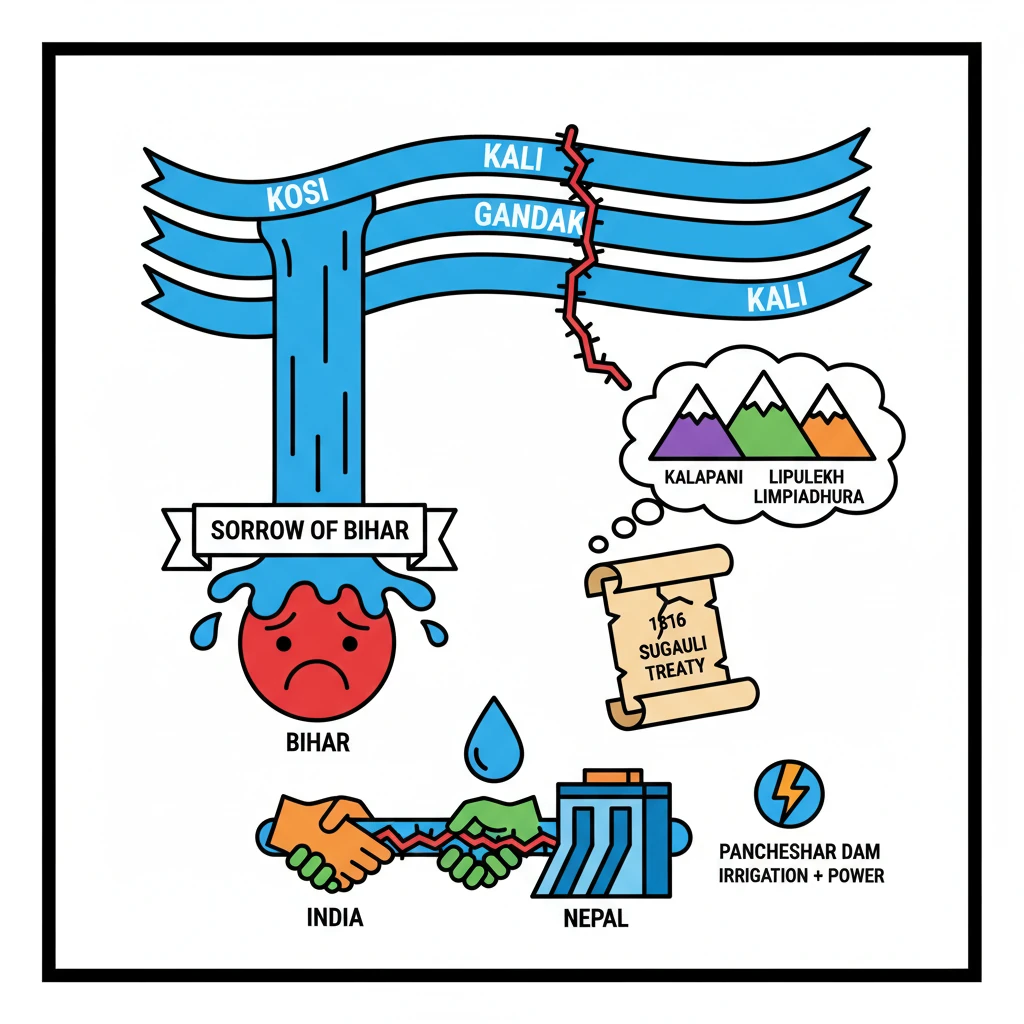
- •The Kosi River is known as the 'sorrow of Bihar' due to frequent floods and course changes.
- •The Sharda/Kali/Mahakali River is central to a border dispute (Kalapani, Lipulekh, Limpiyadhura) based on the Sugauli Treaty of 1816.
- •The Pancheshwar Dam is a proposed joint India-Nepal project on the Sharda/Kali/Mahakali River for irrigation and hydroelectric power.
- •Effective management of these rivers is crucial for water security, flood control, and bilateral relations.
🧠 Memory Techniques
95% Verified Content
📚 Reference Sources
•General knowledge on Indian geography and international relations