Cyclone Asna: First August Cyclone Since 1981 (Pakistan) - Geography | UPSC Learning
Topics
0 topics • 0 completed
🔍
No topics match your search
Cyclone Asna: First August Cyclone Since 1981 (Pakistan)
Medium⏱️ 6 min read
geography
📖 Introduction
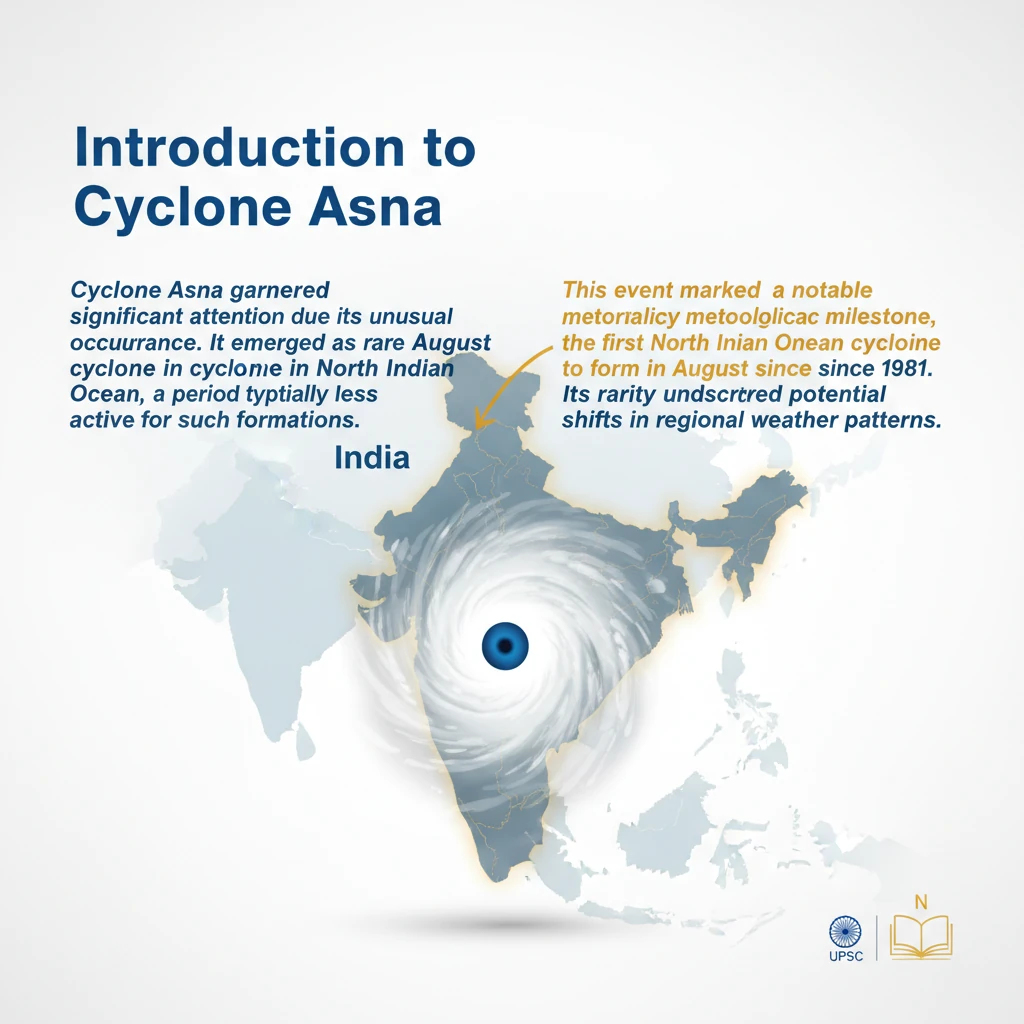
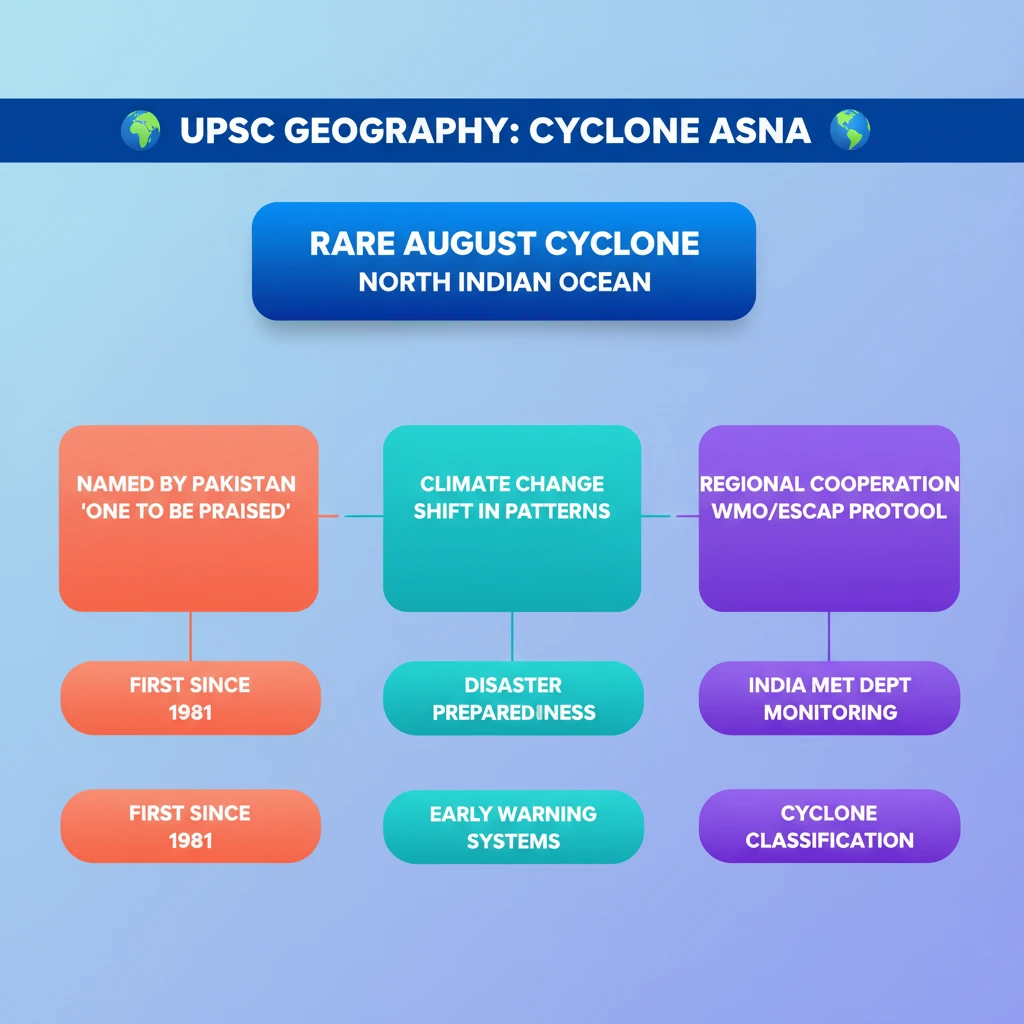
<h4>Introduction to Cyclone Asna</h4><p><strong>Cyclone Asna</strong> garnered significant attention due to its unusual occurrence. It emerged as a <strong>rare August cyclone</strong> in the <strong>North Indian Ocean</strong>, a period typically less active for such formations.</p><p>This event marked a notable meteorological milestone, being the <strong>first North Indian Ocean cyclone</strong> to form in <strong>August since 1981</strong>. Its rarity underscored potential shifts in regional weather patterns.</p><div class='info-box'><p><strong>Key Facts about Cyclone Asna:</strong></p><ul><li><strong>Occurrence:</strong> August (rare for North Indian Ocean)</li><li><strong>Significance:</strong> First August cyclone in the region since <strong>1981</strong></li><li><strong>Location:</strong> North Indian Ocean</li></ul></div><h4>Naming Convention of Cyclone Asna</h4><p>The naming of tropical cyclones follows a specific regional protocol established by the <strong>World Meteorological Organization (WMO)</strong> and the <strong>United Nations Economic and Social Commission for Asia and the Pacific (ESCAP)</strong> panel.</p><p>The name <strong>'Asna'</strong> was contributed by <strong>Pakistan</strong>. This system helps in identifying and tracking cyclones, reducing confusion, and facilitating disaster preparedness efforts across member nations.</p><div class='info-box'><p><strong>Origin of Name:</strong></p><ul><li><strong>Name:</strong> Asna</li><li><strong>Meaning:</strong> "the one to be acknowledged or praised"</li><li><strong>Contributing Country:</strong> Pakistan</li></ul></div><div class='exam-tip-box'><p><strong>UPSC Insight:</strong> The rarity of <strong>Cyclone Asna</strong> makes it an important case study for questions related to <strong>climate change impacts</strong>, <strong>extreme weather events</strong>, and <strong>disaster management</strong> in the <strong>Indian Ocean Region</strong>. Understanding the naming protocol is also crucial for <strong>GS-I Geography</strong> and <strong>GS-III Disaster Management</strong>.</p></div>
💡 Key Takeaways
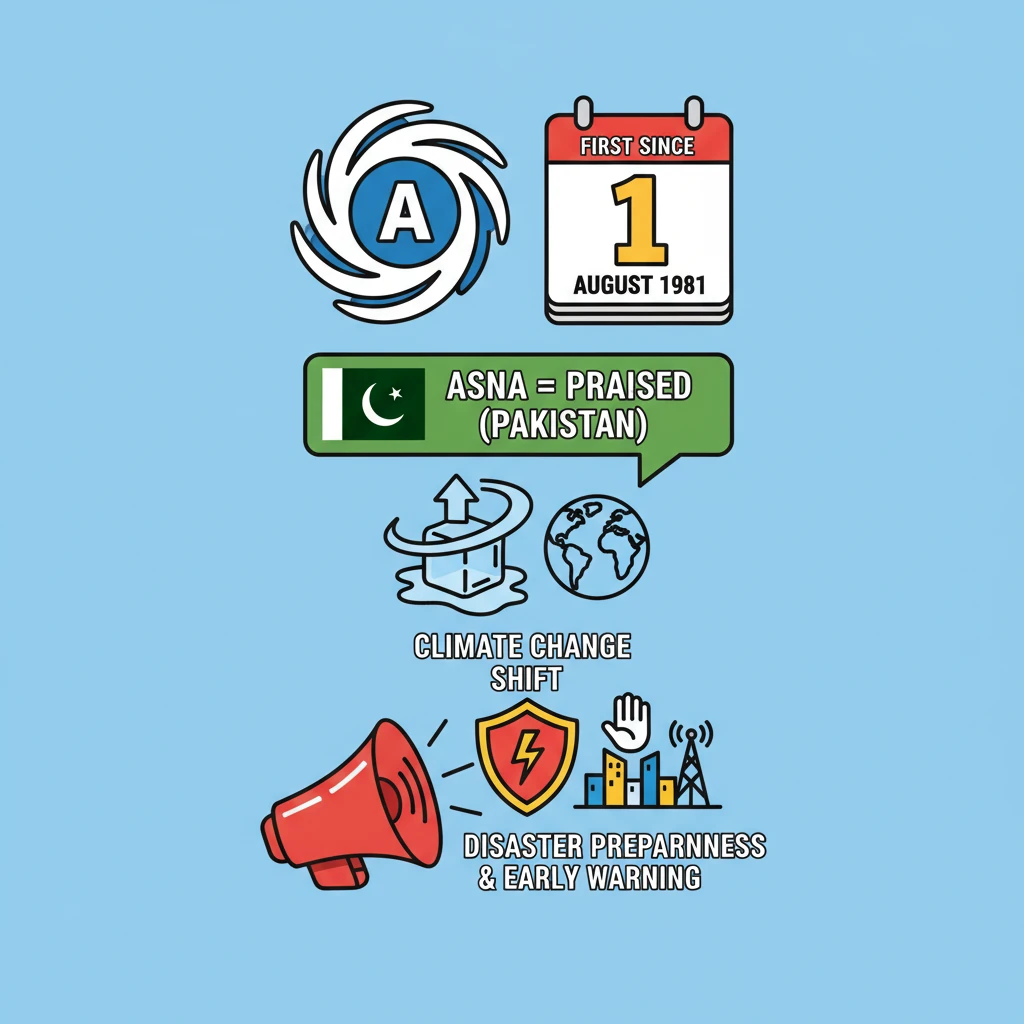
- •Cyclone Asna was a rare August cyclone in the North Indian Ocean, the first since 1981.
- •The name 'Asna' was given by Pakistan, meaning 'the one to be acknowledged or praised'.
- •Its unusual timing highlights potential shifts in cyclone patterns due to climate change.
- •The event underscores the importance of robust disaster preparedness and early warning systems.
- •It exemplifies the role of regional cooperation through the WMO/ESCAP cyclone naming protocol.
🧠 Memory Techniques
95% Verified Content
📚 Reference Sources
•World Meteorological Organization (WMO) publications on tropical cyclones
•United Nations Economic and Social Commission for Asia and the Pacific (ESCAP) documents
•Reputable meteorological news archives (e.g., The Hindu, Indian Express for historical context)