What are the Key Objectives of the Renovation? - Geography | UPSC Learning
Topics
0 topics • 0 completed
🔍
No topics match your search
What are the Key Objectives of the Renovation?
Easy⏱️ 6 min read
geography
📖 Introduction
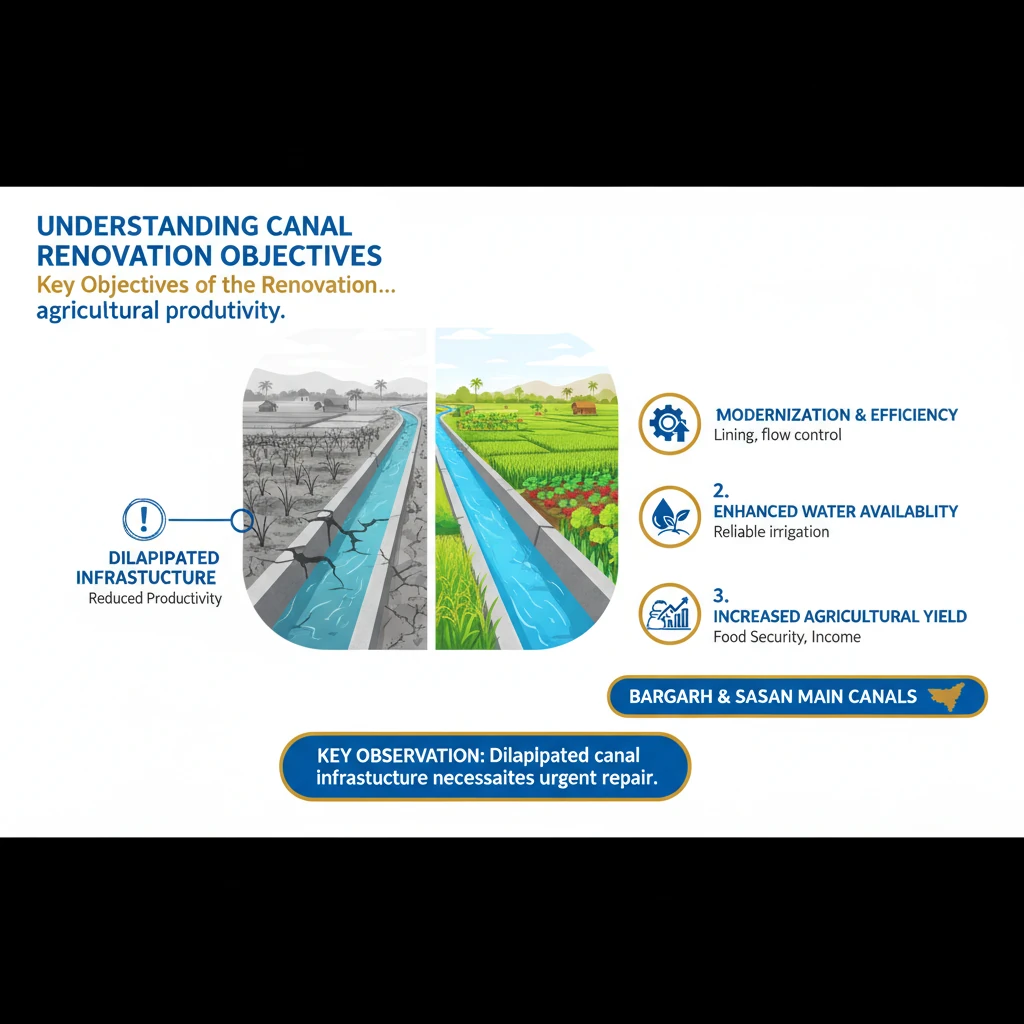
<h4>Understanding Canal Renovation Objectives</h4><p>The renovation of canal infrastructure, such as the <strong>Bargarh</strong> and <strong>Sasan main canals</strong>, is a critical initiative. These vital irrigation channels have fallen into a state of disrepair, significantly impacting agricultural productivity.</p><div class='info-box'><p><strong>Key Observation:</strong> Many existing canal infrastructures are in a dilapidated condition, necessitating urgent repair and modernization efforts.</p></div><h4>Addressing Water Loss and Inefficiency</h4><p>One of the primary drivers for renovation is the substantial <strong>water loss</strong> occurring in existing <strong>earthen canals</strong>. These traditional channels are prone to seepage, which severely reduces overall <strong>irrigation efficiency</strong>.</p><div class='key-point-box'><p><strong>Problem Statement:</strong> Significant water loss from earthen canals directly diminishes the effectiveness of irrigation systems.</p></div><h4>Mitigating Farmland Degradation</h4><p>Excessive <strong>water seepage</strong> from damaged canals has a detrimental effect on surrounding agricultural land. It can render some farmland unsuitable for cultivation, creating significant challenges and economic hardship for <strong>local farmers</strong>.</p><div class='info-box'><p><strong>Direct Impact:</strong> Water seepage reduces arable land, posing a direct threat to farmer livelihoods and food security.</p></div><h4>Key Features of the Renovation Project</h4><p>A central feature of the renovation project is the strategic conversion of all existing <strong>earthen water courses</strong> to modern <strong>concrete paths</strong>. This fundamental change is designed to drastically improve water distribution and overall management.</p><div class='key-point-box'><p><strong>Core Solution:</strong> Transitioning from earthen to concrete canals for enhanced water delivery and reduced leakage.</p></div><p>Furthermore, the project is specifically engineered to enhance <strong>water availability</strong>, particularly in <strong>tail-end areas</strong> of the irrigation network. This ensures that farmers in all regions have equitable and improved access to water resources.</p><div class='exam-tip-box'><p><strong>UPSC Insight:</strong> Projects focusing on "tail-end" water access are crucial for addressing regional disparities in agricultural development, often a topic in <strong>GS-III Agriculture</strong>.</p></div><h4>Impact on Local Farmers and Agricultural Productivity</h4><p>The renovation initiative directly aims to reduce the existing gap between <strong>irrigation potential</strong> and <strong>actual usage</strong>. By modernizing the infrastructure, the project seeks to maximize the utility of available water resources.</p><p>Ultimately, these enhanced irrigation capabilities are expected to bring substantial benefits to <strong>farmers</strong>. Improved water management will lead to increased <strong>crop yields</strong> and contribute to overall agricultural prosperity.</p><div class='highlight-box'><p><strong>Farmer Benefits:</strong> Reduced irrigation potential-actual usage gap, higher crop yields, and improved farmer income.</p></div>
💡 Key Takeaways
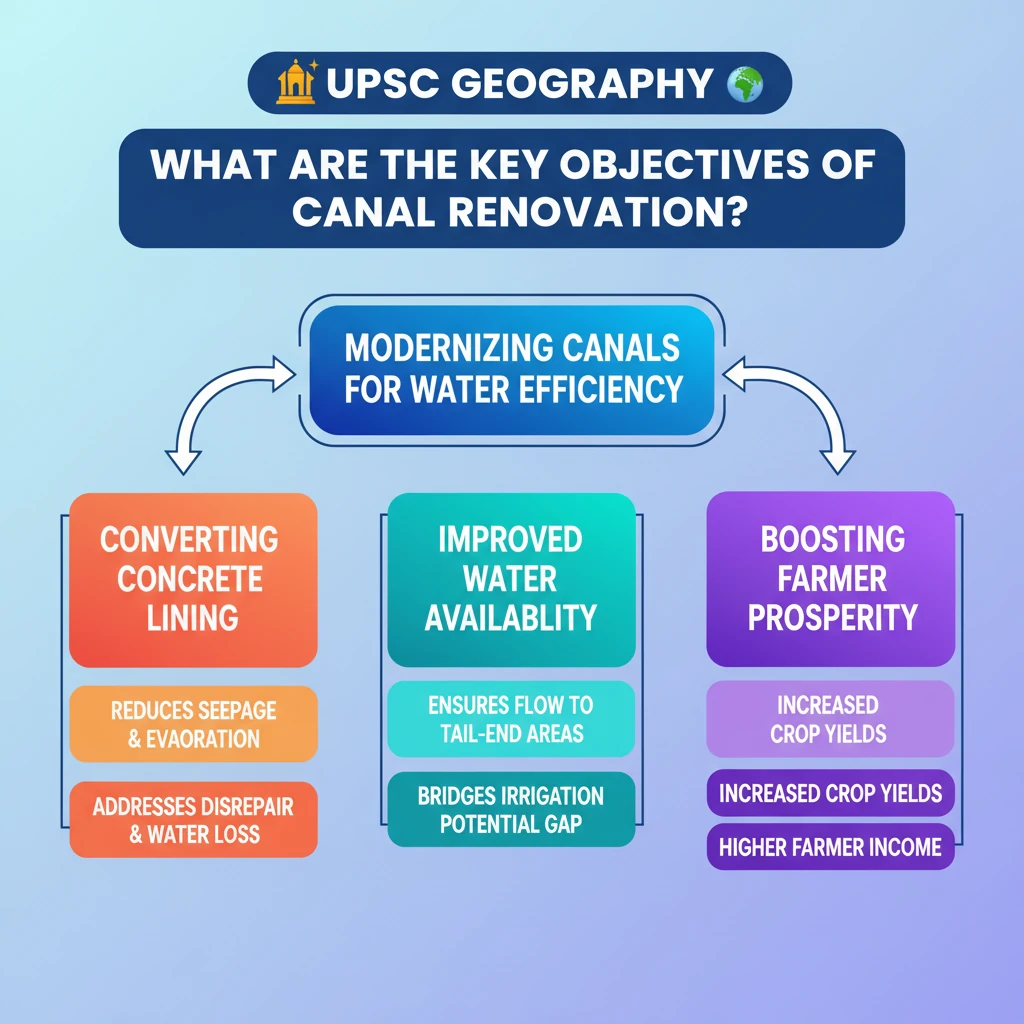
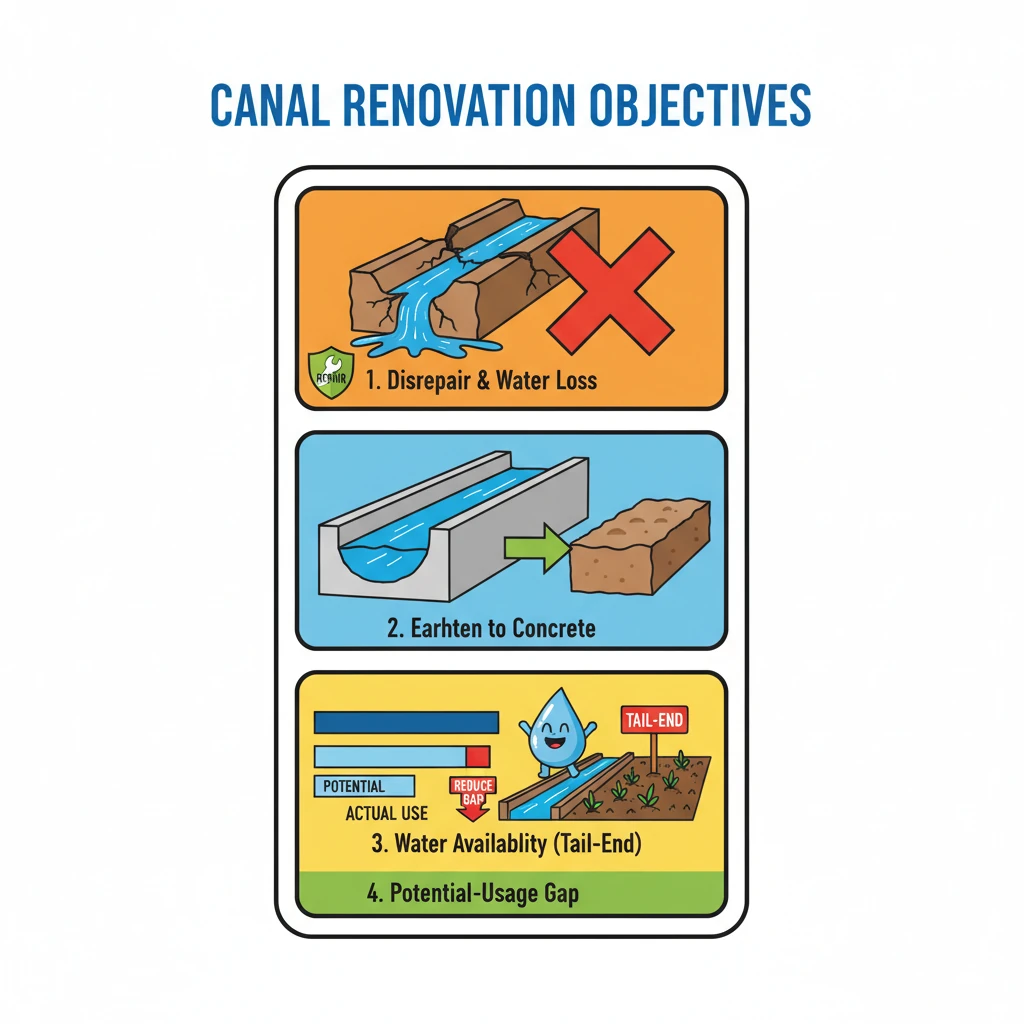
- •Canal renovation addresses disrepair and water loss in earthen canals.
- •Key objective is converting earthen canals to concrete for efficiency.
- •Aims to improve water availability, especially in tail-end areas.
- •Reduces the gap between irrigation potential and actual usage.
- •Ultimately benefits farmers through increased crop yields and income.
🧠 Memory Techniques
95% Verified Content