What is Land Subsidence? - Geography | UPSC Learning
Topics
0 topics • 0 completed
🔍
No topics match your search
What is Land Subsidence?
Medium⏱️ 7 min read
geography
📖 Introduction
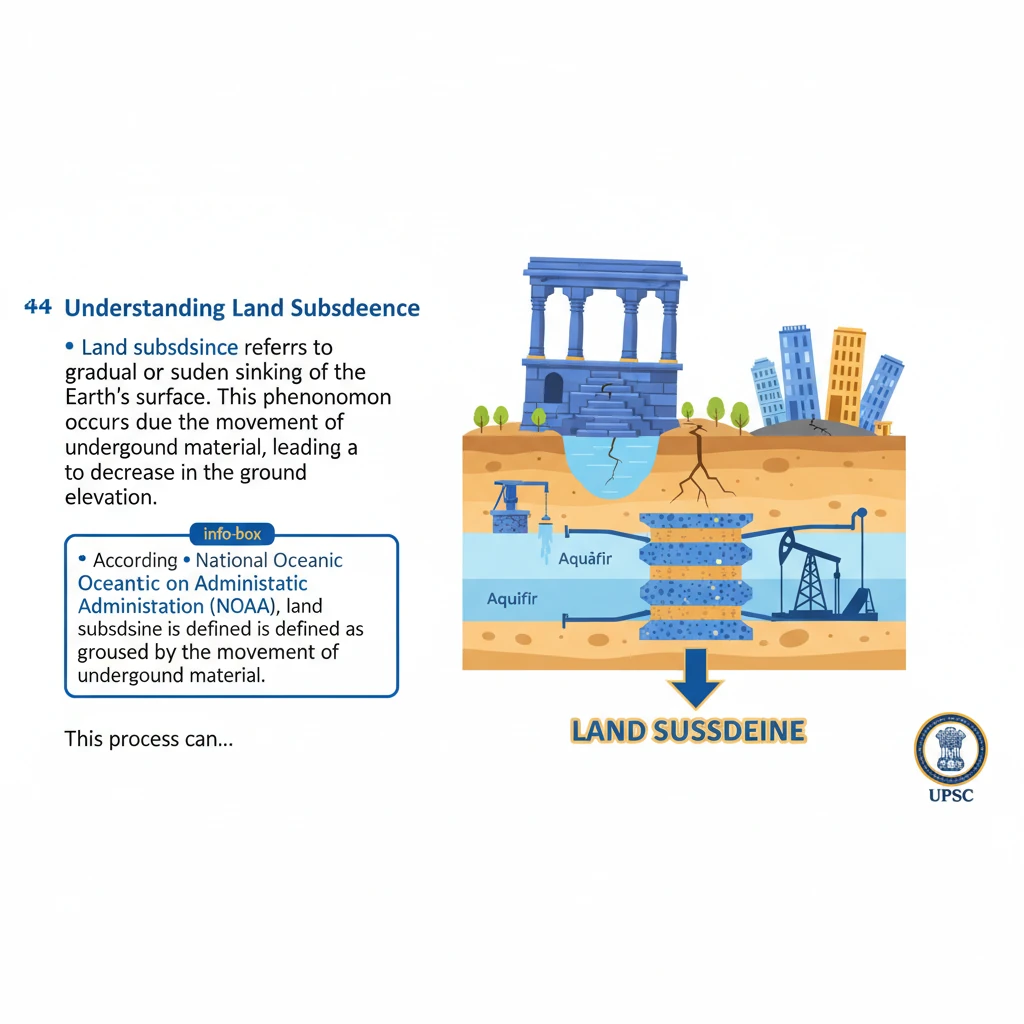
<h4>Understanding Land Subsidence</h4><p><strong>Land subsidence</strong> refers to the gradual or sudden sinking of the Earth's surface. This phenomenon occurs due to the movement of underground material, leading to a decrease in ground elevation.</p><div class='info-box'><p>According to the <strong>National Oceanic and Atmospheric Administration (NOAA)</strong>, land subsidence is defined as the sinking of the ground caused by the movement of underground material.</p></div><p>This process can significantly alter landscapes and impact both natural and built environments.</p><h4>Causes of Land Subsidence</h4><p>The triggers for land subsidence can be broadly categorized into <strong>natural</strong> and <strong>man-made factors</strong>. Both types significantly contribute to the alteration of ground levels.</p><div class='key-point-box'><p>Understanding the distinction between natural and anthropogenic causes is crucial for effective mitigation strategies and UPSC answer writing.</p></div><h5>Man-Made Causes</h5><ul><li><strong>Resource Extraction:</strong> The removal of underground resources such as <strong>water</strong> (groundwater depletion), <strong>oil</strong>, or <strong>natural gas</strong> creates voids or reduces pore pressure, leading to compaction of the overlying strata.</li><li><strong>Mining Activities:</strong> Subsurface mining operations can result in the collapse of abandoned tunnels or supporting pillars, causing the ground above to sink over time.</li></ul><h5>Natural Causes</h5><ul><li><strong>Earthquakes:</strong> Seismic activity can cause liquefaction or compaction of unconsolidated sediments, leading to sudden or rapid subsidence in affected areas.</li><li><strong>Soil Erosion:</strong> The removal of soil by wind or water, especially in regions with soluble bedrock (karst topography), can create subsurface voids that eventually collapse.</li><li><strong>Soil Compaction:</strong> Natural processes, particularly in areas with highly organic soils (e.g., peatlands), can lead to the compaction and oxidation of these soils, resulting in gradual subsidence.</li></ul><h4>Scale of Occurrence</h4><p>Land subsidence can manifest across a wide range of geographical scales. It can affect vast regions, encompassing entire <strong>states</strong> or <strong>provinces</strong>, or be confined to very localized, small areas such as a single building or a specific sinkhole.</p><div class='exam-tip-box'><p>For UPSC, remember that subsidence is not limited to small areas; its large-scale impact on infrastructure and ecosystems is a significant concern, often linked to <strong>urbanization</strong> and <strong>climate change</strong>.</p></div>
💡 Key Takeaways
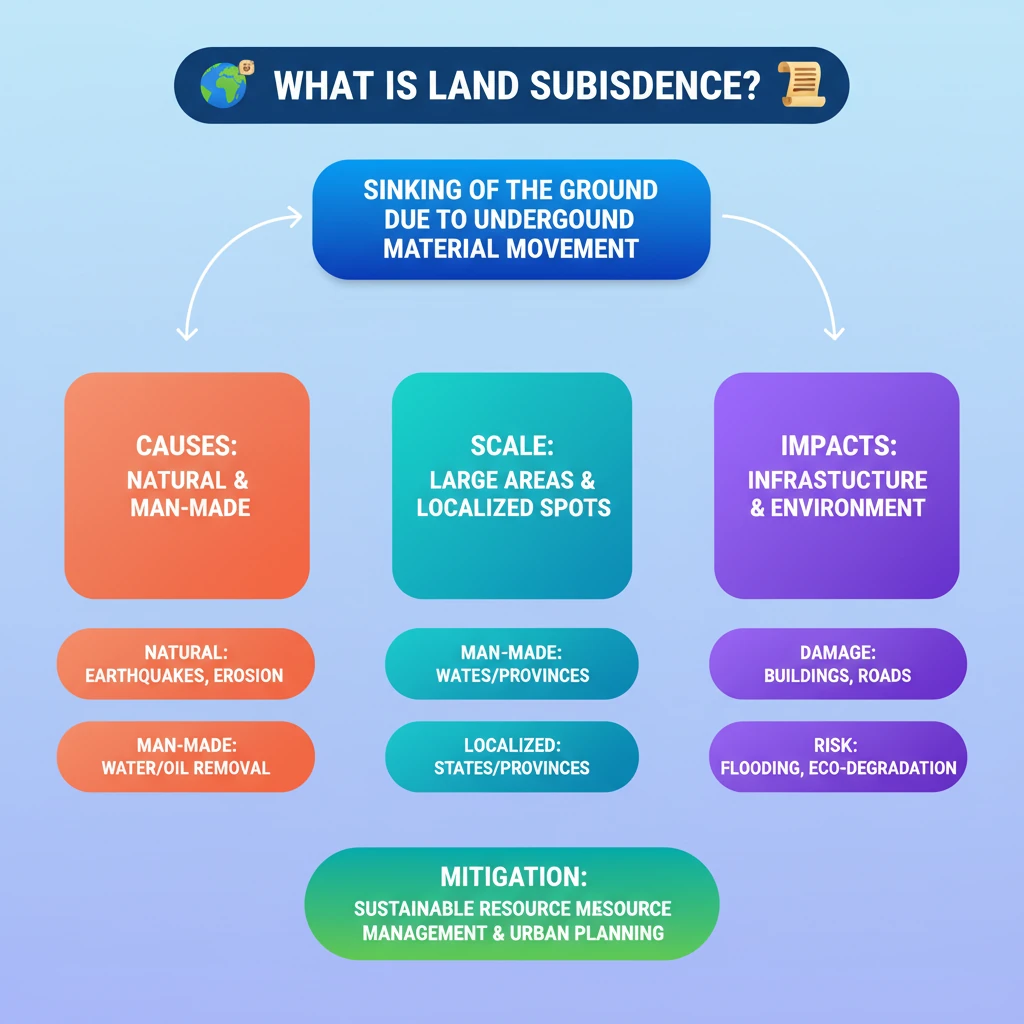
- •Land subsidence is the sinking of the ground due to underground material movement, as defined by NOAA.
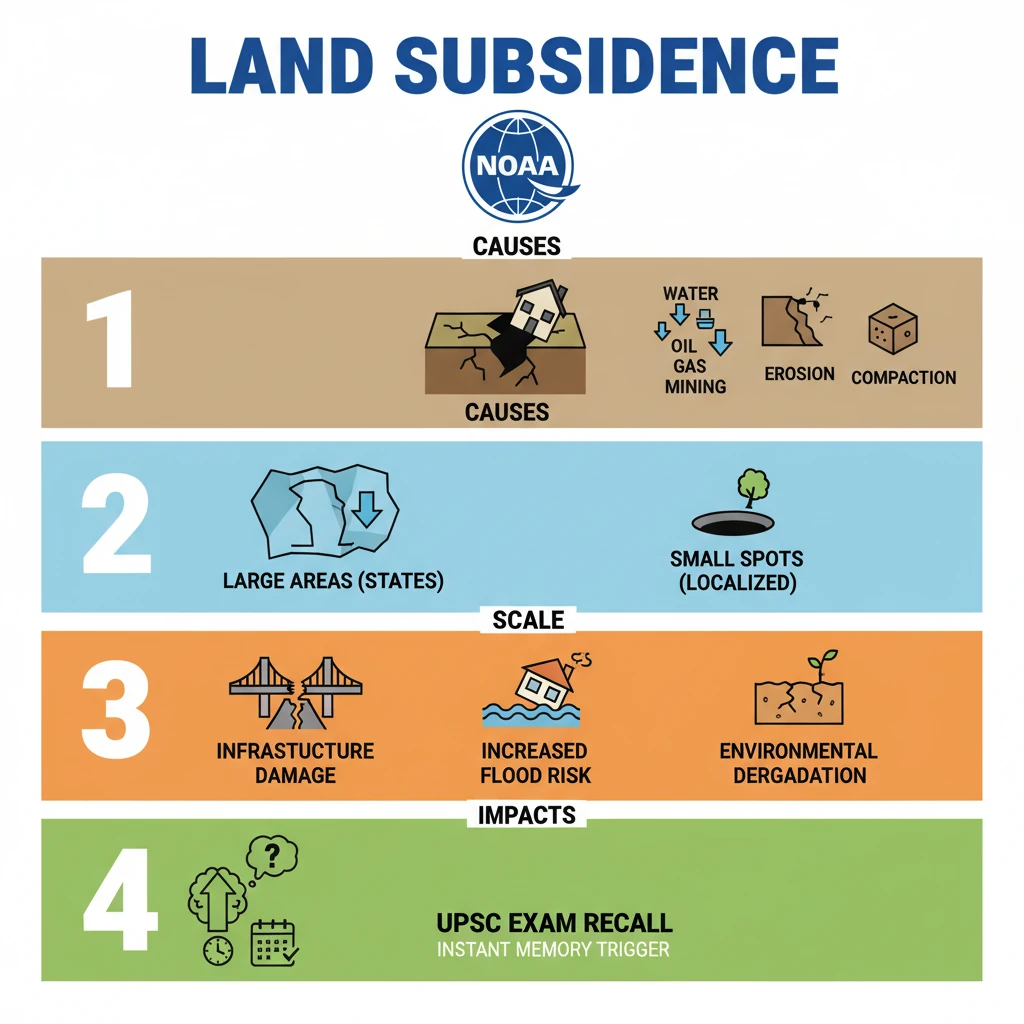
- •It is caused by both natural factors (earthquakes, soil erosion, compaction) and man-made activities (removal of water, oil, gas, mining).
- •Subsidence can occur over very large areas (states/provinces) or very small, localized spots.
- •Key impacts include severe damage to infrastructure, increased flood risk (especially in coastal areas), and significant environmental degradation.
- •Effective mitigation requires sustainable resource management, particularly strict regulation of groundwater extraction and responsible urban planning.
🧠 Memory Techniques
95% Verified Content
📚 Reference Sources
•National Oceanic and Atmospheric Administration (NOAA) - for definition