Conserving of Trees - Geography | UPSC Learning
Topics
0 topics • 0 completed
🔍
No topics match your search
Conserving of Trees
Medium⏱️ 10 min read
geography
📖 Introduction
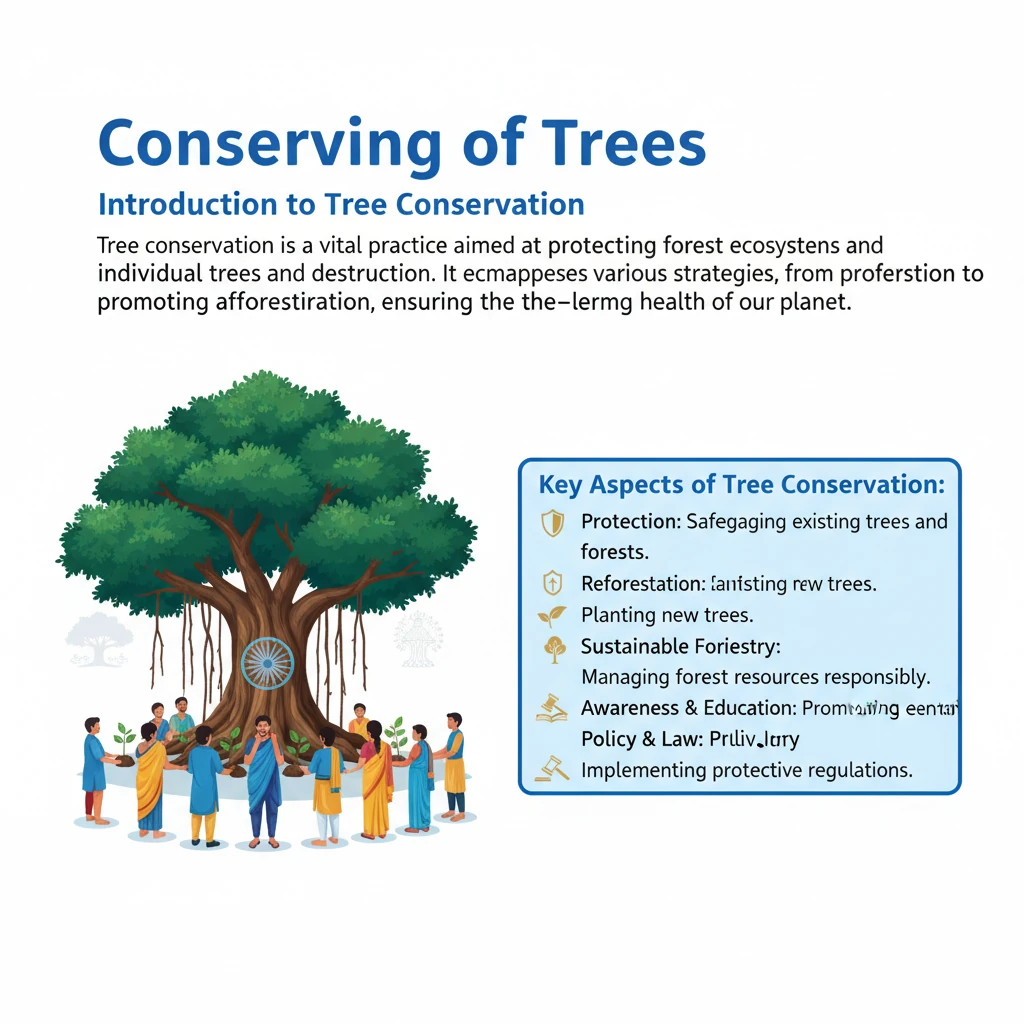
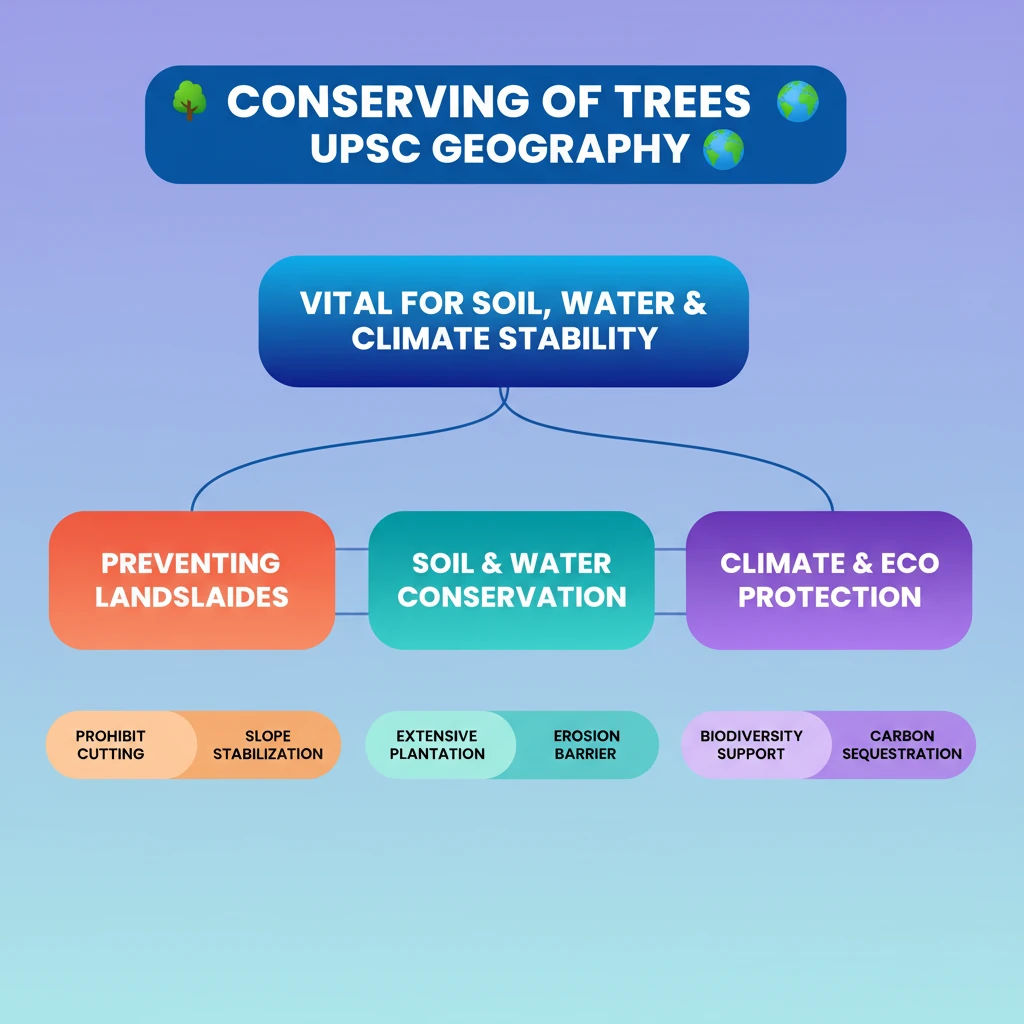
<h4>Introduction to Tree Conservation</h4><p><strong>Tree conservation</strong> is a vital practice aimed at protecting forest ecosystems and individual trees from degradation and destruction. It encompasses various strategies, from preventing deforestation to promoting afforestation, ensuring the long-term health of our planet.</p><div class='info-box'><p><strong>Key Aspects of Tree Conservation:</strong><ul><li><strong>Protection:</strong> Safeguarding existing trees and forests.</li><li><strong>Restoration:</strong> Replanting trees in deforested areas.</li><li><strong>Sustainable Management:</strong> Using forest resources responsibly.</li></ul></p></div><h4>Prohibition in Landslide Zones</h4><p>A crucial aspect of conservation involves specific guidelines for vulnerable areas. It has been strongly advised against the <strong>cutting of trees</strong>, particularly in <strong>landslide zones</strong>. These areas are inherently unstable, and the presence of trees plays a critical role in maintaining soil integrity.</p><div class='key-point-box'><p><strong>Why Trees are Vital in Landslide Zones:</strong><ul><li><strong>Root Systems:</strong> Tree roots bind soil particles together, increasing soil cohesion and stability.</li><li><strong>Water Absorption:</strong> Trees absorb excess moisture, reducing soil saturation and the likelihood of landslides.</li><li><strong>Erosion Control:</strong> Canopy cover reduces the impact of rainfall, preventing surface erosion.</li></ul></p></div><h4>Importance of Extensive Plantation Work</h4><p>To actively combat environmental degradation and enhance natural resource resilience, <strong>extensive plantation work</strong> should be undertaken. This involves planting a large number of trees across various landscapes, especially in areas prone to erosion or resource depletion.</p><p>Such initiatives are fundamental for the long-term health of our ecosystems. They directly contribute to the conservation of both <strong>soil</strong> and <strong>water resources</strong>, which are indispensable for agriculture, biodiversity, and human well-being.</p><div class='exam-tip-box'><p><strong>UPSC Insight:</strong> Questions on environmental conservation often link to <strong>disaster management</strong> (GS-III) and <strong>physical geography</strong> (GS-I). Understanding the role of trees in preventing landslides and conserving resources is critical for integrated answers.</p></div>
💡 Key Takeaways
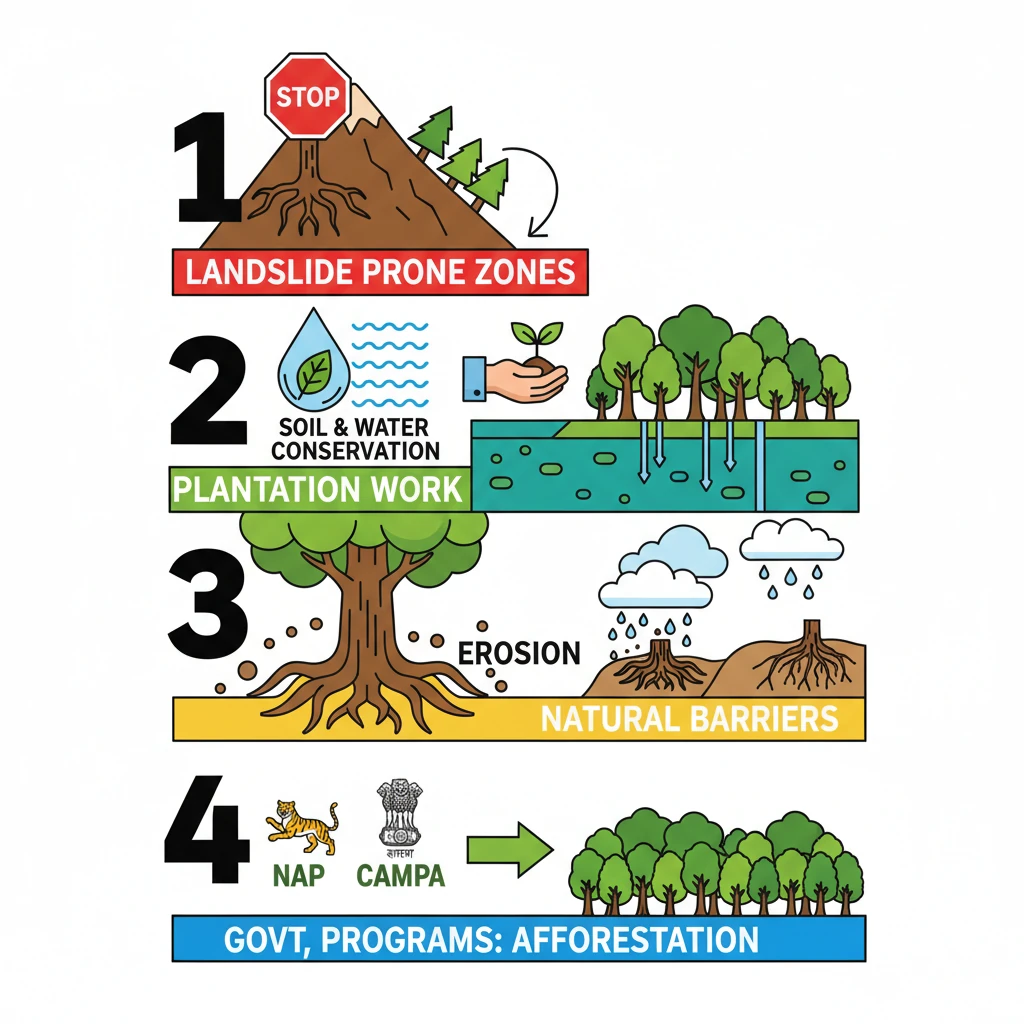
- •Prohibition of tree cutting is essential in landslide-prone zones to maintain soil stability.
- •Extensive plantation work is crucial for conserving vital soil and water resources.
- •Trees act as natural barriers against erosion, absorb water, and bind soil particles.
- •Government programs like NAP and CAMPA actively promote afforestation across India.
- •Tree conservation is vital for climate change mitigation, biodiversity, and disaster risk reduction.
🧠 Memory Techniques
95% Verified Content
📚 Reference Sources
•Ministry of Environment, Forest and Climate Change (MoEFCC) official reports
•National Forest Policy of India documents
•NCERT Geography textbooks (Class XI & XII)
•United Nations Framework Convention on Climate Change (UNFCCC) reports on India's climate actions