What is the National Perspective Plan (NPP) for Interlinking Rivers? - Geography | UPSC Learning
Topics
0 topics • 0 completed
🔍
No topics match your search
What is the National Perspective Plan (NPP) for Interlinking Rivers?
Medium⏱️ 5 min read
geography
📖 Introduction
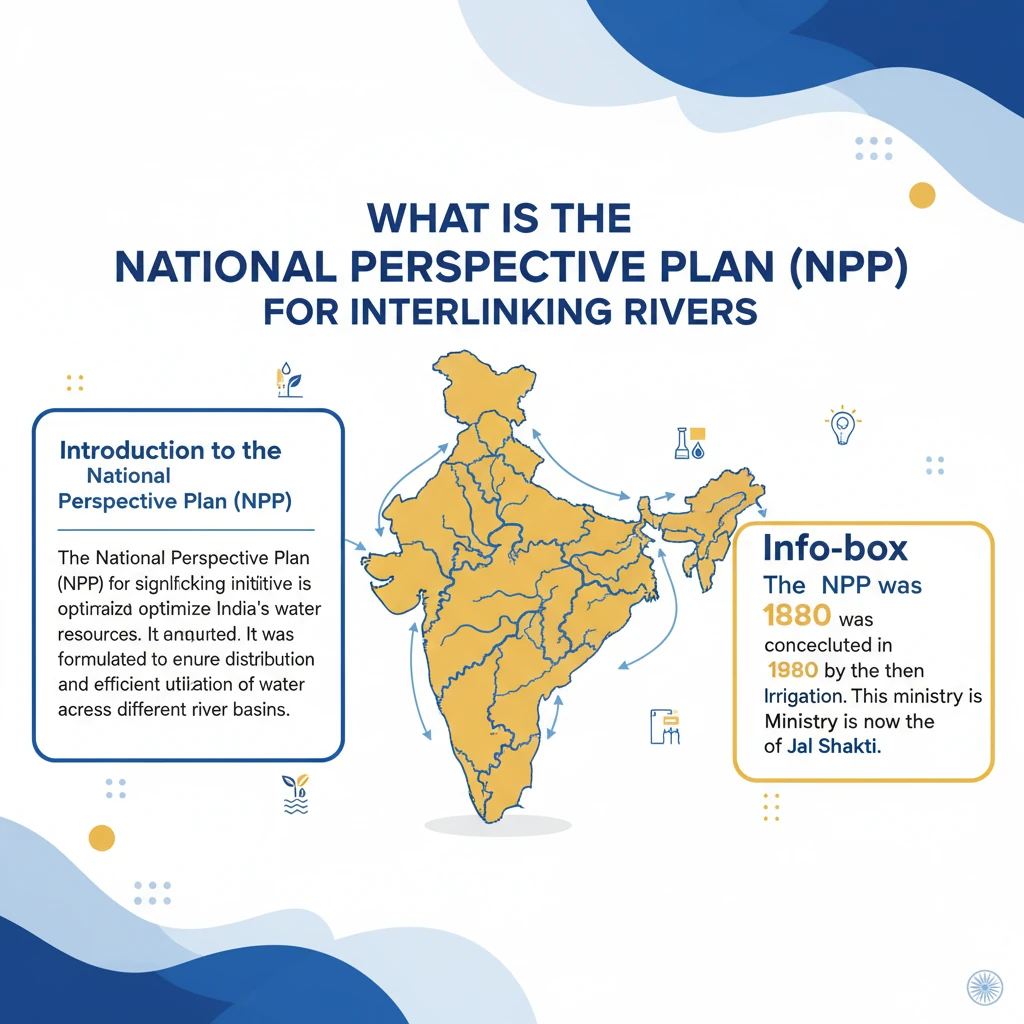
<h4>Introduction to the National Perspective Plan (NPP)</h4><p>The <strong>National Perspective Plan (NPP)</strong> for Interlinking Rivers is a significant initiative aimed at optimizing India's water resources. It was formulated to ensure equitable distribution and efficient utilization of water across different river basins.</p><div class='info-box'><p>The <strong>NPP</strong> was conceptualized in <strong>1980</strong> by the then <strong>Ministry of Irrigation</strong>. This ministry is now known as the <strong>Ministry of Jal Shakti</strong>, reflecting a broader focus on water management.</p></div><p>The primary objective of the <strong>NPP</strong> is the comprehensive development of water resources through the <strong>inter-basin transfer of water</strong>. This involves diverting surplus water from water-rich basins to water-deficit regions.</p><div class='key-point-box'><p>The <strong>National Water Development Agency (NWDA)</strong> has been specifically entrusted with the crucial task of implementing the <strong>Interlinking of Rivers (ILR)</strong> projects under the overarching framework of the <strong>NPP</strong>.</p></div><h4>Key Components of the NPP</h4><p>The <strong>National Perspective Plan</strong> is structured around two major components, each addressing distinct geographical and hydrological characteristics of India's river systems.</p><ul><li><strong>Himalayan Rivers Development Component</strong></li><li><strong>Peninsular Rivers Development Component</strong></li></ul><p>Collectively, these components encompass a vast network of proposed river links designed to create a national water grid.</p><div class='info-box'><p>Under the <strong>NPP</strong>, a total of <strong>30 link projects</strong> have been identified for implementation. These projects are strategically divided between the two main components:</p><ul><li><strong>16 link projects</strong> fall under the <strong>Peninsular Component</strong>.</li><li><strong>14 link projects</strong> are part of the <strong>Himalayan Component</strong>.</li></ul></div><h4>Peninsular Rivers Development Component</h4><p>This component specifically focuses on connecting rivers situated in the <strong>southern and central parts of India</strong>. The aim is to transfer water from river basins with surplus flows to those experiencing deficits, particularly during dry seasons.</p><p>Key projects under the <strong>Peninsular Rivers Development Component</strong> include vital links designed to address regional water imbalances and enhance irrigation potential.</p><ul><li>The <strong>Mahanadi-Godavari link</strong>.</li><li>The <strong>Godavari-Krishna link</strong>.</li><li>The <strong>Ken-Betwa link</strong>.</li></ul><h4>Himalayan Rivers Development Component</h4><p>The <strong>Himalayan Rivers Development Component</strong> is designed to manage the substantial water resources originating from the Himalayan ranges. Its primary goal is to harness and redistribute surplus water effectively.</p><p>This component aims to divert excess water from the <strong>eastern tributaries of the Ganga and Brahmaputra rivers</strong>. The diverted water is intended to benefit the more arid <strong>western regions of India</strong>, addressing their water needs and mitigating flood risks in the east.</p>
💡 Key Takeaways
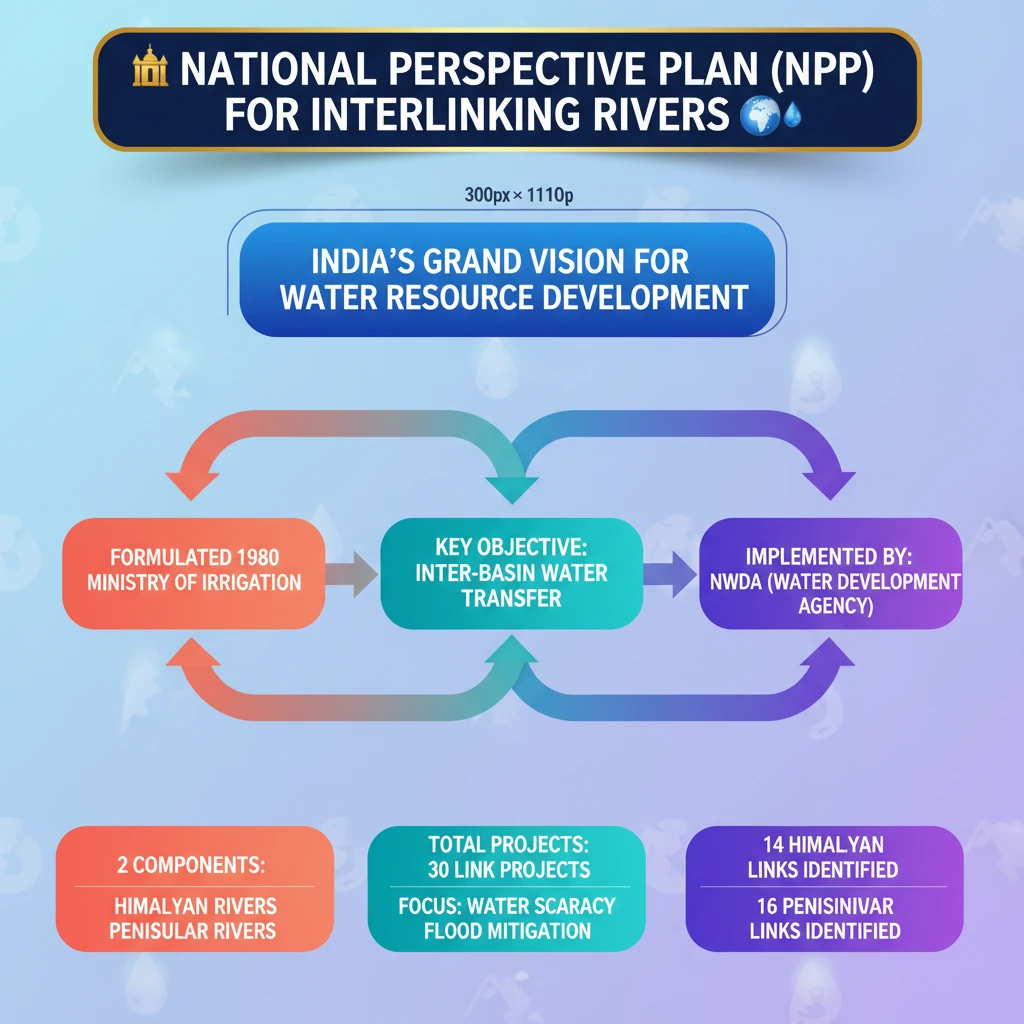
- •National Perspective Plan (NPP) for Interlinking Rivers formulated in 1980 by the Ministry of Irrigation.
- •Aims for inter-basin water transfer to develop water resources.
- •National Water Development Agency (NWDA) is responsible for its implementation.
- •Comprises two main components: Himalayan Rivers and Peninsular Rivers Development.
- •Identifies 30 link projects (16 Peninsular, 14 Himalayan).
- •Key Peninsular projects include Mahanadi-Godavari, Godavari-Krishna, and Ken-Betwa links.
- •Himalayan component aims to divert surplus water from eastern Ganga/Brahmaputra tributaries to western regions.
🧠 Memory Techniques
100% Verified Content
📚 Reference Sources
•Ministry of Jal Shakti, Government of India official website
•National Water Development Agency (NWDA) official reports and documents
•Press Information Bureau (PIB) releases regarding ILR projects