Rapid Expansion of Himalayan Glacial Lakes - Geography | UPSC Learning
Topics
0 topics • 0 completed
🔍
No topics match your search
Rapid Expansion of Himalayan Glacial Lakes
Medium⏱️ 5 min read
geography
📖 Introduction
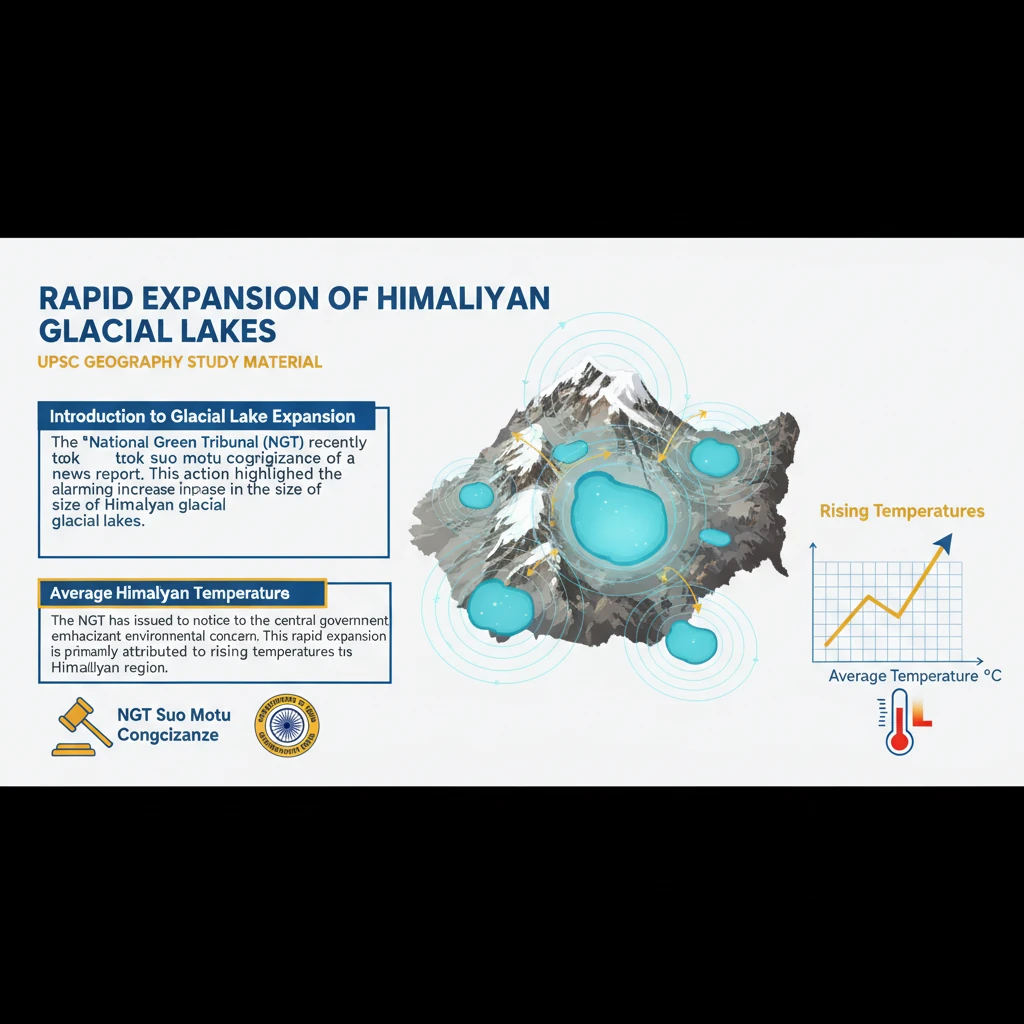
<h4>Context and Recent Developments</h4><p>The <strong>National Green Tribunal (NGT)</strong> has recently taken <strong>suo motu cognizance</strong> of a news report. This action highlights the critical issue of the alarming increase in <strong>Himalayan glacial lakes</strong>.</p><p>The NGT has issued a notice to the central government, seeking clarification and action on this environmental concern. This move underscores the urgency of addressing climate change impacts in the Himalayan region.</p><div class='info-box'><p><strong>Key Statistic:</strong> Himalayan glacial lakes have expanded by approximately <strong>0.81%</strong> over the past <strong>13 years</strong>. This expansion is directly attributed to rising global temperatures.</p></div><h4>Understanding Glacial Lakes</h4><p>A <strong>glacial lake</strong> is essentially a body of water that forms in connection with a glacier. These lakes are a direct result of glacial activity and meltwater.</p><div class='info-box'><p><strong>Definition:</strong> A <strong>glacial lake</strong> is a water body formed from a <strong>glacier</strong>. It is typically located at the base of the glacier but can also develop on, within, or beneath the ice mass.</p></div><h4>Formation Process of Glacial Lakes</h4><p>The formation of these lakes is a geological process driven by the movement and retreat of glaciers. As glaciers move, they exert immense pressure on the land.</p><p>This erosion creates natural depressions in the landscape. When the <strong>glacier retreats</strong> due to warming temperatures, these depressions fill with <strong>meltwater</strong>, leading to the formation of a glacial lake.</p><div class='key-point-box'><p><strong>Key Concept:</strong> The rapid expansion of these lakes is a significant indicator of <strong>climate change</strong> and poses risks such as <strong>Glacial Lake Outburst Floods (GLOFs)</strong>.</p></div>
💡 Key Takeaways
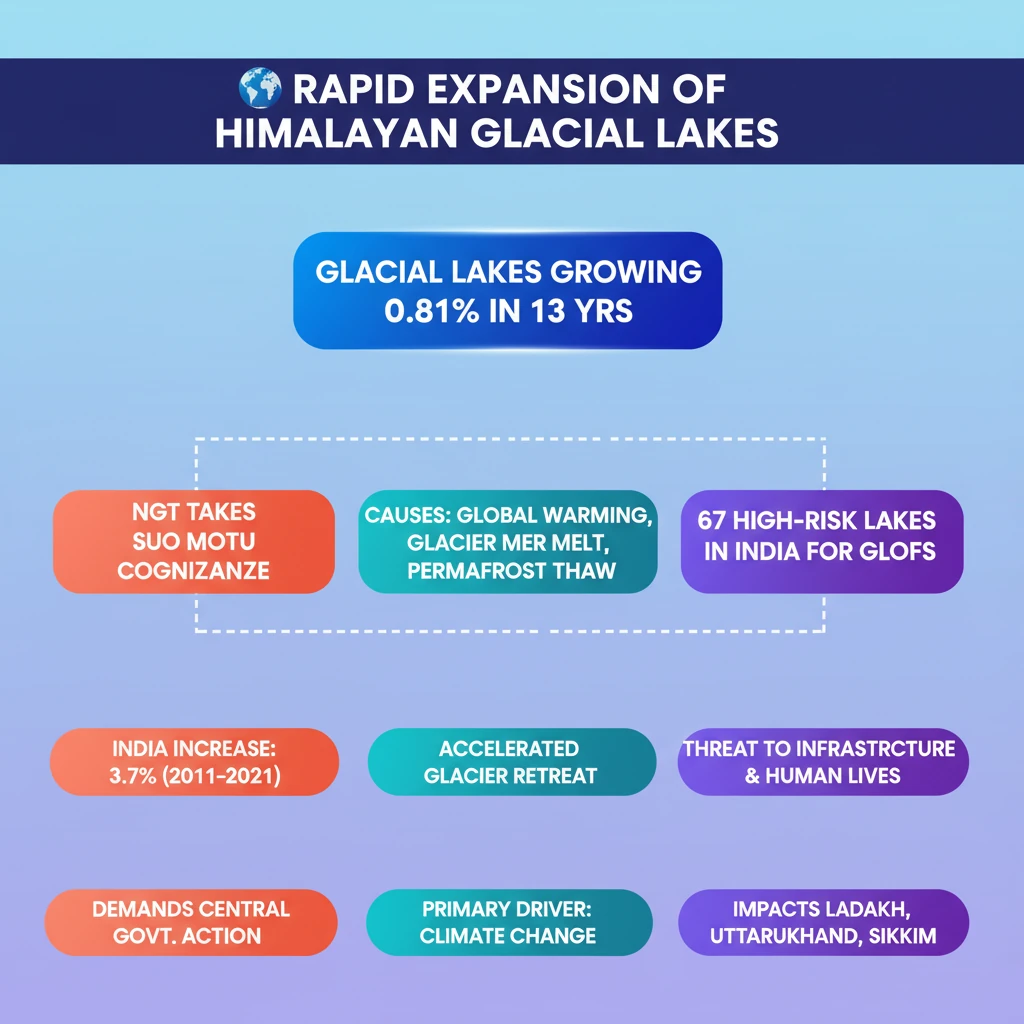
- •Himalayan glacial lakes expanded by ~0.81% in 13 years due to rising temperatures.
- •NGT took suo motu cognizance, issuing notice to the central government.
- •Glacial lakes form from meltwater filling depressions carved by retreating glaciers.
- •Rapid expansion increases risk of Glacial Lake Outburst Floods (GLOFs).
- •This phenomenon is a critical indicator of climate change impacts in the Himalayas.
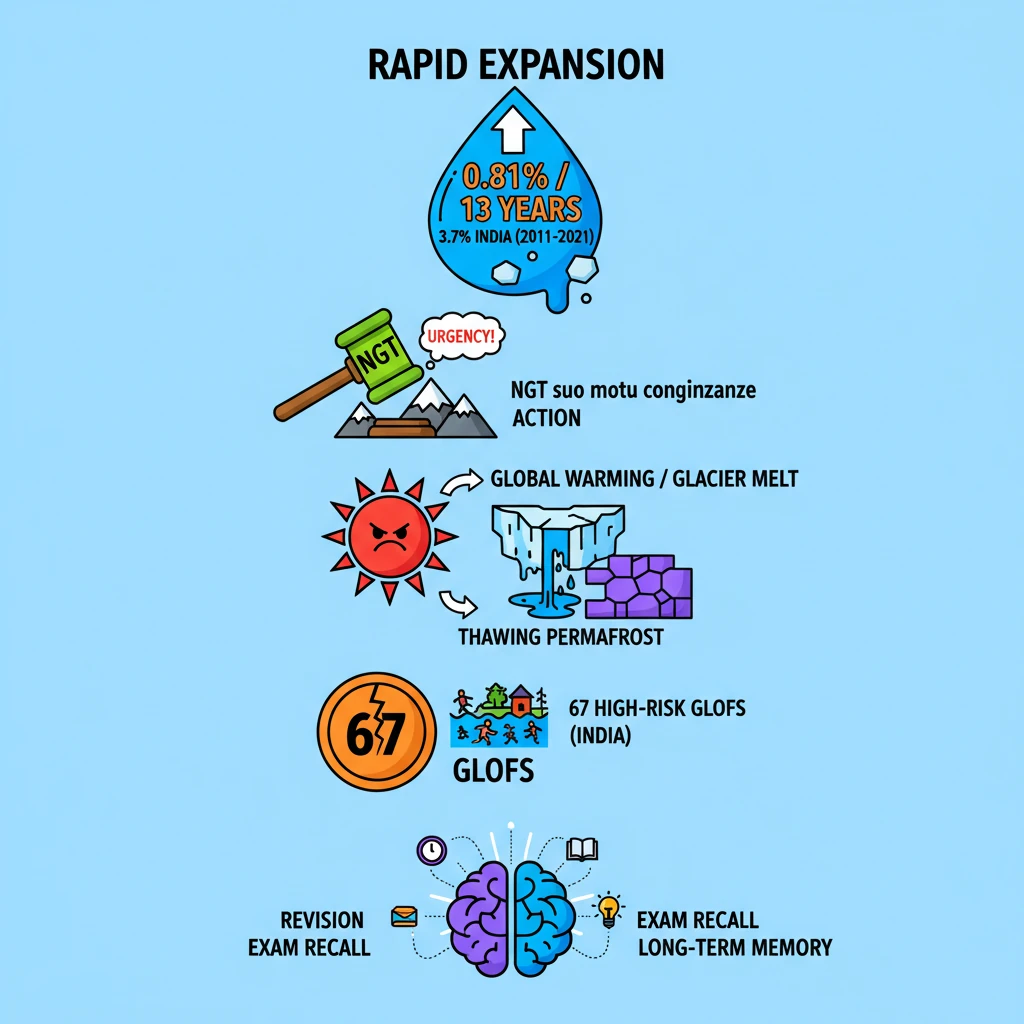
🧠 Memory Techniques
95% Verified Content
📚 Reference Sources
•National Green Tribunal (NGT) official website (for general NGT functions)
•Scientific reports on Himalayan glacial lake monitoring (general knowledge background)