Chenab, Jhelum, and Beas Rivers: Tributaries of the Indus System - Geography | UPSC Learning
Topics
0 topics • 0 completed
🔍
No topics match your search
Chenab, Jhelum, and Beas Rivers: Tributaries of the Indus System
Medium⏱️ 6 min read
geography
📖 Introduction
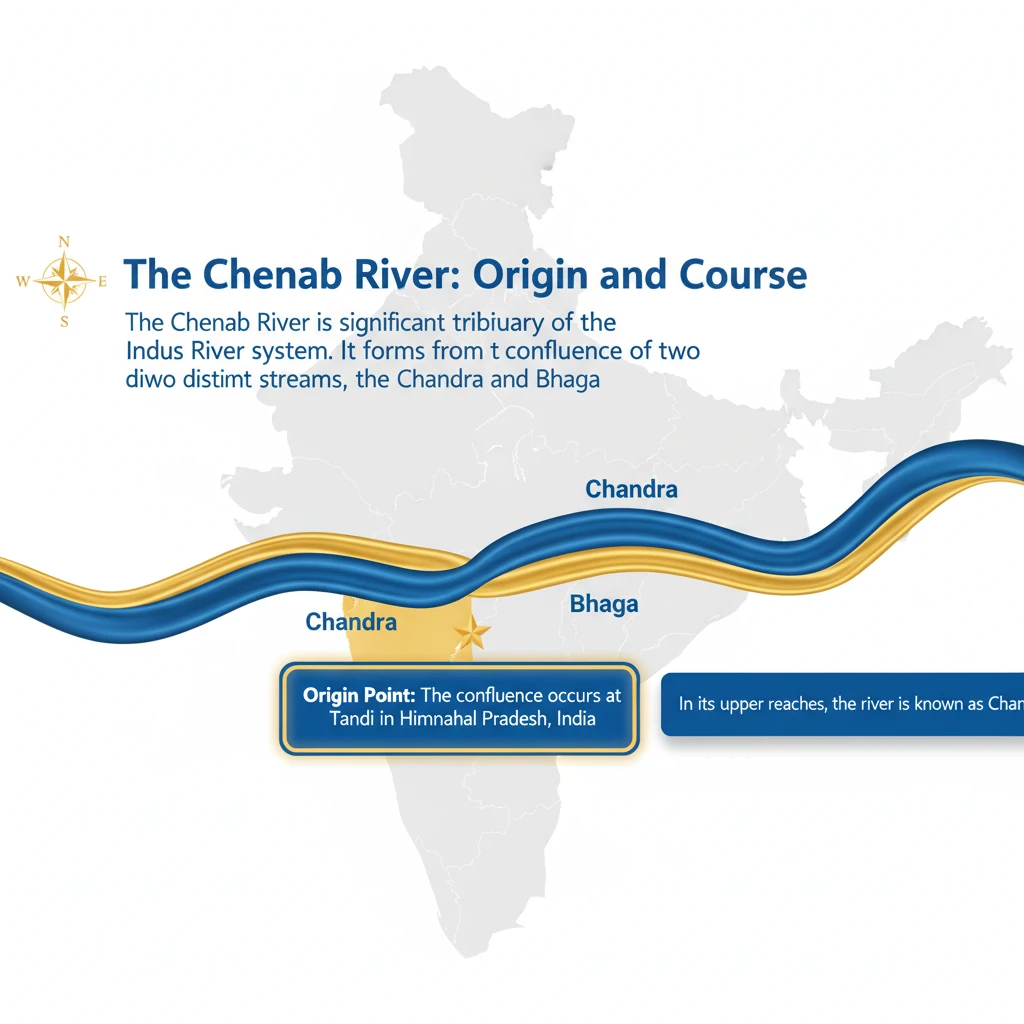
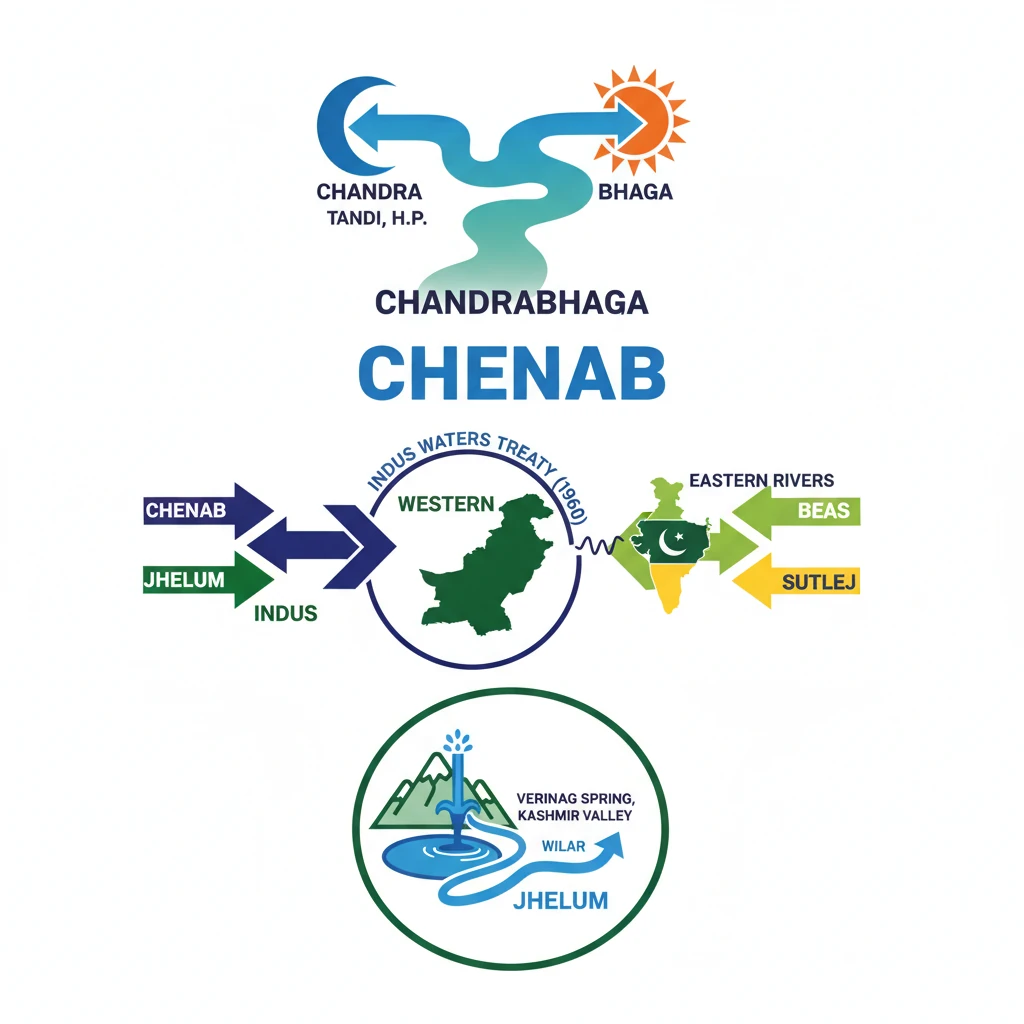
<h4>The Chenab River: Origin and Course</h4><p>The <strong>Chenab River</strong> is a significant <strong>tributary</strong> of the <strong>Indus River</strong> system. It forms from the confluence of two distinct streams, the <strong>Chandra</strong> and <strong>Bhaga</strong>.</p><div class='info-box'><p><strong>Origin Point:</strong> The confluence occurs at <strong>Tandi</strong> in <strong>Himachal Pradesh</strong>, India.</p></div><p>In its upper reaches, the river is known as <strong>Chandrabhaga</strong>. It initially flows westward through <strong>Jammu and Kashmir</strong> before turning southwest into <strong>Pakistan</strong>.</p><p>Upon entering Pakistan, the <strong>Chenab</strong> descends into the <strong>alluvial lowlands</strong> of the <strong>Punjab province</strong>. It then merges with the <strong>Jhelum River</strong> near <strong>Trimmu</strong>.</p><h4>Key Tributaries of the Indus System</h4><p>Understanding the individual characteristics of the Indus tributaries is crucial for UPSC Geography.</p><h5>Jhelum River</h5><p>The <strong>Jhelum River</strong> originates from the <strong>Verinag Spring</strong> located in the <strong>Kashmir Valley</strong>. It traverses through <strong>Jammu and Kashmir</strong> and <strong>Punjab</strong>.</p><div class='info-box'><p><strong>Key Features:</strong> The <strong>Jhelum</strong> passes through <strong>Srinagar</strong> and the prominent <strong>Wular Lake</strong>. It enters <strong>Pakistan</strong> via a gorge near <strong>Gilgit</strong>.</p></div><p>The <strong>Jhelum River</strong> eventually merges with the <strong>Chenab River</strong> near <strong>Jhang</strong> in Pakistan.</p><h5>Beas River</h5><p>The <strong>Beas River</strong> has its source at <strong>Beas Kund</strong>, which is situated near <strong>Rohtang Pass</strong> in <strong>Himachal Pradesh</strong>.</p><div class='info-box'><p><strong>Course:</strong> It flows through the picturesque <strong>Kullu valley</strong>. Unlike some other tributaries, the <strong>Beas</strong> remains entirely within India for its major course.</p></div><p>The <strong>Beas River</strong> ultimately joins the <strong>Sutlej River</strong> at <strong>Harike</strong>, located in <strong>Punjab</strong>, India.</p><h5>Ravi River</h5><p>The <strong>Ravi River</strong> originates from <strong>Bara Bangal</strong> in the <strong>Kangra district</strong> of <strong>Himachal Pradesh</strong>. It flows through several locations including <strong>Bara Bansu</strong>, <strong>Tretha</strong>, <strong>Chanota</strong>, and <strong>Ulhansa</strong>.</p><div class='info-box'><p><strong>Length in HP:</strong> The <strong>Ravi</strong> covers approximately <strong>158 km</strong> within <strong>Himachal Pradesh</strong> before entering the state of <strong>Punjab</strong>.</p></div><p>Its notable tributaries include <strong>Budhil</strong>, <strong>Siul</strong>, <strong>Baljari</strong>, <strong>Chhatrari</strong>, and <strong>Baira</strong>. These smaller streams contribute significantly to its flow.</p><h4>The Indus Waters Treaty (1960)</h4><p>The allocation of waters for these rivers is governed by a crucial international agreement.</p><div class='key-point-box'><p>The <strong>Indus Waters Treaty</strong>, signed in <strong>1960</strong>, is a landmark agreement between <strong>India</strong> and <strong>Pakistan</strong> concerning the sharing of the <strong>Indus River System</strong> waters.</p></div><p>Under this treaty, control of the <strong>Eastern Rivers</strong>—<strong>Beas</strong>, <strong>Ravi</strong>, and <strong>Sutlej</strong>—was allocated to <strong>India</strong>.</p><p>Conversely, the control of the <strong>Western Rivers</strong>—the <strong>Indus</strong> itself, <strong>Chenab</strong>, and <strong>Jhelum</strong>—was allocated to <strong>Pakistan</strong>.</p><div class='exam-tip-box'><p><strong>UPSC Insight:</strong> The <strong>Indus Waters Treaty</strong> is a frequently asked topic in both <strong>Prelims</strong> (facts about rivers and allocation) and <strong>Mains</strong> (geopolitics, water resource management, India-Pakistan relations).</p></div>
💡 Key Takeaways
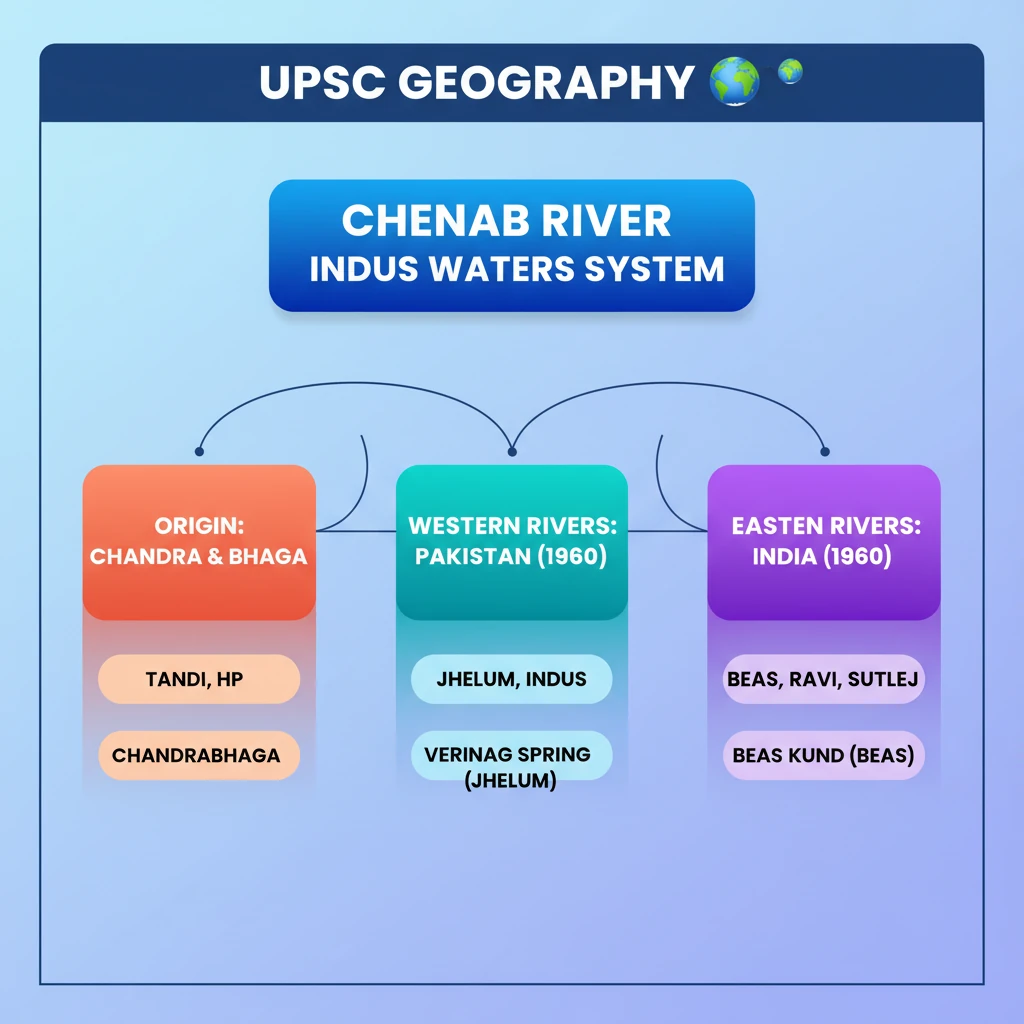
- •Chenab originates from Chandra and Bhaga streams at Tandi, Himachal Pradesh, known as Chandrabhaga.
- •Chenab, Jhelum, and Indus are Western Rivers allocated to Pakistan under the Indus Waters Treaty (1960).
- •Beas, Ravi, and Sutlej are Eastern Rivers allocated to India under the Indus Waters Treaty (1960).
- •Jhelum originates from Verinag Spring in Kashmir Valley, passes through Wular Lake.
- •Beas originates from Beas Kund near Rohtang Pass, joins Sutlej at Harike in Punjab.
- •Ravi originates from Bara Bangal, Kangra district, Himachal Pradesh.
🧠 Memory Techniques
98% Verified Content