Solid Waste Management Rules 2016 - Environment And Ecology | UPSC Learning
Topics
0 topics • 0 completed
🔍
No topics match your search
Solid Waste Management Rules 2016
Medium⏱️ 7 min read
environment and ecology
📖 Introduction
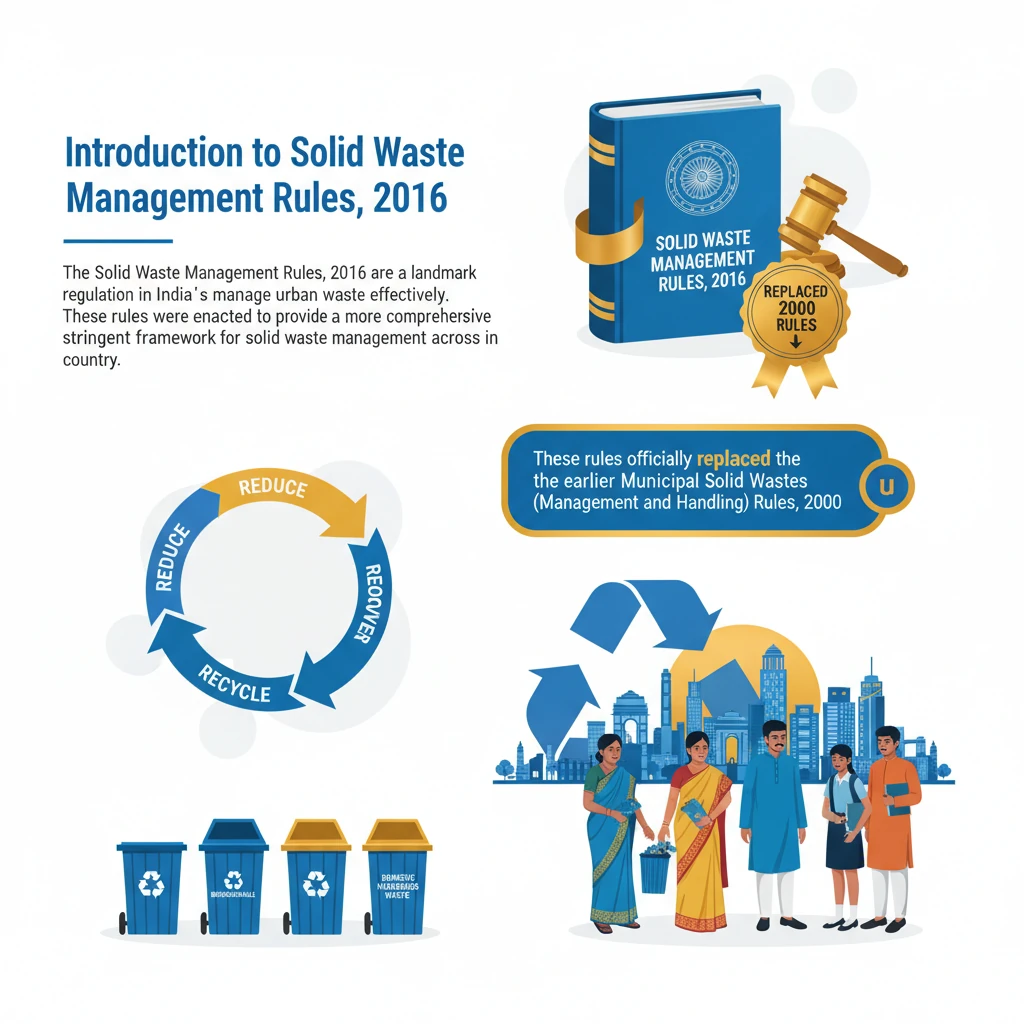
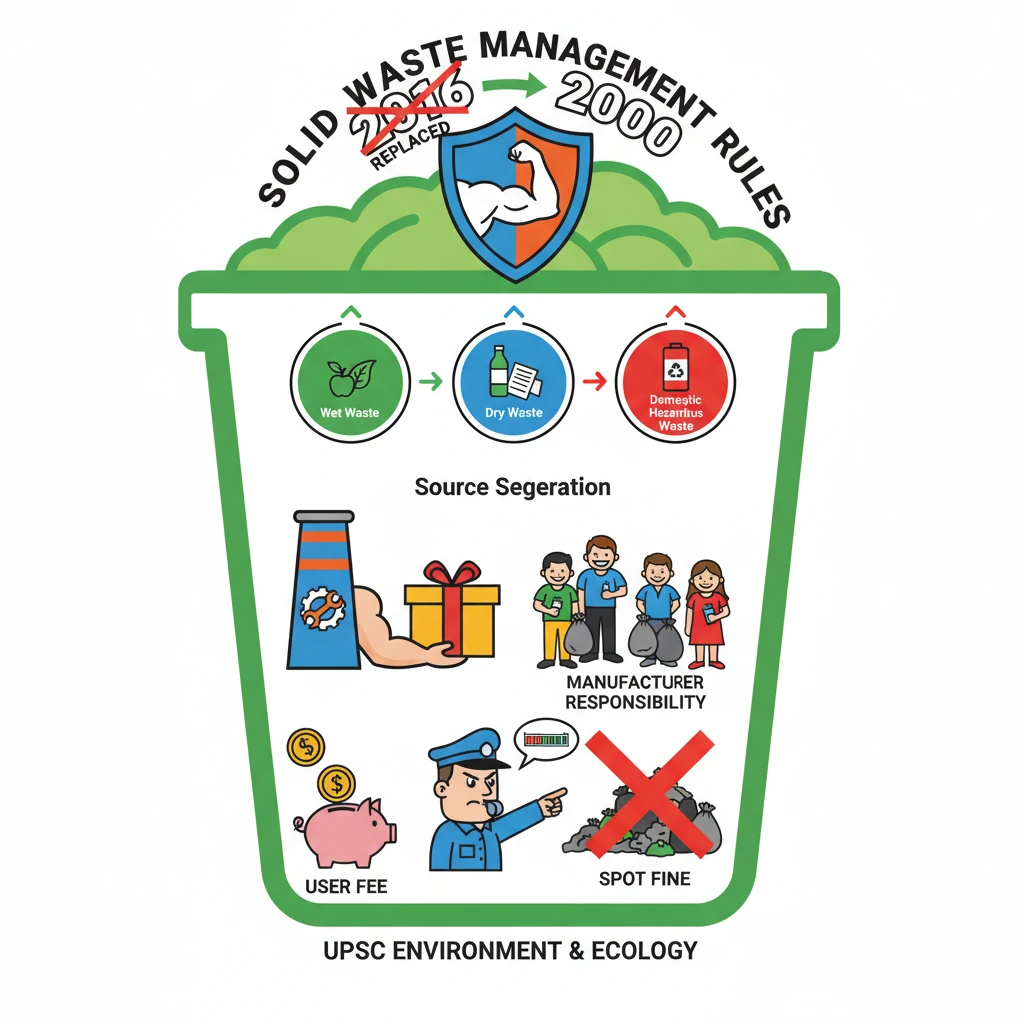
<h4>Introduction to Solid Waste Management Rules, 2016</h4><p>The <strong>Solid Waste Management Rules, 2016</strong> are a landmark regulation in India's efforts to manage urban waste effectively. These rules were enacted to provide a more comprehensive and stringent framework for solid waste management across the country.</p><div class='info-box'><p>These rules officially <strong>replaced</strong> the earlier <strong>Municipal Solid Wastes (Management and Handling) Rules, 2000</strong>. This update reflected a shift towards more proactive and decentralized waste management practices.</p></div><h4>Core Focus Areas of the 2016 Rules</h4><p>The <strong>Solid Waste Management Rules, 2016</strong> introduced several critical areas of focus to enhance waste management efficiency and accountability.</p><ul><li><strong>Segregation of Waste at Source:</strong> A primary emphasis is placed on the separation of waste at the point of generation, which is crucial for effective processing and recycling.</li><li><strong>Manufacturer's Responsibility:</strong> The rules assign specific duties to manufacturers regarding the disposal of certain types of waste, particularly <strong>sanitary and packaging wastes</strong>.</li><li><strong>User Fees for Generators:</strong> A system of user fees was introduced for the collection, disposal, and processing of waste, particularly targeting <strong>bulk generators</strong>.</li></ul><h4>Key Features and Generator Responsibilities</h4><p>The 2016 Rules significantly expanded the responsibilities of <strong>waste generators</strong>, making them active participants in the waste management cycle from the very beginning.</p><div class='key-point-box'><p><strong>Mandatory Waste Segregation:</strong> Generators are now mandated to segregate their waste into <strong>three distinct streams</strong> at the source itself. This is a fundamental shift from previous practices.</p></div><ul><li><strong>Wet Waste (Biodegradable):</strong> This stream includes organic materials like food waste, vegetable peels, and garden waste, suitable for composting.</li><li><strong>Dry Waste:</strong> Comprises non-biodegradable materials such as <strong>plastic, paper, metal, wood, and glass</strong>, which can often be recycled.</li><li><strong>Domestic Hazardous Wastes:</strong> This category includes items like <strong>diapers, sanitary pads, mosquito repellents, discarded medicines, and electronic waste</strong>, requiring special handling.</li></ul><p>Once segregated, generators are responsible for handing over these wastes to <strong>authorised rag-pickers</strong>, designated <strong>waste collectors</strong>, or directly to the <strong>local bodies</strong> responsible for waste management.</p><h4>Financial Obligations of Waste Generators</h4><p>To ensure financial sustainability and compliance, the rules introduced specific monetary obligations for waste generators.</p><ul><li><strong>'User Fee':</strong> Generators are required to pay a '<strong>User Fee</strong>' to the waste collectors for the services rendered in collecting, transporting, and processing their segregated waste.</li><li><strong>'Spot Fine':</strong> A provision for '<strong>Spot Fine</strong>' was introduced to deter non-compliance. Generators can be fined for acts such as <strong>littering</strong> or failing to perform <strong>waste segregation</strong> at source.</li></ul><div class='exam-tip-box'><p>Understanding the <strong>three-stream segregation</strong> and the concept of <strong>generator responsibility</strong> is crucial for UPSC Mains questions on urban governance and environmental policy. Note the shift from municipal responsibility to shared responsibility.</p></div>
💡 Key Takeaways
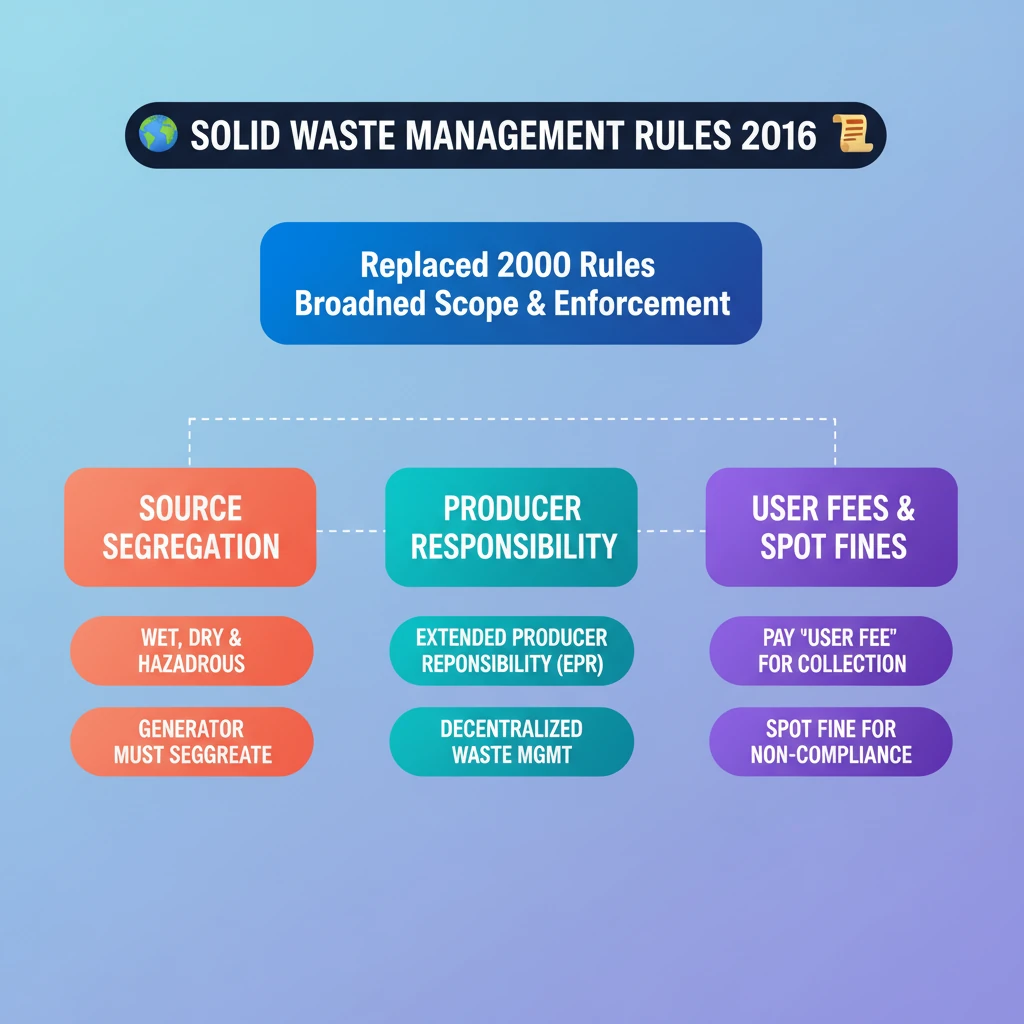
- •SWM Rules 2016 replaced the 2000 rules, broadening scope and strengthening enforcement.
- •Key focus: Source segregation, manufacturer responsibility, and user fees.
- •Waste generators must segregate into wet, dry, and domestic hazardous streams.
- •Generators pay 'User Fee' and face 'Spot Fine' for non-compliance.
- •Rules promote Extended Producer Responsibility and decentralized waste management.
🧠 Memory Techniques
95% Verified Content
📚 Reference Sources
•Ministry of Environment, Forest and Climate Change (MoEFCC) website (for official rules confirmation)