World Meteorological Organisation - Environment And Ecology | UPSC Learning
Topics
0 topics • 0 completed
🔍
No topics match your search
World Meteorological Organisation
Easy⏱️ 6 min read
environment and ecology
📖 Introduction
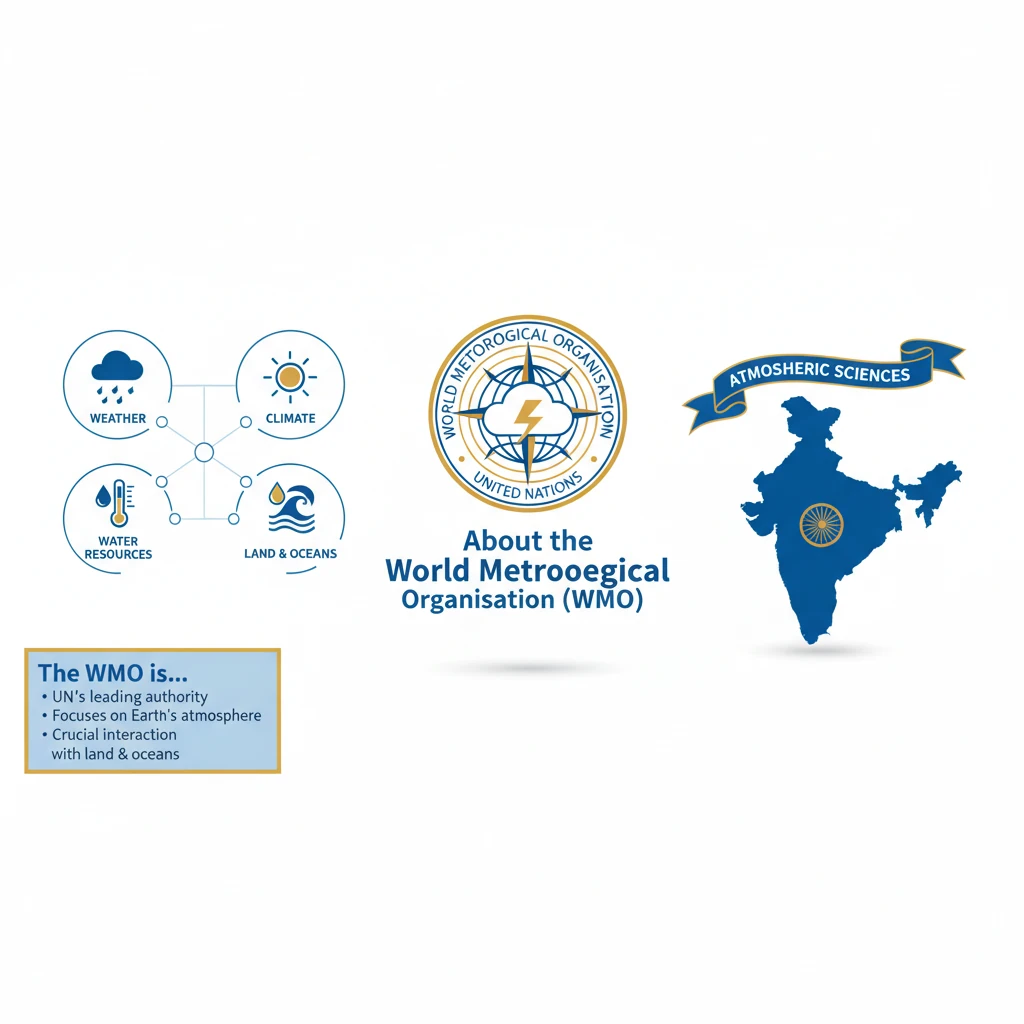
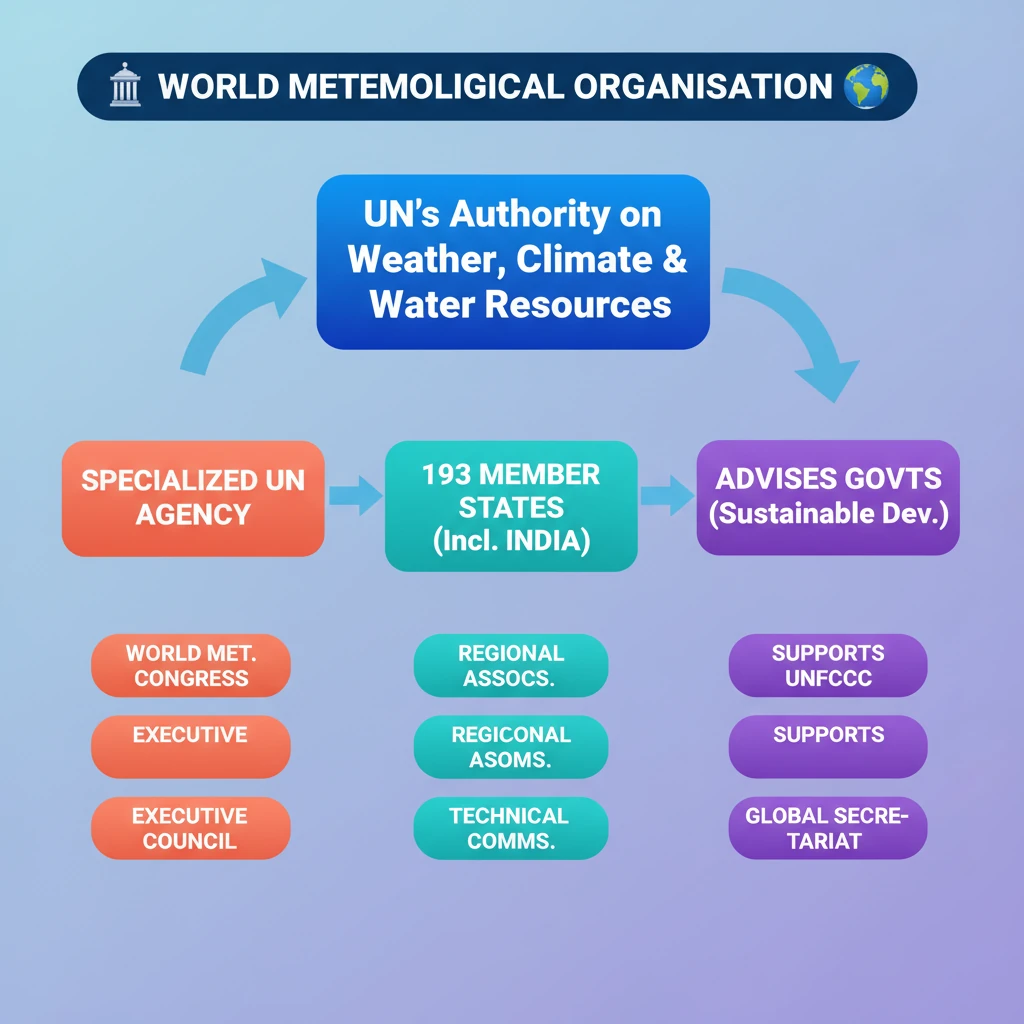
<h4>About the World Meteorological Organisation (WMO)</h4><p>The <strong>World Meteorological Organisation (WMO)</strong> is the <strong>United Nations'</strong> leading authority. It focuses on <strong>atmospheric sciences</strong>, covering Earth’s atmosphere, <strong>weather</strong>, <strong>climate</strong>, and <strong>water resources</strong>. The WMO also examines their crucial interaction with <strong>land</strong> and <strong>oceans</strong>.</p><div class='key-point-box'><p>The WMO is recognized as a <strong>specialised agency</strong> of the <strong>United Nations</strong>. This status highlights its unique mandate and global reach in meteorological and hydrological matters.</p></div><h4>Global Reach and Membership</h4><p>The WMO fosters extensive <strong>global cooperation</strong>. It boasts a substantial membership of <strong>193 Member States and Territories</strong> from around the world.</p><div class='info-box'><p><strong>India</strong> is a proud <strong>member</strong> of the <strong>WMO</strong>, actively participating in its initiatives and contributing to global meteorological efforts.</p></div><h4>Organizational Structure</h4><p>The WMO is structured to ensure effective governance and operational efficiency. Its framework comprises several key bodies working in synergy.</p><ul><li><strong>World Meteorological Congress</strong>: This is the <strong>highest decision-making body</strong>. It is responsible for setting the overall <strong>policies</strong> and strategic <strong>directions</strong> for the organization.</li><li><strong>Executive Council</strong>: This body plays a vital role in <strong>implementing the decisions</strong> made by the World Meteorological Congress.</li><li><strong>Regional Associations</strong>: There are <strong>six regional associations</strong>. These associations are crucial for coordinating <strong>meteorological</strong>, <strong>hydrological</strong>, and related activities within their specific geographic regions.</li><li><strong>Technical Commissions</strong>: These commissions focus on specialized technical aspects of meteorology and hydrology.</li><li><strong>Secretariat</strong>: This is the administrative arm, overseen by the <strong>Secretary-General</strong>.</li></ul><h4>Climate Advocacy and Sustainable Development</h4><p>The WMO actively engages in <strong>climate advocacy</strong>. It provides crucial support to the <strong>UNFCCC (United Nations Framework Convention on Climate Change)</strong> and other vital <strong>environmental conventions</strong>.</p><p>The organization plays a significant advisory role. It <strong>advises governments</strong> on various <strong>climate-related issues</strong>. This guidance is aimed at fostering global <strong>sustainable development</strong> initiatives.</p><h4>Headquarters</h4><p>The <strong>Secretariat</strong> of the <strong>WMO</strong> is centrally located in <strong>Geneva, Switzerland</strong>. This strategic location facilitates international coordination and operations.</p><div class='info-box'><p>The day-to-day operations and administrative functions of the Secretariat are overseen by the <strong>Secretary-General</strong>.</p></div>
💡 Key Takeaways
- •WMO is the UN's leading authority on atmospheric sciences, weather, climate, and water resources.
- •It is a specialized agency of the United Nations.
- •Comprises 193 Member States and Territories, including India.
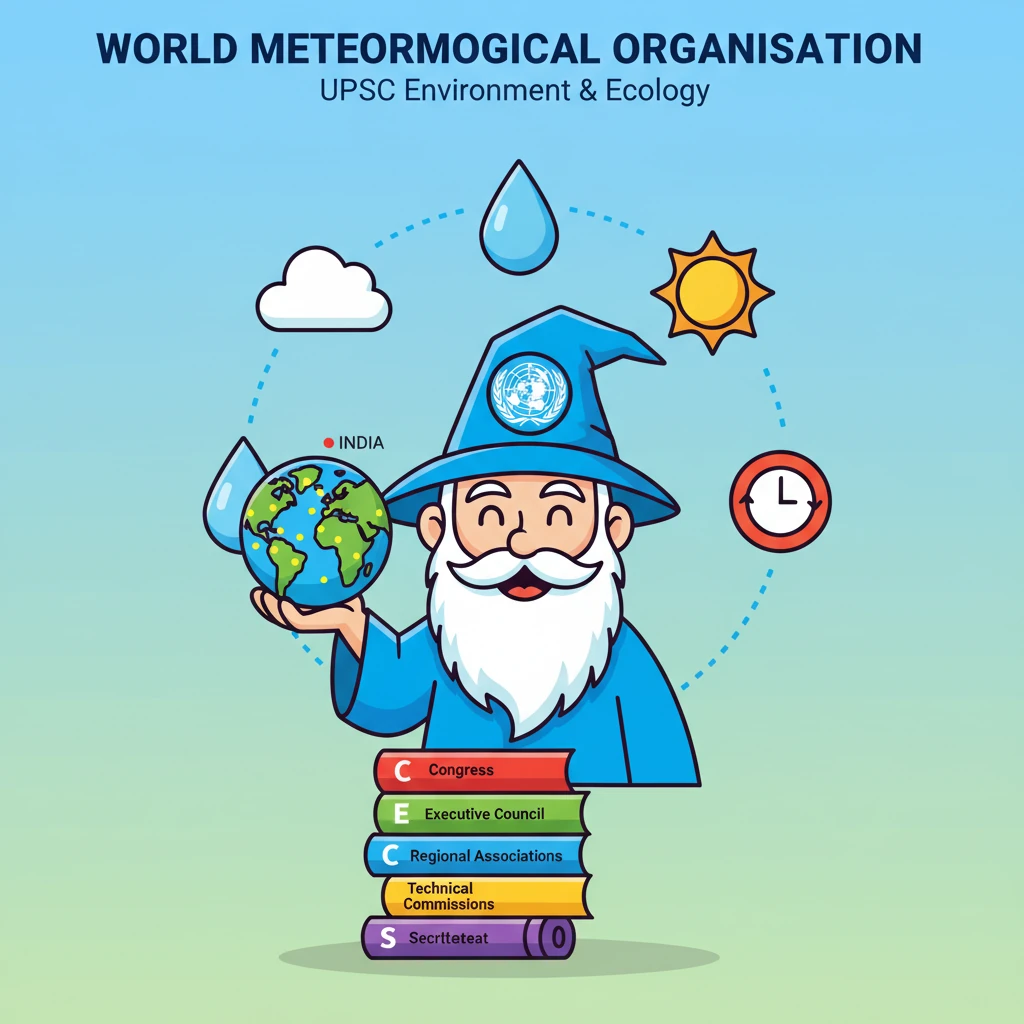
- •Key structures include the World Meteorological Congress, Executive Council, Regional Associations, Technical Commissions, and Secretariat.
- •Supports UNFCCC and advises governments on climate issues for sustainable development.
- •Headquartered in Geneva, Switzerland, overseen by the Secretary-General.
🧠 Memory Techniques
100% Verified Content