Living Planet Report 2024 - Environment And Ecology | UPSC Learning
Topics
0 topics • 0 completed
🔍
No topics match your search
Living Planet Report 2024
Medium⏱️ 7 min read
environment and ecology
📖 Introduction
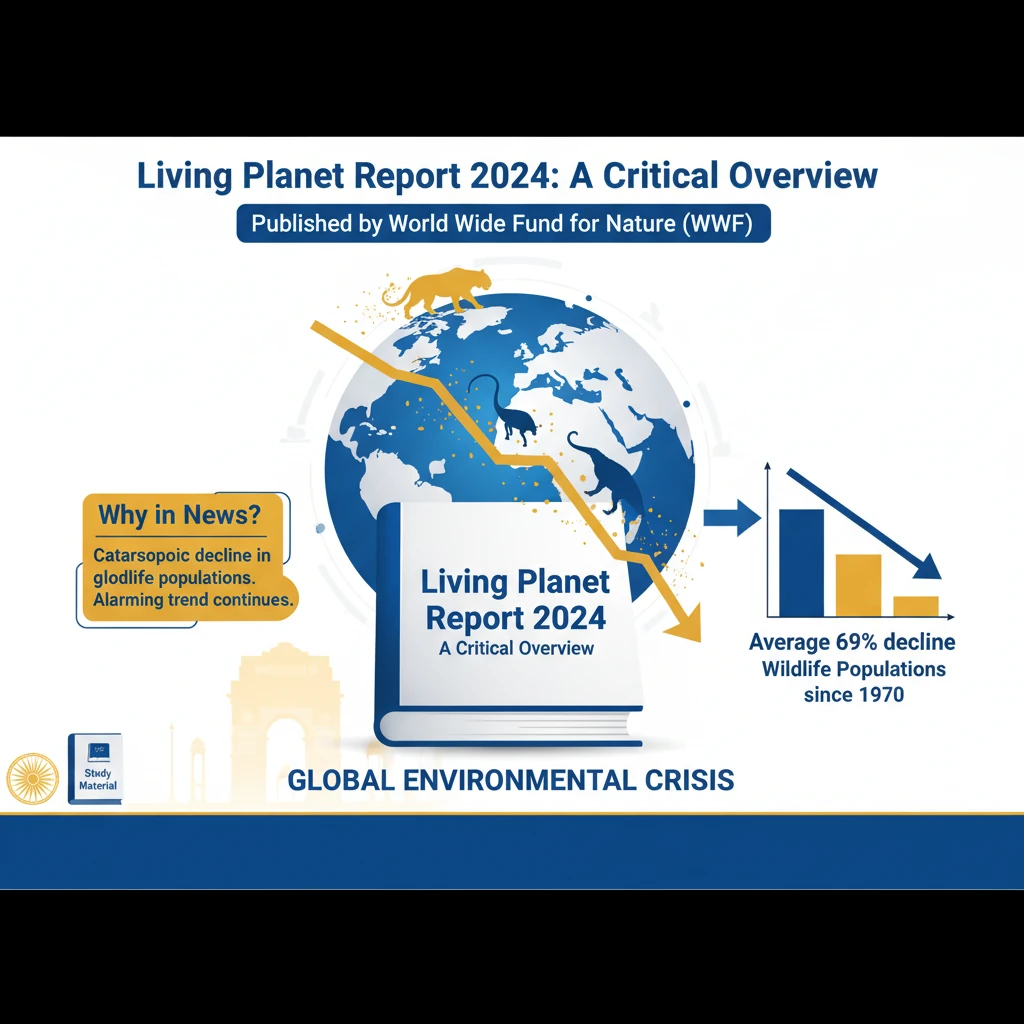
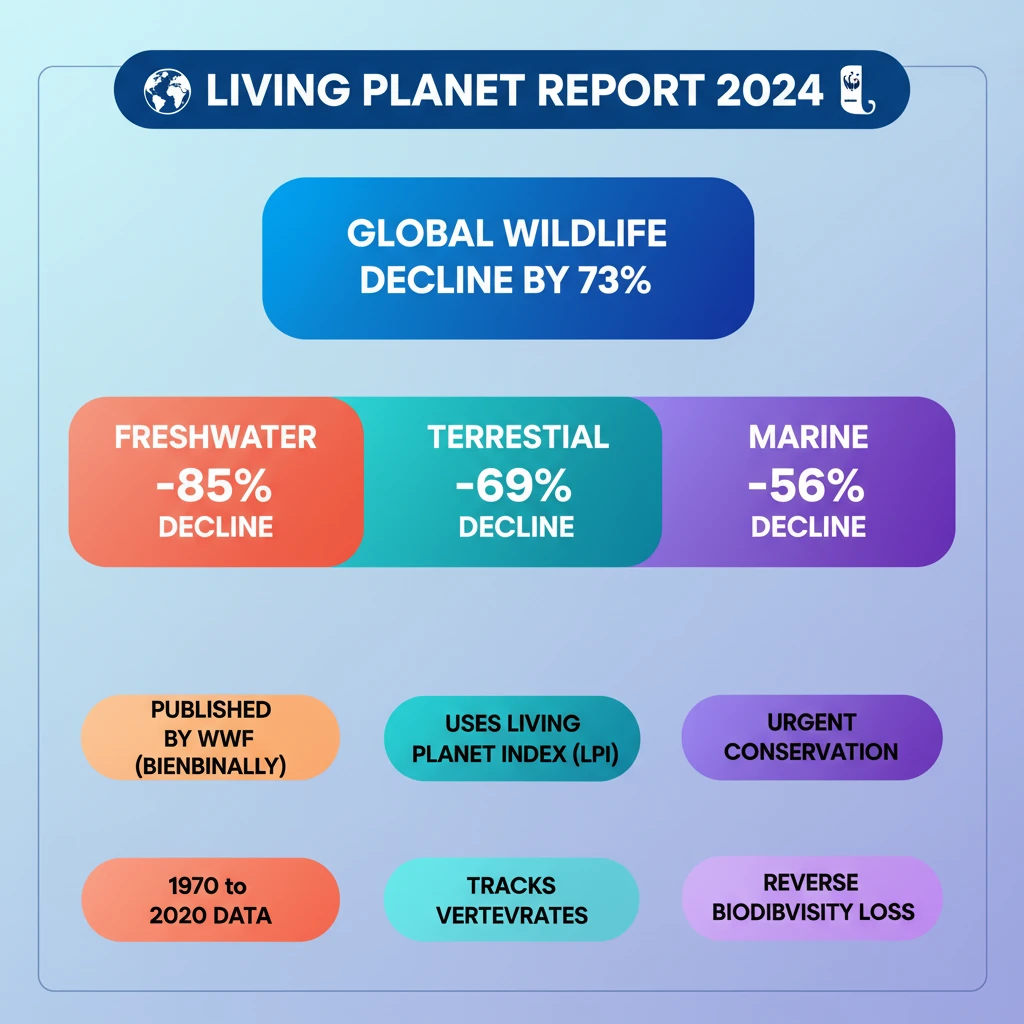
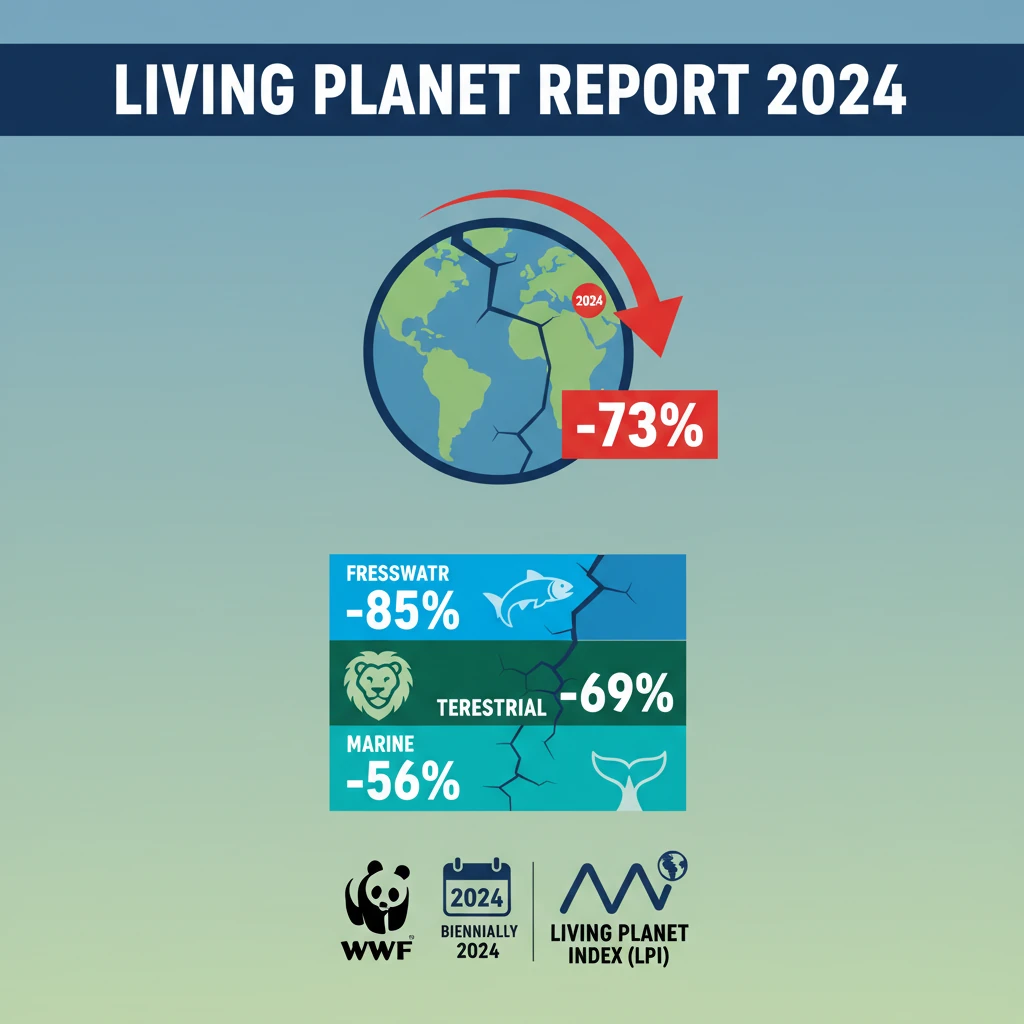
<h4>Living Planet Report 2024: A Critical Overview</h4><p>The <strong>Living Planet Report 2024</strong>, published by the <strong>World Wide Fund for Nature (WWF)</strong>, highlights a severe global environmental crisis. This report serves as a crucial barometer for the health of our planet's ecosystems and biodiversity.</p><div class='info-box'><p><strong>Why in News?</strong></p><p>The latest edition of the report reveals a catastrophic decline in global wildlife populations. This alarming trend underscores the urgent need for robust conservation efforts and sustainable practices worldwide.</p></div><h4>Catastrophic Decline in Wildlife Populations</h4><p>The report's most striking finding is the significant reduction in monitored wildlife populations. Over a span of just <strong>50 years</strong>, from <strong>1970 to 2020</strong>, there has been an average <strong>73% decline</strong> in the size of these populations.</p><div class='key-point-box'><p>This figure signifies that nearly three-quarters of the monitored wildlife has been lost, indicating widespread ecosystem degradation and biodiversity loss across the globe.</p></div><h4>Ecosystem-Specific Declines</h4><p>The decline in wildlife populations is not uniform across all ecosystems. The report meticulously breaks down these losses, revealing which habitats are most severely affected.</p><div class='info-box'><ul><li><strong>Freshwater Ecosystems:</strong> Reported the highest decline at an alarming <strong>85%</strong>. This indicates severe pressure on rivers, lakes, and wetlands, impacting aquatic species.</li><li><strong>Terrestrial Ecosystems:</strong> Experienced a significant decline of <strong>69%</strong>. This includes forests, grasslands, and deserts, highlighting the impact of habitat loss and degradation.</li><li><strong>Marine Ecosystems:</strong> Showed a substantial decline of <strong>56%</strong>. Oceans, seas, and coastal areas are under immense stress from pollution, overfishing, and climate change.</li></ul></div><div class='exam-tip-box'><p><strong>UPSC Insight:</strong> Understanding the differential impact across ecosystems (e.g., <strong>freshwater > terrestrial > marine</strong>) is crucial for both Prelims (factual recall) and Mains (analytical questions on conservation priorities). Always remember the <strong>WWF</strong> and the <strong>1970-2020</strong> timeframe.</p></div>
💡 Key Takeaways
- •Global wildlife populations declined by 73% on average between 1970 and 2020.
- •Freshwater ecosystems suffered the highest decline (85%), followed by terrestrial (69%) and marine (56%).
- •The report is published biennially by the World Wide Fund for Nature (WWF).
- •It uses the Living Planet Index (LPI) to track vertebrate population trends.
- •The findings emphasize the urgent need for conservation and sustainable practices to reverse biodiversity loss.
🧠 Memory Techniques
98% Verified Content
📚 Reference Sources
•Drishti IAS Summary