Rushikulya River - Environment And Ecology | UPSC Learning
Topics
0 topics • 0 completed
🔍
No topics match your search
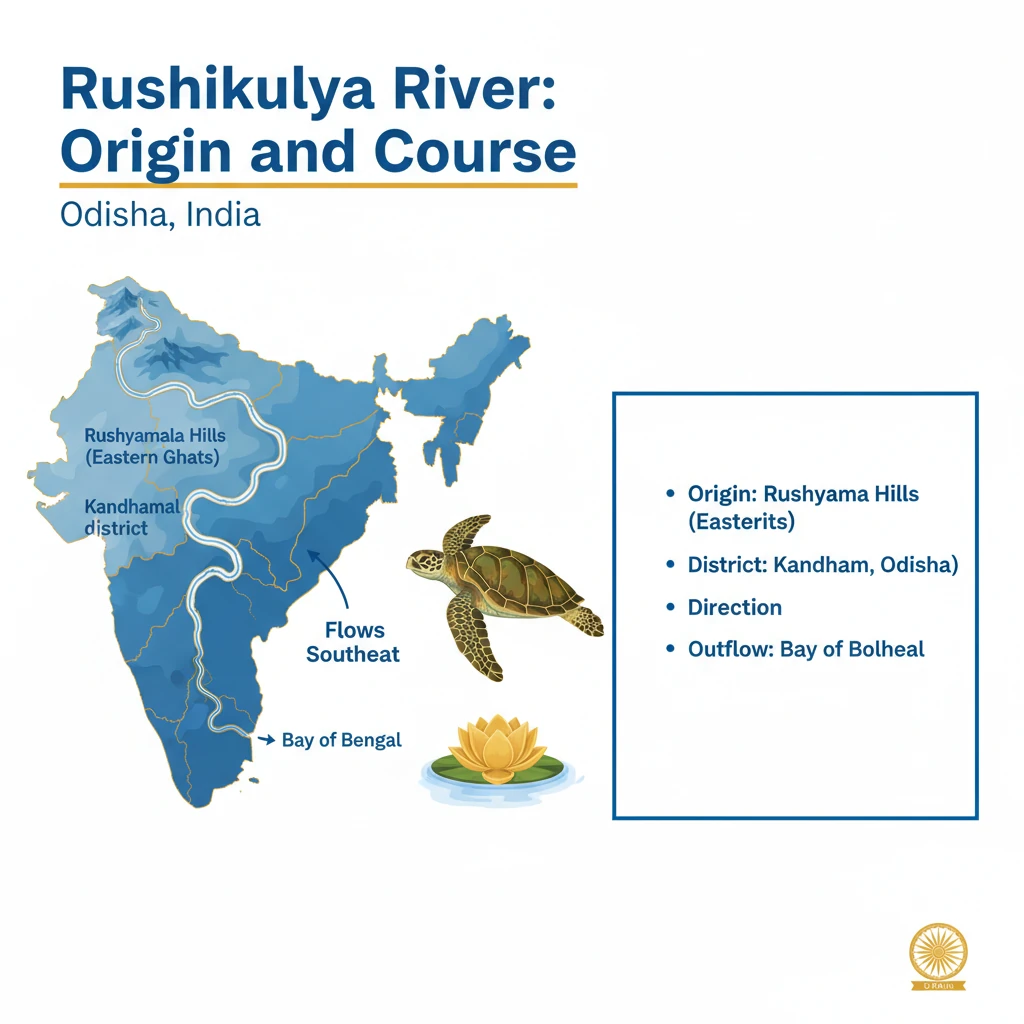
Rushikulya River
Medium⏱️ 8 min read
environment and ecology
📖 Introduction
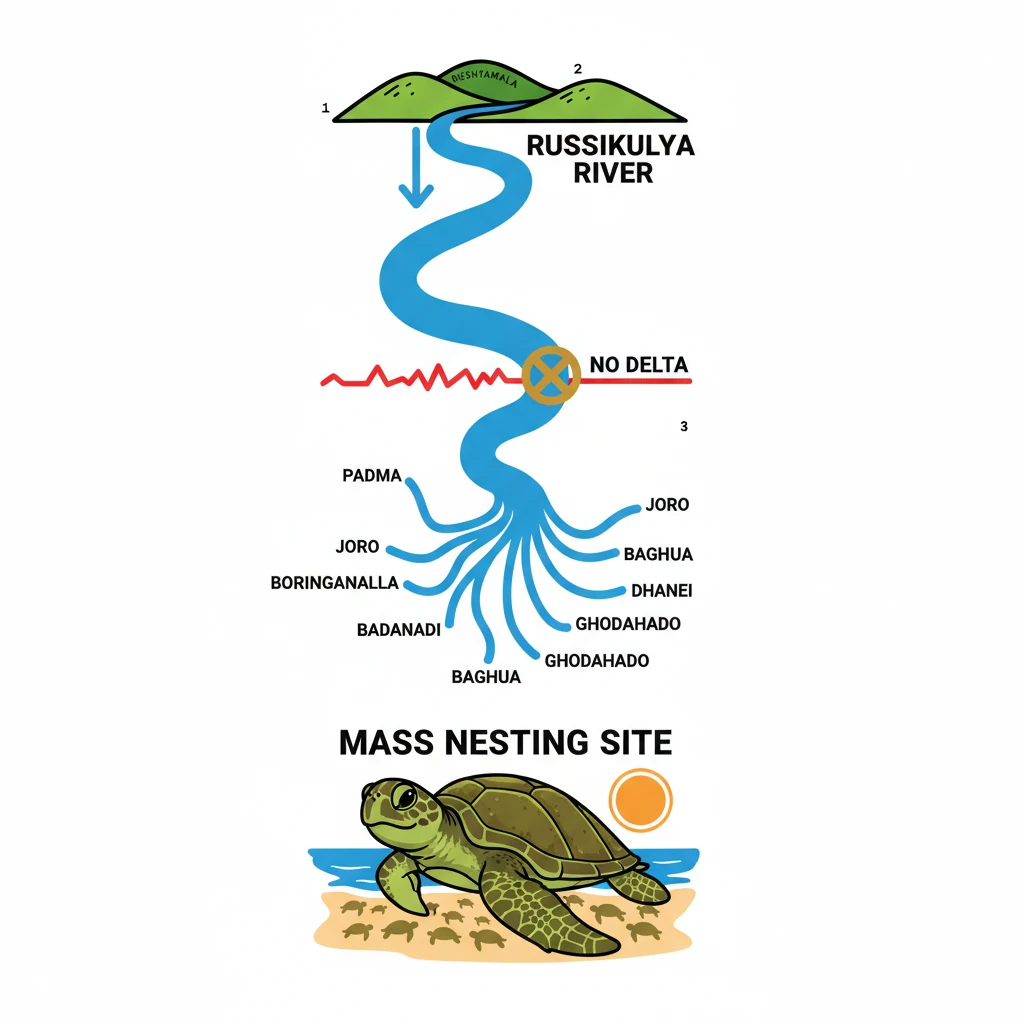
<h4>📍 Origin and Course of the Rushikulya River</h4><p>The <strong>Rushikulya River</strong> is a significant river system located in the state of <strong>Odisha</strong>, India. It originates from the <strong>Rushyamala hills</strong>, which are part of the <strong>Eastern Ghats</strong> mountain range.</p><p>Its source lies specifically in the <strong>Kandhamal district</strong> of Odisha. From its origin, the river flows in a general <strong>southeast direction</strong>, traversing through various landscapes before reaching its ultimate destination.</p><div class='info-box'><p><strong>Key Fact:</strong> The <strong>Rushikulya River</strong> is one of the major rivers of <strong>Odisha</strong>, playing a crucial role in the region's geography and ecology.</p></div><h4>🌊 Journey to the Bay of Bengal</h4><p>After its journey from the highlands, the <strong>Rushikulya River</strong> discharges its waters directly into the <strong>Bay of Bengal</strong>. This confluence marks the end of its course.</p><p>A distinctive feature of the <strong>Rushikulya River</strong> is the absence of a <strong>delta</strong> at its mouth. Unlike many large rivers that form expansive deltas where they meet the sea, the Rushikulya flows directly into the Bay.</p><div class='key-point-box'><p><strong>Important Concept:</strong> The absence of a <strong>delta</strong> at the mouth of the <strong>Rushikulya River</strong> is a key geological characteristic, influencing its coastal ecosystem and making it unique among major rivers.</p></div><h4> tributary Network</h4><p>The <strong>Rushikulya River</strong> is fed by several prominent tributaries that contribute to its water volume and basin area. These tributaries join the main river at various points along its course.</p><ul><li><strong>Padma</strong></li><li><strong>Boringanalla</strong></li><li><strong>Joro</strong></li><li><strong>Badanadi</strong></li><li><strong>Baghua</strong></li><li><strong>Dhanei</strong></li><li><strong>Ghodahado</strong></li></ul><div class='exam-tip-box'><p><strong>UPSC Insight:</strong> Knowing the <strong>origin</strong>, <strong>course</strong>, <strong>tributaries</strong>, and especially the <strong>unique feature</strong> (no delta) of rivers like <strong>Rushikulya</strong> is vital for both <strong>Geography</strong> and <strong>Environment & Ecology</strong> sections of the UPSC exam. Focus on these specific details.</p></div>
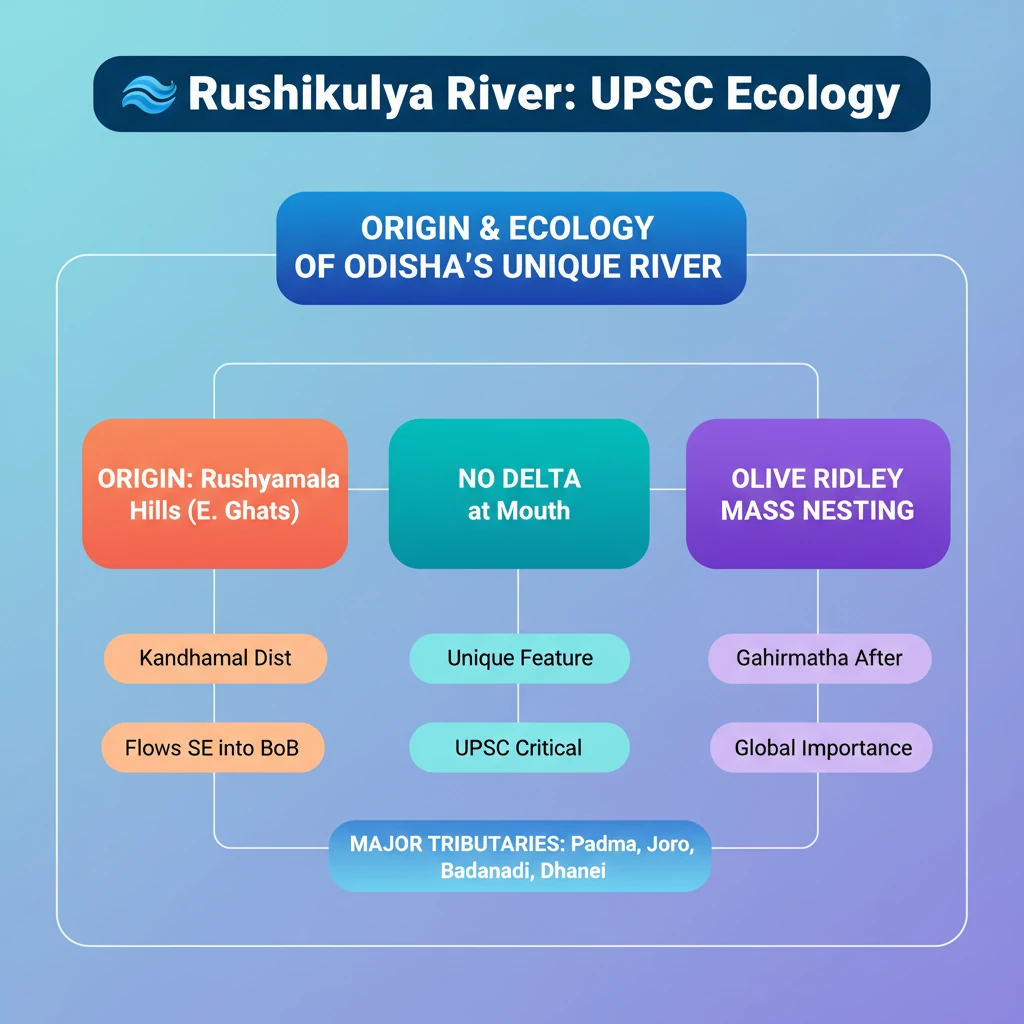
💡 Key Takeaways
- •Rushikulya River originates from Rushyamala hills in Eastern Ghats, Kandhamal district, Odisha.
- •It flows southeast into the Bay of Bengal and uniquely has no delta at its mouth.
- •Prominent tributaries include Padma, Boringanalla, Joro, Badanadi, Baghua, Dhanei, and Ghodahado.
- •The Rushikulya mouth is a globally significant mass nesting site for Olive Ridley Sea Turtles.
- •Its non-deltaic nature and ecological importance make it crucial for UPSC Environment & Ecology topics.
🧠 Memory Techniques
98% Verified Content
📚 Reference Sources
•NCERT Geography Textbooks (Class XI & XII) - Indian Physiography, River Systems
•Ministry of Environment, Forest and Climate Change (MoEFCC) Reports - Coastal Zone Management, Wildlife Protection Act
•WWF India Publications - Marine Turtle Conservation
•Odisha State Disaster Management Authority (OSDMA) Reports - Coastal Vulnerability