What are the Key Facts About Sparrow? - Environment And Ecology | UPSC Learning
Topics
0 topics • 0 completed
🔍
No topics match your search
What are the Key Facts About Sparrow?
Medium⏱️ 7 min read
environment and ecology
📖 Introduction
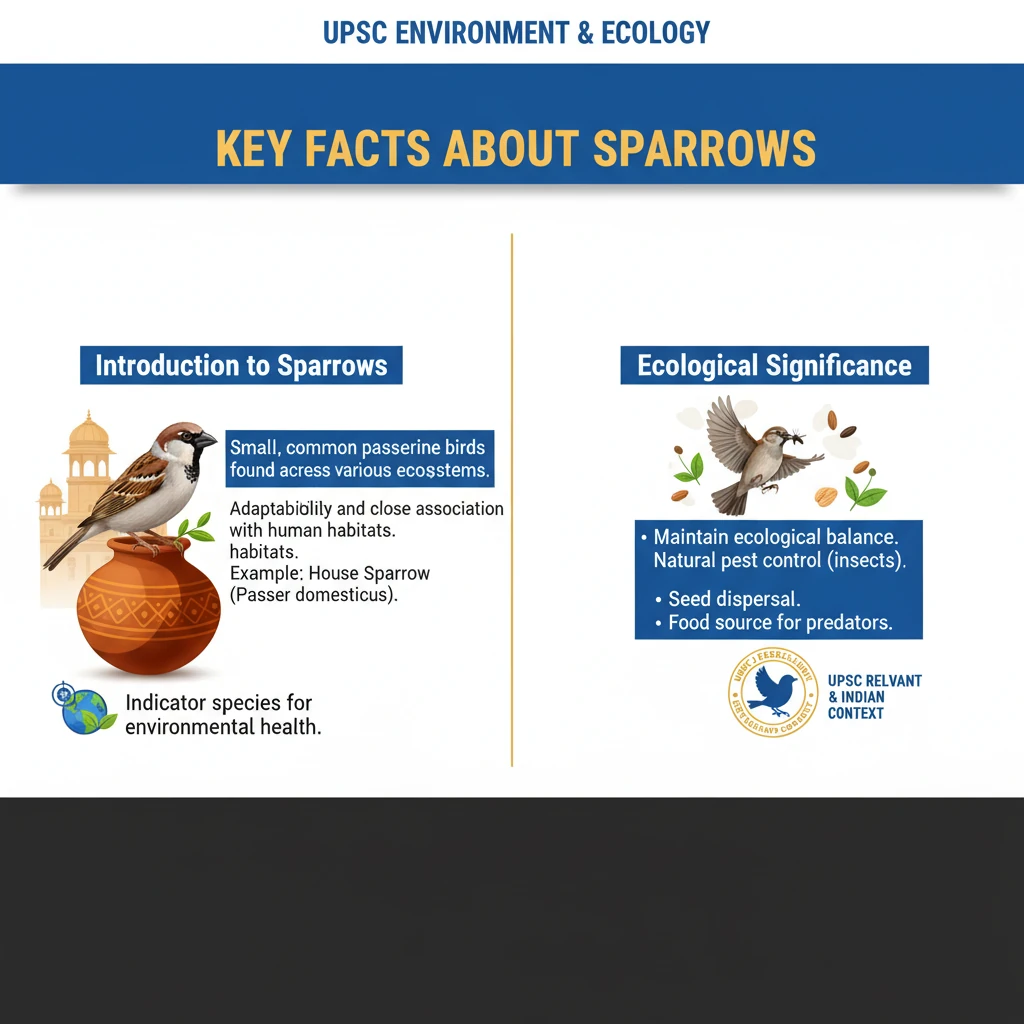
<h4>Introduction to Sparrows</h4><p><strong>Sparrows</strong> are small, common passerine birds found across various ecosystems. They are widely recognized for their adaptability and close association with human habitats, particularly the <strong>House Sparrow</strong> (<em>Passer domesticus</em>).</p><p>These birds play a vital role in maintaining ecological balance and are considered an indicator species for environmental health.</p><h4>Ecological Significance of Sparrows</h4><p><strong>Sparrows</strong> are crucial components of local biodiversity and significantly contribute to <strong>plant growth</strong> and ecosystem health. Their activities provide essential ecosystem services that benefit various plant species.</p><div class='key-point-box'><p><strong>Key Ecological Roles:</strong></p><ul><li><strong>Seed Dispersal:</strong> Sparrows consume various seeds and then excrete them, effectively dispersing plant seeds across different areas.</li><li><strong>Vegetation Promotion:</strong> This natural seed dispersal mechanism aids in the propagation and growth of diverse vegetation, supporting local flora.</li></ul></div><h4>Threats to Sparrow Populations</h4><p>Globally, <strong>sparrow populations</strong> are facing significant declines, primarily due to rapid environmental changes driven by human activities. These threats are interconnected and exacerbate each other.</p><div class='info-box'><p><strong>Major Threats Identified:</strong></p><ul><li><strong>Habitat Degradation:</strong> The destruction and fragmentation of natural and semi-natural habitats crucial for sparrows.</li><li><strong>Urbanization:</strong> Expansion of cities leading to loss of green spaces, nesting sites, and foraging areas.</li><li><strong>Changes in Agricultural Practices:</strong> Modern farming techniques often reduce insect populations and natural seed availability, impacting sparrow food sources.</li></ul></div><h4>Specific Factors Contributing to Decline</h4><p>Beyond broad threats, several specific factors directly contribute to the dwindling numbers of <strong>sparrows</strong>. These factors highlight the complex challenges faced by these adaptable birds.</p><div class='info-box'><p><strong>Direct Causes of Decline:</strong></p><ul><li><strong>Loss of Nesting Sites:</strong> Modern building designs often lack crevices and suitable ledges for sparrow nests.</li><li><strong>Loss of Foraging Areas:</strong> Reduction of gardens, parks, and traditional agricultural fields limits access to food.</li><li><strong>Decline in Insect Populations:</strong> Widespread use of pesticides and monoculture farming reduces the availability of insects, a critical food source for sparrow chicks.</li></ul></div><h4>Impacts of Sparrow Decline</h4><p>The decline in <strong>sparrow populations</strong> has far-reaching consequences that extend beyond the birds themselves, affecting entire ecosystems and potentially human interests. This decline signals broader ecological imbalances.</p><div class='key-point-box'><p><strong>Wider Ecological Effects:</strong></p><ul><li><strong>Increase in Insect Pests:</strong> As sparrows are natural predators of many insects, their decline can lead to an unchecked proliferation of agricultural and garden pests.</li><li><strong>Threats to Biodiversity:</strong> The loss of sparrows indicates a general decline in urban and rural biodiversity, impacting the stability of local ecosystems.</li></ul></div><h4>Conservation Efforts for Sparrows</h4><p>Recognizing the ecological importance and threatened status of <strong>sparrows</strong>, various conservation initiatives are being implemented to reverse their decline and restore suitable habitats.</p><div class='exam-tip-box'><p><strong>UPSC Insight:</strong> Questions on <strong>indicator species</strong> and <strong>urban biodiversity conservation</strong> often feature in <strong>GS Paper III (Environment & Ecology)</strong>. Understanding specific efforts for common birds like sparrows is crucial.</p></div><div class='info-box'><p><strong>Key Conservation Strategies:</strong></p><ul><li><strong>Urban Greening Projects:</strong> Creating and maintaining parks, gardens, and green corridors within cities to provide nesting and foraging opportunities.</li><li><strong>Agroecological Practices:</strong> Promoting sustainable farming methods that enhance biodiversity, reduce pesticide use, and ensure natural food sources for sparrows.</li><li><strong>Community Involvement:</strong> Encouraging citizens to install bird feeders, bird baths, and nest boxes to support local sparrow populations.</li></ul></div>
💡 Key Takeaways
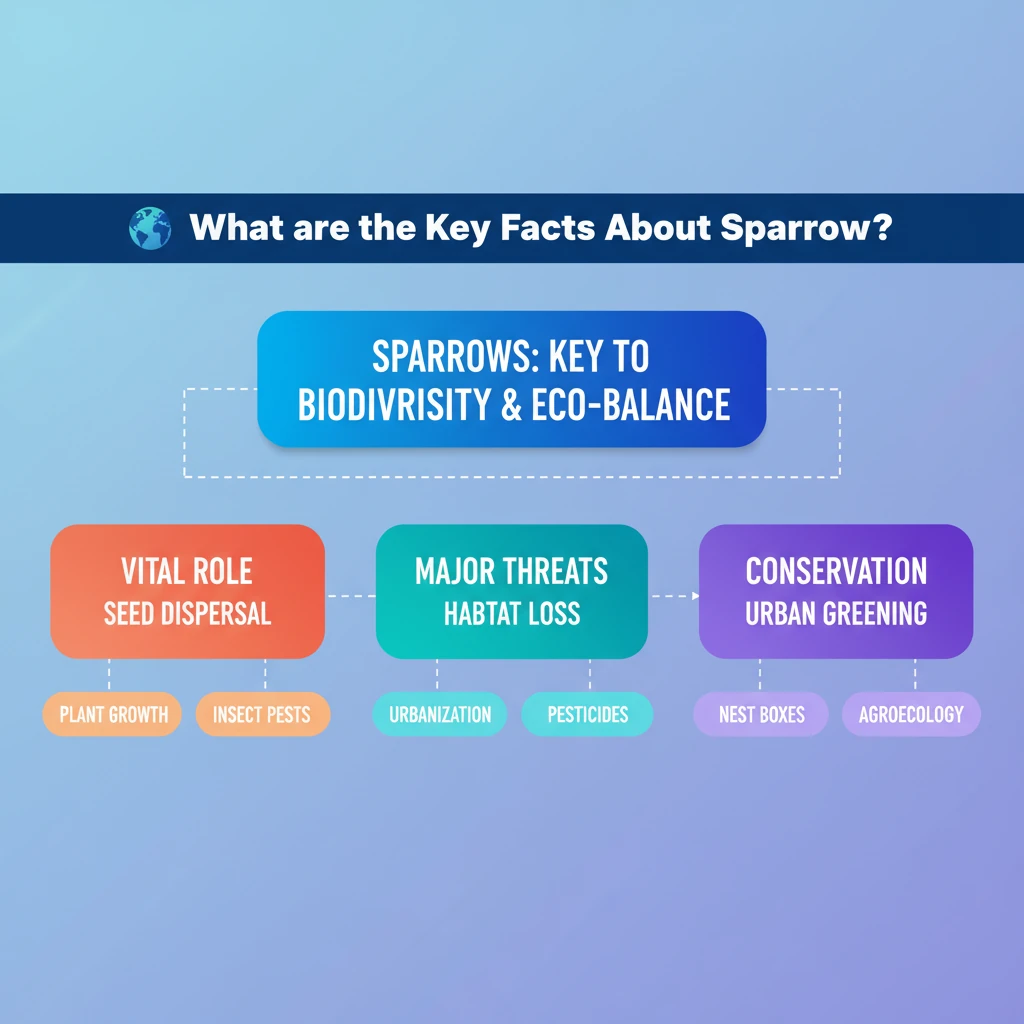
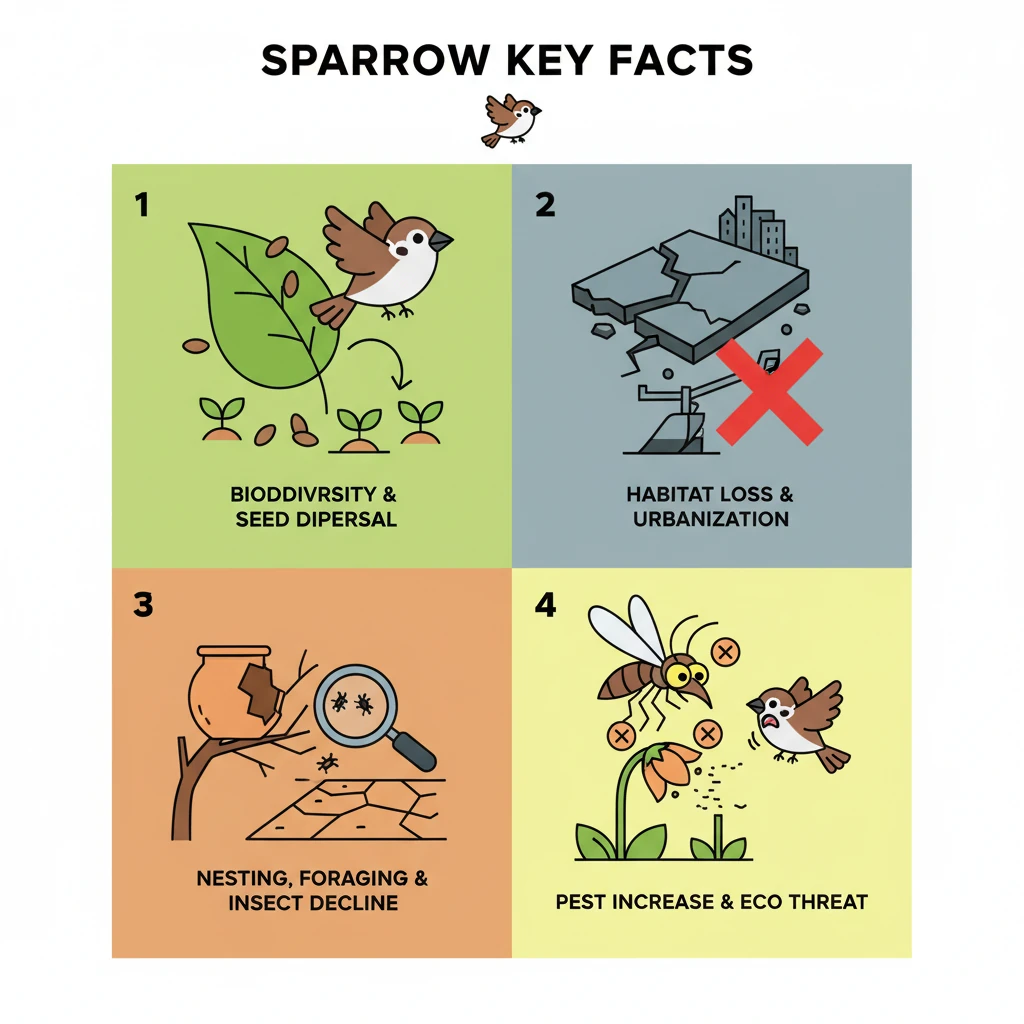
- •Sparrows are vital for biodiversity and plant growth through seed dispersal.
- •Major threats include habitat degradation, urbanization, and changes in agricultural practices.
- •Loss of nesting sites, foraging areas, and insect decline are specific causes.
- •Sparrow decline leads to increased insect pests and overall biodiversity threats.
- •Conservation efforts focus on urban greening and agroecological practices.
- •Sparrows act as indicator species, reflecting the health of our immediate environment.
🧠 Memory Techniques
95% Verified Content
📚 Reference Sources
•National Centre for Biological Sciences (NCBS) research on urban birds
•Bombay Natural History Society (BNHS) publications on Indian birds
•Ministry of Environment, Forest and Climate Change (MoEFCC) reports