Registration of Exotic Animals - Environment And Ecology | UPSC Learning
Topics
0 topics • 0 completed
🔍
No topics match your search
Registration of Exotic Animals
Medium⏱️ 5 min read
environment and ecology
📖 Introduction
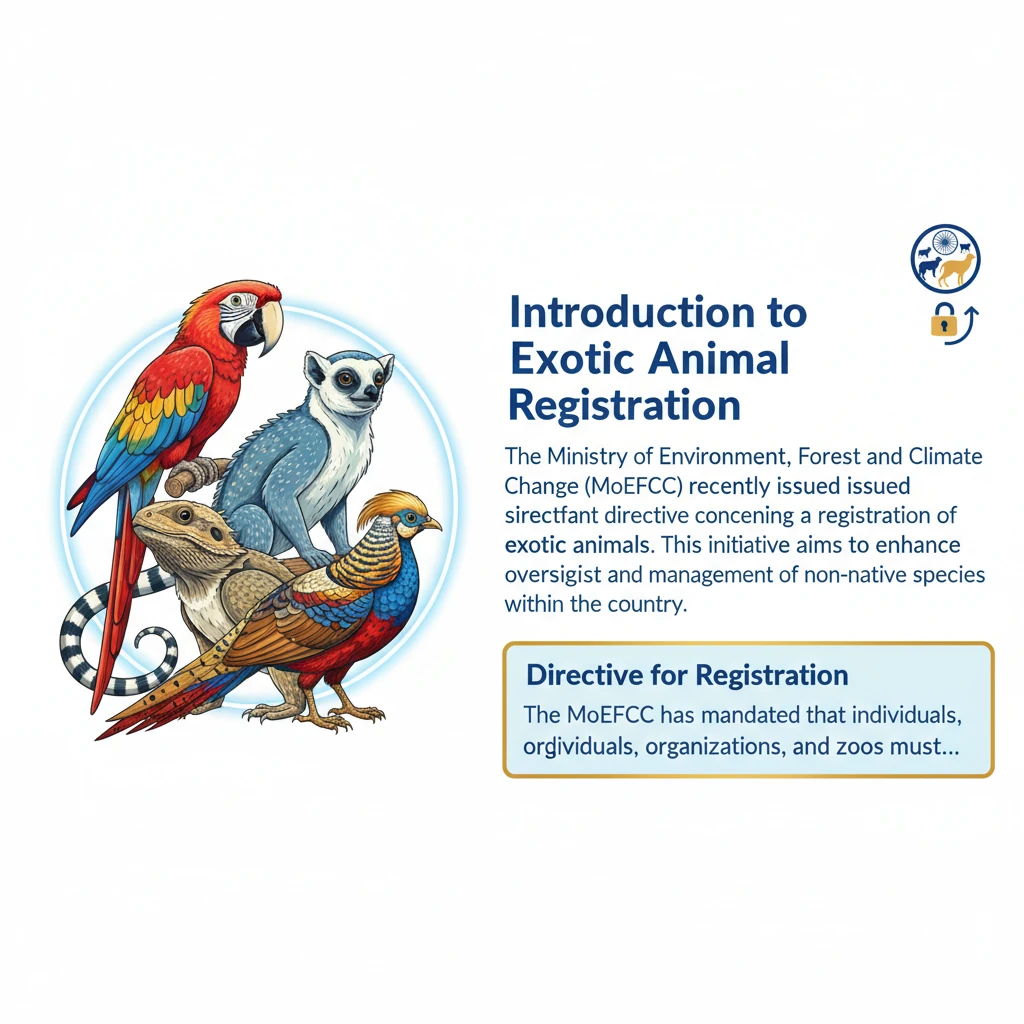
<h4>Introduction to Exotic Animal Registration</h4><p>The <strong>Ministry of Environment, Forest and Climate Change (MoEFCC)</strong> recently issued a significant directive concerning the registration of <strong>exotic animals</strong>.</p><p>This initiative aims to enhance oversight and management of non-native species within the country.</p><h4>Directive for Registration</h4><div class='key-point-box'><p>The <strong>MoEFCC</strong> has mandated that individuals, organizations, and zoos must register any <strong>exotic animals</strong> they possess.</p><p>This registration is a crucial step towards better regulation and tracking.</p></div><h4>Scope of Animals Covered</h4><p>The directive specifically applies to <strong>exotic animals</strong> that are listed under <strong>Schedule IV</strong> of the <strong>Wild Life (Protection) Act, 1972</strong>.</p><p>This includes species as updated by the <strong>Amendment Act, 2022</strong>, reflecting contemporary conservation needs.</p><div class='info-box'><p><strong>Schedule IV</strong> of the <strong>WLPA</strong> typically encompasses species that require protection but are not classified as highly endangered, often necessitating permits for their possession or trade.</p></div><h4>Registration Procedure</h4><p>The entire registration process is conducted <strong>electronically</strong>, utilizing the dedicated <strong>PARIVESH 2.0 portal</strong>.</p><p>Once completed, the registration details must be submitted to the <strong>Chief Wildlife Warden</strong> of the respective State where the animals are kept.</p><div class='exam-tip-box'><p>This directive is highly relevant for <strong>UPSC GS Paper III</strong>, particularly for topics on <strong>environmental governance</strong>, <strong>biodiversity conservation</strong>, and <strong>wildlife protection laws</strong>.</p></div>
💡 Key Takeaways
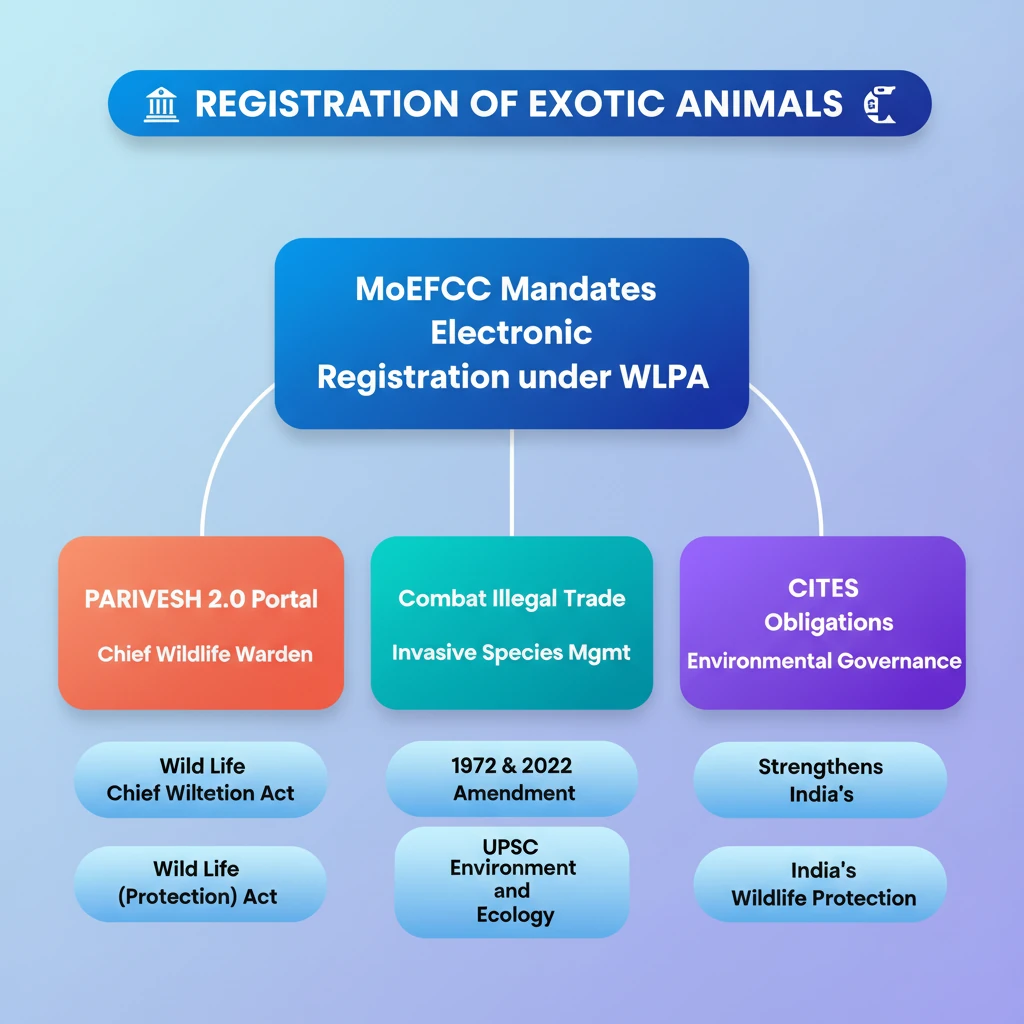
- •MoEFCC mandates electronic registration of exotic animals under WLPA Schedule IV.
- •Registration is done via the PARIVESH 2.0 portal to the Chief Wildlife Warden.
- •Aims to combat illegal wildlife trade and manage potential invasive species.
- •Strengthens India's environmental governance and aligns with CITES obligations.
- •Based on the Wild Life (Protection) Act, 1972, and its 2022 Amendment Act.
🧠 Memory Techniques

95% Verified Content
📚 Reference Sources
•Ministry of Environment, Forest and Climate Change (MoEFCC) official notifications/press releases
•The Wild Life (Protection) Act, 1972 (as amended up to 2022)